
Vietnam Travel Guide for Solo Female Travellers: Safety, Tips, and Best Bases
Vietnam is one of Southeast Asia’s most rewarding destinations for solo female travellers, and this vietnam travel guide covers everything you need to plan a safe, affordable, and unforgettable trip — from visa logistics and transportation to the best neighbourhoods in Ho Chi Minh City. Whether you’re spending a week or relocating for months, Vietnam offers a rare combination of low cost, rich culture, and genuine warmth from locals.
Key Takeaways
- Vietnam is considered one of the safer Southeast Asian countries for solo female travellers, with low violent crime rates in major tourist zones.
- Ho Chi Minh City’s District 1 is the top base for first-time visitors — central, walkable, and well-served by reputable accommodation.
- E-visa is available to most nationalities online; 90-day single and multiple-entry options are available as of 2024.
- Grab (ride-hailing app) is the safest and most reliable way to move around Vietnamese cities day or night.
- Scams targeting tourists exist but are avoidable with preparation — this guide covers the most common ones.
Vietnam Travel Guide Solo Female Travellers: Is Vietnam Safe for Solo Female Travellers?
The short answer is yes — with awareness. Vietnam consistently ranks among the safer countries in Southeast Asia for women travelling alone. Violent crime against tourists is rare, and street harassment, while it exists, is far less aggressive than in many other travel destinations. According to the Global Peace Index 2024, Vietnam ranks 41st globally — above the United States, France, and the United Kingdom — reflecting its stable social environment.
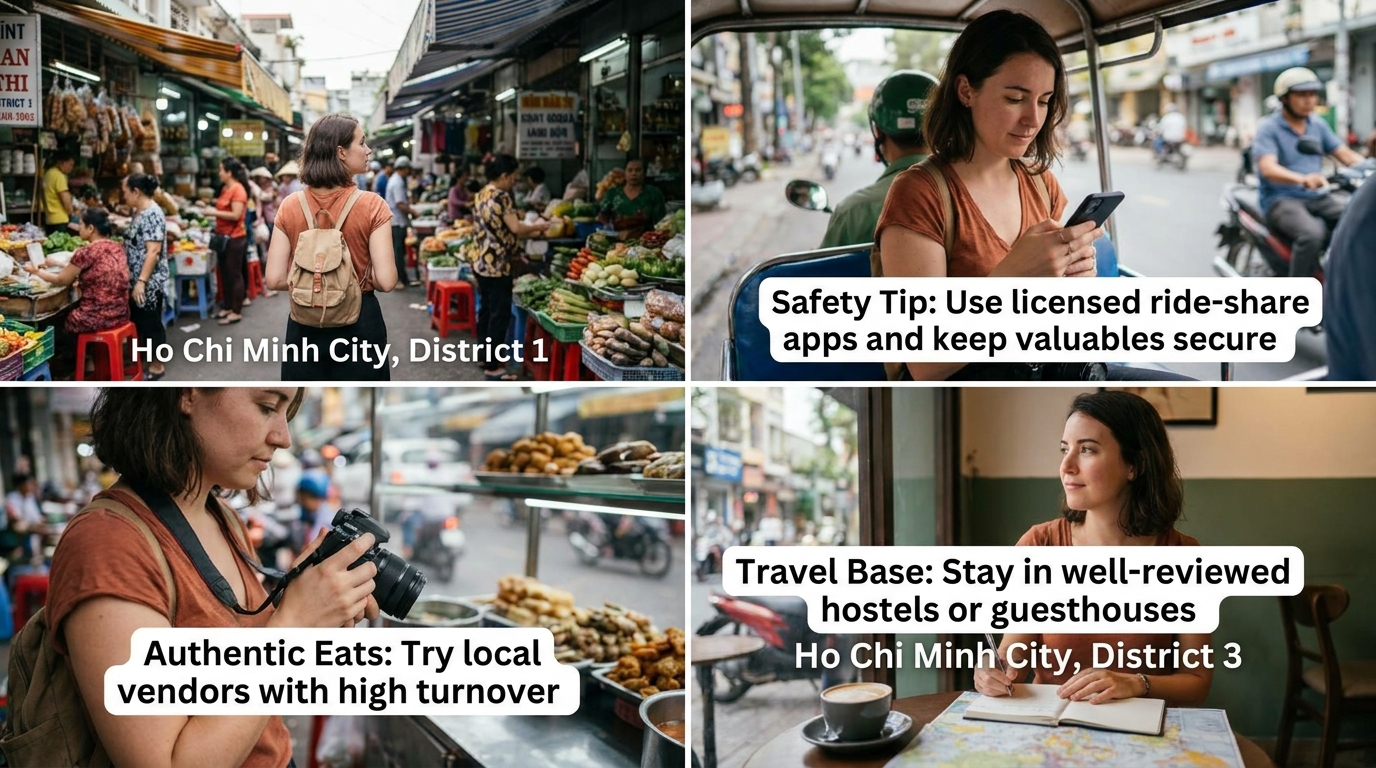
The key risks for solo female travellers in Vietnam are petty theft (phone and bag snatching from motorbikes), overcharging, and occasional scams targeting tourists in busy areas. These are manageable with basic precautions: keep bags on the side away from traffic, use metered taxis or Grab exclusively, and book accommodation in established tourist zones.
Solo female travellers consistently rate D1 as Saigon’s safest neighbourhood — saigonapartment.vn has 24-hour reception, which is a genuine advantage when arriving late at night or after a long travel day.
Vietnam Travel Guide: Visa and Entry Requirements (2025-2026)
Vietnam’s e-visa system has been significantly expanded. As of 2024, citizens of most countries — including the US, UK, EU nations, Australia, and Canada — can apply for a 90-day e-visa online through the official immigration portal (xuatnhapcanh.gov.vn). The fee is $25 USD and processing typically takes 3 business days.
Key points to know:
- Multiple-entry e-visas are now available, allowing you to exit and re-enter within the 90-day validity.
- Visa-on-arrival is still available but requires a pre-arranged approval letter and is generally less convenient than the e-visa.
- Certain nationalities (including South Korea, Japan, and several European countries) qualify for visa-free entry for up to 45 days.
- Always check your country’s specific arrangement on the official Vietnam Immigration website before booking flights.
- Passport must be valid for at least 6 months beyond your entry date.
Getting Around Vietnam: Transportation Tips
Vietnam is a long, narrow country — around 1,650 km from north to south — so understanding your transport options is central to any good vietnam travel guide.
Domestic Flights
VietJet Air, Bamboo Airways, and Vietnam Airlines connect Ho Chi Minh City, Da Nang, and Hanoi with frequent, cheap flights. Book 3-4 weeks ahead for prices under $30 USD one-way. For solo female travellers, flights are strongly preferred over overnight buses for inter-city travel.
Trains
The Reunification Express runs the length of the country and is a scenic, comfortable option for the Saigon–Da Nang or Hanoi–Da Nang legs. Book soft-sleeper berths for overnight journeys. Compartments are shared but generally safe; many solo female travellers request the top bunk.
Within Cities
Grab is essential. The app works exactly like Uber and shows the fare upfront — no negotiation, no scams, GPS-tracked routes. Avoid unmetered taxis, especially those that approach you unsolicited. In Ho Chi Minh City, the Ben Thanh–Suoi Tien metro line (Line 1) opened in late 2024 and now connects District 1 to the eastern suburbs.
Money, Costs, and Budgeting in Vietnam
Vietnam remains one of the most affordable destinations in Asia. A realistic daily budget for a solo female traveller staying in mid-range accommodation, eating at local restaurants, and using Grab for transport is $40–$70 USD per day in Ho Chi Minh City. Budget travellers in hostels can get by on $25–$35.
- Currency: Vietnamese Dong (VND). The exchange rate is roughly 25,000–26,000 VND to 1 USD.
- ATMs: Widely available in cities. Techcombank and BIDV have lower fees. Withdraw larger amounts to reduce per-transaction charges.
- Cash vs card: Most street food, local markets, and small guesthouses are cash-only. Larger restaurants and hotels accept Visa/Mastercard.
- Tipping: Not mandatory but appreciated at restaurants and for massage/spa services — 10% is generous.
According to Numbeo’s 2025 Cost of Living Index, Ho Chi Minh City ranks in the bottom 20% globally for cost of living, making it one of the world’s most affordable major cities for long-stay travellers.
Best Time to Visit Vietnam
Vietnam’s climate varies significantly by region, so the “best time” depends on where you’re going. This is one of the most important sections of any thorough vietnam travel guide.

Ho Chi Minh City (South Vietnam)
The south has two seasons: dry (November–April) and wet (May–October). The dry season is ideal — temperatures are 28–34°C with low humidity and almost no rain. The wet season brings intense afternoon downpours (usually 1–2 hours) but temperatures are similar and tourist crowds are thinner.
Da Nang and Central Vietnam
Best visited February–August. The central coast experiences its own rainy season from September–January, with Typhoon risk in October–November.
Hanoi and the North
October–April is ideal — cooler, drier weather. March–April brings drizzle but comfortable temperatures. Summer (June–August) is hot and humid with heavy rainfall.
Vietnam Travel Guide: Top Destinations Beyond Saigon
Ho Chi Minh City is typically the starting or ending point for most Vietnam itineraries, but the country has enormous variety:
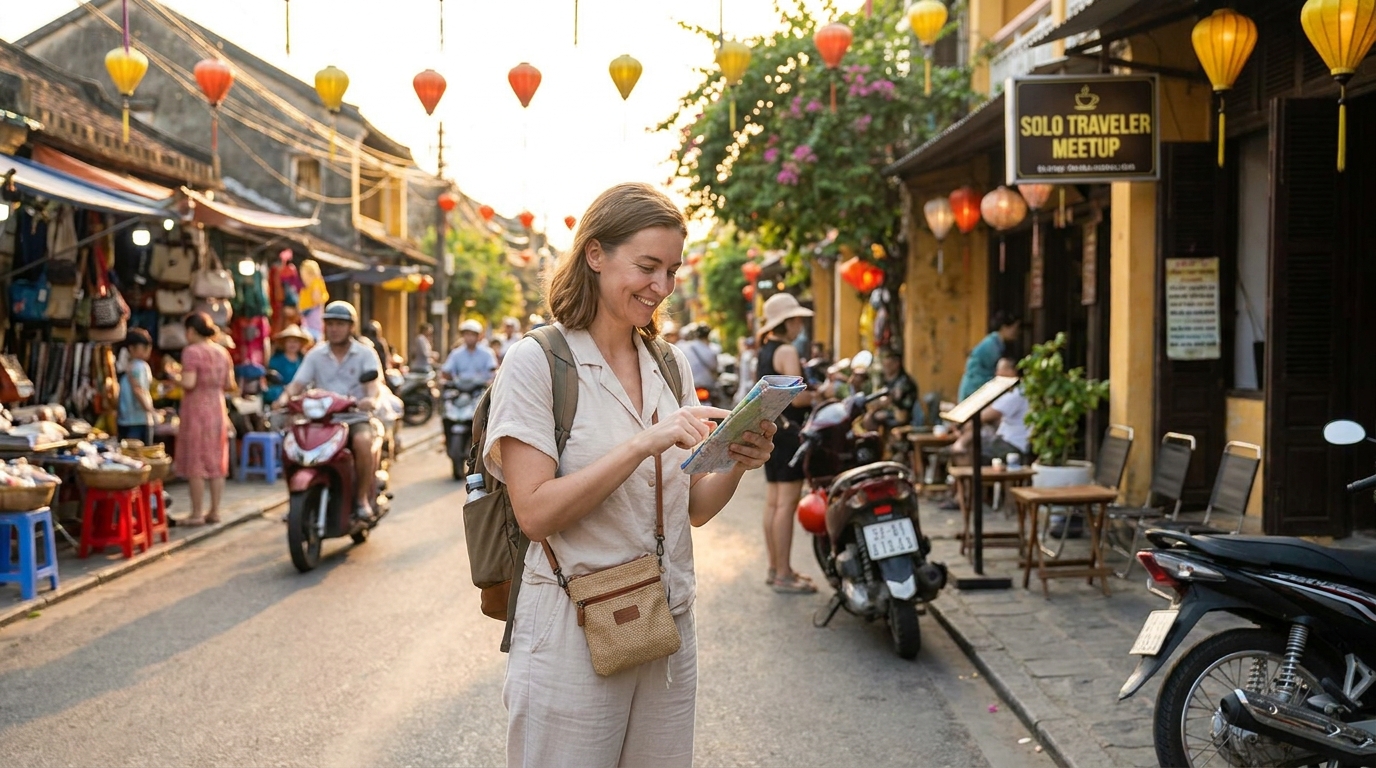
- Hoi An: The most popular destination for solo female travellers after Saigon — safe, walkable ancient town, excellent food, tailors, beaches at An Bang and Cua Dai nearby.
- Da Nang: Larger city, great beaches, gateway to Hoi An and the Ba Na Hills. More modern infrastructure than Hoi An.
- Hanoi: Vietnam’s capital and cultural heartland. The Old Quarter is atmospheric but busier and more chaotic than HCMC’s tourist zones.
- Ha Long Bay: UNESCO World Heritage Site; overnight cruises range from budget to luxury. Choose a reputable operator and book direct.
- Phu Quoc Island: Vietnam’s largest island, now with international airport and resort strips alongside quieter beaches. Easy day-trip from Saigon by flight.
- Mui Ne: 4-hour bus from Saigon, famous for kitesurfing and sand dunes. Less developed than Phu Quoc.
Common Scams and How to Avoid Them
Awareness is your best protection. These are the scams most frequently reported by solo female travellers in Vietnam:
- Cyclo and motorbike taxi overcharging: Always agree on a price before getting in, or use Grab.
- Fake tour operators: Book day trips through your hotel or a verified agency. Distrust anyone who approaches you on the street near tourist sites.
- The “broken meter” taxi: Vinasun and Mai Linh are the two trustworthy metered cab companies in Saigon. All others carry higher risk.
- Shoe shine scam: Men near Bui Vien or the War Remnants Museum offer to shine shoes, then demand $20 USD. Decline politely.
- Overpriced xe om (motorbike taxi): Always quote-check against the Grab estimate before agreeing to a price.
Where to Stay in Ho Chi Minh City
For solo female travellers, District 1 (D1) is the non-negotiable starting base. It contains the city’s most visited attractions — Ben Thanh Market, the War Remnants Museum, the Reunification Palace, and the buzzing Bui Vien Walking Street — within walkable or short Grab distance. The neighbourhood is well-lit, heavily foot-trafficked until midnight, and has a dense supply of vetted accommodation.
District 3 is a quieter, more residential alternative with great coffee shops and a more local feel, while still being 10 minutes from D1. Binh Thanh is popular with long-stay expats for its combination of local markets, river views, and modern amenities.
When choosing accommodation, prioritise properties with 24-hour front desk, secure key card access, and strong recent reviews on Booking.com or Google. Serviced apartments are an excellent option for stays of a week or more — they offer more privacy, kitchen facilities, and often better value than hotels.
Health, Safety Gear, and Essential Apps
Vietnam does not require vaccinations for entry, but travel doctors typically recommend Hepatitis A, Typhoid, and ensuring standard vaccines are up to date. Malaria prophylaxis is generally not needed for Ho Chi Minh City or major tourist cities, but is recommended for remote northern highland areas.
Essential Apps for Vietnam
- Grab — ride-hailing and food delivery
- Google Translate — download Vietnamese offline pack
- Google Maps — download offline maps for HCMC, Hanoi, Da Nang
- XE Currency — live VND exchange rates
- Agoda / Booking.com — last-minute accommodation with verified reviews
What to Pack
Pack light — Vietnam’s cities have excellent laundry services for 20,000–30,000 VND per kg. Essentials include: a portable door lock (for extra security in guesthouses), a modest scarf for temple visits, reef-safe sunscreen (hard to find locally), and a small crossbody bag that closes securely.
Cultural Etiquette for Female Travellers
Vietnamese culture is generally respectful and welcoming, but a few customs help solo female travellers avoid unintentional offence:
- Cover shoulders and knees when entering pagodas, temples, and communal houses. A lightweight scarf solves this.
- Remove shoes before entering homes and some shops — watch what locals do.
- Public displays of affection are uncommon. Solo female travellers who walk confidently and dress modestly report far less unsolicited attention.
- Bargaining is expected at markets but not in shops with fixed prices. A genuine smile goes further than aggressive haggling.
- Accept invitations for tea or coffee from local families — these interactions are among the highlights Vietnam offers.
You May Also Find Useful
Once the route is settled, Booking.com and Agoda are the quickest way to see what is still available on your dates in Ho Chi Minh City.
Frequently Asked Questions
Is Vietnam safe for a solo female traveller in 2025?
Yes, Vietnam is widely considered one of the safer countries in Southeast Asia for solo female travellers. Violent crime against tourists is rare. The main risks are petty theft and tourist scams, both of which are manageable with standard precautions like using Grab for transport and keeping valuables secured.
What is the best base in Vietnam for a first-time solo female traveller?
Ho Chi Minh City’s District 1 is the most recommended base. It offers the best infrastructure, highest density of vetted accommodation with 24-hour reception, and easy access to all major attractions. From D1, day trips to the Mekong Delta and Cu Chi Tunnels are straightforward to organise.
Do I need travel insurance for Vietnam?
Travel insurance is strongly recommended. Vietnam’s private hospitals in HCMC are excellent, but costs for serious treatment can reach thousands of dollars. Ensure your policy covers motorbike incidents (specify “as passenger” if you’re not riding), flight cancellations, and theft of electronics.
How do I get a SIM card in Vietnam?
Buy a local SIM card at the airport immediately on arrival — Viettel and Vietnamobile offer 4G data plans from around 100,000 VND ($4 USD) for 30 days with generous data. You’ll need your passport. Having mobile data from the moment you land makes navigation and Grab far easier.
What is the best itinerary length for Vietnam as a solo traveller?
Three weeks is the ideal minimum to cover the south (Saigon, Mekong Delta), central Vietnam (Hoi An, Da Nang), and the north (Hanoi, Ha Long Bay or Sapa). Two weeks works if you focus on one region. A single week is enough to experience Ho Chi Minh City thoroughly and take one or two day trips.
Official Resources
For the most up-to-date information on vietnam travel guide, visit the Vietnam National Administration of Tourism.