
The best saigon hostel options in 2026 sit inside District 1 and the Pham Ngu Lao backpacker corridor — a dense square kilometre of budget beds, rooftop bars, and travel agencies that has served visiting travellers for three decades. Whether you are doing a weekend stopover or building a Southeast Asia circuit, knowing which zones and properties give you genuine value separates a good trip from a bad one.
Key Takeaways
- Pham Ngu Lao Street and Bui Vien Walking Street form the core of Ho Chi Minh City’s backpacker district, offering the highest concentration of budget beds in the city.
- Dormitory beds in District 1 average USD 8–14 per night in 2026, while a private room in a quality saigon hostel runs USD 22–40.
- Noise, security, and check-in flexibility are the three pain points most reviewers mention — choose properties on side streets for the first two.
- According to the Vietnam National Administration of Tourism, HCMC welcomed over 5.3 million international visitors in 2024, putting consistent pressure on hostel availability during peak season (December–February).
- Travellers staying four weeks or longer consistently find that entry-level serviced apartments undercut hostel private-room rates while delivering a kitchen, a washing machine, and genuine quiet.
Why District 1 Is Still the Centre of the Saigon Hostel Scene
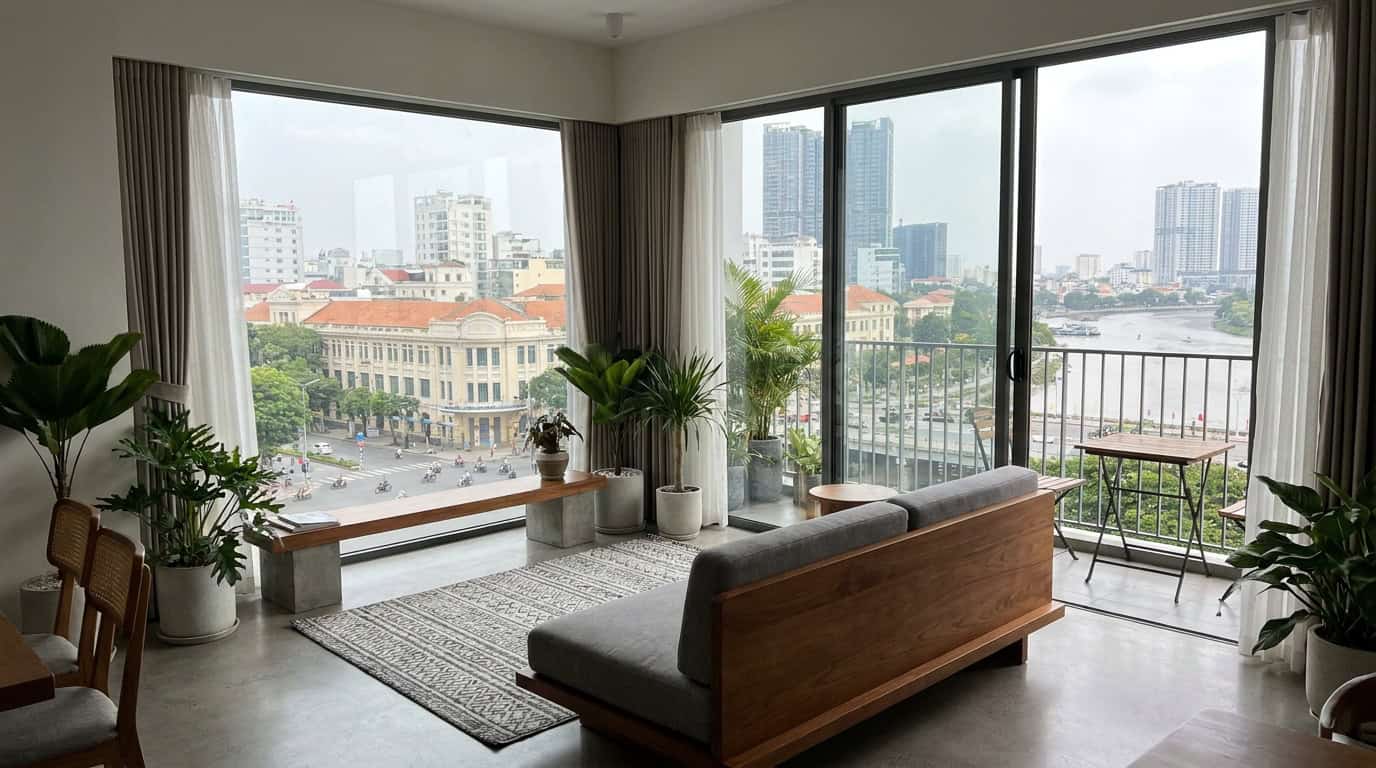
District 1 holds the old colonial core of Ho Chi Minh City — the Notre-Dame Cathedral area, Ben Thanh Market, the Reunification Palace, and the riverside promenade along the Saigon River. For a budget traveller, this geography is hard to argue with. You can walk to the main tourist circuit, catch a Grab bike to Chinatown in under ten minutes, and reach the bus station for onward travel to the Mekong Delta without needing a taxi. The density of hostels here keeps prices competitive and the travel infrastructure — tour desks, currency exchange, SIM card shops — is literally ground-floor in most buildings.
Side streets off Pham Ngu Lao, particularly De Tham and Bui Vien, are the heart of this zone. The three-block stretch contains more beds per square metre than almost any comparable area in Southeast Asia outside of Bangkok’s Khao San Road.
Pham Ngu Lao Zone: What to Expect on the Ground
The Pham Ngu Lao backpacker area operates on a strip economy. Ground floor: convenience stores, pho stalls, and travel agents. First floor: rooftop bars and international restaurants. Upper floors: hostel dormitories and private rooms. The energy is high until 2 a.m. on weekends; Bui Vien itself is closed to traffic on Friday, Saturday, and Sunday nights and becomes a pedestrian street with live music stages.
If you want the social atmosphere, book a bed within two minutes’ walk of Bui Vien. If you want to sleep before midnight, pick a saigon hostel one block north or south — the acoustic difference is noticeable. The best-reviewed properties on De Tham Street consistently score higher on “quiet nights” than those on Bui Vien itself.
Best Saigon Hostel Types: Dorm, Mixed, Female-Only, Private Pod
The modern hostel market in Ho Chi Minh City has moved well beyond the eight-bed dormitory with a single fan. In 2026 you will find four main bed configurations:
- Traditional open dorm (6–12 beds): Cheapest option, USD 7–10 per night. Shared lockers, curtain privacy. Best for solo budget travellers who want to meet people.
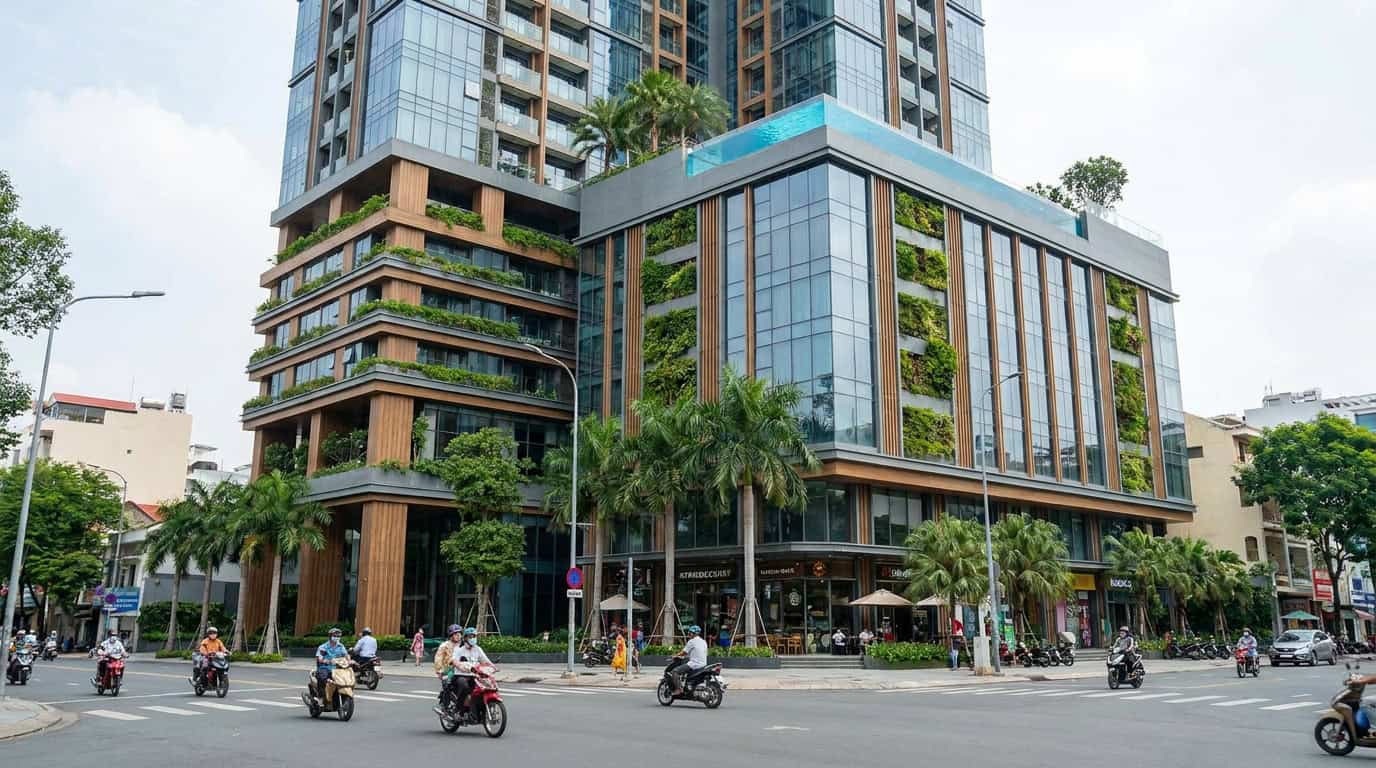
- Pod-style dorm: Each bed is an enclosed timber or fibreglass capsule with a reading light, power socket, and curtain door. USD 12–18. The significant upgrade in privacy makes these popular with travellers who have done the open-dorm circuit before.
- Female-only dorm: Standard in every major property on the strip. Same price range as co-ed dorms. Solo female travellers consistently rate this option higher on security.
- Hostel private room: A small en-suite room inside a hostel building. USD 22–40. You get the hostel social spaces — common room, bar, tour desk — with a door that locks. This is where hostel pricing starts to overlap with entry-level hotel and apartment pricing.
Top Neighbourhoods Beyond Pham Ngu Lao
Pham Ngu Lao dominates search results, but it is not the only option for budget accommodation in the city.
District 3 — Local-feel budget stays
District 3 borders District 1 to the north and has seen a growth in smaller boutique hostels targeting travellers who want local coffee shops and Vietnamese street food over tourist-facing menus. Prices are similar to Pham Ngu Lao but the energy is calmer. The trade-off is a 10–15 minute Grab ride to the main sites.
Binh Thanh District — Long-stay value zone
Binh Thanh is not a hostel neighbourhood, but it is worth mentioning for travellers who arrive expecting hostel prices and discover that entry-level serviced apartments here cost less per month than a private hostel room per week. This distinction matters for anyone planning to stay a month or more.
District 4 — Emerging budget option
District 4 sits directly across the canal from District 1. A handful of newer hostels have opened here in 2024–2025, targeting travellers priced out of Pham Ngu Lao. Walk times to Ben Thanh Market: under 20 minutes on foot. Prices run 15–20 percent lower than comparable District 1 properties.
What a Good Saigon Hostel Should Include in 2026
The baseline expectation has risen. Properties that were considered premium in 2019 are now average. When screening any saigon hostel, look for:
- Air conditioning in every dorm (not a ceiling fan — HCMC humidity makes this non-negotiable from April through October)
- Individual power sockets and USB ports at each bed
- Luggage storage available before check-in and after check-out
- 24-hour reception or a digital self-check-in system
- Secure lockers that fit a 15-inch laptop
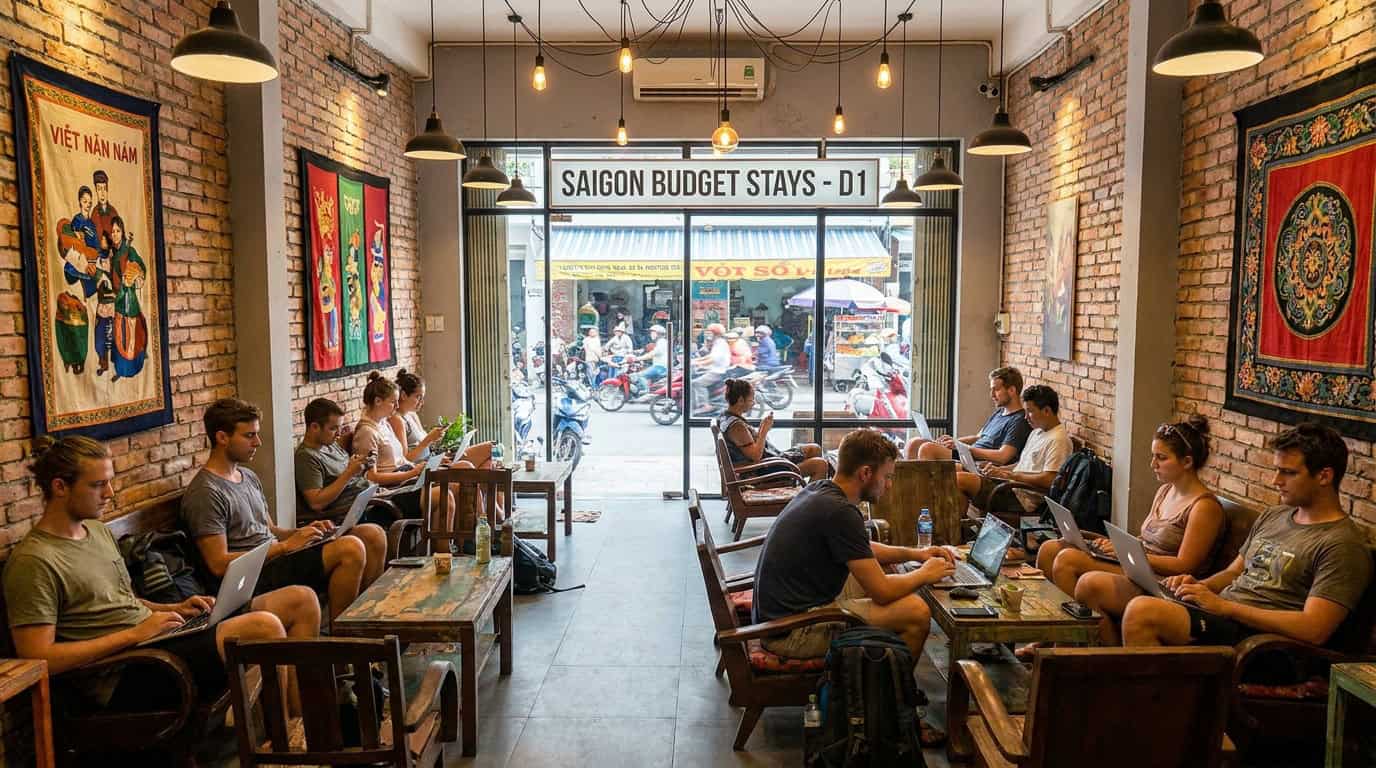
- A common area that functions for working, not just drinking
Security is a legitimate concern. Petty theft does occur in shared dorms. The best properties use RFID locker systems and have CCTV coverage in common areas. Ask specifically about this when booking, because photos on booking platforms do not always reflect current security infrastructure.
Saigon Hostel Pricing: 2026 Market Reality
According to data aggregated by Hostelworld for Southeast Asia in 2025, Ho Chi Minh City remains one of the most affordable major backpacker hubs in the region, with average dorm prices running approximately 30 percent below Bangkok and 40 percent below Singapore for comparable quality tiers.
In practical terms for 2026:
- Budget dorm (fan, basic): USD 6–9 per night
- Mid-range dorm (AC, pod, en-suite): USD 11–17 per night
- Hostel private room: USD 22–40 per night
- Hostel private room with balcony or city view: USD 35–55 per night
These prices reflect walk-in and same-week rates. Booking two or more weeks in advance typically saves 10–15 percent. During Tet (Vietnamese Lunar New Year, late January or February), availability collapses and prices increase 40–80 percent — book six to eight weeks out for any Tet travel.
When a Saigon Hostel Stops Making Financial Sense
Hostels work for backpackers. Serviced apartments work for anyone staying 4+ weeks. If you are budget-conscious and staying long — our entry-level rooms beat hostel pricing on comfort per dollar. A hostel private room at USD 30 per night costs USD 900 per month. An entry-level serviced apartment in Binh Thanh or District 2 starts around USD 400–550 per month, includes utilities, a kitchen, and weekly cleaning, and is significantly quieter. Even a mid-range serviced apartment at USD 650 per month delivers a washing machine, a full bathroom, and the ability to cook — three things that directly reduce daily spending on meals and laundry. The math changes decisively for any stay over three weeks.
This is not a knock on hostels — they serve a genuine purpose for short-stay, social, high-mobility travellers. But the budget-conscious traveller who has already decided to base themselves in HCMC for a month should run the numbers before defaulting to a hostel private room.
Booking Strategy: How to Get the Best Saigon Hostel Rate
The major booking platforms — Hostelworld, Booking.com, and Agoda — all index the Pham Ngu Lao strip well. A few tactical points that experienced HCMC travellers use:
- Check direct booking discounts: Many properties offer a 5–10 percent discount for booking directly by email or WhatsApp. Look for a contact number in the property’s Google Maps listing.
- Read reviews from the last 90 days: Management quality and cleanliness at budget properties can shift quickly. Reviews from 2023 are largely irrelevant in 2026.
- Filter by review score above 8.0: On Hostelworld, an 8.0 or higher on their 10-point scale is a reasonable quality floor. Below 7.5, expect inconsistency.
- Avoid non-refundable rates for a first stay: HCMC has enough inventory that flexibility is worth a few dollars extra, especially if this is your first time in the city.
According to a 2024 Agoda traveller survey cited in their Southeast Asia Travel Trends report, location (proximity to transport) and cleanliness ranked first and second among HCMC hostel selection criteria, ahead of price — a useful reminder that the cheapest bed is not always the best value.
Safety and Practical Tips for First-Time Visitors
Ho Chi Minh City is a safe city for budget travellers by regional standards. The risks are primarily low-level: bag snatching on motorbikes along major roads, petty theft in crowded areas, and scam transport at the airport. Staying in a saigon hostel in District 1 puts you in a well-patrolled tourist zone.
Street safety around Pham Ngu Lao
Keep bags on the shoulder away from the road on Bui Vien and Pham Ngu Lao. Phone snatches by motorbike do occur — not commonly, but consistently enough that it is worth awareness. Use Grab rather than hailing motorbike taxis from the street; the app records driver details.
Health considerations
Air quality in District 1 is variable — particulate matter readings regularly exceed WHO guidelines during dry season. Travellers with respiratory sensitivity should check the AQI before extended outdoor activity. Dengue fever is present year-round; mosquito repellent is not optional if you are staying in older buildings with less well-maintained ventilation.
Getting Around From Your Saigon Hostel
A bed in Pham Ngu Lao puts you within walking distance of Ben Thanh Market, the Fine Arts Museum, and the Nguyen Hue pedestrian boulevard. For anything further:
- Grab: The default. Car rides across District 1 typically cost VND 35,000–60,000 (USD 1.40–2.40).
- Xe om (motorbike taxi): Faster in traffic, slightly cheaper, higher risk. Use the Grab Moto option for the safety of app-tracked rides.
- Public bus: Routes 1, 2, and 36 connect District 1 to the wider city. VND 6,000–8,000 per journey. Useful for budget day trips to Chinatown (District 5) and District 3.
- Ben Xe Mien Tay (Western Bus Station): Catch a bus from here to the Mekong Delta — a half-day trip of 60–90 minutes to Can Tho or My Tho. Most hostels sell these tickets through their tour desk.
You May Also Find Useful
Rates in Ho Chi Minh City move a lot by season and by district. It is worth comparing current availability on Booking.com and Agoda before committing to anything.
Frequently Asked Questions
What is the cheapest area for a saigon hostel in 2026?
The Pham Ngu Lao and De Tham corridor in District 1 offers the most competitive pricing with the widest range of options. District 4, just across the canal, has slightly lower rates — around 15–20 percent cheaper — with acceptable walkability to the main tourist zone. For the absolute lowest prices, guesthouses in District 3 and Binh Thanh will undercut District 1 but require more reliance on Grab for sightseeing.
Is it safe to stay in a hostel in Ho Chi Minh City?
Yes, for most travellers. The main risks are low-level property theft in dorms (use the provided lockers for valuables and electronics) and street-level petty crime on busy tourist roads at night. The Pham Ngu Lao zone has a consistent police and security presence, particularly on weekends when Bui Vien operates as a pedestrian street. Solo female travellers widely report HCMC as safe relative to comparable budget travel destinations in the region.
When is the best time to book a saigon hostel?
For travel outside of peak season (December–February) and Tet, booking one to two weeks in advance is usually sufficient. For December and January travel, book four to six weeks out. For Tet itself, eight weeks minimum. The platform availability windows open 12 months ahead on most properties. Last-minute walk-in rates do exist outside of peak season and can sometimes match or beat online prices, but the best-reviewed properties fill first.
How do hostel prices compare to serviced apartments for a long stay?
For stays of three weeks or more, serviced apartments become significantly more cost-effective. A hostel private room at USD 25–35 per night equals USD 750–1,050 per month — comparable to a well-equipped serviced apartment that includes utilities, a kitchen, laundry, and cleaning. Dorm beds remain cheaper for true budget stays, but the comfort and privacy gap widens considerably for anyone working remotely or staying more than a fortnight.
Do saigon hostels in District 1 include breakfast?
Some do, most do not — or they include a minimal continental breakfast that adds limited value. Budget travellers consistently report better value eating at street-level pho and banh mi shops within one block of any Pham Ngu Lao property. A full Vietnamese breakfast costs VND 30,000–55,000 (USD 1.20–2.20) within walking distance of every hostel on the strip. Factor this into your total cost when comparing “breakfast included” rates, which often carry a USD 4–6 premium.
Official Resources
For the most up-to-date information on saigon hostel, visit the Vietnam Tourism Official Guide.