
Monthly apartment rent in Saigon ranges from as low as $250 per month for a basic studio in an outer district to over $3,000 for a luxury two-bedroom in the heart of District 1. Understanding the monthly apartment rent Saigon market in 2026 means knowing which districts offer the best value, which building types come with hidden costs, and how expat demand continues to push prices in certain pockets of Ho Chi Minh City. This guide breaks down exactly what you pay, what you actually get, and the pitfalls that catch new renters off guard.
Key Takeaways
- Monthly apartment rent Saigon varies dramatically by district: District 1 and District 2 (Thu Duc City) command a 40–80% premium over Districts 7, 10, or Binh Thanh.
- Furnished serviced apartments typically cost 20–35% more than unfurnished units but include utilities, management, and flexibility — often better value for stays under 12 months.
- Hidden costs — management fees, electricity surcharges, parking, and deposit terms — can add $80–$200 per month on top of the advertised rent.
- According to CBRE Vietnam’s Q1 2026 report, average Grade A serviced apartment rents in HCMC held at approximately $28–$35 per square metre per month, with occupancy above 85%.
- Negotiating a 12-month lease upfront and paying two to three months in advance routinely secures discounts of 10–15% from listing price.
Monthly Apartment Rent Saigon: District-by-District Price Guide
Location is the single biggest driver of monthly apartment rent in Saigon. The city’s rental market splits cleanly into high-demand expat corridors and more affordable local neighbourhoods. Here is a realistic price range for a one-bedroom apartment across the main rental districts in 2026:
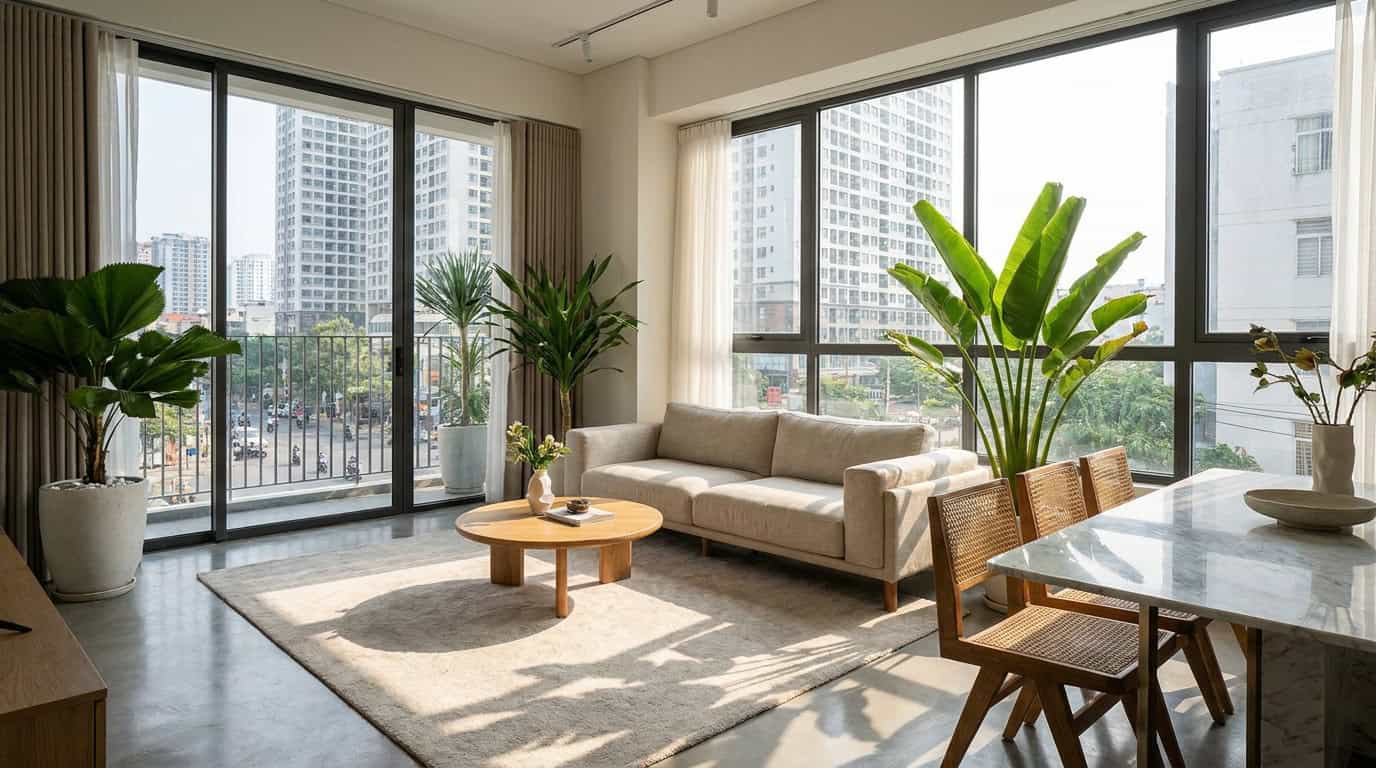
- District 1 (CBD): $500–$1,800/month furnished. Premium addresses on Nguyen Hue, Le Loi, or near the Bitexco tower push toward the upper end.
- District 2 / Thao Dien (Thu Duc City): $600–$2,000/month. The expat village around Thao Dien holds the city’s densest concentration of Western-standard apartments and villas.
- District 3: $400–$1,200/month. Walkable, centrally located, popular with long-term residents who want character without the District 1 premium.
- District 7 / Phu My Hung: $450–$1,500/month. The Korean and Japanese expat community keeps demand steady; newer high-rise stock is excellent quality.
- Binh Thanh District: $300–$900/month. Arguably the best value for central-adjacent living, with Vinhomes Central Park dominating the upper tier.
- Districts 4, 5, 10: $250–$700/month. Authentic urban living with local pricing; less English-language management support.
These figures assume a standard 40–60 sqm one-bedroom. Studio units run roughly 20–30% cheaper; two-bedroom apartments with a second bathroom typically run 60–90% higher.
What Drives Monthly Apartment Rent Saigon Higher in 2026
Several structural forces pushed rents upward through 2024–2025 and have sustained elevated prices into 2026. Understanding them helps you decide whether to lock in now or wait.
Expat demand recovery: Post-pandemic, Ho Chi Minh City saw a significant return of foreign workers and digital nomads. According to a 2025 market brief by Savills Vietnam, the number of expatriate households renting in HCMC rose by approximately 12% year-on-year through 2024, directly compressing vacancy rates in Grade B and Grade A serviced buildings.
New supply lag: Several large residential projects in Thu Duc City and District 7 were delayed by permitting backlogs, meaning less inventory entered the market than anticipated. Constrained supply against recovering demand is a textbook recipe for rent inflation.
USD / VND dynamic: Most expat-targeted apartments are priced and paid in US dollars. The VND depreciated modestly through 2025, which made dollar-denominated rents incrementally more expensive for local tenants and kept landlords comfortable holding USD pricing.
Serviced vs. Non-Serviced: The Real Monthly Cost Comparison
One of the most common mistakes when calculating monthly apartment rent in Saigon is comparing a serviced apartment rate to a raw unfurnished lease rate without accounting for what each actually includes.
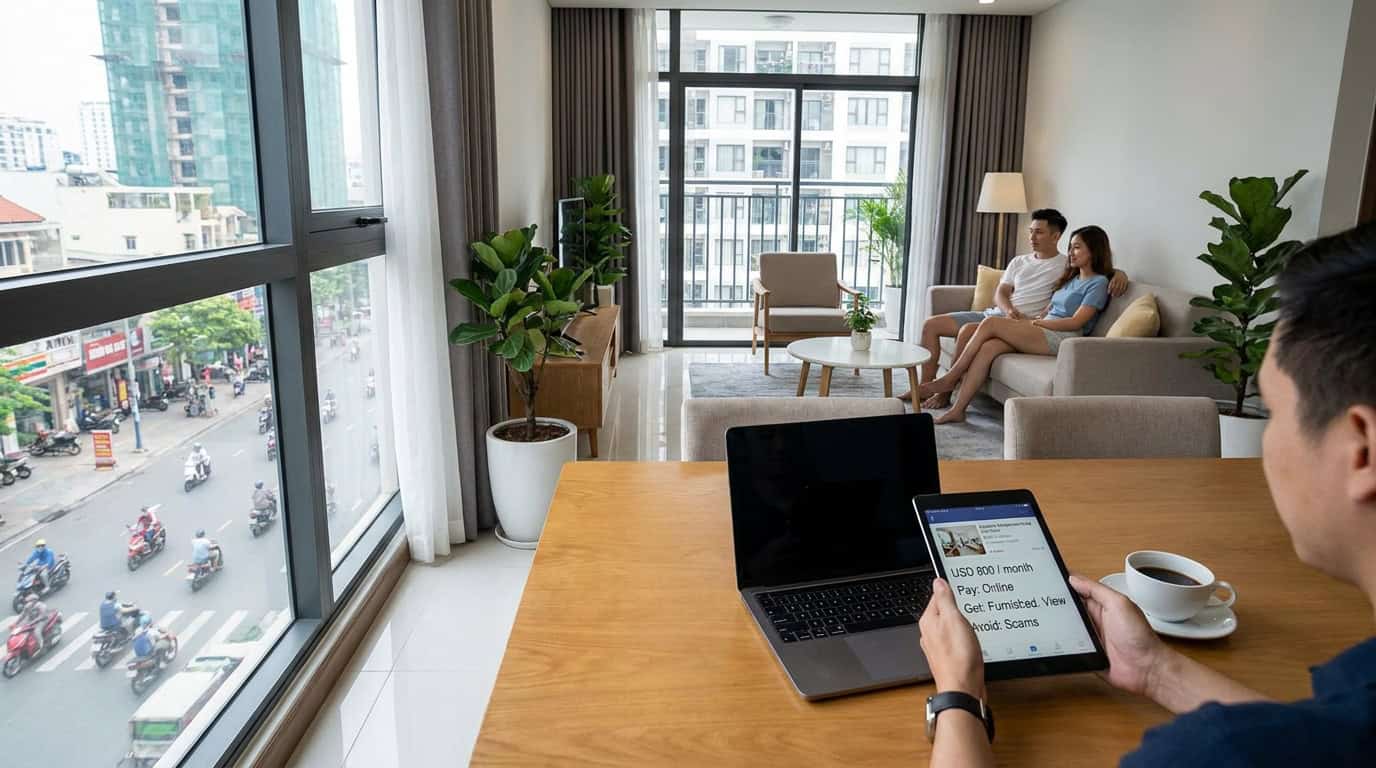
A non-serviced one-bedroom in District 1 listed at $600/month sounds cheaper than a serviced studio at $900/month. Factor in the real additions:
- Electricity: HCMC electricity is billed on a tiered system. Air conditioning-heavy usage in a hot month can easily hit $80–$150 in a standard apartment. Many landlords add a surcharge on top of the EVN rate.
- Internet: $8–$15/month, but setup delays and contract commitments apply.
- Building management fee: $30–$80/month in condominiums, often not mentioned in listings.
- Parking: $15–$40/month per motorbike; $60–$120/month for a car space in District 1.
- Cleaning / laundry: $50–$120/month if not included.
When all-in costs are calculated, the gap between serviced and non-serviced narrows considerably — and for stays under 12 months, serviced apartments with flexible lease terms almost always represent better overall value.
Monthly Apartment Rent Saigon: Studio vs. One-Bedroom vs. Two-Bedroom
Bedroom count matters, but so does layout efficiency. Saigon developers have built aggressively compact in recent years, meaning a “one-bedroom” can be anywhere from 35 sqm to 75 sqm depending on the project.
- Studio (20–38 sqm): $280–$900/month depending on district and building grade. Best for solo professionals or short-term stays.
- One-bedroom (38–65 sqm): $400–$1,800/month. The sweet spot for couples and professionals wanting separation of living and sleeping space.
- Two-bedroom (65–110 sqm): $700–$3,500/month. Monthly rents in District 1 range from $400 for a basic studio to $2,500 for a premium two-bedroom. Serviced residences sit competitively in the mid-range with all utilities included.
Always ask for the exact square metreage and verify whether the figure is gross (including corridor allocation) or net internal area. The difference can be 15–20% in newer HCMC high-rises.
How to Negotiate Monthly Apartment Rent in Saigon
The Saigon rental market is more negotiable than many expats expect, particularly outside the peak October–December arrival season when landlords compete for tenants.
- Commit to 12 months upfront: Six-month or month-to-month leases carry a 10–20% premium. If you know you are staying, a 12-month commitment is your strongest negotiating chip.
- Offer to pay quarterly in advance: Landlords value cash flow certainty. Three months paid upfront in exchange for a reduced monthly rate is a deal many will take.
- Arrive in the slow season: January–March and June–August see lower landlord competition. Listings that have sat for more than three weeks are negotiable.
- Ask what is included, not what the price is: Get the landlord to bundle in parking, cleaning, or a utility cap before discussing the headline number.
- Use a local agent: Reputable local agents know building-by-building market rates and will often surface unlisted inventory at below-average rates. Commission is typically paid by the landlord.
Hidden Costs That Inflate Your Monthly Apartment Rent in Saigon
Experienced Saigon renters develop an instinct for the clauses that inflate effective monthly costs well beyond the advertised figure. Watch for these specifically:
- Electricity surcharge clauses: Some leases allow landlords to charge above the EVN rate without a cap. Insist on a fixed rate or an EVN-rate clause.
- Deposit terms: Two months is standard; three months is increasingly common. Confirm refund conditions in writing and include a timeline (30 days is reasonable).
- Early termination penalties: A 30-day notice clause is fair; penalties of two to three months rent for early exit are not unusual in premium buildings. Read this carefully.
- Furniture wear clauses: Some furnished apartment leases include vague language about furniture condition that creates disputes at checkout. Document everything with photos on move-in day.
- VAT on rental invoice: If your employer reimburses rent and you need a VAT invoice, confirm the landlord can issue one. Many individual landlords cannot, which creates tax compliance problems for corporate employees.
Best Neighbourhoods for Expats Renting Monthly in Saigon
Beyond price, liveability is the other half of the equation. These neighbourhoods consistently rank highest among long-term expat renters for the combination of amenity access, transport links, and community feel.
Thao Dien, District 2: International schools, brunch cafes, riverfront cycling paths, and the widest selection of Western-standard apartments in the city. Rents are among the highest, but the lifestyle infrastructure is unmatched for families.
District 3, around Vo Thi Sau: Tree-lined streets, proximity to the city centre, excellent local food scene, and a mix of renovated French colonial villas converted into apartment buildings. A favourite for creative professionals and long-term residents.
Binh Thanh, Vinhomes Central Park area: Modern high-rise living with an internal park, supermarket, and direct access to the expressway. Attracts a mix of expats and affluent Vietnamese professionals. Better value per square metre than District 1.
Phu My Hung, District 7: Planned satellite town with wide roads, Korean and Japanese expat infrastructure, and strong school options. Slightly more isolated from the city centre but quieter and very well maintained.
Lease Terms and What Your Contract Should Include
Vietnamese rental law provides basic protections, but the specifics matter. A well-drafted lease protects both parties and eliminates the most common sources of end-of-tenancy disputes.
Your monthly apartment rent contract in Saigon should include: exact monthly rent figure in both USD and VND with a stated exchange rate mechanism; lease start and end date with a clear renewal option; deposit amount, conditions for deduction, and refund timeline; a detailed inventory list of furniture and appliances signed by both parties; utility responsibility and, if landlord-paid, the rate applied; maintenance responsibility split (who fixes what, with what response time); and the governing language of the contract (insist on a bilingual copy).
According to the Vietnam Real Estate Brokers Association, disputes over deposit deductions and early termination penalties represent the two most common landlord-tenant conflicts in HCMC. Both are preventable with explicit contract language.
Short-Term vs. Long-Term Monthly Rent in Saigon: Which Makes More Sense?
The answer depends on how confident you are about your stay length. Short-term furnished rentals (one to three months) exist in good supply through Airbnb and dedicated serviced apartment operators, typically running 30–50% above the annualised long-term rate. For a one-month trial of a neighbourhood or a project-based assignment, the premium is worth the flexibility.
For stays of six months or more, a standard lease almost always wins on cost. The additional 10–15% discount available for 12-month commitments compounds meaningfully over a year. The key exception is all-inclusive serviced apartments, where the management, maintenance, and utility bundling can justify the premium regardless of stay length — particularly for busy professionals who do not want to manage utility accounts and maintenance requests independently.
What the 2026 Market Means for Renters
The HCMC rental market in 2026 is characterised by stable-to-slightly-rising rents in prime districts, moderate new supply entering the mid-range segment, and continued strong expat demand. Renters who act decisively in Q1 and Q2 tend to secure the best terms before peak corporate relocation season (Q3–Q4) tightens vacancy.
For those flexible on district, the outer reaches of Thu Duc City and emerging clusters near the new metro line stations offer compelling value — units that would have listed at $800/month two years ago are now $950/month but with significantly improved amenity infrastructure around them. The metro corridor is reshaping Saigon’s rental geography in ways that will accelerate through 2026–2028.
You May Also Find Useful
- Long-Stay Apartments in Saigon 2026: The Complete Guide to Monthly Accommodation
- Saigon Apartment for Rent 2026: Complete Guide for Expats and Long-Stay Residents
- Saigon Apartments for Rent: What to Know Before You Sign
- Luxury Apartments in Saigon 2025: What You Actually Get for the Premium and Where to Find It
For a first month while you look at longer leases, Booking.com and Agoda both list serviced apartments in Ho Chi Minh City on monthly rates — a useful baseline before you start dealing with local agents.
Frequently Asked Questions
What is the average monthly apartment rent in Saigon in 2026?
A furnished one-bedroom apartment in a mid-tier building in central HCMC (Districts 1, 3, or Binh Thanh) averages $600–$1,100 per month all-in. Basic studios in outer districts start around $250–$350/month, while luxury two-bedrooms in Grade A District 1 or Thao Dien buildings reach $2,000–$3,500/month.
Is it cheaper to rent monthly or use a short-term furnished apartment in Saigon?
Long-term monthly leases (12 months) are typically 25–40% cheaper per month than short-term furnished rentals. However, short-term options include utilities and flexible exit terms, making them practical for stays under three months or when you are still deciding on a neighbourhood.
How much deposit do landlords require in Saigon?
The standard deposit for a monthly apartment rental in Saigon is two months rent. Premium buildings and serviced apartments sometimes ask for three months. The deposit should be refunded within 30 days of lease end, minus documented deductions. Always get deposit conditions in writing before signing.
Can foreigners legally rent apartments in Saigon?
Yes. Foreigners holding a valid visa or residence permit can legally rent residential apartments in Vietnam. The landlord is required to register the tenancy with the local ward police (phong tam tru), which they handle as a routine matter. Foreigners cannot own standard residential apartments under Vietnamese law except under specific Foreign Ownership Quota arrangements, so renting is the standard arrangement.
Which Saigon districts offer the best value for monthly apartment rent?
District 3, Binh Thanh, and District 7 (Phu My Hung) consistently offer the best balance of quality, location, and price. District 3 gives central access at 20–30% below District 1 pricing. Binh Thanh (particularly the Vinhomes area) delivers modern high-rise living at mid-range prices. District 7 suits those prioritising space, quiet, and planned infrastructure over urban centrality.
Official Resources
For the most up-to-date information on monthly apartment rent saigon, visit the Vietnam Real Estate Association.