
The best vietnam backpacking guide starts with one honest truth: this country rewards preparation. Vietnam stretches over 1,600 km from the Chinese border to the Mekong Delta, packs five distinct climate zones into one long, narrow strip of land, and offers everything from $3 street food to UNESCO heritage towns — all accessible on a budget of $30–50 per day if you plan your route right. Whether you have three weeks or three months, this guide covers every decision a first-timer needs to make before boarding a night train or hopping a budget flight.
Key Takeaways
- According to the Vietnam National Administration of Tourism (VNAT), Vietnam welcomed over 17.5 million international arrivals in 2024 — a record that demonstrates just how backpacker-friendly the infrastructure has become.
- A 30-day e-visa covers most nationalities and costs $25; apply at least 5 business days before arrival to avoid airport queues.
- The classic north-to-south (or reverse) route covers Hanoi, Halong Bay, Hue, Hoi An, Da Nang, and Ho Chi Minh City — achievable in 21 days at a relaxed pace.
- Budget travellers average $35–45/day including accommodation, food, and internal transport when they book sleeper buses and trains instead of flights.
- Every Vietnam backpacking route starts or ends in Saigon. Our D1 apartments bridge the gap between hostel and hotel — ideal for the first or last nights of a long trip.
Why Vietnam Is the Best Backpacking Destination in Southeast Asia in 2026
In 2024, the World Travel and Tourism Council ranked Vietnam among the top five fastest-recovering tourism economies in Asia-Pacific, citing infrastructure investment and visa liberalisation as key drivers. That investment shows on the ground: renovated train stations, a functioning intercity bus network, and a hostel scene that has matured well beyond bare-bones dormitories. For first-timers with a tight budget and a long route in mind, no country in the region delivers the same variety per dollar. You get French colonial architecture, tropical coastline, highland trekking, and some of the world’s best street food — all within a single visa.
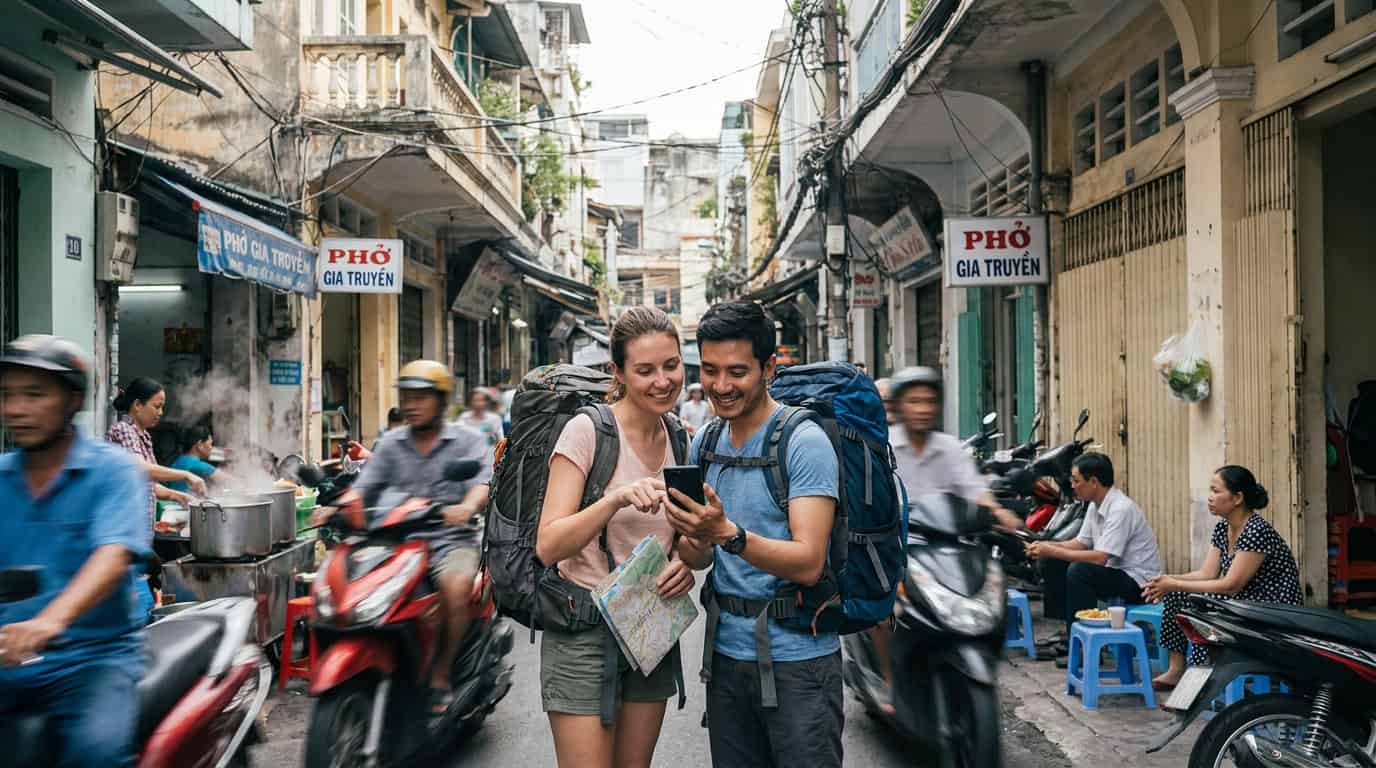
Vietnam Visa Requirements for Backpackers in 2026
Most nationalities — including citizens of the US, UK, EU, Canada, and Australia — can enter Vietnam on a 90-day e-visa that costs $25 and is applied for online through the official Vietnam Immigration portal. Processing typically takes 3–5 business days. Citizens of South Korea, Japan, and 13 other countries receive visa-free access for stays of up to 45 days. Always check the current list on the official portal before booking flights, because the visa-free list expanded in late 2023 and updates periodically.
Visa on arrival is still available but requires a pre-arranged letter of approval and can create bottlenecks at busy airports. The e-visa is the cleaner option for nearly every traveller. If you plan to exit and re-enter — for a side trip to Cambodia, say — note that the 90-day e-visa now allows multiple entries, a change introduced in August 2023.
The Classic Vietnam Backpacking Route: North to South
The north-to-south direction is the most popular layout in any serious vietnam backpacking guide, and for good reason: you arrive in Hanoi when it’s cooler in the north, then track south as the climate warms. Allow a minimum of 21 days; 28–35 days lets you breathe.

Hanoi (3–4 nights)
Start in the Old Quarter. Walk the 36 streets, eat bun cha for breakfast, and take the overnight cruise to Halong Bay (or the quieter Lan Ha Bay via Cat Ba Island). Hanoi is also the gateway to Sapa and Ha Giang for trekkers who want to add a highland detour before heading south.
Hue (2–3 nights)
The old imperial capital sits halfway up the country and is often underrated. Rent a motorbike for a day and cover the Citadel, the Thien Mu Pagoda, and the royal tombs spread along the Perfume River. The train south from Hanoi to Hue takes 14–16 hours on a sleeper — a comfortable and scenic option.
Hoi An (3–4 nights)
The Ancient Town is a UNESCO World Heritage Site and one of the most photographed places in Southeast Asia. It’s also a legitimate backpacker hub: dozens of hostels cluster within a 10-minute walk of the Japanese Covered Bridge, and My Khe beach is a 10-minute bicycle ride away. Budget an extra day to pick up a tailored shirt or dress — the tailors here are fast and inexpensive.
Da Nang (1–2 nights)
Most backpackers use Da Nang as a transit point between Hoi An and points south, but the Marble Mountains and the Son Tra Peninsula are worth a half-day each. Da Nang also has the cheapest domestic flights to Ho Chi Minh City if you want to skip the 18-hour bus.
Nha Trang (2–3 nights)
Vietnam’s beach resort capital divides opinion. The central beach strip is crowded and commercial. The islands offshore — reached by local boat tour for around $15 — are genuinely beautiful. If you prefer quieter coastline, skip to Mui Ne instead.
Ho Chi Minh City / Saigon (3–4 nights)
The southern anchor of every vietnam backpacking guide. Saigon moves faster than any other city in the country: motorbikes outnumber pedestrians, the food scene runs 24 hours, and the day-trip options — the Mekong Delta, Cu Chi Tunnels, Can Gio Biosphere Reserve — are all within two hours. Every Vietnam backpacking route starts or ends in Saigon. Our D1 apartments bridge the gap between hostel and hotel, giving you a quiet base in the city centre without paying boutique hotel rates.
South-to-North: The Case for Reversing the Route
Flying into Saigon and out of Hanoi cuts against the conventional wisdom but has real advantages. You start your trip in the most accessible, English-friendly city in the country, dial in your budget and routines, then head north as you gain confidence. The weather logic also works if you’re travelling between November and March, when central Vietnam’s rain season runs and the north is drier. Bus and train tickets are equally available in both directions, and domestic flight prices don’t differ by direction.
From a Saigon resident’s perspective, arriving south-first is genuinely easier for jetlagged first-timers. Tan Son Nhat Airport has better signage for international arrivals than Noi Bai, the transport links to District 1 are cheaper (around 150,000 VND by metered taxi), and the city’s grid layout makes it less disorienting than Hanoi’s tangle of Old Quarter streets.
Vietnam Backpacking Budget: What Does It Actually Cost in 2026?
According to Numbeo’s 2025 Cost of Living Index, Vietnam ranks in the bottom quartile for daily travel costs among Asian destinations, with an average meal at a local restaurant costing $1.50–2.50 and a dorm bed in a mid-range hostel averaging $8–12 per night. That data point anchors the budget conversation, but your actual spend depends heavily on how you move between cities.
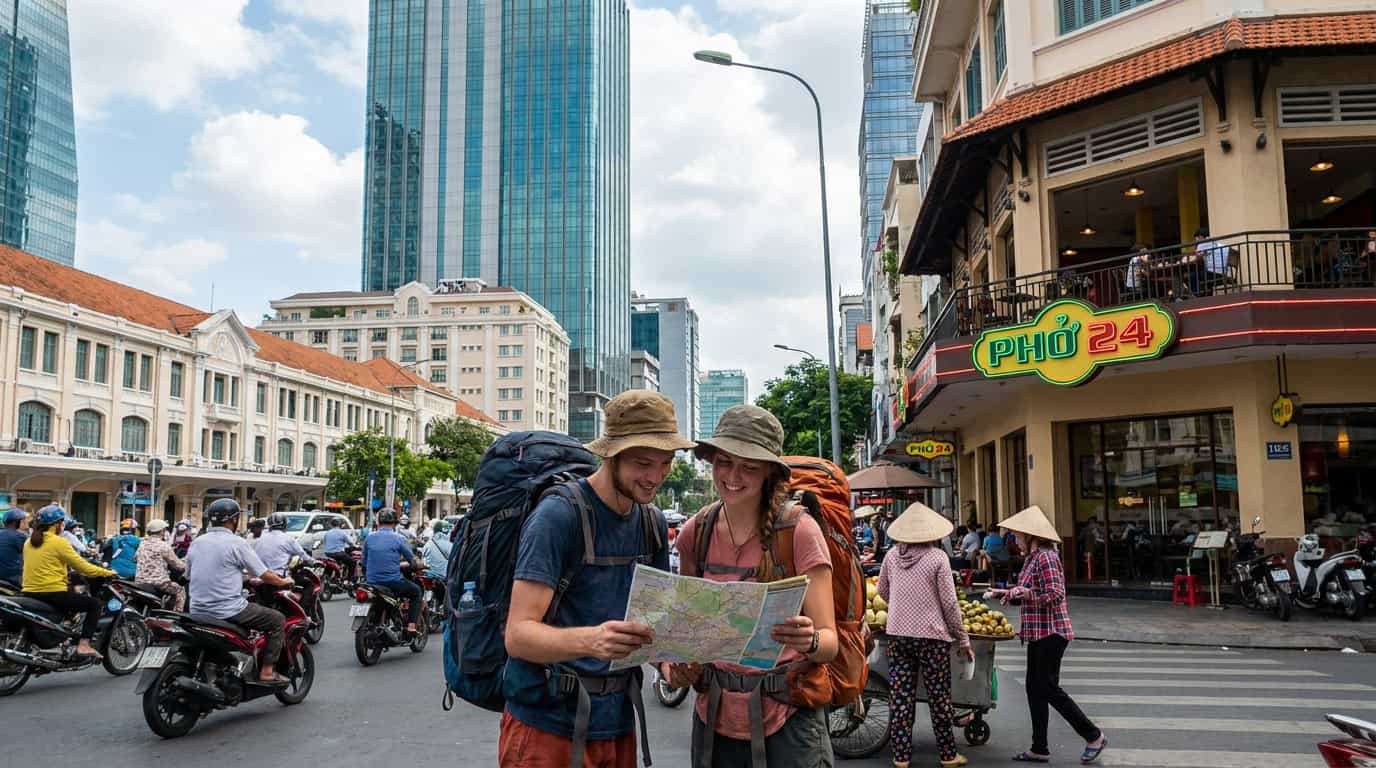
- Budget traveller ($25–35/day): Dorm beds, street food only, sleeper buses between cities, skip the tourist cruises.
- Mid-range backpacker ($40–60/day): Private hostel rooms or guesthouses, mix of street food and sit-down restaurants, train travel, one or two paid experiences per stop.
- Comfort backpacker ($70–100/day): Budget boutique hotels, domestic flights for the longer legs, guided day trips.
The single biggest budget lever is intercity transport. A sleeper bus from Da Nang to Ho Chi Minh City costs around $15–18; a budget flight on Vietjet or Bamboo Airways costs $25–60 but cuts a 17-hour bus journey to 90 minutes. For a 28-day trip, mixing two or three short flights with bus and train travel is both cost-effective and sane.
When to Go: Vietnam’s Climate Zones Explained
Vietnam doesn’t have a single best travel season because the country spans three distinct climate zones: the north (four seasons, cool winters), the centre (a narrow wet season from October to December), and the south (wet season May–October, dry season November–April). The practical upshot for backpackers is that some part of Vietnam is always in good weather. The broadly “safest” window for a full north-to-south trip is February to April: the north is warming up after winter, Hoi An and Hue are dry, and Saigon is still in its dry season.
The months most backpackers avoid — particularly September and October in the centre — are often the best value. Prices drop 20–30% at hostels in Hoi An during the low season, and the rice paddies around Hue are at their most photogenic when flooded. If rain doesn’t bother you and you pack a cheap poncho, shoulder season travel in Vietnam is a smart budget move.
Getting Around Vietnam on a Backpacker Budget
Sleeper Trains
The Reunification Express runs the full length of the country from Hanoi to Saigon (34 hours) with multiple stops. Soft-sleeper four-berth cabins cost around $35–55 for the full journey. Book through the official Vietnam Railways website or through Baolau, which aggregates tickets with an English interface. Book at least 3–5 days ahead for weekend departures.
Open Bus Tickets
The “Open Tour” concept is a backpacker staple: one ticket covers the full Hanoi-to-Saigon route with hop-on, hop-off flexibility at major stops. Operators like Sinh Tourist and Phuong Trang (Futa Bus) run daily departures. The trade-off is fixed stops — you can’t deviate to smaller towns without buying separate tickets.
Motorbike Travel
Riding your own motorbike from north to south (or the reverse) is a bucket-list experience for many backpackers. Semi-automatic 110cc bikes cost $200–350 to buy in Hanoi and can be sold in Saigon for $150–250 at the end of the trip. International driving licences are technically required; in practice, enforcement is minimal outside cities, but this is your risk calculation to make.
Domestic Flights
Vietjet Air, Bamboo Airways, and Vietnam Airlines cover all major city pairs. Vietjet in particular runs promotional fares as low as $10–20 on less popular routes. Baggage fees can double the headline price, so read the fare rules carefully before booking.
Where to Stay: Hostels, Guesthouses, and Apartments in Vietnam
Vietnam’s hostel infrastructure is genuinely good in the main backpacker hubs. Hanoi’s Old Quarter, Hoi An’s Ancient Town, and Saigon’s District 1 and District 3 all have competitive hostel markets with dorm beds from $8 and private rooms from $18. Outside those hubs — in Hue, Nha Trang, Da Lat — quality drops and prices are less predictable.
For the Saigon leg of your trip, the choice between a hostel dorm and a private room matters more than in other cities. D1 is loud after midnight, especially around Bui Vien walking street. A private room in a managed apartment gives you air conditioning, a proper desk, and a kitchen — useful if you’re spending three or more nights recovering from the road before a flight home.
Food and Safety: What Every First-Timer Needs to Know
Street Food Rules
Vietnam’s street food is safe to eat at busy stalls with high turnover. Look for stalls where locals queue — not where the tourist menu board is laminated. Pho, bun bo Hue, banh mi, and com tam are all excellent gateway dishes. Avoid pre-cut fruit sitting in the sun and ice from unknown sources outside major cities.
Health and Vaccinations
Recommended vaccinations for Vietnam include Hepatitis A and B, Typhoid, and a Tetanus booster. Malaria prophylaxis is recommended for trekking in highland border regions (Ha Giang, the Central Highlands) but not required for the standard backpacker route along the coast. Travel insurance is non-negotiable: a motorbike accident without coverage can cost $5,000–15,000 in a private hospital.
Scams to Avoid
The most common scams targeting backpackers are: taxi meters that run fast (use Grab or ask for a fixed price in advance), “free” tea ceremonies that result in a hard sell, and cyclo rides with no agreed price that end in an inflated demand. These are concentrated around tourist areas in Hanoi and Ho Chi Minh City. Grab — the regional Uber equivalent — eliminates most transport scams at a stroke.
Essential Apps and Tools for Backpacking Vietnam in 2026
- Grab — Transport, food delivery, and payments. Works everywhere with a foreign card.
- Google Translate — Download the Vietnamese offline pack before you land. Camera translation reads menus accurately.
- Baolau — Bus and train ticket booking with English interface and advance booking.
- Maps.me or Google Maps — Download offline maps for each province you visit. Mobile data is cheap ($5–10 for a 30-day SIM at the airport) but signal drops in tunnels and rural areas.
- VPBank or Vietcombank ATMs — Lower foreign card fees than smaller bank ATMs. Withdraw larger amounts to reduce per-transaction fees.
You May Also Find Useful
Once the route is settled, Booking.com and Agoda are the quickest way to see what is still available on your dates in Ho Chi Minh City.
Frequently Asked Questions
How much money do I need for 3 weeks backpacking Vietnam?
A mid-range backpacker spending 21 days in Vietnam typically needs $800–1,200 total, excluding international flights. According to Numbeo’s 2025 data, daily costs average $40–55 when you mix dorm and private accommodation, eat at local restaurants, and use a combination of sleeper trains and budget flights for intercity travel.
Is Vietnam safe for solo backpackers?
Vietnam consistently ranks as one of the safer destinations in Southeast Asia for solo travellers. Violent crime targeting tourists is rare. The main risks are traffic accidents — Vietnam has one of the region’s higher road fatality rates — and petty theft in crowded markets. Use Grab instead of street taxis, keep valuables in a money belt, and you’ll have few problems.
Do I need a Vietnam visa in advance?
Most nationalities need a visa. The 90-day e-visa ($25) is the standard option and is applied for online at the official Vietnam Immigration portal. Citizens of South Korea, Japan, Germany, France, Italy, Spain, the UK, and several other countries receive 45-day visa-free entry. Always verify the current list before booking, as the visa-free roster expanded in 2023 and may update further.
What is the best route for a first-time vietnam backpacking guide trip?
The classic Hanoi–Halong Bay–Hue–Hoi An–Saigon route covers the country’s highlights in 21–28 days. Fly into Hanoi and out of Ho Chi Minh City (or reverse) to avoid doubling back. Add Ha Giang in the north or the Mekong Delta in the south if you have extra time. This route is the backbone of every standard vietnam backpacking guide for a reason.
Is it better to travel Vietnam north to south or south to north?
Both directions work. North-to-south aligns with the dominant weather pattern for February–April travel: cool north, dry centre, dry south. South-to-north works well from November to January and suits travellers flying into Saigon, which has a more straightforward airport and city orientation for jetlagged arrivals. Your flight prices will likely be the deciding factor.
Final Tips from a Saigon Resident
Pack light. A 40-litre backpack is enough for three months; anything larger becomes a liability on sleeper buses and motorbike taxis. Learn five words of Vietnamese — xin chao (hello), cam on (thank you), bao nhieu (how much), ngon (delicious), and khong (no) — and you’ll generate goodwill everywhere. Carry small denomination dong: 10,000, 20,000, and 50,000 notes are essential for street food stalls and market vendors who genuinely can’t break a 500,000 note.
Most importantly: give yourself more time than you think you need. Vietnam is a country that punishes the rushed itinerary. The best moments — a spontaneous conversation with a xe om driver who turns out to speak perfect French, a sunrise over Ha Long Bay when everyone else is still asleep, a bowl of bun rieu at 6am in a Saigon alley — happen when you slow down and stop ticking boxes.
Whether this vietnam backpacking guide takes you from Hanoi south or Saigon north, you’re in for one of the most rewarding overland trips in Asia. Plan the bones, keep the rest flexible, and trust that Vietnam will fill in the gaps.
Official Resources
For the most up-to-date information on vietnam backpacking guide, visit the Vietnam Tourism Official Guide.