
Vietnam’s streets are a feast, and Ho Chi Minh City’s District 1 is where that feast reaches its peak. If you’re hunting for must try food Vietnam has to offer, the answer is not a restaurant—it’s a route. This D1 walking food tour covers the dishes that define Vietnamese street cuisine, from dawn pho to late-night banh mi, all packed into a single walkable loop in the city’s beating heart.
Key Takeaways
- District 1 contains the highest concentration of iconic Vietnamese street food within any single walkable area in Ho Chi Minh City.
- The full D1 food route takes 3–4 hours and covers roughly 3 km on foot, passing wet markets, street carts, and hidden alley kitchens.
- The must try food Vietnam list on this route includes pho, banh mi, com tam, bun bo Hue, banh xeo, goi cuon, and che—all in one district.
- Morning starts (before 9 am) give you access to the freshest pho and banh mi; lunchtime unlocks com tam and bun thit nuong.
- This is the walking food tour our tenants do first. Everything on the route is within 20 minutes of our D1 apartments.
Street Food: Why District 1 Is the Best Starting Point for Must Try Food Vietnam Experiences
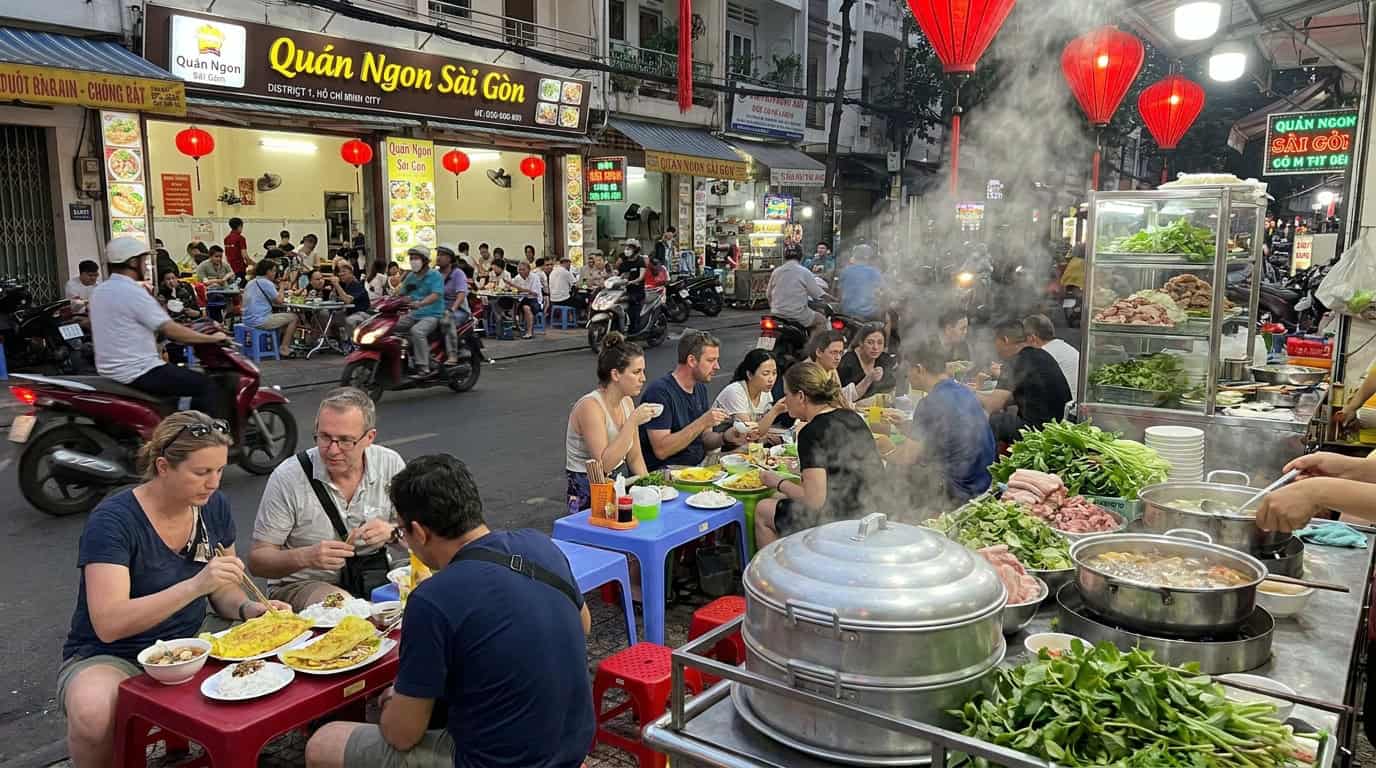
Every visitor eventually asks a local: where do I actually eat? The answer, almost universally, points to District 1. It is not just the tourism hub—it is the convergence point of Vietnam’s regional cuisines. Hanoian pho vendors set up carts alongside Hue-style bun bo stalls. Southern-style com tam shops open at 6 am next to French-influenced banh mi bakeries. The colonial street grid makes everything walkable, and competition among vendors keeps quality ruthlessly high. For anyone building a must try food Vietnam itinerary, D1 is both the starting point and, for many visitors, the only point they ever need.
When to Walk: Timing the D1 Food Route
Street food in Saigon operates on a clock. Miss it and you miss the dish. The optimal window is 7 am to 1 pm, when morning vendors are at full capacity and the midday heat has not yet pushed people indoors. A secondary window opens from 5 pm to 9 pm, when the banh mi carts restock, the com tam fires reignite, and the dessert stalls emerge. If you can only do one window, go morning. Pho is a breakfast food here—ordering it at 3 pm gets you reheated broth and a puzzled look from the vendor. According to the Vietnam National Administration of Tourism’s 2024 report, food-focused itineraries now account for 38% of all tourist activity in Ho Chi Minh City, up from 22% in 2019—meaning the competition for the best seats at the best stalls is real, and early arrivals win.
Stop 1 — Pho: The Dish That Defines Must Try Food Vietnam
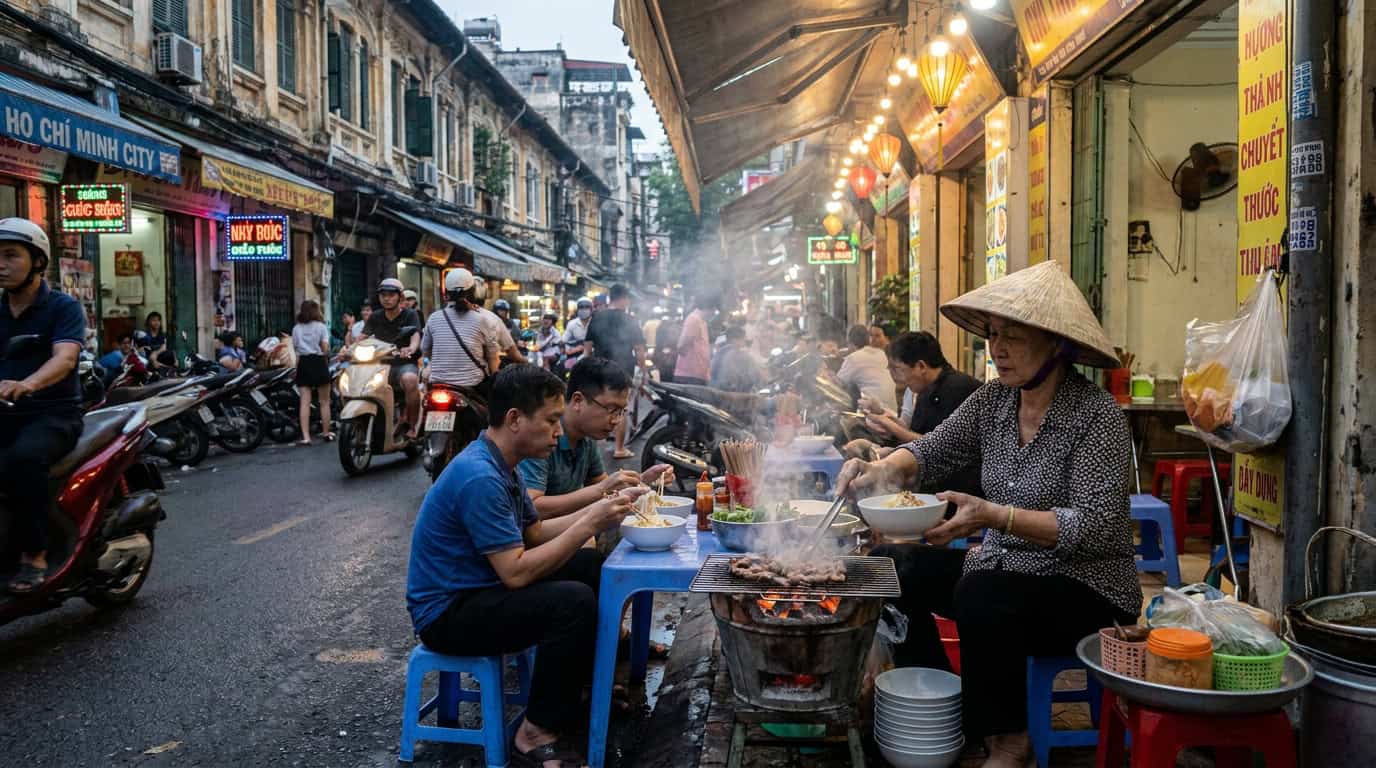
No must try food Vietnam list is complete without pho, and no pho experience in Saigon compares to a bowl consumed before 8 am on a plastic stool. The D1 route begins on Pasteur Street, where several pho stalls have operated for decades. Southern-style pho differs from the Hanoi original: the broth is slightly sweeter, the accompaniments more generous—bean sprouts, fresh basil, hoisin sauce, and sliced chili arrive automatically. Order pho bo (beef) for your first bowl. The flat rice noodles, clear amber broth, and paper-thin beef slices are the benchmark against which every other bowl in your trip will be measured. Budget 50,000–70,000 VND.
Stop 2 — Banh Mi: Vietnam’s Most Portable Must Try Food
Banh mi is the product of French colonialism colliding with Vietnamese ingenuity, and it is arguably the must try food Vietnam moment most likely to convert a skeptic into a devotee. The D1 version uses a baguette baked light and airy, filled with a precise layering of pate, cold cuts, pickled daikon and carrot, cucumber, cilantro, and chili. The ratio matters—too much bread collapses the architecture. The best vendors on the route work near Ben Thanh Market, opening by 6:30 am. A full-loaded banh mi costs 30,000–50,000 VND. Eat it standing at the cart. That is the correct method.
Stop 3 — Com Tam: Broken Rice, the Saigon Lunch Institution
Com tam—literally “broken rice”—is the lunch dish Saigon built its working culture around. The rice is a byproduct of milling, smaller-grained and slightly chewy, and it holds sauce better than standard jasmine rice. It arrives loaded: a charcoal-grilled pork chop (suon nuong), a steamed egg cake (bi), shredded pork skin, and a fried egg, all drizzled with fish-sauce dressing and accompanied by a bowl of clear broth. On the D1 route, com tam shops cluster on Bui Vien Street and the surrounding lanes. This is the fuel that keeps the city moving from 11 am through the afternoon. Budget 60,000–90,000 VND for a full plate.
Stop 4 — Bun Bo Hue: The Spicier Side of Must Try Food in Vietnam
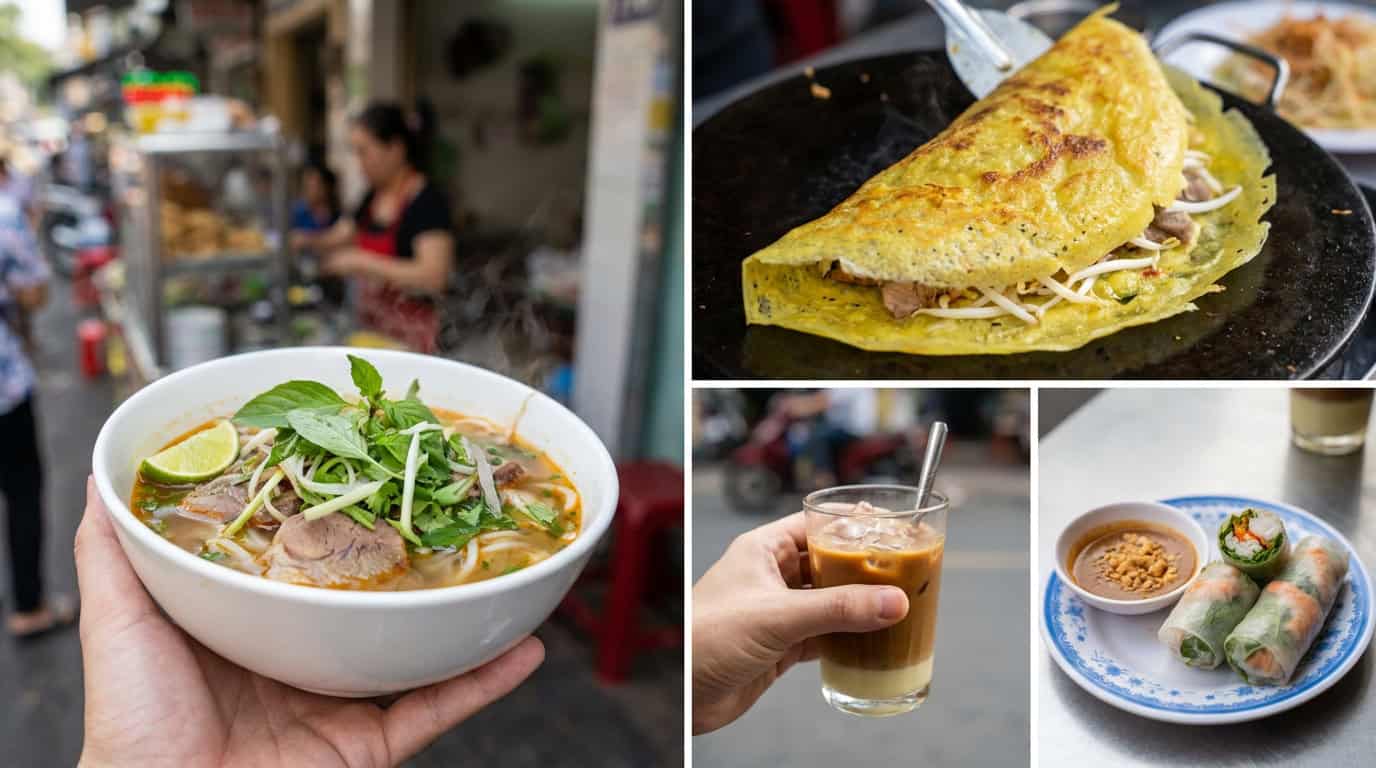
Most visitors arrive knowing pho. Fewer arrive knowing bun bo Hue, which is a mistake. This noodle soup from the imperial city of Hue uses thick round rice noodles, a lemongrass-and-shrimp-paste-scented broth, and a combination of beef shank, pork knuckle, and Vietnamese ham. The heat level is honest—this is a spicy dish—and the depth of the broth rewards slow eating. Several dedicated bun bo Hue shops operate on the D1 route near Ly Tu Trong Street. Order the full bowl, ask for extra rau song (the herb and vegetable plate), and add a squeeze of lime at the end. Budget 60,000–80,000 VND.
Stop 5 — Banh Xeo: The Sizzling Crepe That Earns Its Name
The name banh xeo translates roughly as “sizzling cake,” named for the sound the rice flour batter makes when it hits the hot pan. The result is a crispy, turmeric-yellow crepe stuffed with shrimp, pork, bean sprouts, and mung bean. You eat it by tearing off a piece, wrapping it in mustard leaf and rice paper with fresh herbs, and dipping the bundle into nuoc cham. The process is hands-on and slightly chaotic, which is part of the point. Banh xeo on the D1 route is best found in the small restaurants on Dinh Cong Trang Street, where cooks tend large pans over open flames. Budget 80,000–120,000 VND for a full-sized crepe.
Stop 6 — Goi Cuon: Fresh Spring Rolls as a Palate Reset
By mid-route, the palate needs lightness. Goi cuon—fresh spring rolls wrapped in translucent rice paper—are the reset. Inside: poached shrimp, pork slices, vermicelli, lettuce, and mint, all visible through the wrapper like a cross-section diagram of Vietnamese flavor logic. The dipping sauce is peanut-based, slightly sweet, slightly savory. Street vendors and small shops near the Notre-Dame Cathedral area sell goi cuon throughout the morning. Two rolls per serve, 30,000–40,000 VND. This is the must try food Vietnam entry point for anyone nervous about street food intensity—it is fresh, uncooked, and impossible to dislike.
Stop 7 — Ca Phe Sua Da: The Fuel Between Stops
Vietnamese iced coffee is not optional on this route—it is structural. Ca phe sua da (cold brew drip coffee over condensed milk and ice) is served at every street corner in D1, often from a single-person cart with a thermos, glasses, and a small stool. According to the 2025 Vietnam Coffee Report published by the Vietnam Coffee and Cocoa Association, Vietnam remains the world’s second-largest coffee exporter, and domestic per-capita consumption has risen for five consecutive years. The cup you get on a Saigon sidewalk is the direct expression of that industry: thick, dark, sweet, and served fast. Budget 25,000–35,000 VND. Drink two.
Stop 8 — Che: Vietnamese Dessert Drinks to Close the Route
Che is the umbrella term for Vietnamese sweet soups and puddings—a category so wide it could fill its own tour. On the D1 route, look for che shops near Ben Thanh Market offering che ba mau (three-color dessert with mung bean, red bean, and pandan jelly over crushed ice) and che chuoi (warm banana and coconut milk pudding). Che is both dessert and beverage, eaten with a spoon from a glass. It is the appropriate closer to the walking route, sweet without being heavy, served cold on a hot afternoon. Budget 25,000–40,000 VND.
Practical Notes: Walking the D1 Food Route
The full route runs from the Pasteur Street pho cluster south to Ben Thanh Market, east toward Notre-Dame Cathedral, and loops back via Bui Vien. The total walking distance is approximately 3 km. Wear shoes suitable for uneven pavement. Carry small bills—most vendors do not make change for 500,000 VND notes. Cash is overwhelmingly preferred at street stalls, though larger com tam shops sometimes accept QR payment. Bring a reusable bag; markets along the route sell fruit and packaged snacks worth carrying. The route is entirely doable solo, but a local guide accelerates the navigation through the alley vendors who do not appear on any map. This is the walking food tour our tenants do first. Everything on the route is within 20 minutes of our D1 apartments.
What to Know Before You Eat: Must Try Food Vietnam Safety and Etiquette
Street food safety in D1 is generally reliable—vendor turnover is determined by the market, and bad food means no customers by tomorrow. That said, a few guidelines improve the experience. Eat where locals eat, particularly workers eating their own city’s food on their own lunch break. Avoid meat dishes at stalls that have been sitting in the sun for more than an hour. For pho and bun bo, the broth is boiled fresh throughout the morning—piping-hot bowls are always safe. Etiquette is minimal: take the stool you are offered, do not hover while ordering, and leave the table promptly at busy stalls. Tipping is not customary at street stalls but is appreciated at sit-down shops. Learn two words: “ngon” (delicious) and “cam on” (thank you). Both will be used constantly.
You May Also Find Useful
If you are doing this as a day out from elsewhere, Booking.com and Agoda show what is available to stay in Ho Chi Minh City on the nights around it.
Frequently Asked Questions
What is the single most must try food in Vietnam for first-time visitors?
Pho is the answer most locals give, and they are right. It is the dish that synthesizes Vietnamese flavor principles—clear broth, fresh herbs, rice noodles, fish sauce balance—into a single bowl. A good bowl of pho in District 1 before 8 am is one of the most reliable food experiences available anywhere in Southeast Asia. That said, banh mi is a close second for accessibility and impact.
Is the D1 food route safe for people with dietary restrictions?
Vegetarian options exist but require navigation. Goi cuon can be made with tofu at many stalls. Che desserts are mostly plant-based. Banh mi can be ordered as banh mi chay (vegetarian) at dedicated stalls near Bui Vien. Pho and bun bo Hue are both meat-heavy and fish-sauce-dependent, making them difficult to adapt. People with shellfish allergies should be cautious with banh xeo, which almost always contains shrimp.
How much should I budget for the full D1 food walking tour?
A complete run of all eight stops—pho, banh mi, com tam, bun bo Hue, banh xeo, goi cuon, ca phe sua da, and che—costs between 350,000 and 550,000 VND per person (roughly USD 14–22). That covers full portions at each stop. If you are sharing dishes across stops, the cost drops significantly. Add 100,000–150,000 VND for additional coffees and market snacks along the route.
Can I do the D1 food route in half a day?
Yes. The morning window (7 am to 12 pm) is sufficient to complete the route at a comfortable pace with time to sit and eat properly at each stop. If you rush, you can cover the same ground in two hours, but that misses the point. Allow at least three hours. The afternoon/evening window (5 pm to 9 pm) covers a slightly different set of stalls—banh mi carts restock around 5 pm, and the Bui Vien area activates with additional food options after dark.
Do I need a guide, or can I walk the D1 food route independently?
The route is fully navigable solo using Google Maps and the stop descriptions above. The challenge is the alley vendors—the best com tam and bun bo Hue stalls are often tucked into laneways that do not appear on standard maps. A local guide or a knowledgeable resident (such as a long-term apartment host) can redirect you to the spots that locals use over the tourist-facing stalls on main streets. The quality difference is real and worth the extra navigation effort.
Official Resources
For the most up-to-date information on must try food vietnam, visit the Vietnam Tourism – Food and Drink.