
This nha trang travel guide skips the generic advice and gets straight to what actually makes Vietnam’s most-visited coastal city worth a long weekend — or a week. Nha Trang is not just a beach town with overpriced sunbeds; it is a base for island-hopping, diving, Vietnamese street food, and a handful of genuinely excellent cultural sites that most tourists walk straight past on their way to the ocean. Here is everything you need to plan a real trip.
Key Takeaways
- Nha Trang’s best beaches are north of the main strip — Bai Dai and Doc Let offer cleaner water and far fewer vendors.
- The four southern islands (Hon Mun, Hon Tam, Hon Mot, Hon Tre) are reachable by day-boat and are the city’s top snorkelling and diving grounds.
- Po Nagar Cham Towers is a 1,300-year-old active Hindu temple that most visitors overlook in favour of the beach.
- Dry season runs from January to August; June and July deliver the calmest seas and best underwater visibility.
- Nha Trang is 8 hours north of Saigon by overnight train or 1 hour by air — a natural extension of any Ho Chi Minh City trip.
Why Nha Trang Belongs on Your Vietnam Itinerary
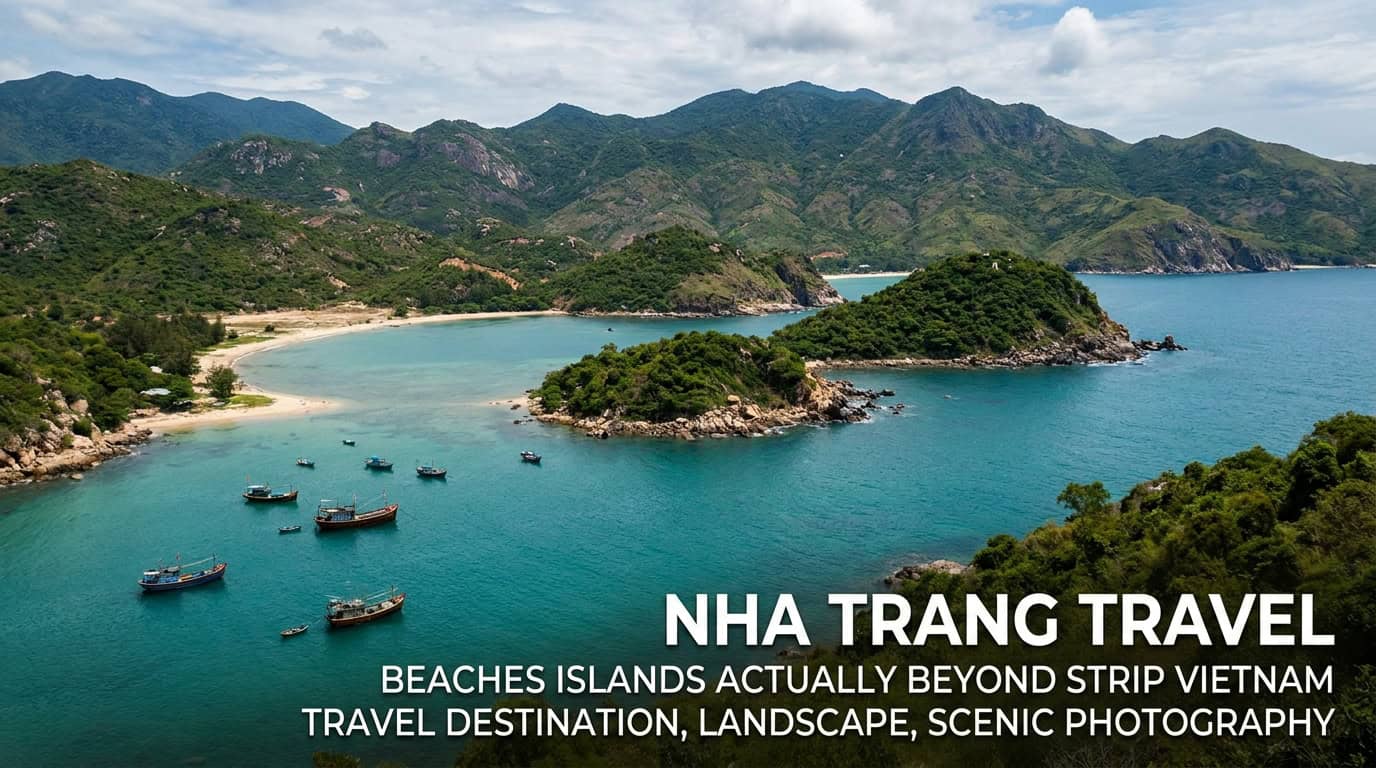
Vietnam has a long coastline, but Nha Trang punches above its weight because the geography is unusually varied. A sheltered bay ringed by 19 islands means calm water for most of the year, a city compact enough to navigate on foot, and a Vietnamese population that has not been fully displaced by resort development. According to the Vietnam National Authority of Tourism, Khanh Hoa province — of which Nha Trang is the capital — welcomed over 5 million visitors in 2024, with international arrivals recovering strongly from post-pandemic lows. The city earns that footfall: the combination of reef diving, French colonial architecture, hot springs, and seafood eaten at plastic tables on the waterfront is hard to replicate elsewhere in Southeast Asia.
Nha Trang Travel Guide: Getting There from Ho Chi Minh City
From Saigon, you have two sensible options. The overnight train (SE1, SE3, or SE5 from Saigon Station on Nguyen Thong) takes roughly 7.5–8.5 hours and arrives in the early morning, saving a night’s accommodation and delivering you at the bay with a full day ahead. A soft-sleeper berth costs around 350,000–550,000 VND booked through the national rail website or Baolau. The flight on VietJet, Bamboo, or Vietnam Airlines takes 55–65 minutes from Tan Son Nhat and costs 500,000–1,200,000 VND depending on timing. Flying makes sense if you are time-poor; the train makes sense if you want to arrive without the airport faff and see the countryside at dawn.
Nha Trang is 8 hours north of Saigon by overnight train or 1 hour by air. Our D1 apartment is the return address — a useful base when you need a real neighbourhood to come back to before or after the coast.
When to Go: Seasons and Weather
Nha Trang’s dry season runs from roughly January to August, with the prime window being February through July when rain is rare, humidity is tolerable, and the sea is at its calmest. June and July specifically produce the best underwater visibility for diving — the water is warm (28–30°C) and clear to 15 metres on a good day at Hon Mun. September through December brings the south-central rainy season: heavy, sustained rains and swells that close some boat routes and turn the bay brown. Unlike the rest of Vietnam’s coast, Nha Trang’s wet season is out of phase with the south — a quirk of the surrounding mountains that catches most first-timers off guard. If you are travelling from HCMC in July or August, conditions will be excellent; the same trip in November requires more flexibility.

Nha Trang Travel Guide: The Beaches (Ranked Honestly)
The main Tran Phu beach in front of the hotels is fine for a morning swim but it is crowded, lined with vendors, and the water quality is variable. It is not where locals go on weekends. For a better experience:
- Bai Dai (Long Beach) — 20 km south of the city, a 7 km stretch of pale sand with very few facilities. Hire a motorbike and go early.
- Doc Let — 50 km north, arguably the most beautiful beach in the province. Shallow, warm, clear, with barely a building in sight. Half-day trip or combine with a stop at the salt fields at Dam Mon.
- Bai Tru on Hon Tre Island — accessible by cable car (the world’s longest overwater gondola, at 3.3 km) or ferry. The Vinpearl resort dominates the island but the beach itself is genuinely good and sheltered.
- Hon Tam Island — quieter alternative to Hon Tre; the resort here is less overwhelming and the snorkelling directly off the beach is decent.
Island Hopping: The Four Southern Islands
The standard island-hopping tour covers Hon Mun (marine protected area, best coral in the bay), Hon Mot, Hon Tam, and Hon Mieu — usually with lunch included and an optional snorkelling stop. Tours depart from Cau Da Pier from around 08:00, cost 150,000–350,000 VND for the boat fee, and take a full day. The experience varies enormously depending on the operator; avoid the cheapest “party boat” tours if you actually want to see the reef. Funky Monkey Divers and Rainbow Divers are the most consistently recommended operators for anyone who wants a proper guided snorkel or an introductory dive — both have operated in Nha Trang for over a decade and have multilingual staff.
According to Reef Check Vietnam’s 2023 assessment, Hon Mun Marine Protected Area contains some of the most intact hard coral coverage on Vietnam’s southern coast, with over 340 species of reef fish recorded. It is the primary reason divers specifically choose Nha Trang over Mui Ne or Phu Quoc.
Beyond the Beach: Cultural and Historic Sites
Most travellers spend their entire time on the sand or the islands and leave having seen almost nothing of Nha Trang’s history. That is a genuine loss, because the city sits on top of more than a millennium of Cham civilisation.
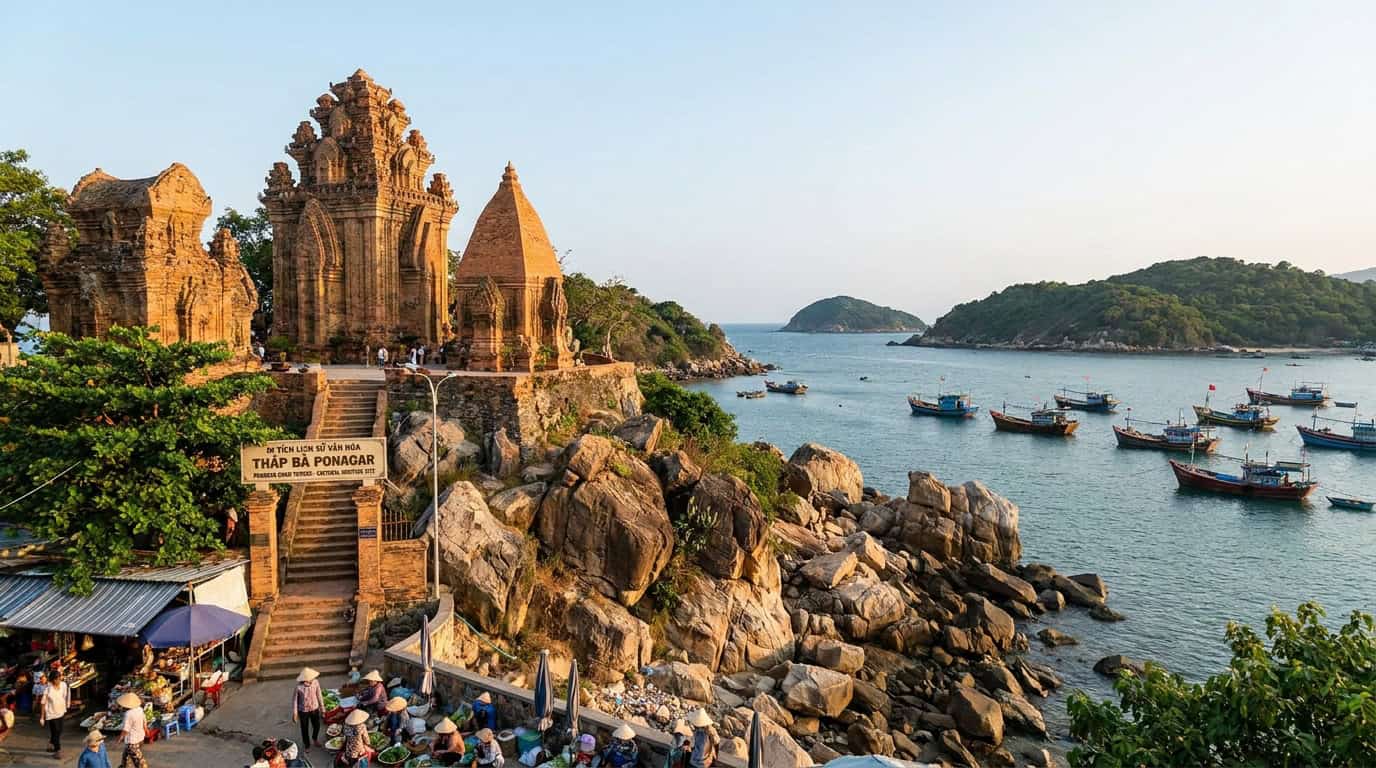
- Po Nagar Cham Towers — built between the 7th and 12th centuries on a hill above the Cai River, this is an active place of worship for both Hindu and Buddhist devotees. Entry is 22,000 VND. Arrive before 09:00 to avoid tour groups and to watch the morning offerings.
- Long Son Pagoda — the large white Buddha visible from the train station sits at the top of a staircase lined with dragon mosaics. Free entry; remove shoes. The hill behind gives a rare elevated view of the city grid.
- Alexandre Yersin Museum — the Swiss-French bacteriologist who identified the bubonic plague bacillus lived and worked in Nha Trang for decades. His laboratory and personal library are preserved inside the Pasteur Institute and attract a small, curious crowd of scientists and historians. One of the most unusual museums in Vietnam.
- Dam Market (Cho Dam) — the city’s main wet market, best before 08:00. The ground floor is fish, meat, and produce; upper floors sell fabric and household goods. Breakfast in the food court upstairs costs 30,000–50,000 VND.
Nha Trang Travel Guide: Where to Eat
The seafood economy means that almost any restaurant near the harbour will serve fresh product, but price calibration matters. The Pham Van Dong seafood strip north of the main beach caters almost entirely to domestic tourists and prices are transparent — tanks out front, weight-based pricing. For something with less translation friction, Lac Canh Restaurant on Nguyen Binh Khiem has been grilling beef over charcoal at the table since the 1970s and requires no menu navigation. For breakfast, look for banh mi Nha Trang — a local variant stuffed with pate, cha lua, and a fried egg; the best stalls are clustered around the market. Bun cha ca (fish cake noodle soup) is the city’s signature dish and costs 30,000–50,000 VND at any decent pho-style shop.
Avoid the tourist-facing restaurants on Tran Phu directly opposite the beach unless you enjoy paying 250,000 VND for a tiger prawn that would cost 60,000 VND three streets back.
Mud Baths, Hot Springs, and Spa Options
Nha Trang sits over a geothermal zone, which has produced a minor industry of mud bath complexes on the city’s outskirts. Thap Ba Hot Springs is the longest-established, about 6 km northwest of the centre, and offers mineral mud baths, hot pools, and a waterfall slide for around 250,000–400,000 VND depending on the package. I-Resort is the newer, more polished option with better facilities and a higher price point. Both are worth two to three hours as a break from sun exposure. Book through your accommodation or direct — the markup from tour desks is significant.
Practical Transport Inside Nha Trang
The city centre is flat and compact enough to walk. For everything else:
- Grab operates reliably; a cross-town ride rarely exceeds 50,000 VND.
- Motorbike rental — 100,000–150,000 VND per day from guesthouses or dedicated rental shops near the train station. Required for Bai Dai or Doc Let independently.
- Local buses run north to Doc Let and south along the coast but schedules are infrequent and signage is Vietnamese-only.
- Cable car to Hon Tre — departs from the Vinpearl ferry terminal on Tran Phu; fare includes the gondola and Vinpearl admission (about 900,000 VND adults). Worth doing once for the view even if the resort is not your scene.
Where to Stay: Neighbourhoods That Make Sense
Nha Trang’s accommodation clusters into three zones. The main beach strip on Tran Phu puts you in the centre of everything but surrounds you with large resort hotels at inflated prices and beach vendors from 07:00. The backpacker area around Biet Thu street is compact, walkable, and has the best density of bars, budget guesthouses, and tour operators. North of the river (Vinh Phuoc and surroundings) offers quieter streets, local restaurants, and proximity to Po Nagar — the trade-off is a 10-minute Grab ride to the beach. Budget for 400,000–900,000 VND per night for a decent guesthouse; 1,200,000 VND and up buys you a clean mid-range room with a sea view.
Sample 3-Day Itinerary
This itinerary assumes arrival by overnight train on the morning of Day 1.
- Day 1: Drop bags, walk Po Nagar Towers (early, before tour buses), breakfast at Dam Market, afternoon at Long Son Pagoda, evening at Lac Canh.
- Day 2: Full-day island boat tour (Hon Mun snorkel, Hon Tam beach, lunch on board), late afternoon mud bath at Thap Ba Hot Springs.
- Day 3: Hire motorbike at 07:00, ride north to Doc Let beach via Dam Mon salt fields, return in late afternoon, Yersin Museum before closing, seafood on Pham Van Dong for farewell dinner.
You May Also Find Useful
Once the route is settled, Booking.com and Agoda are the quickest way to see what is still available on your dates in Nha Trang.
Frequently Asked Questions
Is Nha Trang worth visiting in 2026?
Yes, particularly if you engage with the islands, diving, and cultural sites rather than staying on the main beach strip. The infrastructure is good, the food is excellent, and the bay geography means calm conditions for most of the year. Overtourism is concentrated on Tran Phu beach; a short distance away the city still feels genuinely Vietnamese.
How many days do you need in Nha Trang?
Three full days covers the core attractions comfortably: one day for the city and cultural sites, one full day on the islands, and one day for beaches further afield. Five days allows a more relaxed pace and the option to take a diving course. A two-day weekend trip from Saigon by overnight train is viable but rushed.
Is the water clean for swimming and snorkelling?
In the bay’s marine protected areas — particularly around Hon Mun — visibility and coral health are genuinely good by Southeast Asian standards. The main Tran Phu city beach is swimmable but not snorkel-worthy; boat-out conditions at the islands are the real draw. Water quality is significantly better between February and August when river runoff is minimal.
What is the best way to get from Saigon to Nha Trang?
The overnight train (departing Saigon Station around 22:00–23:00, arriving Nha Trang 06:00–08:00) saves a night’s accommodation and is the most convenient option for a long weekend. Book soft-sleeper at minimum. The flight from Tan Son Nhat is faster but requires airport time on both ends and is only meaningfully quicker if you are tight on days.
Do I need cash in Nha Trang?
Cash in Vietnamese dong is essential for markets, street food, motorbike rentals, and most boat tours. ATMs (Vietcombank, Agribank, BIDV) are plentiful along Tran Phu and near the train station. Mid-range restaurants and hotels accept cards but often add a 2–3% surcharge. Carry 500,000–1,000,000 VND in small notes for daily expenses.
Official Resources
For the most up-to-date information on nha trang travel guide, visit the Vietnam National Administration of Tourism.