
Choosing the right expat housing in Saigon is one of the most consequential decisions you will make before — or shortly after — landing in Ho Chi Minh City. Ask any long-term resident and they will tell you the same thing: the type of accommodation you choose in your first year shapes your entire experience of the city. From cramped guesthouses in Bui Vien to sprawling villas in District 2, each option comes with real trade-offs that only become obvious after you have actually lived through them.
Key Takeaways
- Saigon offers five main accommodation types for expats: serviced apartments, long-term apartments, guesthouses, villas, and co-living spaces — each suited to a different budget and lifestyle stage.
- According to CBRE Vietnam’s 2025 Residential Market Report, serviced apartment occupancy in Ho Chi Minh City averaged 87% across Grade A buildings, driven largely by corporate and long-stay expat demand.
- District 1 remains the most popular base for new arrivals due to walkability, transport links, and proximity to international schools and medical clinics.
- Most experienced expats recommend a serviced apartment for the first 6–12 months before committing to a longer unfurnished lease.
- Hidden costs — security deposits, maintenance fees, utility mark-ups, and agency commissions — can add 20–35% to the advertised monthly rent on standard apartments.
The Five Types of Expat Housing in Saigon
Before comparing prices or neighbourhoods, it helps to understand what the market actually offers. Expat housing in Saigon breaks down into five broad categories, and the terminology is used loosely by local agents, so knowing the definitions prevents expensive misunderstandings.
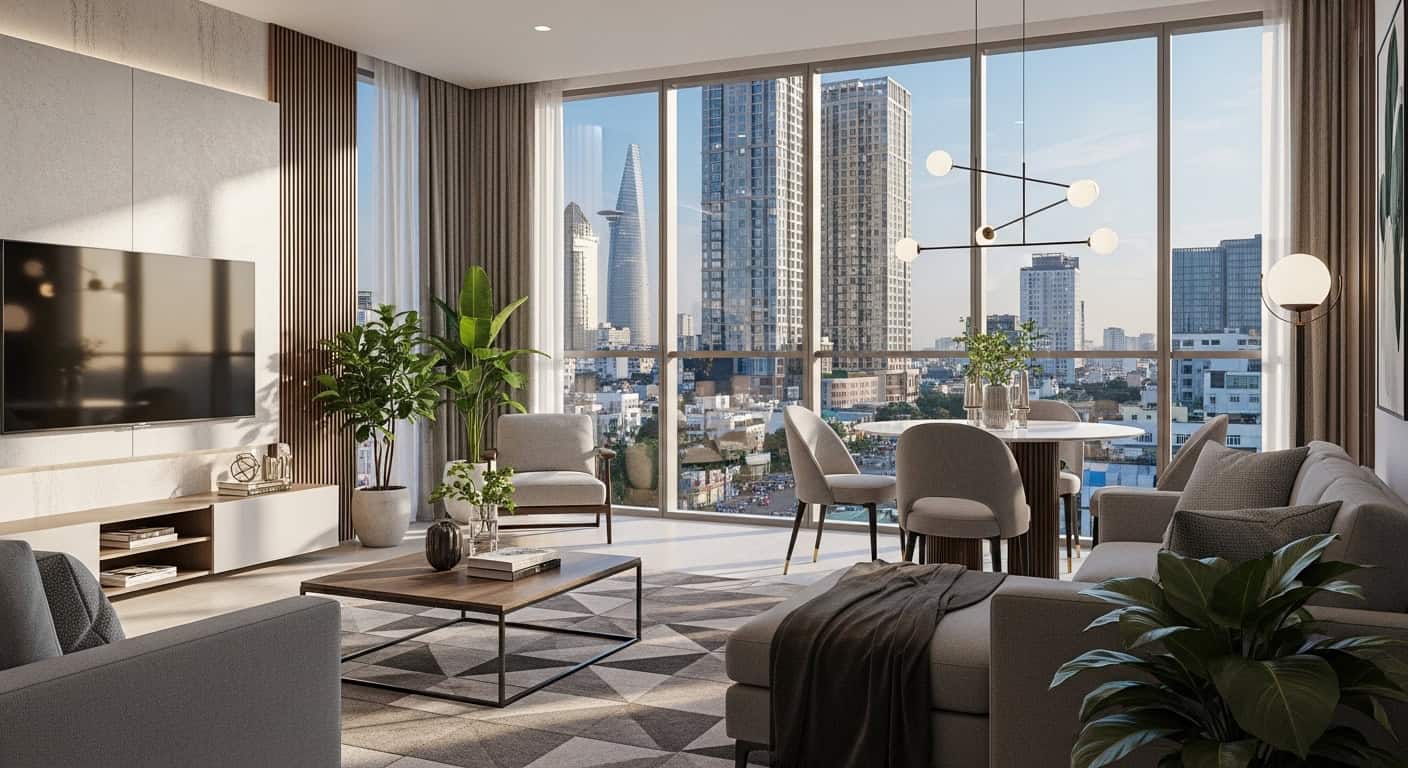
- Serviced apartments: Fully furnished units managed by a professional operator. Rent includes utilities, housekeeping, Wi-Fi, and building amenities. Leases range from one month to two years.
- Long-term unfurnished apartments: Standard residential units let directly by Vietnamese landlords or developers, usually on 12-month leases. Tenants furnish and maintain the unit themselves.
- Guesthouses and mini-hotels: Family-run properties offering short-stay rooms, often in alley streets (hẻm). Low cost but minimal privacy and inconsistent standards.
- Villas and townhouses: Standalone houses, mostly in District 2 (Thao Dien), District 7 (Phu My Hung), and Binh Thanh. High space and privacy at a premium price.
- Co-living spaces: A growing sector targeting digital nomads and younger expats, offering private rooms with shared common areas and built-in community programming.
What Long-Term Residents Say About Serviced Apartments
Talk to expats who have lived in Saigon for five or more years and a clear pattern emerges: almost all of them started in a serviced apartment in Saigon and most of them wish they had stayed longer before moving out. The reasons are practical rather than sentimental.
When you arrive in a new city with a new job, a new language barrier, and a new bureaucratic system to navigate, the last thing you need is a broken air conditioner and a landlord who does not speak English. Serviced apartments remove that friction entirely. The building handles maintenance, cleaning, and utility bills. The staff speak English. The contract is straightforward. You can focus on learning the city instead of managing a property.
The cost is higher per square metre than a bare-shell lease, but experienced residents consistently point out that the all-in price — once you factor in deposits, furniture purchases, utility connection fees, and inevitable maintenance costs on a private apartment — is far closer than it first appears. Long-term expats consistently recommend serviced apartments for the first 6–12 months in Saigon. A well-run serviced building is built for exactly that transition — professional management, flexible lease terms, and a central location that lets you explore the city on your own terms before you decide where to put down longer roots.
Long-Term Apartment Leases: The Honest Trade-Offs
Once you know the city, an unfurnished apartment on a 12-month lease can deliver significantly more space for your money. A two-bedroom unit in Binh Thanh or District 4 typically rents for VND 15–25 million per month (approximately USD 600–1,000), compared to VND 25–45 million for an equivalent serviced apartment in District 1.
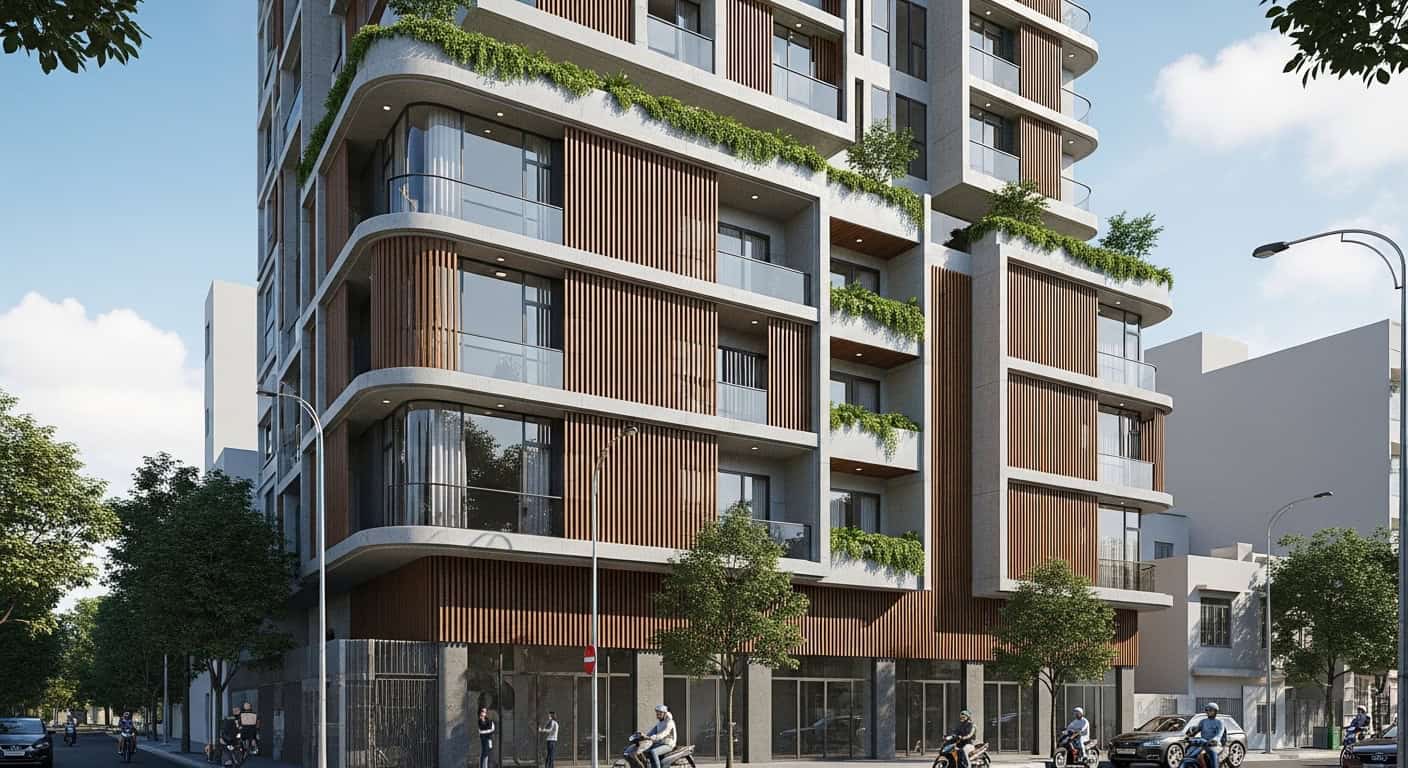
However, long-term residents list the following friction points repeatedly:
- Deposits: Most landlords require two to three months upfront, plus the first month’s rent — meaning you need four months of cash before you move in.
- Lease inflexibility: Breaking a 12-month lease early typically costs you the full deposit.
- Maintenance responsibility: You own the maintenance problem. A failing water heater or a leaking roof becomes your negotiation, in Vietnamese, with a landlord who may be several hours away.
- Utility mark-ups: Many landlords charge above the official EVN electricity rate. The legal cap is 3,500 VND/kWh but enforcement is inconsistent.
- Agent fees: The standard commission is one month’s rent, paid by the tenant. Some agents charge both sides.
None of these are insurmountable, but they reward experience. The expats who navigate private leases successfully are almost always people who spent at least six months in the city first — learning which buildings have reliable management, which agents are trustworthy, and which districts actually fit their lifestyle.
District Guide: Where Expats Actually Live in Ho Chi Minh City
Location is the most important variable in any expat housing Saigon decision. The districts have distinct characters and the commute times are not forgiving in a city where a three-kilometre journey can take 45 minutes in peak traffic.
District 1 — The Default Starting Point
Central, walkable, and dense with international infrastructure: hospitals, supermarkets, coworking spaces, rooftop bars, and consulates. Rents are the highest in the city but the convenience premium is real, particularly for people who do not yet own a motorbike. Most long-term expats start here before deciding whether to stay or move out.
District 2 / Thu Duc City (Thao Dien)
The traditional family expat enclave. Good international schools, a large villa stock, and a strong English-language community make it the go-to for expats with children. Rents are high and the commute to District 1 by car takes 20–50 minutes depending on traffic and whether the Thu Thiem tunnel is your route.
Binh Thanh
Increasingly popular with younger professionals. Close to District 1 but with lower rents and a more local, Vietnamese neighbourhood feel. Good café culture and improving transport links make it a strong second-base option after an initial District 1 stay.
District 7 (Phu My Hung)
A planned township with wide roads, Korean and Japanese communities, and a relatively quiet atmosphere. Good for families but considered remote by expats who work in the city centre.
District 3 and District 4
Underrated options for expats who want to be close to District 1 without paying District 1 prices. District 3 has excellent street food and a vibrant local energy. District 4 has improved significantly in recent years with new residential developments along the riverside.
Budget Benchmarks: What Expat Housing in Saigon Actually Costs in 2026
According to PropertyGuru Vietnam’s Q1 2026 Market Index, median asking rents for expat-grade apartments in Ho Chi Minh City rose approximately 8% year-on-year, driven by constrained supply in Grade A buildings and continued corporate demand.
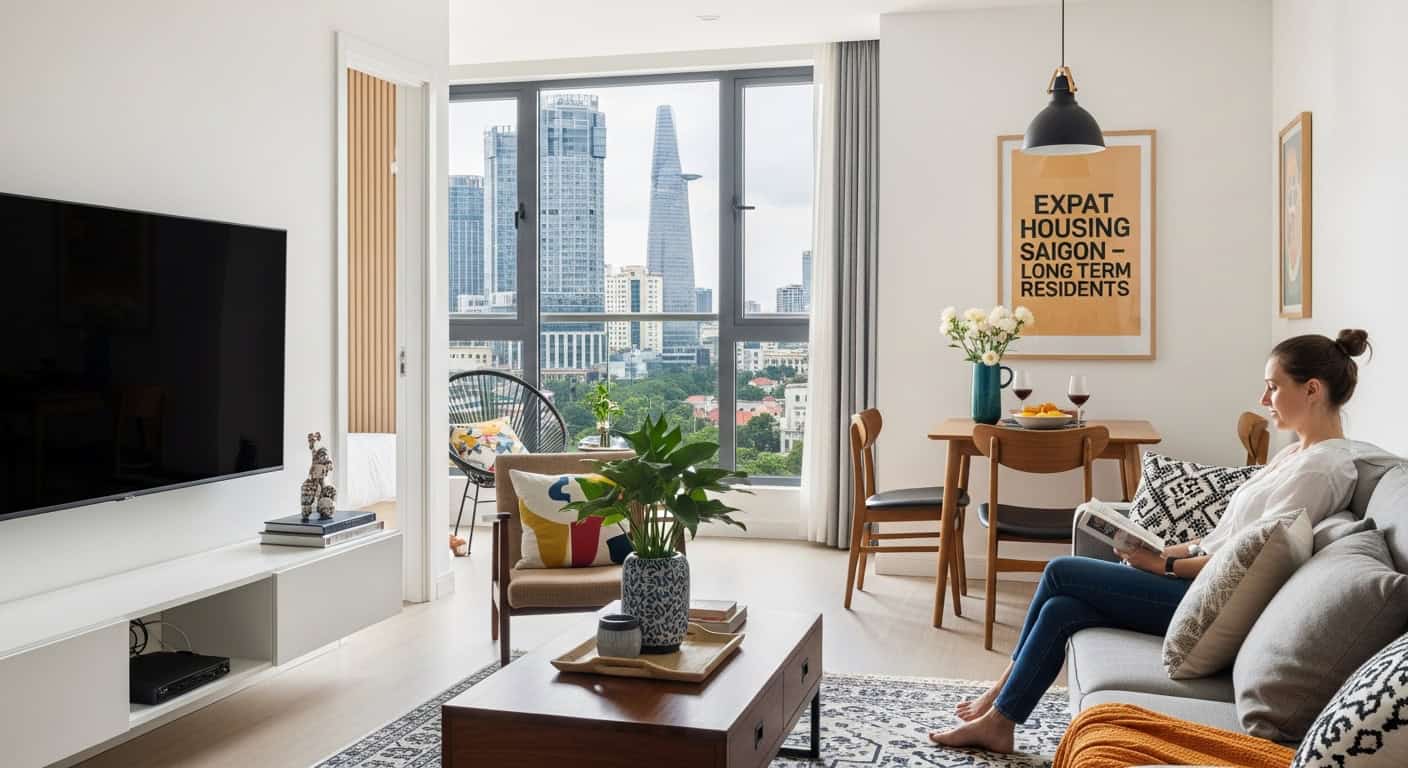
Practical 2026 price ranges for expat housing in Saigon:
- Guesthouse / budget room: USD 300–500/month (fan or basic AC, shared spaces)
- Studio serviced apartment, District 1: USD 700–1,100/month (fully furnished, bills included)
- 1-bedroom serviced apartment, District 1: USD 900–1,600/month
- 1-bedroom unfurnished, Binh Thanh: USD 450–700/month (before furniture, deposits, utilities)
- 2-bedroom villa, Thao Dien: USD 1,800–3,500/month
- Co-living private room: USD 500–850/month (bills and amenities included)
These figures reflect asking prices. Actual negotiated rents on long-term unfurnished leases are typically 5–15% lower, particularly outside peak arrival months of September–October and January–February.
The Visa and Legal Reality of Renting in Saigon
One factor that surprises many new arrivals: your visa status directly affects where you can legally rent and what documentation landlords require. Serviced apartment operators are experienced at handling the mandatory guest registration (đăng ký tạm trú) with local ward police — a legal requirement for all foreigners staying more than 30 days. Many private landlords either do not know how to complete this process or actively avoid it, which can create complications for expats who need proof of address for bank accounts, work permits, or residency applications.
Reputable serviced apartment buildings handle registration automatically. This is a non-trivial administrative advantage that rarely appears in price comparisons but matters enormously in practice.
Furnished vs Unfurnished: A Decision Tree for Expats
The furnished-versus-unfurnished question is where many expats make expensive mistakes by optimising for the wrong variable. Here is a simplified decision framework based on common expat situations:
- Arriving without a job confirmed: Serviced or short-term. Do not lock into a 12-month lease before you know where you will be working and how long your contract is.
- Corporate relocation with housing allowance: Serviced apartment, Grade A building. Your employer’s relocation policy almost certainly specifies this and there is a reason for it.
- Freelancer or remote worker, first visit to Vietnam: Serviced apartment or co-living for the first three months minimum. Get your bearings before committing.
- Returning expat who knows the city: Unfurnished long-term lease in a known building makes strong financial sense. You know what you are getting.
- Family with school-age children: Proximity to your chosen school usually drives the decision more than accommodation type. Prioritise the school catchment, then find the best housing within range.
Common Mistakes Long-Term Residents Warn About
Expats who have been in Saigon for several years are usually generous with advice and consistent about what they wish they had known. The most frequently cited mistakes in the context of expat housing in Saigon:
- Signing a long lease too quickly. The city is large and varied. A neighbourhood that seems perfect in your first week may feel wrong after a month of daily commuting. Give yourself time.
- Underestimating utility costs. Air conditioning in Saigon’s humid climate is not optional. Monthly electricity bills in a standard two-bedroom can run VND 2–5 million or more, particularly June through September.
- Ignoring building management quality. The difference between a well-managed and a poorly managed building compounds over a 12-month lease. Read reviews, visit in person, and talk to current residents if possible.
- Skipping the contract review. Have any Vietnamese-language lease reviewed by a bilingual lawyer or a trusted expat community member before signing. Termination clauses are where surprises tend to live.
- Choosing the cheapest option in the wrong location. Saving USD 200/month on rent while losing two hours per day to traffic is a poor trade in almost every case.
The Role of Expat Communities in Finding Housing
Formal property listings tell only part of the story. A significant share of good expat housing in Saigon — particularly well-priced private apartments in desirable buildings — moves through informal networks before it ever reaches a listing platform. The major expat Facebook groups (Expats in Ho Chi Minh City, Saigon Expats, and district-specific groups) are active markets where landlords post directly, outgoing expats list their leases for takeover, and recommendations for trustworthy agents circulate.
Building a basic network before you arrive — or immediately after — materially improves your housing options. Saigon’s expat community is genuinely helpful to newcomers and most residents remember what their own arrival felt like.
What the Market Looks Like for the Rest of 2026
According to Savills Vietnam’s H1 2026 Residential Update, the Ho Chi Minh City serviced apartment market is expected to see limited new Grade A supply through the end of the year, keeping occupancy rates elevated and putting modest upward pressure on rents in central districts. New supply is concentrated in suburban developments in Thu Duc City and Binh Duong, which serve a different market segment than central expat demand.
For expats planning a Saigon move in the second half of 2026, the practical implication is to begin searching and booking earlier than feels necessary. Grade A serviced apartments in District 1 with preferred move-in dates in August and September are worth securing two to three months in advance.
You May Also Find Useful
- Safety in Saigon for Long-Term Residents: What Actually Matters
- Saigon vs Kuala Lumpur for Expats 2025: A Practical Comparison for Long-Term Residents
- Expat Vietnam 2026: The Honest Guide to Fitting In, Thriving, and Staying Long-Term
- Expat Associations in Saigon 2025: Which Groups Actually Deliver Value for Long-Stay Residents
Frequently Asked Questions
What is the average cost of expat housing in Saigon in 2026?
A serviced studio apartment in District 1 typically costs USD 700–1,100 per month including utilities and furnishings. Long-term unfurnished one-bedroom apartments in Binh Thanh or District 3 run USD 450–700 per month before utilities, furniture costs, and deposits. Villas in Thao Dien for families start around USD 1,800 per month and scale significantly upward from there.
Is District 1 the best area for new expats in Ho Chi Minh City?
For most new arrivals, yes. District 1 offers the highest walkability, the densest concentration of international services (hospitals, supermarkets, coworking spaces), and the best public transport access. The premium over other districts is real but justifiable during the orientation phase. Many expats later move to Binh Thanh, District 3, or Thao Dien once they understand the city’s geography and their own daily routines.
How long should I book a serviced apartment for when first arriving in Saigon?
Most experienced expats recommend a minimum of three months and ideally six months for your initial serviced apartment booking. Three months is enough to orient yourself and start a serious apartment search; six months gives you the full cycle of seasons, work rhythms, and neighbourhood discovery that makes a longer-term housing decision well-informed.
Do I need a Vietnamese visa to rent an apartment in Saigon?
You need a valid visa or residency permit to remain in Vietnam, but there is no visa type specifically required to rent property. However, landlords and building operators are legally required to register foreign guests with local ward authorities. Well-managed serviced apartments handle this automatically. Private landlords vary significantly in their willingness and ability to complete the registration process correctly.
What is the difference between a serviced apartment and a regular apartment in Ho Chi Minh City?
A serviced apartment is professionally managed, fully furnished, and includes utilities, housekeeping, and building services in a single monthly payment. A regular (unserviced) apartment is let bare or semi-furnished by a private landlord, with the tenant responsible for furnishing, utility connections, maintenance, and ongoing building management interactions. Serviced apartments cost more per square metre but offer significantly lower administrative friction, which most new expats find is worth the price difference — at least initially.
Official Resources
For the most up-to-date information on expat housing saigon, visit the Vietnam Tourism Official Guide.