
Grab taxi Saigon is the fastest, most reliable way to get around Ho Chi Minh City — whether you’re landing at Tan Son Nhat airport for the first time or heading out for a late-night bowl of pho in District 1. The app-based ride-hailing service dominates HCMC’s streets, offering metered fares, cashless payment, and drivers who know every alley in the city. This guide covers everything you need before you tap that first booking.
Key Takeaways
- Grab is the dominant ride-hailing app in Ho Chi Minh City, available 24/7 across all districts.
- GrabCar fares are significantly cheaper than traditional metered taxis for most journeys in HCMC.
- The app works with Vietnamese SIM cards and international numbers — no local number required for tourists.
- Airport pickups from Tan Son Nhat use a dedicated ride-hailing zone; expect a short walk from arrivals.
- Grab pickup from a well-run serviced building averages under 4 minutes. A good building welcome guide covers app setup and fare expectations.
What Is Grab and Why Expats Use It in Ho Chi Minh City
Grab launched in Southeast Asia in 2012 and quickly became the default transport app across Vietnam. In Ho Chi Minh City, it has effectively replaced the need to flag down a street taxi for most residents and travellers. The platform offers multiple service tiers — GrabCar, GrabBike, GrabTaxi (partnered metered cabs), and GrabFood — all within one app. For expats and long-term renters in District 1, District 2, or Binh Thanh, opening Grab before stepping outside is simply habit.

Unlike traditional grab taxi Saigon alternatives such as Vinasun or Mai Linh, bookings through Grab show you the fare upfront, display the driver’s name, license plate, and photo, and allow you to share your ride in real time with contacts. That transparency matters enormously when you’re navigating a city of 10 million people whose street numbers can be notoriously inconsistent.
Grab Taxi Saigon vs GrabCar: Choosing the Right Service
When you open the Grab app in HCMC you’ll notice several transport options. Here’s how the main ones compare:
- GrabCar: Private cars booked through the app with upfront pricing. The most popular choice for longer distances, airport runs, and air-conditioned comfort. Comes in 4-seat and 7-seat variants.
- GrabTaxi: Connects you with licensed metered taxis (Vinasun, Mai Linh) through the Grab interface. The meter runs as normal, but you get the tracking and safety features of the app. Useful when GrabCar surge pricing is active.
- GrabBike: Motorbike taxi — the cheapest and quickest option for short hops under 5 km, especially during peak-hour gridlock. Helmets are provided by the driver.
- GrabElectric: An expanding fleet of electric GrabCars rolling out across HCMC in 2025, offering the same fares with lower emissions.
For most grab taxi Saigon searches, travellers are looking for GrabCar — it’s the closest equivalent to a traditional taxi but with far better price certainty and accountability.
How to Download and Set Up the Grab App
Setting up Grab before you land in Saigon takes less than five minutes:
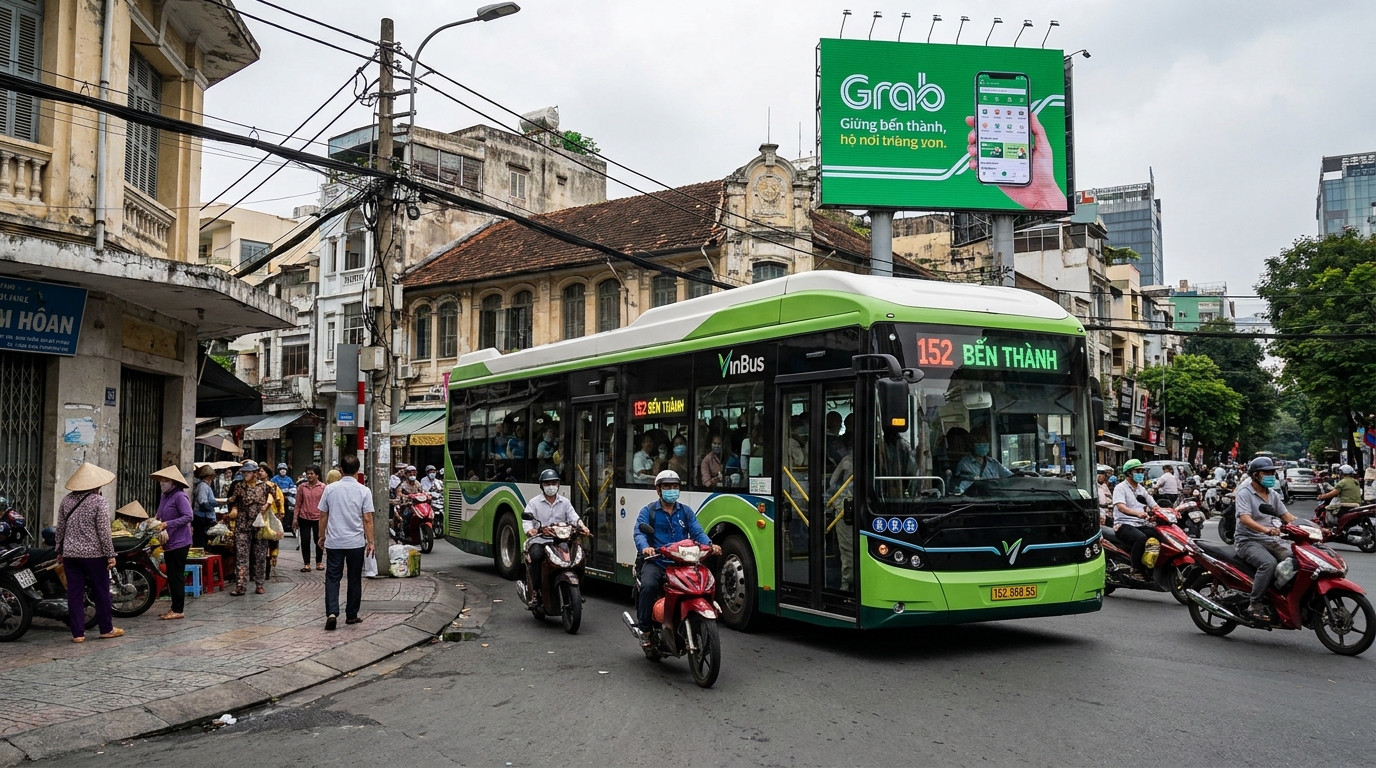
- Download the Grab app from the App Store or Google Play — it’s free.
- Register with your mobile number. International numbers work fine; you’ll receive an SMS verification code.
- Add a payment method. Grab accepts Visa, Mastercard, and local e-wallets (MoMo, ZaloPay). Cash payment is also available if you prefer.
- Set your home address once you arrive. Pinning your apartment or hotel saves time on every subsequent booking.
- Enable location permissions so the app can detect your pickup point automatically.
If you’re staying in District 1, the app will typically show 5–12 available drivers within a 1 km radius at any given hour. Grab pickup from a well-run serviced building averages under 4 minutes. A good building welcome guide covers app setup and fare expectations, including tipping norms and how to handle driver communication if your Vietnamese is limited.
Grab Fares in Ho Chi Minh City: What to Expect in 2025
Grab uses dynamic pricing, meaning fares increase during peak hours and bad weather. That said, base rates remain affordable by any international standard. A rough benchmark for GrabCar 4-seat in HCMC:
- Short trip (under 5 km): 45,000–70,000 VND (roughly USD 1.80–2.80)
- Medium trip (5–15 km): 80,000–160,000 VND (roughly USD 3.20–6.40)
- Airport run (Tan Son Nhat to D1): 110,000–180,000 VND depending on traffic and surge
- GrabBike short hop: 15,000–35,000 VND
According to Grab Vietnam’s 2024 annual transparency report, Vietnam processed over 1 billion Grab trips in 2024, making it one of the platform’s top two markets globally alongside Indonesia. That volume keeps driver supply high and wait times short across HCMC’s urban core.
Surge pricing (shown as a multiplier in the app) typically kicks in between 7:00–9:00 AM and 5:00–7:30 PM on weekdays, and during heavy rain. Waiting 10–15 minutes usually sees fares drop back to normal.
Getting a Grab from Tan Son Nhat Airport
Tan Son Nhat International Airport is one of the busiest airports in Southeast Asia, and navigating it for the first time with luggage requires a plan. Here’s how to use grab taxi Saigon from the airport:
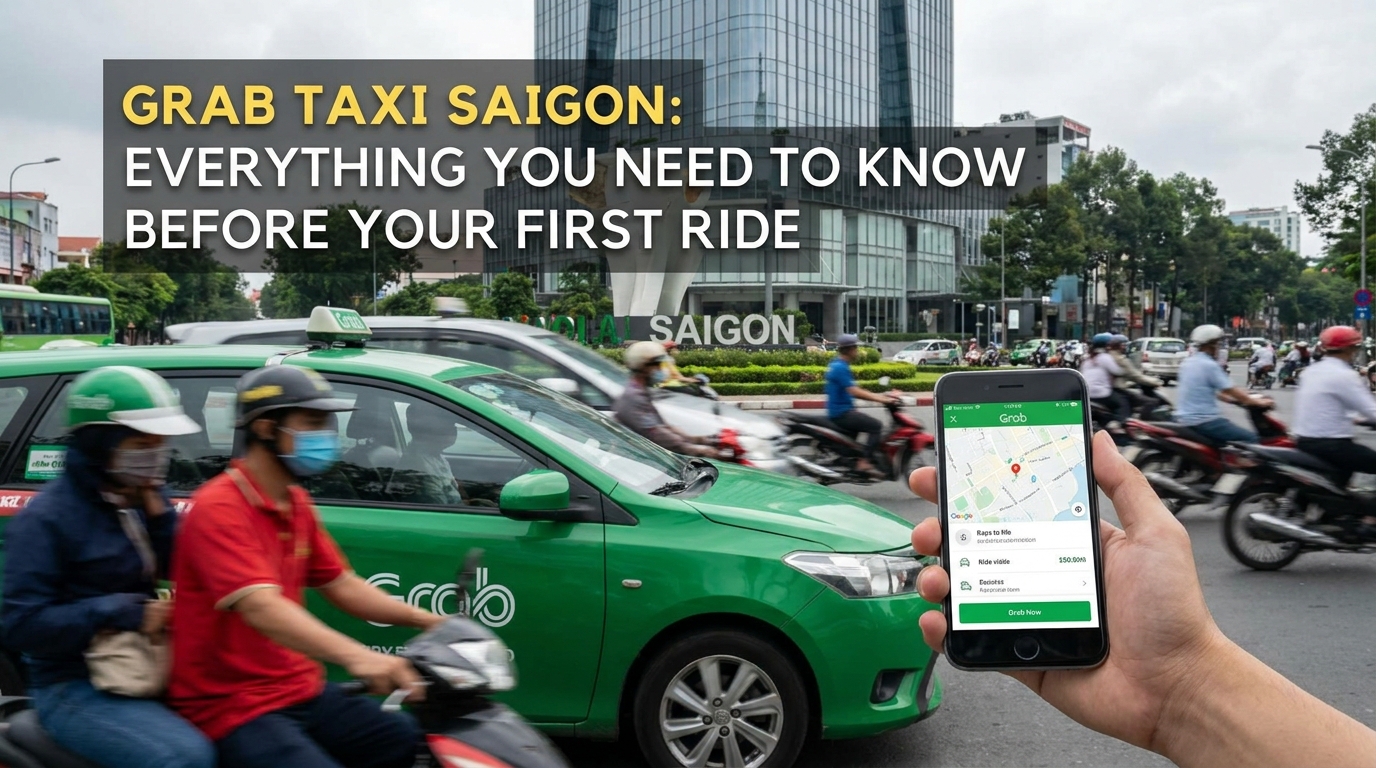
- After collecting baggage, exit through the arrivals hall (domestic or international terminal).
- Follow signs for “Ride-hailing / Taxi Technology” — at Tan Son Nhat this takes you to a dedicated pickup zone, usually a short walk from the main exit.
- Open Grab, set your destination, and confirm the pickup point matches the ride-hailing zone location (the app often auto-detects airport zones).
- Match your driver’s car and plate number before getting in.
Important: Do not book Grab while still inside the terminal building — the app’s GPS will struggle to pin your location precisely. Step outside first. Also note that airport touts near the exit may approach you offering rides; always confirm you have an actual Grab booking before following anyone to a vehicle.
Grab Taxi Saigon Safety: What the Data and Locals Say
Safety is a legitimate concern when using any ride-hailing service in a new city. Grab’s built-in safeguards in Vietnam include:
- Driver verification: All drivers undergo background checks and vehicle inspections before activation on the platform.
- In-app emergency button: Connects directly to local emergency services with your GPS coordinates pre-loaded.
- Share My Ride: Sends a real-time link of your journey to a contact of your choice.
- Two-way rating system: Drivers with low ratings are removed; passengers can also be rated, which incentivises respectful behaviour on both sides.
According to a 2025 Southeast Asia Digital Safety Index published by Tech in Asia, Grab ranked as the highest-rated ride-hailing app for user safety perception among frequent travellers in Vietnam, the Philippines, and Thailand. For women travelling alone in HCMC, the Share My Ride feature is widely used and recommended by the expat community.
Navigating HCMC with Grab: Tips From Long-Term Residents
Living in Saigon for any length of time teaches you a few tricks that first-timers miss:
- Pin your pickup precisely. Ho Chi Minh City addresses are notoriously confusing — the same street number can appear twice on the same road due to historical renaming. Always drag the pin to the exact building entrance rather than relying on address text alone.
- Save frequent destinations. Home, the office, and your preferred supermarket should all be saved in the app. It saves time and reduces driver confusion.
- Call or message the driver. If you’re at a complex pickup point (inside a mall, a narrow alley, a serviced apartment building), use the in-app chat to send a brief note. Many drivers appreciate a pin screenshot via Zalo if the location is genuinely tricky.
- Use GrabBike for District 1 micro-trips. Walking two blocks to grab a coffee in D1 at rush hour? A GrabBike covers it in three minutes for 15,000 VND. GrabCar in the same corridor during peak hour can take 12 minutes just to reach you.
- Check for GrabRewards. Long-term users accumulate reward points redeemable for fare discounts. Worth activating if you’re staying in HCMC for more than a few weeks.
Grab vs Traditional Saigon Taxis: Is There Still a Case for Vinasun?
Vinasun and Mai Linh remain reputable metered taxi operators in HCMC and are a genuine alternative when Grab surge pricing is high or when you can’t get a signal. Their meters are government-regulated and tamper-evident. However, for most day-to-day journeys, grab taxi Saigon through the app offers better price transparency, easier payment, and the accountability of a digital record.
Where traditional taxis still hold an edge: long intercity journeys (some drivers negotiate flat rates), situations where the app has poor GPS in underground car parks, and for older travellers who prefer face-to-face negotiation. That said, GrabTaxi within the app actually gives you access to Vinasun and Mai Linh drivers with the added layer of Grab’s tracking — a reasonable middle ground.
Paying for Grab in Saigon: Cash, Card, and Local Wallets
Payment flexibility is one of Grab’s underrated strengths in Vietnam. Your options:
- Cash (VND): The default for many short-term visitors. Have small denominations ready — drivers don’t always have change for 500,000 VND notes.
- International credit/debit card: Visa and Mastercard work reliably. Some users report occasional declined transactions; having a backup payment method set is wise.
- GrabPay wallet: Top up via card or bank transfer. Enables one-tap payment and often unlocks exclusive promotions.
- MoMo / ZaloPay: Vietnam’s dominant e-wallets are linked directly within the Grab app. If you have a local bank account or Vietnamese SIM-linked wallet, this is the smoothest option.
Common Problems with Grab in Ho Chi Minh City and How to Fix Them
Even in a city where Grab works exceptionally well, issues do arise. The most common:
- Driver cancels after accepting: Happens occasionally during surge periods. Simply rebook — a second driver usually arrives faster. If cancellations recur, check that your pickup pin is in a location where a car can legally stop.
- App can’t find your location: Turn off VPN if active, toggle location services off and on, and ensure you’re using GPS rather than Wi-Fi positioning indoors.
- Fare higher than quoted: This should not happen with GrabCar upfront pricing — the quoted fare is final unless you change the destination mid-trip. If billed incorrectly, use the in-app Help Centre to dispute within 24 hours.
- Driver unfamiliar with destination: Drop a Google Maps screenshot in the in-app chat. Most drivers navigate via their own map app and appreciate having the pin shared directly.
Grab for Day Trips Beyond District 1
One of the most useful but underutilised aspects of grab taxi Saigon is booking longer journeys. GrabCar handles trips to:
- Cu Chi Tunnels (40 km north): Expect 180,000–250,000 VND one-way depending on traffic and timing.
- Binh Duong or Long An province: Grab covers these routes; confirm the driver accepts before the trip begins.
- Vung Tau (90 km east): Some GrabCar drivers accept long-distance bookings with a return wait. Negotiate via chat before departure.
For anything over 60 km, it’s worth checking GrabCar’s long-distance option which appears at the bottom of the service list in some HCMC accounts, or messaging a driver directly after booking a shorter route to ask about an extended journey.
You May Also Find Useful
- Cu Chi Tunnels Complete Guide 2025: Everything You Need to Know Before You Go
- Saigon Motorbike Rental Guide: What You Need to Know Before You Ride
- Cu Chi Tunnels Vietnam Tour: Everything You Need to Know Before You Go
- District 1 Ho Chi Minh City: Everything You Need to Know Before You Stay or Move Here
Frequently Asked Questions
Is Grab safe to use in Ho Chi Minh City?
Yes. Grab is widely regarded as the safest ride-hailing option in HCMC due to driver verification, in-app GPS tracking, an emergency button, and the ability to share your live journey with contacts. Millions of rides are completed safely in Vietnam every month, and the platform’s accountability features significantly reduce the risks associated with traditional street taxis.
How much does a Grab from Tan Son Nhat airport to District 1 cost?
A GrabCar 4-seat from Tan Son Nhat to central District 1 typically costs between 110,000 and 180,000 VND (approximately USD 4.40–7.20). The fare varies based on traffic, time of day, and whether surge pricing is active. The app shows the final price before you confirm the booking, so there are no surprises.
Can I use Grab without a Vietnamese SIM card?
Yes. Grab accepts international phone numbers for registration and sends SMS verification codes to foreign numbers. You can also pay by international credit card. However, having a local SIM card makes communication with drivers easier and enables access to local e-wallet promotions that frequently discount fares.
What is the difference between GrabCar and GrabTaxi in Saigon?
GrabCar connects you with private car drivers who operate through the Grab platform with upfront fixed pricing. GrabTaxi connects you with licensed metered taxi drivers (Vinasun, Mai Linh) through the app — the meter runs as normal but you benefit from Grab’s tracking. GrabCar is usually cheaper for pre-set routes; GrabTaxi can be better value in unpredictable traffic where a metered fare might come in lower than a surge-affected upfront GrabCar quote.
Does Grab work in all districts of Ho Chi Minh City?
Grab operates across all 21 districts of HCMC, including outlying areas such as Binh Chanh, Hoc Mon, and Can Gio. Driver density is highest in Districts 1, 3, Binh Thanh, and Thu Duc. In more remote suburban districts, wait times can be 10–20 minutes versus the 3–5 minute average in the urban core.
Official Resources
For the most up-to-date information on grab taxi saigon, visit the HCMC Urban Traffic Management Centre.