
A Ha Long Bay tour is one of those rare travel experiences that lives up to every photograph you have seen. The bay spans roughly 1,553 square kilometres of emerald water dotted with 1,969 limestone karst islands, and a well-chosen cruise puts you right in the middle of it. Whether you are planning a weekend escape from Ho Chi Minh City or building a longer Vietnam itinerary, this guide covers every decision you need to make: which cruise tier fits your budget, how to get there from Saigon, what to pack, and the honest truths that most tour sites leave out.
Key Takeaways
- Ha Long Bay is a UNESCO World Heritage Site in northern Vietnam, best visited on an overnight or two-night cruise departing from Hanoi or Ha Long City.
- Budget cruises start around USD 99 per person; mid-range runs USD 150–280; luxury reaches USD 350–700+ for two nights.
- From Ho Chi Minh City, the fastest option is a direct flight to Hanoi (roughly 2 hours), then a 3–4 hour transfer to the pier — total door-to-pier time under 7 hours.
- According to the Vietnam National Authority of Tourism, Ha Long Bay welcomed over 3.5 million visitors in 2024, making advance booking essential for peak season (October–April).
- Ha Long Bay is Vietnam’s most iconic sight. Fly Saigon to Hanoi, take the bay cruise, then fly back to your D1 apartment — the whole trip fits a long weekend.
What Is a Ha Long Bay Tour and How Does It Work?
At its core, a halong bay tour means boarding a wooden or steel-hulled junk boat at Tuan Chau Marina or Ha Long International Cruise Port, sailing into the bay for one to three nights, and stopping at caves, floating villages, and kayaking spots along the way. Most itineraries follow one of three zones: the classic Ha Long Bay area closest to Ha Long City, the quieter Lan Ha Bay to the south (accessed via Cat Ba Island), and the increasingly popular Bai Tu Long Bay to the northeast. Each zone offers similar karst scenery but very different crowd levels — Bai Tu Long in particular sees a fraction of the boat traffic.

Day tours exist but are strongly discouraged by experienced travellers. You spend roughly five of your eight hours on the road and only three on the water. An overnight stay on the boat is the minimum for a worthwhile halong bay tour.
Ha Long Bay Tour Options: Budget, Mid-Range, and Luxury Cruises
The cruise market sorts itself into three clear tiers, and the differences go beyond cabin size.
Budget Cruises (USD 89–130 per person, 2 days/1 night)
These boats carry 30–50 passengers and offer basic en-suite cabins, set-menu seafood meals, and guided cave walks. Expect good value but crowded decks and a rushed pace. Operators like Viet Hai Cruise and Bhaya Classic fall in this range. Suitable for backpackers or solo travellers comfortable with a lively group dynamic.
Mid-Range Cruises (USD 150–280 per person, 2 days/1 night or 3 days/2 nights)
The sweet spot for most travellers from Ho Chi Minh City. Boats typically carry 20–36 passengers, cabins have proper windows or balconies, meals include à la carte options, and itineraries add kayaking, cooking classes, or sunrise tai chi. Operators worth shortlisting include Paradise Elegance, Indochina Sails, and Era Cruises.
Luxury and Ultra-Luxury Cruises (USD 350–700+ per person, 2–3 nights)
Fewer than 20 guests on vessels that resemble boutique hotels. Rooftop infinity pools, private dining, spa treatments, and bespoke shore excursions are standard. Orchid Classic, Au Co, and Signature Halong consistently rank among the top-reviewed boats in this tier. If you are staying in a serviced apartment in District 1 and accustomed to that quality of living, this category matches the experience.
Ha Long Bay Tour Prices: What You Actually Pay in 2025–2026
Published rack rates are only the starting point. Here is what drives the final number:

- Season: High season (October to April) commands 15–25% premiums; book at least 6–8 weeks ahead.
- Cabin type: Deluxe window versus balcony versus suite adds USD 30–120 per person per night.
- Transfer package: Most operators bundle a minivan from Hanoi Old Quarter to the pier for USD 15–25 per person each way; private cars cost USD 60–90.
- Cave entrance fees: Sung Sot Cave charges VND 250,000 (roughly USD 10) per person; some packages include this, others do not.
- Tipping: USD 5–10 per person per day for crew is customary and meaningful — factor it in.
According to TripAdvisor Travellers’ Choice data for Southeast Asia 2025, the average verified booking for a two-night halong bay tour by international visitors sat at approximately USD 210 per person, reflecting strong demand for the mid-range segment.
How to Get from Ho Chi Minh City to Ha Long Bay
This is the question most Saigon-based residents ask first, and the logistics are simpler than they look.
- Book a morning flight from Tan Son Nhat (SGN) to Noi Bai (HAN). VietJet, Vietnam Airlines, and Bamboo Airways all operate 5–8 daily departures. Flight time is roughly 2 hours; fares start at VND 600,000 (~USD 24) with luggage if booked 3–4 weeks out.
- Transfer to Ha Long Bay pier. The pier at Tuan Chau Marina is 165 km east of Hanoi. Your cruise operator’s shared minivan departs from a central pick-up point (usually Hoan Kiem or Ba Dinh) at 7:30–8:30 am, arriving pier-side by noon for embarkation. Book the earliest possible flight from SGN to catch this window.
- Board and sail. Lunch is served on board as the boat leaves harbour, so you transition seamlessly from travel mode to holiday mode.
On departure day, the reverse transfer drops you at Hanoi Airport for an evening flight back to Ho Chi Minh City, putting you in your District 1 apartment by 9 or 10 pm — a genuinely doable long weekend.
Best Time to Take a Ha Long Bay Tour
Ha Long Bay sits in a subtropical climate zone with distinct seasons that matter enormously for cruise quality.
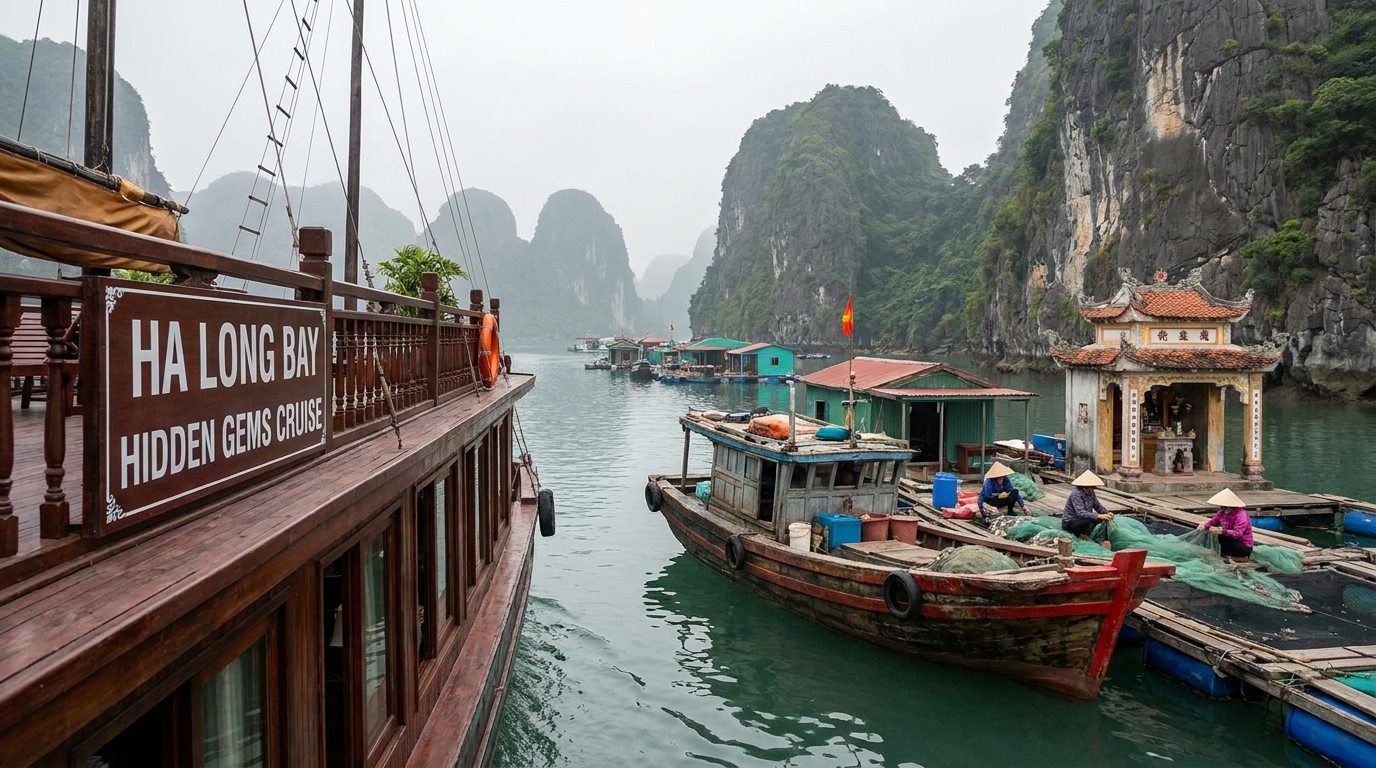
- October to April (high season): Cool, mostly clear, calm seas. October–December and February–April offer the best visibility and conditions. January sees some mist, which actually creates dramatic photography.
- May to June: Shoulder season — warm, occasional showers, noticeably fewer boats. Good value if you can tolerate a 30% chance of rain on any given day.
- July to September (typhoon season): The bay can close for several consecutive days due to tropical storms. Operators offer refunds or rescheduling but itineraries are disrupted. Not recommended for a short HCMC weekend escape where flights are fixed.
For Saigon residents flying up for a long weekend, aim for the November–March window. Tet (late January or early February) is magical in terms of atmosphere but boats book out entirely 3–4 months ahead.
What to See on a Ha Long Bay Tour: Top Spots and Experiences
Every halong bay tour itinerary hits a combination of the following highlights:
Sung Sot Cave (Surprise Cave)
The largest and most visited cave in the bay, with two enormous chambers filled with illuminated stalactites. Expect crowds on standard routes; visit early morning before day-tour boats arrive.
Kayaking Through Karst Tunnels
Paddling through a low arch into a hidden lagoon surrounded by vertical limestone — this is the image that makes Ha Long Bay unforgettable. Most mid-range and luxury tours include guided kayaking; budget boats sometimes charge an extra USD 5–8.
Vung Vieng Floating Fishing Village
A community of around 600 people living entirely on houseboats. Traditional rowing-boat tours through the village take about an hour. Many operators are phasing this out as Vietnam relocates fishing communities to shore — confirm with your operator whether this is still accessible.
Ti Top Island
A small island with a beach and a 400-step staircase to a panoramic viewpoint. Oversubscribed on peak days; skip if your itinerary includes less-visited alternatives.
Bai Tu Long Bay Anchorages
Boats that venture into Bai Tu Long can anchor in near-empty coves with no other vessels in sight. The overnight experience here is dramatically more peaceful than the main Ha Long Bay channel.
Ha Long Bay Tour: What Nobody Tells You
After years of living in Ho Chi Minh City and making this trip multiple times, here are the honest observations that tour operators tend to omit:
- The bay is busy. In peak season, dozens of boats anchor in the same spots simultaneously. Choosing Lan Ha Bay or Bai Tu Long Bay routes meaningfully reduces congestion.
- Motion sickness is real. The bay’s short, choppy waves bother some travellers even in calm conditions. Bring Dramamine or pressure-point wristbands if you are even mildly susceptible.
- Meals vary wildly between operators. Food quality is one of the sharpest differentiators between budget and mid-range boats — read recent TripAdvisor or Google reviews specifically mentioning meals before booking.
- Wi-Fi is non-existent mid-bay. Some boats advertise Wi-Fi; in practice it works only near the pier. Treat the trip as a digital detox and enjoy it.
- The plastic pollution problem is improving but visible. UNESCO and the Vietnamese government have run cleanup programs since 2022, but floating debris is still occasionally visible. Do not let this deter you — the scenery overwhelms everything else.
- Sunrise from the deck is worth setting an alarm for. The light on the karsts at 5:30 am with mist lifting off the water is the single best moment of any halong bay tour. Most passengers sleep through it.
How to Book a Ha Long Bay Tour: Step-by-Step
Booking directly with the cruise operator through their official website is the safest approach — you get the best price and direct communication for itinerary adjustments. Third-party platforms like GetYourGuide, Klook, and Viator add a 10–20% markup but offer stronger refund protection.
- Decide on duration (1 night versus 2 nights) and budget tier first.
- Shortlist 3–4 operators and check their most recent TripAdvisor reviews (filter by last 6 months).
- Email the operator directly and ask for availability on your dates before paying — confirmed availability beats a pending booking request.
- Pay a deposit (typically 30%) to secure the cabin; balance is due at embarkation or 7 days before departure depending on the operator.
- Book Hanoi transfer through the operator at the same time. This simplifies logistics considerably for travellers flying in from HCMC.
According to Vietnam Tourism Board official statistics for 2024, approximately 68% of international visitors who took a halong bay tour rated the booking process as the most confusing part of planning their Vietnam trip — reinforcing the value of direct operator contact over aggregator platforms.
Ha Long Bay Tour Packing List for HCMC Travellers
You are packing for 2–3 days on a boat in a subtropical climate. Keep it minimal:
- Light layers for evenings (it gets genuinely cool October–February)
- Quick-dry swimwear and a rash guard for kayaking
- Reef-safe sunscreen — conventional sunscreen is banned or strongly discouraged on responsible operators
- Sturdy sandals with grip for wet decks and cave stairs
- Motion sickness medication
- Portable power bank (boat charging points are limited)
- Cash in VND for tips, cave entry fees, and any onboard extras — ATMs do not exist mid-bay
Combining a Ha Long Bay Tour With Your Saigon Life
Ha Long Bay is Vietnam’s most iconic sight. Fly Saigon to Hanoi, take the bay cruise, then fly back to your D1 apartment — the round trip is logistically straightforward and genuinely transformative. For expats living in District 1, this is one of the best weekend escapes Vietnam offers: different climate, entirely different landscape, and the kind of natural scenery that makes you appreciate why you chose to live in this country. Many Saigon residents do it once and go back annually, usually upgrading cruise tiers with each visit.
If you are based in Ho Chi Minh City for a longer assignment, pairing the bay with a day in Hanoi’s Old Quarter on either end of the trip makes a compelling four-day itinerary. Flights back to SGN from HAN take under two hours and run until 9 pm, giving you full use of both weekend days on the water.
You May Also Find Useful
If you are doing this as a day out from elsewhere, Booking.com and Agoda show what is available to stay in Ha Long on the nights around it.
Frequently Asked Questions
How much does a Ha Long Bay tour cost in 2025?
Budget overnight cruises start at USD 89–130 per person for two days and one night. Mid-range options run USD 150–280; luxury boats cost USD 350–700 or more. These prices typically include accommodation on board, three meals per day, guided activities, and shared transfer from Hanoi. Cave entrance fees and tips are usually extra.
How long does a Ha Long Bay tour take?
A standard halong bay tour runs 2 days and 1 night (approximately 30 hours on the water). Most experienced travellers recommend 3 days and 2 nights for a relaxed pace with time to kayak, explore caves, and enjoy sunrise and sunset on the bay. Day tours (8 hours) are poor value and not recommended.
Is Ha Long Bay safe for solo travellers from Ho Chi Minh City?
Yes. Cruise boats have professional crews, life jackets, and safety briefings at embarkation. Solo travellers commonly join group tours and meet other travellers onboard. Choose a mid-range operator with recent positive reviews for the best solo experience. The transfer from Hanoi to the pier is straightforward and well-organised by most operators.
What is the difference between Ha Long Bay and Lan Ha Bay?
Ha Long Bay is the UNESCO-listed zone administered by Quang Ninh Province, with the most boats, caves, and infrastructure. Lan Ha Bay lies directly south, accessed via Cat Ba Island, and sits within the Cat Ba National Park. Lan Ha has almost identical karst scenery with dramatically fewer boats — roughly 10% of Ha Long’s daily visitor volume. It is often described as Ha Long Bay 20 years ago.
When is the best time to book a Ha Long Bay tour from Saigon?
Book 6–8 weeks in advance for October–April travel and 3–4 months ahead for the Tet holiday period (late January or early February). For May–September travel, 2–3 weeks is usually sufficient. Always confirm the operator’s typhoon and weather policy before paying a deposit if you are travelling July through September.
Official Resources
For the most up-to-date information on halong bay tour, visit the Vietnam National Administration of Tourism.