
Vietnam health system choices can feel confusing at first because public hospitals, private clinics, and international providers serve different needs.
Navigating the vietnam health system expat residents encounter can feel overwhelming at first — but once you understand how it is structured, it becomes far more manageable. Vietnam operates a two-tier system: a large public network subsidised by the state, and a growing private sector catering heavily to foreigners and wealthier locals. Both have distinct advantages and limitations, and knowing when to use each could make a real difference to your health outcomes in Ho Chi Minh City.
Key Takeaways
- Vietnam’s health system has two tiers: public hospitals (affordable, crowded) and private hospitals (expensive, expat-friendly, English-speaking staff).
- Most long-term expats in HCMC rely on private hospitals for routine and specialist care, using public facilities only in emergencies when private options are unavailable.
- International health insurance is strongly recommended — out-of-pocket costs at top private hospitals can reach USD 200-500 per specialist visit.
- District 1 offers the best access to premium private hospitals in Saigon, including FV Hospital, Vinmec, and Columbia Asia.
- Vietnam does not have a universal health system for foreigners, but work-permit holders can access the public social health insurance scheme (BHYT) through their employer.
How the Vietnam Health System Is Structured
Vietnam’s healthcare framework is managed by the Ministry of Health (MOH) and divided into four administrative levels: central, provincial, district, and commune. Public hospitals at each level vary significantly in quality and specialisation. Central-level hospitals such as Cho Ray and Bach Mai handle the most complex cases and attract patients from across the country, often resulting in extreme congestion. For expats trying to understand the vietnam health system, the key insight is that the public sector is designed primarily for Vietnamese citizens enrolled in social health insurance, not foreign residents.
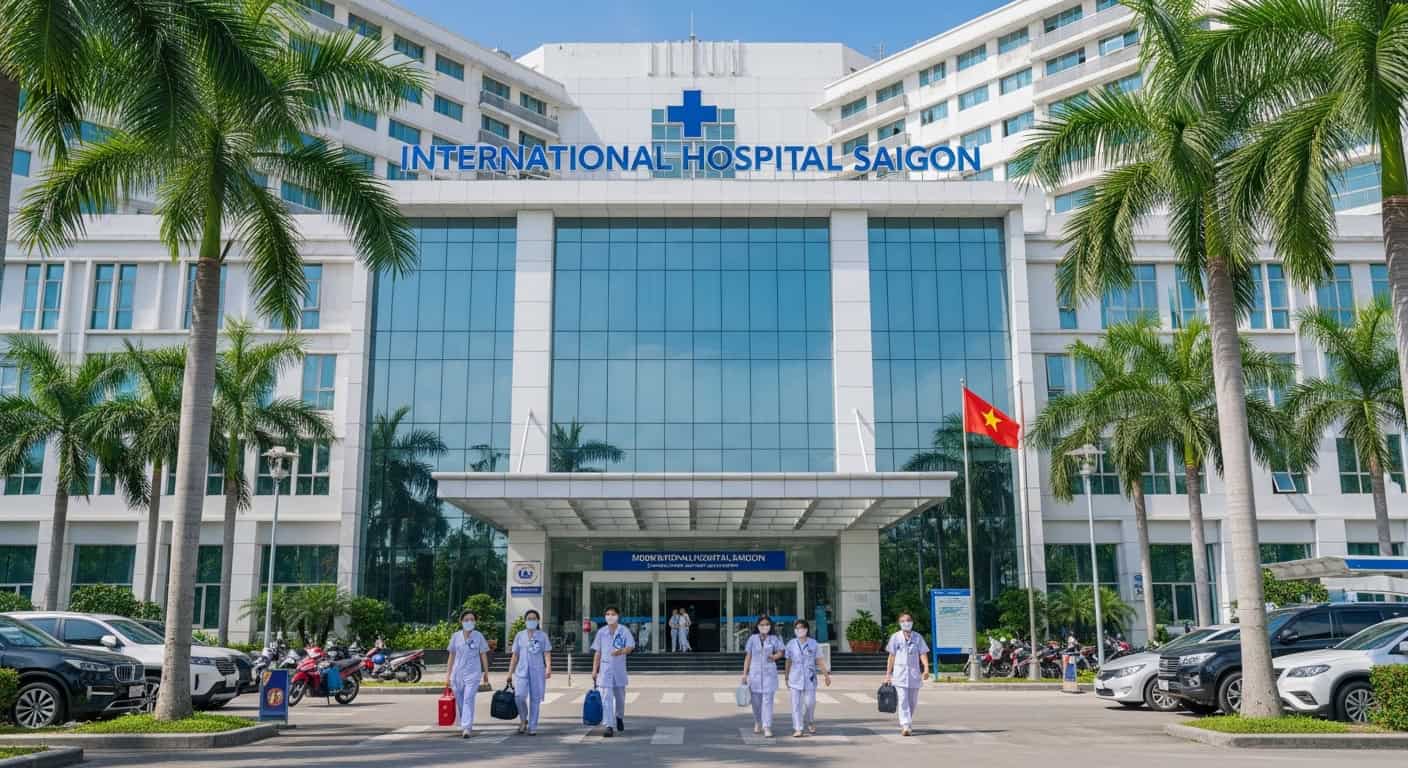
Private hospitals, on the other hand, were specifically built to fill the gap for patients who want faster service, English communication, international-standard facilities, and more predictable costs. These facilities operate independently of the public system and set their own pricing. In HCMC, international private hospitals are concentrated in Districts 1, 2, 7, and Binh Thanh — making central location a major practical consideration for expat residents.
Public Hospitals in Vietnam: What Expats Need to Know
Public hospitals in Vietnam are dramatically underfunded relative to demand. According to the World Health Organization’s 2024 Vietnam Country Health Profile, Vietnam has approximately 3.2 hospital beds per 1,000 people — below the regional average for middle-income Southeast Asian countries. Major public hospitals in HCMC regularly operate at 150-200% capacity.
For expats, the practical challenges at public hospitals include: minimal English-speaking staff at most facilities, long wait times (often four to eight hours for non-emergency outpatient consultations), a bureaucratic registration and payment process, and inconsistent availability of medications. That said, emergency departments at large public hospitals like Cho Ray can be genuinely life-saving in critical situations, and surgical skill at top-tier public hospitals is often excellent.
If you are ever taken to a public hospital in an emergency, Cho Ray in District 5 and Gia Dinh People’s Hospital in Binh Thanh are among the better-equipped facilities in the city. Always carry your passport, any existing prescriptions, and — if possible — a Vietnamese-speaking contact you can call.
Private Hospitals in Ho Chi Minh City: The Expat Default
For the vast majority of the vietnam health system expat community in HCMC, private hospitals are the primary point of care. The flagship options are well known: FV Hospital (Nguyen Luong Bang, District 7), Vinmec International Hospital (District 9 / Thu Duc), Columbia Asia Saigon (Dien Bien Phu, Binh Thanh), and the American International Hospital (AIH) near the airport. Each has English-speaking doctors, international accreditation or equivalent standards, and the ability to coordinate directly with foreign insurance providers.

Costs are significantly higher than public care. A standard GP consultation at FV Hospital typically runs VND 800,000-1,200,000 (approximately USD 32-48). Specialist appointments, imaging, or overnight stays escalate quickly into the hundreds or thousands of US dollars. Without insurance, a three-day hospital stay for something like dengue fever or a surgical procedure can cost USD 3,000-10,000 or more.
Understanding Vietnam’s health system is one of the most important things a long-stay resident can do in their first month. A well-run serviced building is 10 minutes from three of the best private hospitals in the city — a proximity that genuinely matters when you need care fast.
Health Insurance for Expats in Vietnam: Do You Really Need It?
The short answer is yes — unambiguously. Vietnam does not require foreign residents to carry health insurance as a legal condition of their visa (unlike some countries), but the financial exposure without coverage is substantial. According to a 2025 Pacific Cross survey of expats in Southeast Asia, 71% of uninsured expats who required hospital treatment in Vietnam reported out-of-pocket costs exceeding USD 1,500 in a single visit.
Most expats in HCMC rely on one of three insurance models: international health insurance from global providers (Cigna, AXA, Allianz, Bupa), employer-provided group plans, or Vietnamese social health insurance (BHYT) for those working legally with a work permit. BHYT covers a portion of costs at public hospitals and some private ones, but the reimbursement rates and coverage scope are limited compared to international plans. If you are self-employed, freelancing, or on a business visa, BHYT is generally not accessible to you and an international plan is essential.
Vietnamese Social Health Insurance (BHYT) for Work Permit Holders
If you hold a valid work permit and are employed by a Vietnamese company or a foreign company with a legal presence in Vietnam, your employer is required by law to enrol you in BHYT (Bao Hiem Y Te). You contribute 1.5% of your declared salary and your employer contributes 3%. The card covers a defined percentage of medical costs at approved public facilities — typically 80% of the cost for services within your registered hospital tier.
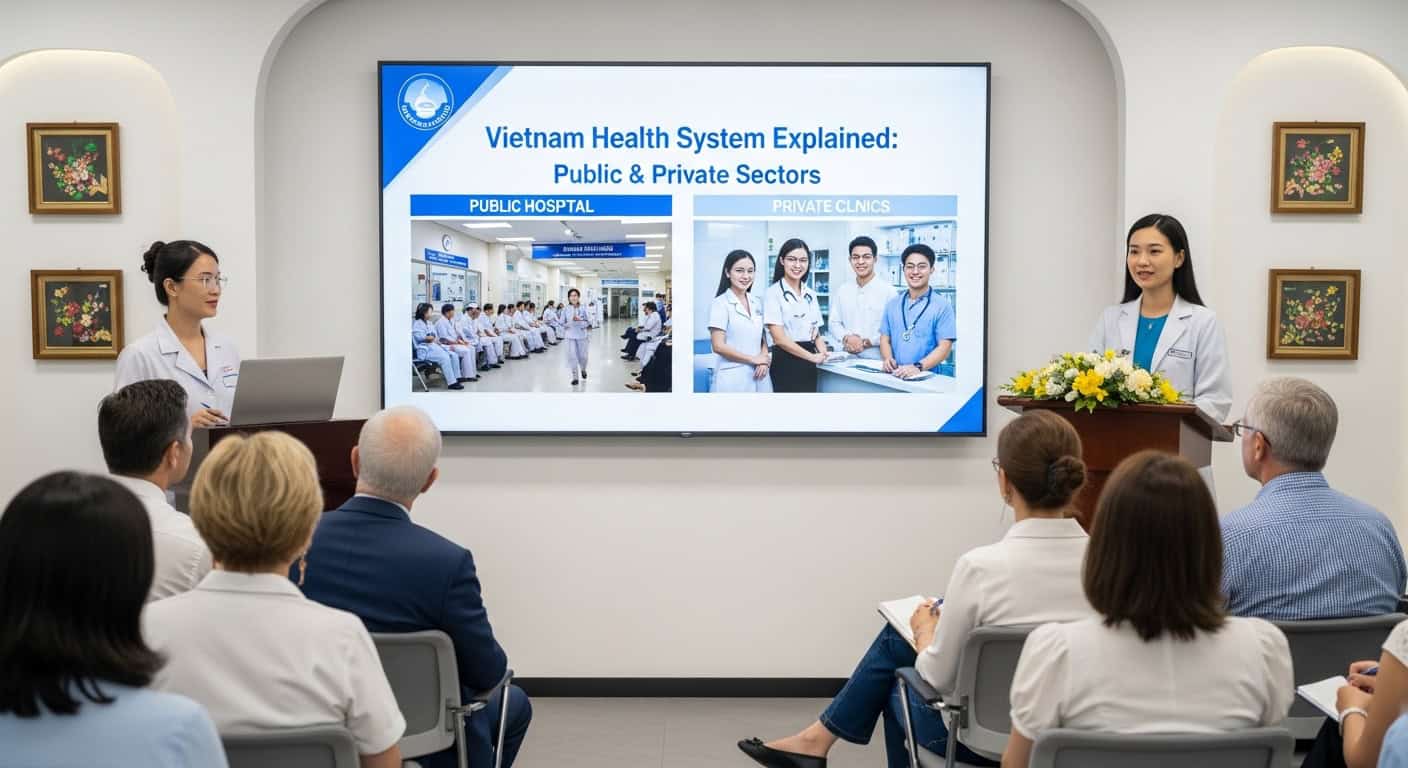
In practice, BHYT is useful as a supplement but not a replacement for private coverage. Most expats in the vietnam health system who hold BHYT cards still carry private insurance for the convenience and quality of private hospital access. The BHYT system is currently being expanded, and recent reforms under Decree 146/2018/ND-CP have broadened the list of covered treatments, but significant gaps remain for foreign residents accustomed to higher-standard facilities.
Finding an English-Speaking Doctor in HCMC
English-speaking GPs and specialists are concentrated at private international hospitals and a smaller number of independent clinics. Established expat-oriented clinics in central HCMC include the HCMC Family Medical Practice (FMP) on Han Thuyen Street in District 1, International SOS, and various dermatology and dental clinics along Hai Ba Trung and Le Thanh Ton. Telehealth platforms such as Doctor Anywhere and Intellicare have also expanded their Vietnamese operations and allow English-language video consultations for minor issues.
For specialist care — cardiology, oncology, neurology, fertility — the major private hospitals are the right starting point. FV Hospital has arguably the broadest specialist roster in HCMC, while AIH and Vinmec handle complex surgical cases. It is always worth calling ahead to confirm whether a specific specialist consults in English, as even within international hospitals, not every doctor is equally fluent.
Pharmacies and Medications in Vietnam
Vietnam has a dense pharmacy network — you will rarely be more than a few blocks from a nha thuoc (pharmacy) in any urban district. Many medications available only by prescription in Western countries are sold over the counter in Vietnam, including antibiotics, antiparasitics, and some controlled substances. This can be convenient in a pinch but also creates risks: self-treating with incorrect medications or dosages is a common problem among expats.
Major pharmacy chains including Pharmacity, Long Chau, and An Khang have standardised their practices in recent years and increasingly require prescriptions for antibiotics. These chains are generally reliable for branded medications. If you take a specific medication regularly, bring an adequate supply from your home country and verify with a doctor in Vietnam whether the local equivalent is bioequivalent. Some medications are difficult to source in Vietnam or are only available under different brand names.
Dental and Mental Health Care for Expats
Dental care in Vietnam is both widely available and excellent value by international standards. HCMC has a large number of internationally trained dentists, particularly in Districts 1, 3, and Binh Thanh. Prices for routine work (cleaning, fillings, crowns) are typically 40-70% lower than in Australia, the UK, or the US. The Nhan Tam Dental Clinic network and Worldwide Dental are frequently cited by expats as reliable options with English-speaking staff.
Mental health services are an area where the vietnam health system expat experience has historically been more limited. Vietnam has a cultural stigma around mental health that affects both availability and candour. However, the last three years have seen a notable expansion of English-language psychology services in HCMC, with independent therapists, online platforms, and some private hospital psychology departments now available. Organisations like Psych Company Vietnam and various expat-focused counsellors offer sessions in English and other European languages.
Emergency Care and Ambulance Services in Vietnam
Vietnam’s emergency ambulance system (dial 115) exists but is slow by most expat standards — response times in central HCMC average 15-25 minutes, and ambulances are often not equipped to the level of a Western ALS (advanced life support) unit. Private hospitals including FV Hospital operate their own ambulance or rapid-response services for registered patients, which are generally faster and better equipped.
In a serious emergency in District 1 or nearby districts, it is often faster to take a taxi or Grab to the nearest emergency department rather than waiting for 115. Serious trauma cases should go to Cho Ray or a major private ER. Keep the emergency numbers for your preferred private hospital saved in your phone, and ensure your insurance provider’s 24-hour emergency line is accessible.
Vaccinations and Preventive Health for Vietnam Residents
Long-stay expats should review their vaccination status on arrival. Recommended vaccines for Vietnam include hepatitis A, hepatitis B, typhoid, Japanese encephalitis (especially for those spending time outside urban areas), and rabies pre-exposure prophylaxis for animal handlers or those in rural environments. Routine vaccines (MMR, Tdap, influenza, COVID-19 boosters) should be kept up to date.
Dengue fever remains a significant health risk in HCMC — the city experiences seasonal surges, typically peaking between June and November. There is no widely available expat-targeted dengue vaccine in Vietnam at present, though the Dengvaxia and Qdenga vaccines are in limited circulation. Mosquito prevention (repellents with DEET, screens, avoiding stagnant water near your residence) remains the primary protective measure. Check with your GP or travel medicine specialist before moving to Vietnam for a personalised vaccination schedule.
Navigating the Vietnam Health System as a New Expat: Practical First Steps
When you first arrive, do the following within your first two to four weeks: register with a private GP or family medicine clinic near your residence, get your BHYT card organised through your employer if applicable, confirm your international insurance policy covers Vietnam fully and without referral requirements, locate the nearest emergency department and save the number, and bring or order a sufficient supply of any regular medications. Understanding the vietnam health system expat framework early removes a significant source of stress and prepares you for situations where quick, confident decisions matter.
District 1 residents are particularly well-positioned — the area’s density of private clinics, specialist hospitals, and English-speaking providers is unmatched in the city. The more central your accommodation, the shorter your response time to quality care.
You May Also Find Useful
- Vietnam Health Insurance for Expats: The Complete 2026 Comparison Guide
- Lease Terms Explained for Expats Renting in Vietnam: What to Read Before You Sign
- International Health Insurance for Expats in Vietnam: Best Plans and Costs 2026
- SIM Cards and Internet for Long-Stay Expats in Vietnam: 2026 Guide
Frequently Asked Questions
Can expats use public hospitals in Vietnam?
Yes, public hospitals in Vietnam are legally open to foreign nationals. However, most expats find the experience challenging due to language barriers, long wait times, and lower facility standards compared to private hospitals. Emergency departments at major public hospitals like Cho Ray are an exception and can be essential in life-threatening situations.
Is health insurance mandatory for expats living in Vietnam?
Health insurance is not legally required for most foreign residents in Vietnam as a visa condition, but it is strongly recommended. Medical costs at private hospitals — where most expats receive care — can be very high without coverage. Work-permit holders employed by registered companies are required to join the state BHYT scheme, but this covers only a portion of costs and does not replace international coverage.
What is the best private hospital in Ho Chi Minh City for expats?
FV Hospital in District 7 is frequently cited as the top-ranked international hospital in HCMC for breadth of specialist services and English-language care. Other highly regarded options include Vinmec International, AIH (American International Hospital), and Columbia Asia Saigon. The best choice depends on your location, insurance network, and the type of care required.
How do I find an English-speaking doctor in Vietnam?
The most reliable route is through international private hospitals or established expat-focused clinics such as Family Medical Practice (FMP) in District 1. Your insurance provider’s directory is another good resource. Expat community groups on Facebook and platforms like Expat.com also maintain regularly updated lists of recommended English-speaking GPs and specialists in HCMC.
What should I do in a medical emergency in Ho Chi Minh City?
Call 115 for the national ambulance service, but also call your private hospital’s emergency line simultaneously. In many central districts, getting a Grab or taxi to the nearest private hospital ER may be faster than waiting for an ambulance. Pre-save the emergency numbers for FV Hospital, AIH, or your nearest international facility in your phone before you need them.
Official Resources
For the most up-to-date information on vietnam health system expat, visit the Vietnam Tourism Official Guide.