
The neighborhoods Ho Chi Minh City offers span from French colonial boulevards to quiet residential enclaves, from buzzing backpacker streets to modern high-rise corridors — making the city one of Southeast Asia’s most layered urban experiences. Whether you’re visiting for a week or relocating for years, understanding Saigon’s districts is the single most important step to finding your footing in this city of 9 million.
Key Takeaways
- Ho Chi Minh City is divided into 22 districts (quận), each with a distinct character, price range, and expat suitability.
- District 1 (D1) remains the top choice for first-time visitors and expats who prioritize walkability, transport links, and dining variety.
- Districts 2, 3, and 7 are the most popular long-term residential neighborhoods among foreigners and returning Vietnamese.
- Rental prices vary dramatically — from under $300/month in outer districts to $2,000+ for serviced apartments in D1 and D2.
- Understanding the difference between central, mid-ring, and outer districts helps you balance cost, commute, and lifestyle before committing.
Saigon Neighborhoods and Districts: How Ho Chi Minh City’s Districts and Neighborhoods Are Organized
Saigon is not laid out on a neat grid. The city grew organically from a colonial river port, and its 22 administrative districts radiate outward from the historic core near the Saigon River. Each district is numbered (Quận 1 through Quận 12, plus named districts like Bình Thạnh, Tân Bình, and Phú Nhuận) and contains multiple wards (phường). For practical navigation, most residents think in terms of three rings: the central core (Districts 1, 3, and parts of 4), the mid-ring (Districts 2, 5, 6, 10, 11, Bình Thạnh, Phú Nhuận), and the outer city (Districts 7, 8, 9, 12, Tân Bình, Gò Vấp, and Thủ Đức). Knowing which ring a neighborhood sits in tells you almost everything about commute times, street noise, and how international the surrounding infrastructure will be.

District 1: The Heart of the Neighborhoods Ho Chi Minh City Is Known For
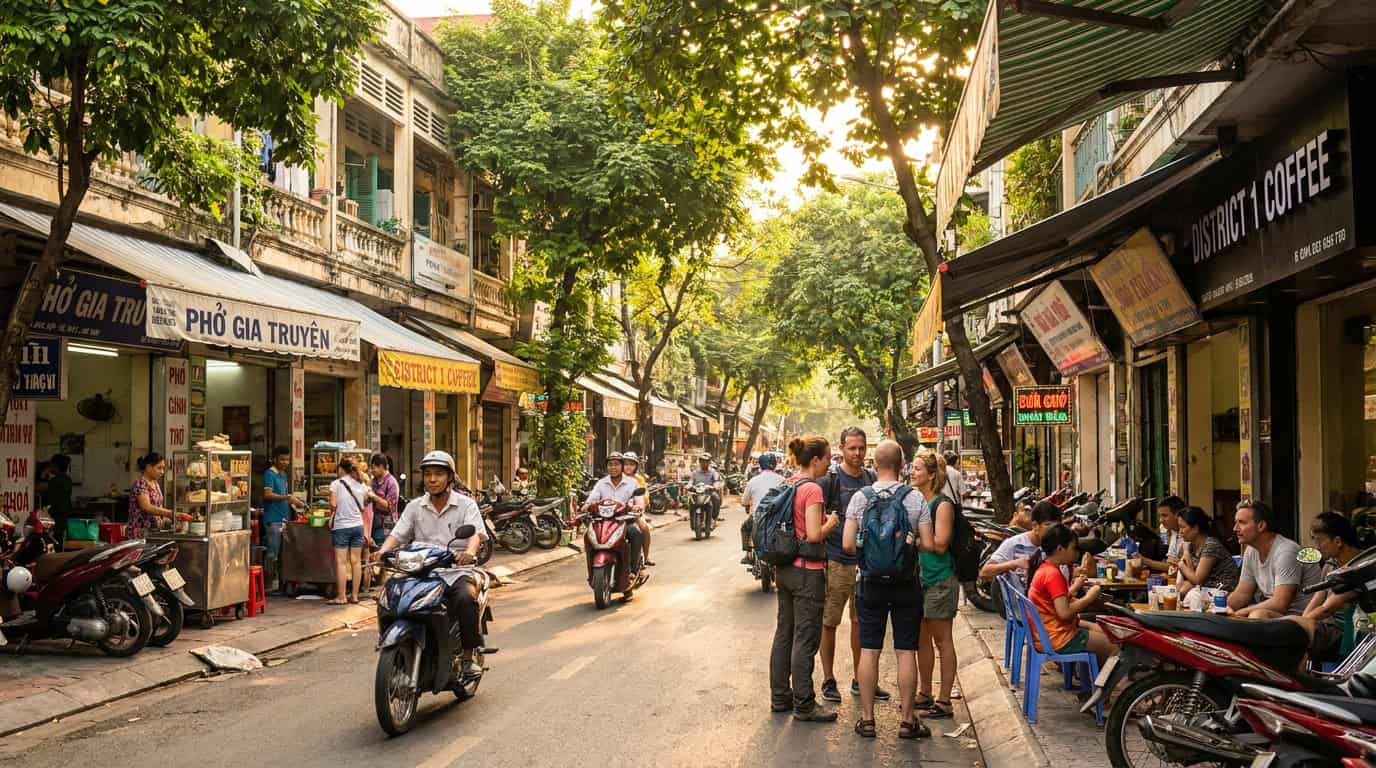
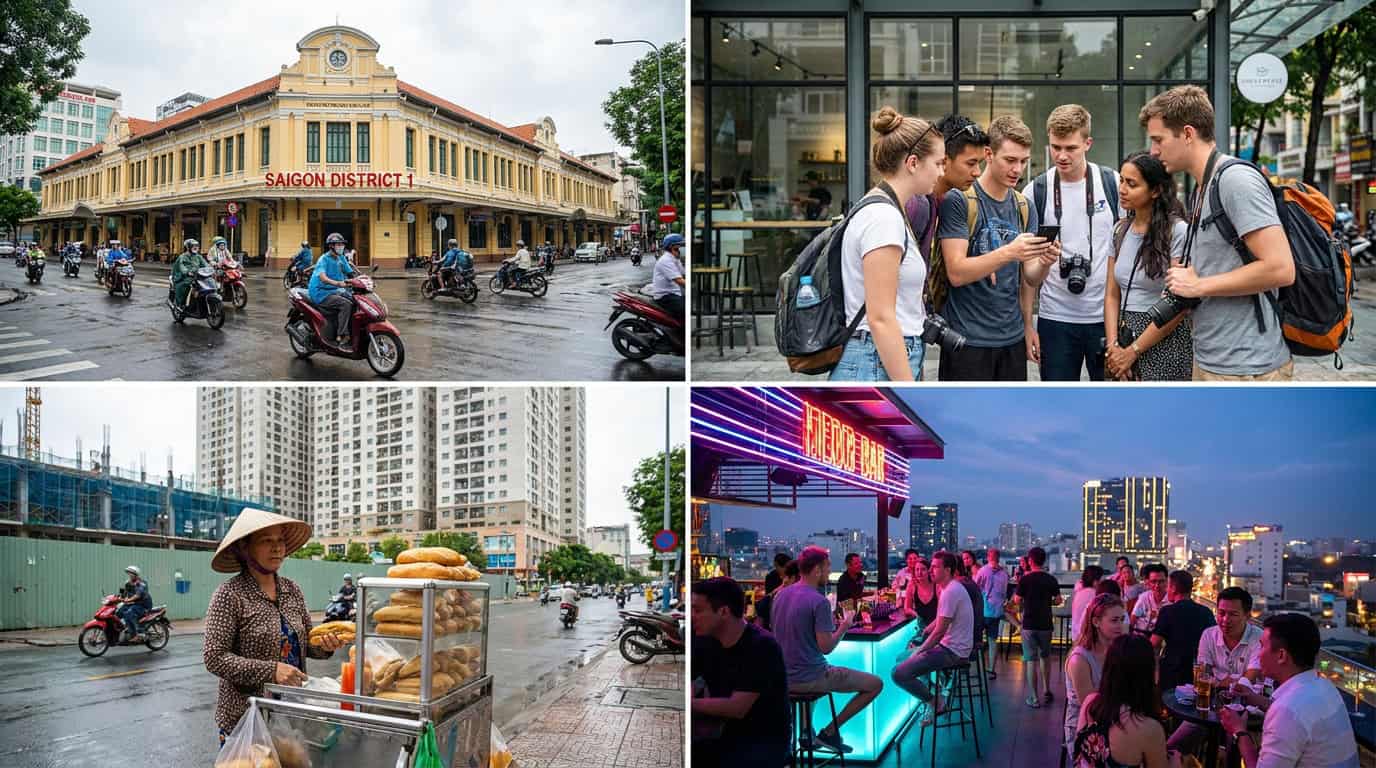
District 1 is the historic, commercial, and social center of Saigon. The Notre-Dame Cathedral, the Central Post Office, Ben Thanh Market, and the city’s best concentration of rooftop bars all sit within a 15-minute walk of each other. Bui Vien Walking Street draws backpackers every night, while the parallel streets of Dong Du and Mac Thi Buoi host boutique hotels and internationally minded cafes. Phạm Ngũ Lão ward is the budget traveler corridor; the CBD pocket around Nguyen Hue Boulevard is where business travelers and long-stay expats gravitate.
Every neighborhood has its appeal, but D1 keeps winning for connectivity and walkability — our apartments are at the heart of it.
Rental prices in D1 run higher than anywhere else in the city — a furnished one-bedroom serviced apartment averages $800–$1,400/month — but residents consistently cite the ability to walk to restaurants, grab a Grab in under two minutes, and reach Tan Son Nhat Airport in 20–30 minutes as justification for the premium.
District 3: Colonial Villas and Cafe Culture
Just north of D1 and connected by wide tree-lined streets, District 3 is Saigon’s most aesthetically pleasing neighborhood for long-term living. French-era villas sit behind bougainvillea-covered walls on streets like Vo Van Tan and Tran Quy Cap. The cafe culture here is unmatched — third-wave coffee shops occupy converted townhouses on almost every block. D3 is popular with creative professionals, NGO workers, and Vietnamese returnees from Europe. It is quieter than D1 but still extremely central, with Tan Dinh Market providing excellent fresh produce and street food options at the northern edge.
District 2 and Thu Duc: The Expat Family Hub
District 2 — now technically merged into Thu Duc City but still universally called D2 — is the primary residential choice for expat families, international school corridors, and anyone seeking a lower-density lifestyle without leaving greater Saigon. The Thao Dien ward is the epicenter: tree-lined streets, international supermarkets (Annam Gourmet, Giant), a cluster of international schools (ISHCMC, BIS, SSIS), and a thriving brunch-and-yoga expat community. An Phu and Thao Dien together account for the majority of foreign resident registrations in the eastern part of the city.
According to the Ho Chi Minh City Statistics Office (2024), Thu Duc City (which includes former D2) recorded the highest growth in registered foreign residents of any administrative unit in HCMC, increasing 18% year-on-year. Rents in Thao Dien for a 2-bedroom apartment typically range from $800 to $2,500 depending on whether the unit is in a villa compound or a high-rise.
District 7: Phu My Hung and the Southern International Corridor
District 7 is Saigon’s planned township district, anchored by the Phu My Hung urban development — a master-planned Korean-Vietnamese joint venture that created wide roads, parks, international schools, and a distinctly un-chaotic streetscape unlike anywhere else in the city. The Korean and Taiwanese communities are dominant here, meaning exceptional East Asian dining options and supermarkets stocked with imported goods. Crescent Mall and SC VivoCity serve as the retail anchors. Families who need proximity to Saigon South International School, Korea International School, or Taipei School often choose D7 exclusively for that reason. Commutes to D1 run 25–45 minutes depending on bridge and tunnel traffic.
Binh Thanh District: The Up-and-Coming Riverside Neighborhood
Bình Thạnh sits directly north of D1 across the Thi Nghe Channel and has transformed significantly over the past decade. The Vinhomes Central Park mega-development brought luxury towers, a riverside park, and a Vincom Landmark 81 — currently the tallest building in Vietnam — to what was previously an industrial riverfront. Outside the Vinhomes gates, older Bình Thạnh retains a gritty, local character with excellent street food, affordable mid-range apartments, and easy Grab access to D1. It is increasingly popular with young Vietnamese professionals and digital nomads who want a central location without D1 price tags.
Phu Nhuan and Go Vap: Local Living Close to the Airport
Phú Nhuận district is wedged between D3 and Tan Binh and is one of Saigon’s most livable mid-ring neighborhoods. It has a strong local Vietnamese character — very few tourists wander here — with excellent pho shops, banh mi carts, and wet markets that open before dawn. Rents are noticeably lower than D1 or D3 for comparable apartment sizes. The district’s proximity to Tan Son Nhat Airport (10–15 minutes by motorbike) makes it popular with airline crew and frequent travelers. Gò Vấp, directly north, is larger and more working-class but offers some of Saigon’s best value on renovated apartments for budget-conscious expats willing to commute inward.
District 5: Saigon’s Chinatown and Cultural Neighborhoods
District 5 is the historical heart of Saigon’s Hoa (ethnic Chinese) community and one of the most culturally distinctive neighborhoods Ho Chi Minh City preserves. Cholon — the old Chinese district — sprawls across D5 and into D6, filled with clan houses, Chinese-language signage, herbal medicine shops, and temples including the famous Thien Hau Pagoda. The food in D5 is outstanding: dim sum, roast goose, and specialty Cantonese noodle soups available at prices far below D1. This district is not a typical expat choice for long-term residency, but it is an essential neighborhood to explore, and budget travelers increasingly stay here for its authenticity and affordability.
Districts 4, 8, and 6: The Underrated Central Neighborhoods
District 4 is a small, dense district directly across the Ben Nghe Channel from D1 — close enough to walk to the downtown core via the Khanh Hoi Bridge. It has a legitimate claim to hosting Saigon’s best concentration of local seafood restaurants and is one of the city’s best-value neighborhoods for furnished apartments within five kilometers of the CBD. Districts 8 and 6 extend westward and are primarily local residential areas with lower density commercial activity. They appeal to budget travelers and long-stay visitors who prioritize cost savings over proximity, and both are seeing gradual infrastructure investment as the city expands its metro network westward.
According to the HCMC Department of Construction’s 2025 Housing Market Report, Districts 4, 8, and 6 showed the highest year-on-year increase in new apartment supply (combined 22% increase), driven by metro line construction and improved bridge access from the city center.
Choosing the Right Neighborhood Ho Chi Minh City Has to Offer: A Practical Framework
Matching yourself to a Saigon neighborhood comes down to four variables: budget, commute destination, lifestyle priorities, and length of stay. Here is a practical breakdown:
- Short-stay visitors (under 2 weeks): District 1 is the clear choice. You need walkability, restaurant density, and easy access to major sights.
- Digital nomads and solo expats (1–6 months): District 1, District 3, or Binh Thanh offer the best balance of internet infrastructure, co-working proximity, and social life.
- Expat families with school-age children: District 2 (Thao Dien) or District 7 (Phu My Hung) will likely be dictated by which international school you choose.
- Budget travelers: Districts 4, 5, or Phu Nhuan deliver the most value per dollar without sacrificing safety or transit access.
- Long-term residents wanting local immersion: Phu Nhuan, Go Vap, or Binh Thanh outside Vinhomes provide authentic Vietnamese neighborhood living with manageable expat infrastructure.
Getting Around Between Neighborhoods Ho Chi Minh City Spans
Until 2024, Saigon’s only realistic transport options were motorbike, Grab (app-based car and bike), and taxi. The opening of Metro Line 1 (Ben Thanh to Suoi Tien, spanning Districts 1, Binh Thanh, 9, and Thu Duc) in late 2024 changed the connectivity calculus for eastern districts significantly. Residents in Thao Dien and An Phu now have a direct rail option into D1 that bypasses bridge traffic entirely. Future metro lines will eventually link D7, Tan Binh, and Binh Duong Province. Until then, owning or renting a motorbike remains the most efficient way to navigate across neighborhoods — Grab bike is the fastest option for solo trips under 8km.
You May Also Find Useful
- District 1 Saigon 2026: Complete Neighborhood Guide for Visitors and Long-Stay Residents
- Ho Chi Minh City Weather: Month-by-Month Guide for Visitors and Long-Stay Residents
- District 5 Chinatown Saigon: Living Guide for Visitors and Long-Stay Residents
- Vietnam Transport in Saigon: Every Option Explained for Visitors and Long-Stay Residents
Frequently Asked Questions
Which neighborhood in Ho Chi Minh City is best for first-time visitors?
District 1 is the best neighborhood for first-time visitors to Ho Chi Minh City. It contains the highest concentration of hotels, restaurants, historical sights, and transport links in the city. Ben Thanh Market, the Reunification Palace, and the main tourist infrastructure are all within walking distance of most D1 accommodation options.
What is the safest neighborhood in Ho Chi Minh City for expats?
Saigon is generally a safe city by Southeast Asian standards, but Districts 1, 2 (Thao Dien), 3, and 7 (Phu My Hung) are consistently cited by long-term expats as the most comfortable for daily life. These areas have lower rates of petty theft, good street lighting, and well-maintained footpaths. Bag snatching from motorbikes is the most common security concern citywide — keeping bags on your inside shoulder mitigates most of this risk.
Is District 2 or District 7 better for expat families?
Both are excellent but serve different preferences. District 2 (Thao Dien) has a more organic, cafe-village feel with a diverse international mix and is closer to the city center. District 7 (Phu My Hung) is more planned, more Korean and East Asian in character, has wider roads and better parks, and tends to attract families who prioritize a quieter suburban atmosphere. School location is usually the deciding factor — ISHCMC and BIS draw families to D2, while Korea International School and Saigon South International draw families to D7.
What are the cheapest neighborhoods to live in Ho Chi Minh City?
The most affordable neighborhoods for expats are Districts 8, 6, 12, Go Vap, and Tan Binh. Furnished apartments in these areas can be found for $250–$500/month for a one-bedroom. The trade-off is longer commutes to the city center, fewer English-language services, and less developed expat social infrastructure. Phu Nhuan offers a middle ground — genuinely local character at moderate prices, but still within 15 minutes of D1.
How do the neighborhoods Ho Chi Minh City offers compare for nightlife?
District 1 dominates nightlife, with Bui Vien Walking Street for backpacker bars, the Nguyen Hue and Dong Du corridors for upscale rooftop venues, and the Pham Ngu Lao area for mid-range options. District 2’s Thao Dien has a growing strip of wine bars and craft beer spots popular with the expat community. District 3 has excellent late-night cafe culture. Districts 7 and elsewhere in Phu My Hung are quieter by design — families tend to prefer it that way.
Official Resources
For the most up-to-date information on neighborhoods ho chi minh city, visit the Vietnam Tourism Official Guide.