The best ho chi minh city hotel for your trip depends entirely on where you stay, how long you stay, and what you need from your base. District 1 puts you inside the action with rooftop bars and river views; District 3 gives you tree-lined streets and boutique calm; Thu Duc and Binh Thanh are emerging for long-stay value. This guide covers every angle — areas, price tiers, trip types, and the honest comparison between hotels and serviced apartments for extended visits.
Key Takeaways
- District 1 (Ben Nghe, Ben Thanh) remains the prime tourist hotel corridor, but it commands a 30–50% price premium over equally comfortable options in District 3.
- Budget travelers can find clean, well-located guesthouses for USD 20–40/night; mid-range hotels run USD 60–120; luxury properties start at USD 150 and climb past USD 400 for top-tier brands.
- Ho Chi Minh City’s hotel market recovered strongly post-pandemic — According to the Ho Chi Minh City Department of Tourism, the city welcomed over 5 million international visitors in 2024, placing intense seasonal pressure on District 1 inventory.
- For short stays under 7 nights, a hotel is convenient and competitively priced. For stays over 30 nights, a serviced apartment dramatically reduces your per-night cost while adding a kitchen, laundry, and living space.
- Avoid booking without checking the exact sub-district address — “District 1” spans over 6 km and a hotel near Tan Dinh market is a 25-minute taxi from the main tourist zone.
Why Location Matters More in HCMC Than Almost Any Other Asian City
Ho Chi Minh City has no single compact tourist center. The colonial core around Nguyen Hue Boulevard and Ben Thanh Market is walkable, but the city fans outward fast into a tangle of one-way alleys, flyovers, and canals that make the wrong address a daily taxi bill. When searching for a ho chi minh city hotel, always cross-reference the pin on Google Maps — not just the district name — against the specific sites you plan to visit. A hotel 3 km from Ben Thanh in the wrong direction can mean 20 minutes stuck in rush-hour gridlock twice a day.
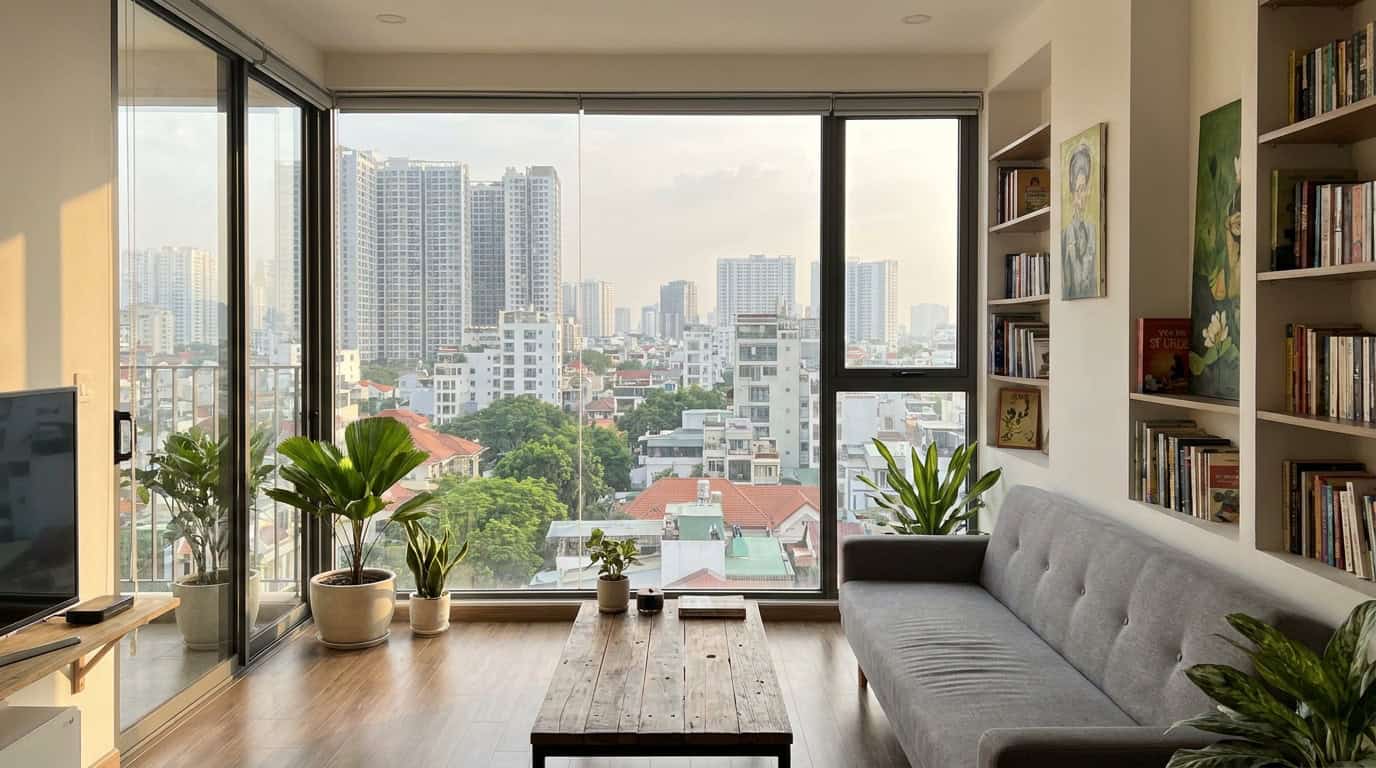
Best Areas to Book a Ho Chi Minh City Hotel by Trip Type
Different travelers need different base camps. Here is how the main districts break down:
District 1 — Best for First-Time Visitors and Short Stays
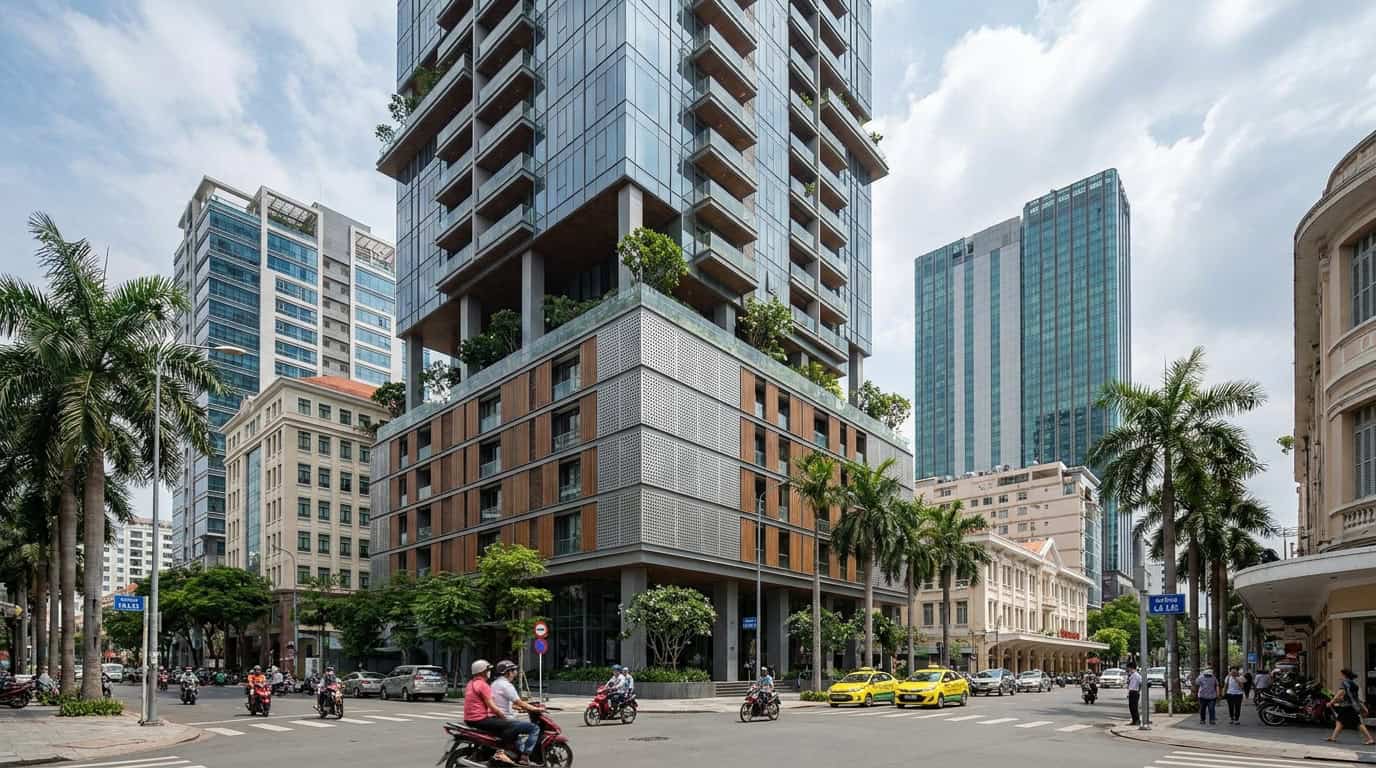
District 1 is the default answer when someone asks where to book a ho chi minh city hotel. The War Remnants Museum, Notre-Dame Cathedral, the Reunification Palace, and the main rooftop bar strip along Bui Vien and Le Thanh Ton are all accessible on foot or by a short Grab ride. Rates are highest here precisely because proximity commands a premium. Expect to pay USD 70–150 for a solid mid-range room and USD 180–500+ for international five-star brands like the InterContinental Saigon or Caravelle.
District 3 — Best for Culture, Calm, and Better Value
District 3 borders District 1 directly and is connected by a five-minute taxi. The difference: broader sidewalks, older French-era villas, genuinely good local coffee shops, and hotel rates that run 25–35% lower for comparable quality. Boutique hotels and guesthouses here attract repeat visitors who have already done the tourist circuit and want a more residential feel. This district is also convenient for the Jade Emperor Pagoda and the city’s best pho strips along Vo Thi Sau.
Binh Thanh — Best for Design Hotels and River Views
Binh Thanh sits north of District 1 across the Thi Nghe canal and has quietly become home to some of the city’s most interesting boutique and design-forward hotels. The area suits travelers who want style without the District 1 tourist bustle. The riverside stretches near Vinhomes Central Park offer park access and a noticeably cleaner street environment.
District 7 (Phu My Hung) — Best for Families and Long-Stay Comfort
Built as a planned satellite city in the 1990s, Phu My Hung has wide roads, international schools, well-stocked supermarkets, and several hotels and serviced residences targeting expat families and corporate relocatees. It trades central-Saigon energy for genuine liveability. If you have children or need proximity to Crescent Mall and SC VivoCity, this is worth considering.
Ho Chi Minh City Hotel Price Ranges for 2026
Pricing in HCMC’s hotel market has firmed up meaningfully since 2022. According to STR Global’s Asia Pacific Lodging Outlook 2025, average daily rates in Ho Chi Minh City’s upscale and upper-upscale segment reached approximately USD 145 in 2024, up roughly 12% from 2022 levels, driven by inbound flight recovery and strong domestic leisure demand during national holidays.
- Budget (USD 18–45/night): Guesthouses and hostels in the Pham Ngu Lao backpacker strip, District 1. Basic amenities, often very social. Quality varies sharply; read recent reviews carefully.
- Mid-range (USD 50–130/night): The largest and most competitive segment. Three- and four-star hotels, often with breakfast included, pool, and reliable air conditioning. Districts 1, 3, and Binh Thanh.
- Upper Mid-range (USD 130–200/night): International brand consistency (Novotel, Pullman, Movenpick), good fitness centers, reliable English-speaking staff, executive floors with lounge access.
- Luxury (USD 200–500+/night): Park Hyatt Saigon, InterContinental Saigon, Sofitel Saigon Plaza, Caravelle Saigon. Colonial architecture, multiple F&B outlets, spa, and the full five-star experience. Book 30+ days out for peak season (December–February and Vietnamese national holidays).
Business Travel: What to Prioritize in a Ho Chi Minh City Hotel
Business travelers entering HCMC for meetings in the CBD — clustered around Le Duan Boulevard, the financial district near Bitexco Tower, and the tech corridor extending toward District 4 — should prioritize the following: fiber Wi-Fi (ask for the actual Mbps, not just “high-speed”), a dedicated work desk, proximity to the main taxi and Grab corridors for airport runs, and a hotel restaurant that serves before 07:00 for early departures. The Park Hyatt and InterContinental consistently rank highest for corporate infrastructure in independent traveler surveys.
For stays under 7 nights, a hotel works. For stays over 30 nights, a serviced apartment like ours is dramatically better value — a full kitchen, a laundry machine, and a living room change the quality of an extended stay in ways that room service never quite compensates for. See the comparison at saigonapartment.vn/residences.
Leisure Travel: Best Ho Chi Minh City Hotels by Activity Base
If your trip is built around eating your way through the city, stay near Hoang Dieu in District 4 or along the backstreets of District 3 — these neighborhoods have the highest density of acclaimed local restaurants within walking distance. If your plan includes day trips (Cu Chi Tunnels, Mekong Delta, Vung Tau beach), District 1 remains the most practical hub because tour pickups are concentrated there. If nightlife is the priority, a hotel within 10 minutes of Bui Vien or the Thao Dien strip in District 2/Thu Duc will save Grab costs and late-night complications.
Booking Timing and Seasonal Pricing Patterns
HCMC’s hotel market runs two distinct peak seasons. The dry-season peak runs November through February — Tet (Lunar New Year, falling in late January or early February in 2026) compresses availability in District 1 severely, and rates spike 40–80% in the two weeks around the holiday as domestic travelers flood the city. Book at least 60 days ahead for this window. The second, softer peak covers July and August when European visitors arrive in volume and school holidays drive regional family travel. Shoulder months — March–May and September–October — offer the best combination of availability, lower rates, and manageable humidity.
What Hotel Amenities Actually Matter in HCMC
A pool matters more than you might expect: HCMC’s wet-season heat and humidity (30–38°C from April to October) make a hotel without a pool feel claustrophobic after three days. Air conditioning quality varies wildly — older buildings sometimes have window units that cannot hold temperature below 26°C. A blackout curtain is non-negotiable given that street noise and daylight start around 05:30 in most Saigon neighborhoods. Breakfast included is worth calculating carefully: a full Vietnamese breakfast at a local shop costs USD 2–4, making a USD 15 “breakfast add-on” a poor deal if you are comfortable venturing a block outside.
Checking In: Practical Logistics for a Smooth Arrival
Tan Son Nhat Airport (SGN) sits approximately 7–8 km north of District 1 in ideal conditions — budget 40–60 minutes by Grab in standard traffic and up to 90 minutes during peak arrival windows (17:00–20:00 on weekday evenings). Every reputable ho chi minh city hotel will have a Grab-friendly address in the app. Avoid metered taxis queued outside the international terminal unless you know the approximate fare in advance; the Mai Linh and Vinasun fleets are legitimate, but unsolicited “taxi” touts at arrivals are not metered. Standard airport-to-D1 fare by metered taxi runs approximately VND 200,000–280,000 (roughly USD 8–11).
Avoiding Common Ho Chi Minh City Hotel Mistakes
- Booking on name alone: Some hotels in HCMC use names implying proximity to landmarks they are not near. Always confirm the map pin.
- Ignoring review recency: Management changes are frequent. A hotel with great reviews from 2021 may have declined; filter for reviews from the last six months.
- Overlooking noise floors: Street-facing rooms on the first three floors in District 1 catch motorbike noise from 05:30 onward. Request upper floors or interior courtyard rooms.
- Skipping the cancellation terms: Non-refundable rates in HCMC are often 15–25% cheaper but Vietnam entry requirements occasionally change. Keep your booking flexible if you are arriving within 30 days of purchase.
- Underestimating the long-stay economics: A hotel room at USD 90/night for 45 nights costs USD 4,050 with no kitchen. A furnished serviced apartment in the same city zone at USD 1,400–1,800/month eliminates restaurant dependency and halves your accommodation cost.
Ho Chi Minh City Hotel Alternatives for Extended Stays
The city’s serviced apartment sector has expanded significantly to meet demand from digital nomads, corporate relocatees, and project-based workers on 1–6 month assignments. Unlike a standard ho chi minh city hotel, serviced apartments typically include weekly housekeeping, a full kitchen, dedicated Wi-Fi circuits rather than shared hotel bandwidth, and a lease structure that protects against mid-stay rate increases. Districts 1, 3, Binh Thanh, and the Thao Dien area of Thu Duc have the deepest inventory across quality tiers.
You May Also Find Useful
Rates in Ho Chi Minh City move a lot by season and by district. It is worth comparing current availability on Booking.com and Agoda before committing to anything.
Frequently Asked Questions
What is the best area to stay in Ho Chi Minh City for first-time visitors?
District 1 — specifically the area between Ben Thanh Market and the Nguyen Hue pedestrian boulevard — is the most practical base for a first visit. It puts the main museums, river promenade, rooftop bars, and the highest concentration of tour pickup points within walking distance or a very short Grab ride. Rates are higher than other districts but the convenience premium is worth it for a first trip of 4–7 nights.
How much does a good ho chi minh city hotel cost per night in 2026?
A clean, well-located three-star hotel in District 1 starts at approximately USD 55–80/night. Four-star properties with pools run USD 100–160. Five-star international brands start at USD 180 and peak above USD 400 during Tet and major holidays. District 3 offers comparable quality at 20–30% lower rates. For stays over 30 nights, serviced apartments typically cut your monthly accommodation cost by 40–60% compared with equivalent hotel rates.
Is it safe to book budget hotels in the Pham Ngu Lao area?
Yes, for the most part. The Pham Ngu Lao backpacker district in District 1 has decades of experience hosting budget international travelers. The main risks are noise (the street does not quiet until well past midnight on weekends), occasional petty theft in shared facilities, and inconsistent air conditioning in older buildings. Book properties with 4.0+ ratings on Booking.com or Agoda and read reviews from the past three months specifically.
When is the cheapest time to book a hotel in Ho Chi Minh City?
March through May and September through October offer the lowest rates combined with manageable weather. Avoid the two weeks surrounding Tet (late January or early February) and the July–August European holiday window if cost is a priority. Mid-week check-ins (Tuesday–Thursday) can also produce small additional discounts on most booking platforms.
At what point does a serviced apartment make more sense than a hotel in HCMC?
The break-even point is typically around 21–30 nights. Below 7 nights, a hotel’s convenience (daily housekeeping, concierge, flexible checkout) outweighs the premium. Between 7 and 30 nights, it depends on whether you need a kitchen and laundry. Above 30 nights, a serviced apartment is almost always dramatically better value — lower per-night cost, more living space, and a stable home base that makes working and living in the city far more comfortable.
Official Resources
For the most up-to-date information on ho chi minh city hotel, visit the Vietnam Tourism Official Guide.