
Ho Chi Minh City delivers more to first-time visitors than any single guide can hold — but this ho chi minh city guide tourists cuts through the noise and gives you a working framework for your first days in Saigon. The city of roughly 9 million people runs on motorbikes, iced coffee, and an energy that never fully powers down. District 1 is your base — everything else radiates outward from there, and once you understand that logic, the city stops feeling overwhelming and starts feeling alive.
Key Takeaways
- District 1 (Ben Nghe and Ben Thanh area) is the natural base for first-time visitors — walkable, safe, and close to the major landmarks.
- Grab (ride-hailing app) is the safest, most affordable way to move around the city; always confirm the fare before you get on a motorbike taxi.
- Street food is the heart of Ho Chi Minh City — a full breakfast of banh mi or hu tieu costs under 40,000 VND (~$1.60 USD).
- The best time to visit is November through April, during the dry season, when humidity drops and outdoor exploration is comfortable.
- According to the Vietnam National Administration of Tourism, Ho Chi Minh City received over 5 million international visitors in 2024, making it Vietnam’s most-visited city.
Ho Chi Minh City Guide: Understanding Ho Chi Minh City: Saigon’s Layout for First-Time Visitors
Most tourists land at Tan Son Nhat International Airport and head straight to District 1 — and that instinct is correct. The city is officially divided into 22 districts, but as a first-time visitor you really only need to care about a handful. District 1 is the commercial and tourist center, home to Ben Thanh Market, the Reunification Palace, Notre-Dame Cathedral, and most of the city’s internationally-facing hotels and restaurants. District 3 sits just north and blends colonial architecture with quieter local cafes. District 7 (Phu My Hung) is a planned expat suburb popular with Korean and Japanese residents. Binh Thanh and Phu Nhuan are where you find authentic Saigonese daily life without the tourist markup.
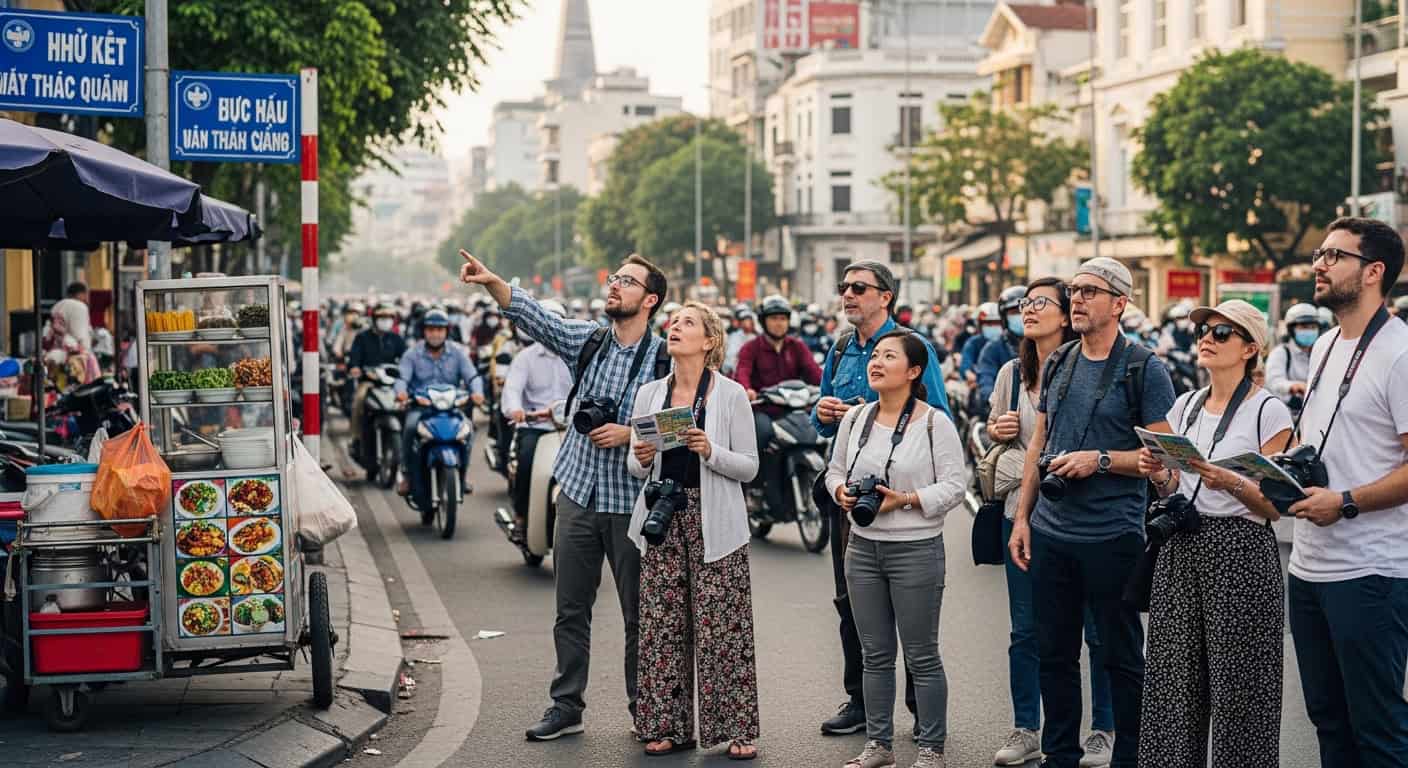
The Saigon River divides the main urban core from District 2 (Thu Duc City), which has become a hub for young professionals and high-end dining. For a first trip, you can comfortably spend three to five days without ever needing to cross the river — but if you have the time, District 2’s Thao Dien neighborhood rewards a half-day visit.
When to Visit: Seasons, Heat, and the Rainy Cycle
Ho Chi Minh City sits close to the equator, so temperatures stay between 25°C and 37°C (77°F–99°F) year-round. What changes is rain. The dry season runs from November to April — this is when the city is easiest to navigate on foot and outdoor markets are at their best. The wet season (May to October) brings afternoon downpours that typically last 30–60 minutes and then clear. Experienced travelers actually enjoy the wet season for lower hotel prices and a greener, more atmospheric city.
Peak tourist months are December and January, when you’ll share the major sites with Vietnamese domestic travelers celebrating Tet preparations. If you want fewer crowds on this ho chi minh city guide tourists itinerary, aim for February–April or September–October.
Getting Around Ho Chi Minh City Safely
Traffic in Saigon is the first thing every visitor notices and the first thing every long-term resident learns to read. The key insight: traffic flows like water around obstacles. Crossing a busy street means walking at a steady, predictable pace so motorbikes can route around you — not waiting for a gap that will never come.
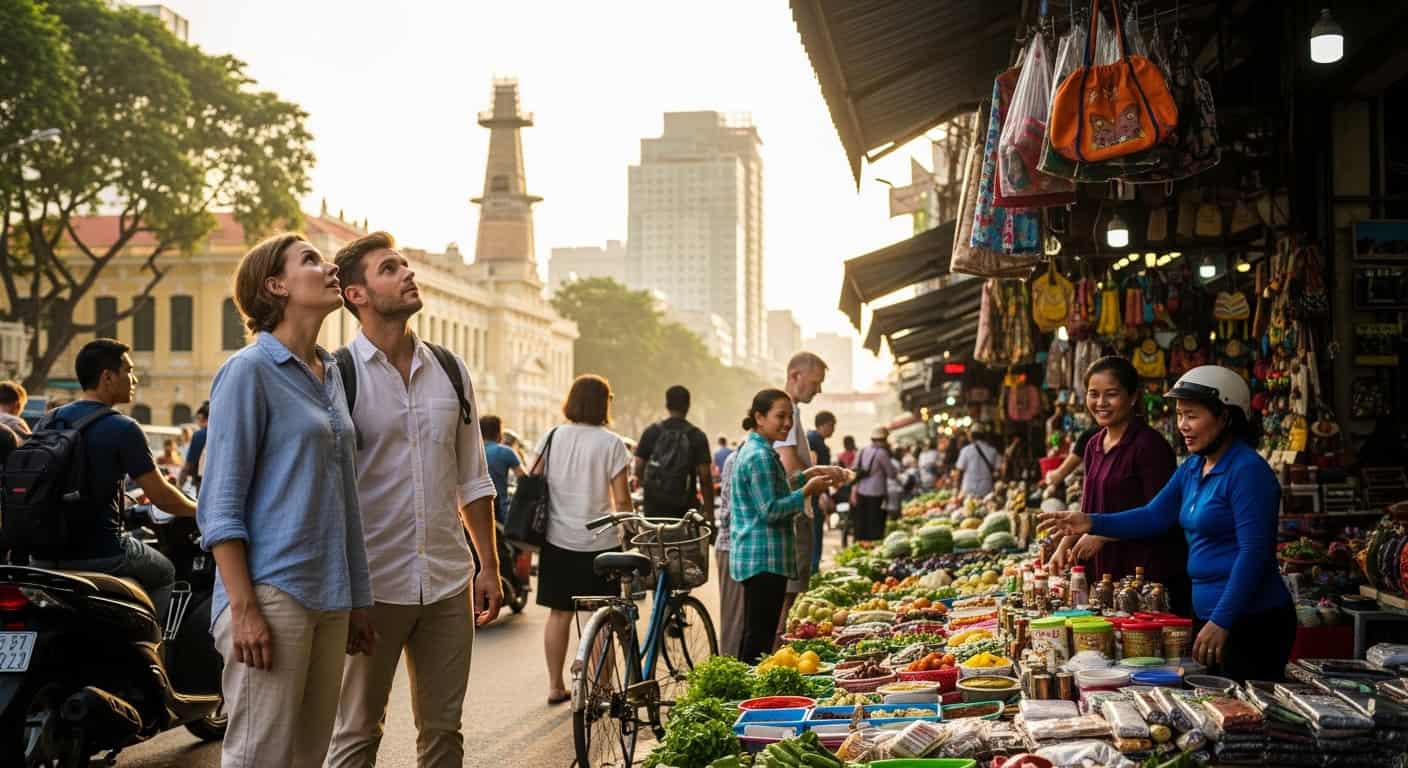
For getting between neighborhoods, your options are:
- Grab: The dominant ride-hailing app. Book GrabBike (motorbike) for short trips under 5 km; GrabCar for comfort or rainy days. Prices are fixed before you confirm, so there is no negotiation needed.
- Metered taxis: Vinasun and Mai Linh are reputable. Avoid unmarked taxis that approach you outside Tan Son Nhat.
- Walking: District 1’s core — from Ben Thanh to the riverside — is walkable in about 25 minutes. The heat makes anything longer uncomfortable between 10am and 4pm.
- Public bus: Cheap (7,000 VND) and air-conditioned on major routes. The app BusMap shows real-time routes in English.
- Ho Chi Minh City Metro Line 1: The Ben Thanh–Suoi Tien line opened in late 2024 and connects District 1 to District 9/Thu Duc, making it the first rapid transit option in the city’s history.
Where to Stay: Districts and Neighborhoods for Every Budget
For most first-time visitors, staying in District 1 makes the most sense. The Ben Thanh and Pham Ngu Lao areas offer everything from budget guesthouses at $15/night to five-star properties. Pham Ngu Lao Street, known as the backpacker district, has the highest concentration of hostels, travel agencies, and tour operators — it can feel loud at night but is extremely convenient.
For a quieter experience at a similar price point, the streets around Nguyen Thi Minh Khai (District 3 border) offer boutique hotels within walking distance of District 1’s attractions. District 2’s Thao Dien is popular with longer-stay visitors and expatriates looking for serviced apartments.
According to data from STR Global (2025), average daily hotel rates in Ho Chi Minh City’s District 1 rose 11% year-on-year in Q1 2025, driven by the post-pandemic recovery in regional tourism — book at least three weeks ahead during peak season.
What to Eat on Day One: A Ho Chi Minh City Food Roadmap
No ho chi minh city guide tourists is complete without a serious food section, because eating well here requires almost no money and almost no planning. Start your first morning at a streetside banh mi cart — the Saigon version uses a shorter, crispier baguette than Hanoi’s, typically stuffed with pate, cold cuts, cucumber, daikon, and chili. Budget 25,000–35,000 VND.
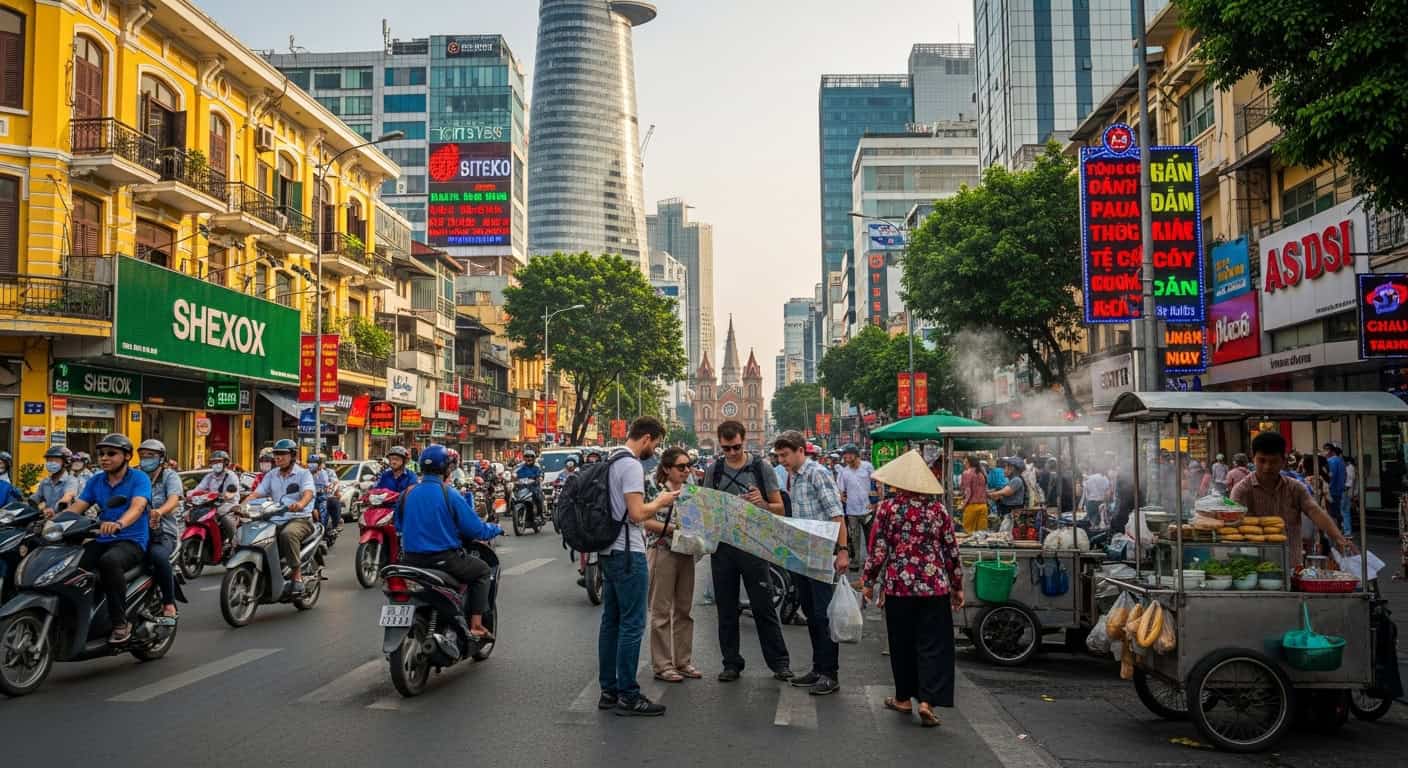
For lunch, find a com tam (broken rice) restaurant. Com tam with suon nuong (grilled pork chop), a fried egg, and a bowl of soup is the quintessential Saigon midday meal. It costs 45,000–70,000 VND and you’ll find it on nearly every residential street. In the evening, walk to Bui Vien or the Ben Thanh Night Market for a wider spread — but locals eat better and cheaper one or two streets away from the tourist clusters.
Other dishes to prioritize on your first visit:
- Hu tieu Nam Vang: Clear pork broth noodle soup, a Saigon specialty distinct from pho.
- Banh xeo: Sizzling crepe filled with shrimp, bean sprouts, and pork; eaten by wrapping in lettuce and rice paper.
- Ca phe trung (egg coffee): A Saigon adaptation of Hanoi’s famous egg coffee, served both hot and iced.
- Goi cuon (fresh spring rolls): Lighter than fried versions; standard in any bun (noodle) restaurant.
HCMC rewards orientation. This guide maps the city’s logic for first-time visitors: which districts to prioritise, what to eat on day one, how to move around safely. District 1 is your base — everything else radiates outward.
Must-Visit Attractions for Ho Chi Minh City Tourists
The city’s landmark attractions are clustered tightly enough to visit several in a single morning:
- War Remnants Museum: One of the most visited museums in Southeast Asia. Honest, sometimes confronting, and important context for understanding modern Vietnam. Allow 2 hours; entry is 40,000 VND.
- Reunification Palace: The former Presidential Palace, frozen in 1975. The retro interiors and rooftop are genuinely fascinating. Entry 40,000 VND.
- Notre-Dame Cathedral (Basilica of Our Lady of the Immaculate Conception): Currently undergoing partial restoration, but still photogenic and historically significant.
- Ben Thanh Market: Better for atmosphere and people-watching than for bargain shopping (prices are tourist-facing). The surrounding streets are more authentic.
- Jade Emperor Pagoda (Phuoc Hai Tu): The most atmospheric temple in the city; free entry, incense smoke, century-old carvings. District 3, easily reached by Grab.
- Cu Chi Tunnels: A half-day trip 40 km northwest of the city center. The tunnel network used by Viet Cong guerrillas is one of the most unique historical sites in the region. Book a guided morning tour.
Day Trips and Excursions From Ho Chi Minh City
Saigon is well positioned as a base for regional exploration. The Mekong Delta’s Can Tho province is three hours by road — the floating markets at Cai Rang are most active before 8am, so an early start is essential. Vung Tau, the coastal city 2 hours southeast, offers a beach break without a domestic flight. For history, the Cao Dai Temple in Tay Ninh province (3 hours) is architecturally unlike anything else in Vietnam.
Most guesthouses in the Pham Ngu Lao area organize these day trips at reasonable rates. Alternatively, book through reputable operators like Intrepid Travel or GetYourGuide for English-language guides.
Practical Tips: Money, SIM Cards, and Safety
Vietnam uses the Vietnamese Dong (VND). As of mid-2025, 1 USD equals approximately 25,200 VND. ATMs dispense dong; Vietcombank and Techcombank machines have the lowest foreign transaction fees. Credit cards are accepted at hotels and mid-range restaurants but rarely at street food stalls — carry at least 200,000–300,000 VND in cash for daily expenses.
Buy a local SIM card immediately after landing at Tan Son Nhat. Viettel and Vietnamobile offer tourist SIM packages with 4G data for 150,000–200,000 VND — airport kiosks in the arrivals hall are legitimate. A working data connection is your single most useful tool in the city, enabling Grab, Google Maps, and translation apps.
Ho Chi Minh City is generally safe for tourists. Petty theft (bag snatching from motorbikes) does occur on some streets, particularly along the riverside and near Ben Thanh. Keep bags on your inner shoulder, away from the road. At night, the main tourist areas are well-lit and busy. Solo female travelers report feeling comfortable in District 1 and District 3, particularly in the early evening.
Language and Getting By in Saigon
Vietnamese is a tonal language that takes months to learn, but you need almost none of it to navigate the city. English is widely spoken in hotels, upscale restaurants, and tour agencies. In street food stalls, pointing and showing prices on a phone calculator works universally. A few phrases that earn goodwill: xin chao (hello), cam on (thank you), and bao nhieu (how much). The Google Translate camera function handles menus reasonably well.
Visa Requirements for Ho Chi Minh City Tourists
As of 2023, Vietnam extended its e-visa program to citizens of all countries, with a 90-day single or multiple-entry e-visa available online at evisa.xuatnhapcanh.gov.vn. Citizens of several countries including the UK, France, Germany, Italy, and Spain also qualify for visa-free entry for 45 days. Check your specific country status before booking — requirements can change. The e-visa application typically takes 3 business days and costs $25 USD.
A 3-Day Itinerary for First-Time Visitors
This compressed itinerary covers the essentials for a ho chi minh city guide tourists framework:
Day 1 — District 1 Core: Morning at the War Remnants Museum, then walk to the Reunification Palace. Lunch at a com tam shop on Nguyen Van Chiem Street. Afternoon: Ben Thanh area, Nguyen Hue Walking Street, rooftop sunset at a Bui Vien bar. Evening: pho or bun bo Hue at a local spot.
Day 2 — Culture and Neighborhoods: Early morning Jade Emperor Pagoda before the crowds arrive. Coffee at a third-wave cafe in District 3 (The Workshop or Cafe Apartment). Afternoon: Thao Dien in District 2 for galleries and riverside dining. Return via the new Metro Line 1 for the experience.
Day 3 — Cu Chi Tunnels Day Trip: Depart by 7:30am to beat the heat. Return by 2pm; spend the afternoon at a cooking class (Saigon Cooking Class by Hoa Tuc is well-regarded) or exploring Cholon, District 5’s Chinatown, for temple-hopping and dim sum.
You May Also Find Useful
- Where to Stay in Ho Chi Minh City 2026: The Complete Neighborhood Guide for First-Time Visitors
- HCMC in 48 Hours: The Perfect Weekend Itinerary for First-Time Visitors
- Vietnam Itinerary: The Best Route for First-Time Visitors Entering Through Saigon
- Saigon First-Time Visitor Guide 2025: What to Do, Where to Stay, and How to Orient Yourself
Frequently Asked Questions
Is Ho Chi Minh City safe for tourists?
Yes — Ho Chi Minh City is generally safe for tourists. The main risks are petty theft (motorbike bag snatching near the riverside) and traffic. Use Grab for transport, keep bags on your inner shoulder, and you’ll have few problems. The tourist districts of District 1 and District 3 are well-policed and busy with visitors.
How many days do I need in Ho Chi Minh City?
Three to four days covers the major attractions at a comfortable pace. Five to seven days allows for a day trip to the Mekong Delta or Cu Chi Tunnels plus a deeper exploration of the city’s neighborhoods. One or two days is enough to hit the highlights if you’re passing through on a longer Vietnam itinerary.
What is the best area to stay in Ho Chi Minh City as a tourist?
District 1 is the best base for first-time visitors. The Pham Ngu Lao area is the budget traveler hub; Ben Thanh and the riverfront area suit mid-range and luxury stays. District 3 is quieter and more local-feeling while still within walking distance of the main sites.
What is the local currency and how much cash do I need per day?
Vietnam uses the Vietnamese Dong (VND). For a mid-range traveler using a mix of street food and sit-down restaurants, budget approximately 500,000–800,000 VND ($20–32 USD) per day for food and local transport, not including accommodation or entrance fees. ATMs are widely available in District 1.
Do I need a visa to visit Ho Chi Minh City?
Most nationalities now qualify for either visa-free entry (45 days for citizens of many European and select other countries) or the 90-day e-visa available at Vietnam’s official e-visa portal. Check your country’s specific status before travel — requirements updated significantly in 2023 and continue to evolve.
Official Resources
For the most up-to-date information on ho chi minh city guide tourists, visit the Vietnam National Administration of Tourism.