
This Hoi An travel guide covers everything you need to plan a perfect trip to Vietnam’s most atmospheric town — from wandering the lantern-lit Ancient Town to getting a suit made overnight, cycling to hidden beaches, and booking the best day trips from Hoi An. Whether you’re visiting for a long weekend or five full days, this guide gives you the practical details that most travel sites skip.
Key Takeaways
- Fly from Tan Son Nhat (SGN) to Da Nang (DAD) in 1.5 hours — budget carriers like VietJet and Bamboo Airways run multiple flights daily from around 500,000 VND one-way.
- The Hoi An Ancient Town UNESCO World Heritage Site charges a 120,000 VND entrance ticket that grants access to five heritage monuments.
- Plan 4–5 days: two days in the Ancient Town, one day at An Bang or Cua Dai beach, and one day for a My Son or Marble Mountains day trip.
- Book tailors at least 48 hours before you need your garment — quality houses require two fittings and won’t rush the final stitch.
- Hoi An is extremely walkable and bike-friendly; rent a bicycle for 50,000–80,000 VND/day and skip the taxis entirely.
How to Get to Hoi An from Ho Chi Minh City
The fastest route from Saigon to Hoi An starts at Tan Son Nhat Airport. Fly to Da Nang — the journey takes roughly 1 hour 20 minutes — then transfer by taxi or private car 30 km south to Hoi An town. The drive takes 45 minutes and costs around 300,000–400,000 VND by metered taxi or 350,000–500,000 VND by pre-booked private transfer. Budget airlines VietJet Air, Bamboo Airways, and Vietnam Airlines all operate this route multiple times daily. Book 2–4 weeks ahead to lock in sub-600,000 VND fares. This is the most practical itinerary opener for anyone using a Hoi An travel guide from a Saigon base — the whole city-swap takes under three hours door to door.
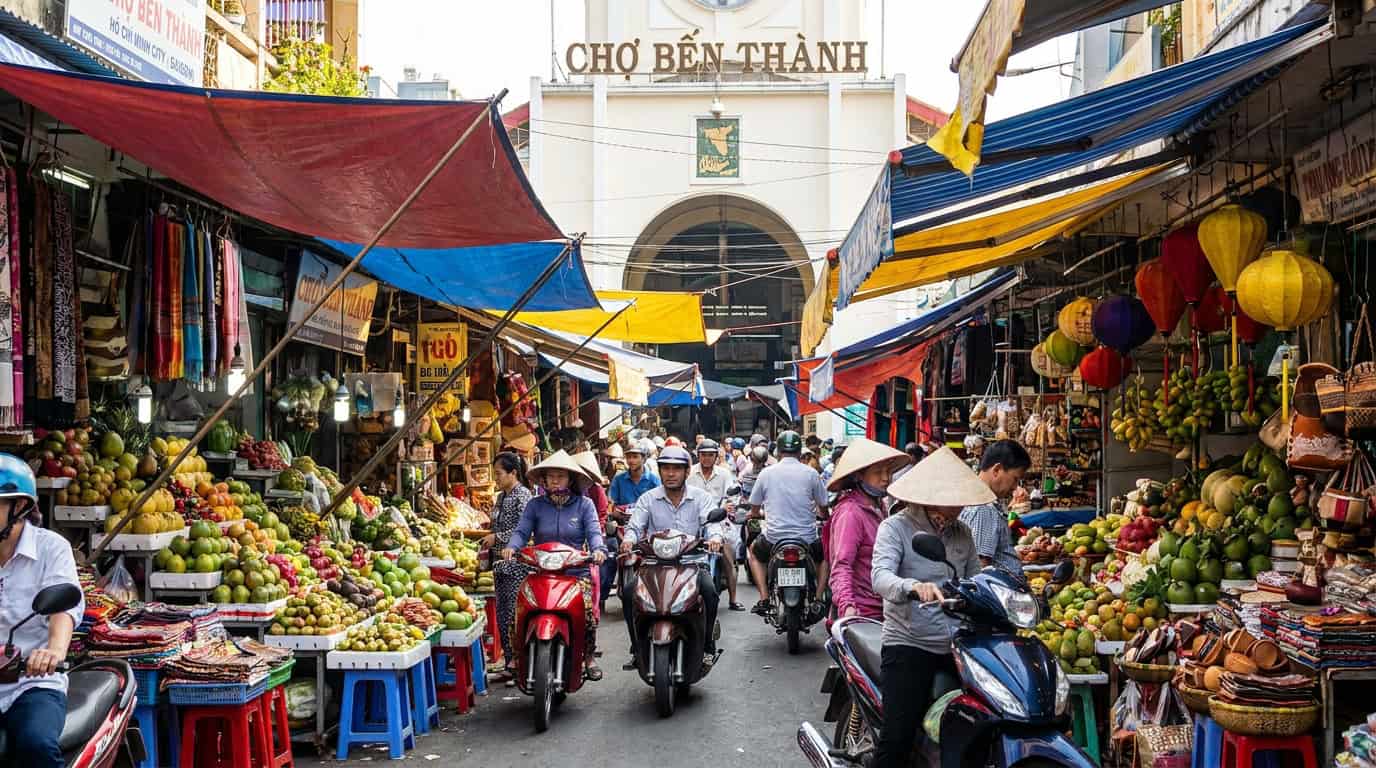
Alternatively, the overnight sleeper train from Saigon to Da Nang takes 16–17 hours and deposits you in the city with a soft-berth experience for around 500,000–900,000 VND, but most visitors prefer the flight for efficiency.
Hoi An Ancient Town: What to See and Where to Walk
The Ancient Town is the beating heart of any Hoi An travel guide. Recognised as a UNESCO World Heritage Site since 1999, the 30-hectare old quarter preserves 1,000-plus wooden merchant houses, assembly halls, family chapels, and bridges built between the 15th and 19th centuries by Japanese, Chinese, and Vietnamese traders. Your 120,000 VND ticket (purchased at any of six booths around the perimeter) covers entry to five attractions — choose from the Japanese Covered Bridge, Phuc Kien Assembly Hall, Tan Ky Old House, Duc An Old House, Quan Cong Temple, and others on the UNESCO ticket list.
Walk Tran Phu Street at 7 am before tour groups arrive and the shopfronts are still quiet. Cross the Japanese Covered Bridge to the smaller north bank, where riverside cafes serve ca phe trung (egg coffee) with views across the Thu Bon River. In the evenings, the town transforms — hundreds of silk lanterns are lit and the streets fill with colour. According to UNESCO’s World Heritage monitoring report (2024), Hoi An receives over two million international visitors per year, making conservation of the wooden structures an active priority for local authorities.
Hoi An Beaches: An Bang, Cua Dai, and Beyond
Hoi An sits just 4 km from the coastline. The two main beaches — An Bang and Cua Dai — are reachable by bicycle in 20–30 minutes from the Ancient Town, which is one reason they feature in almost every Hoi An travel guide.

- An Bang Beach is the livelier, backpacker-friendly option with beach bars, sunloungers for hire (around 50,000–100,000 VND/day including a drink), and good seafood restaurants right on the sand. Soul Kitchen and La Plage are long-standing favourites.
- Cua Dai Beach is quieter and more open, though erosion has affected parts of the shoreline in recent years. Best visited in the morning when the water is calmer.
- Bang An and Ha My beaches, further north past the resorts, are almost empty on weekdays — ideal if you cycle 8–10 km north of town.
Swimming is best from March to August. The rainy season (September to December) brings rougher seas and occasional flooding in the Ancient Town itself.
Hoi An Tailors: Getting Clothes Made the Right Way
Getting something made by a Hoi An tailor is a rite of passage for long-term Vietnam residents — and one of the most practical items in any serious Hoi An travel guide. The town has over 400 tailor shops, ranging from excellent family-run ateliers to tourist-trap assembly lines. Here’s how to navigate them:
- Choose your tailor carefully. Yaly Couture (four locations on Le Loi and Tran Phu), A Dong Silk, and Be Be Tailor have strong reputations for quality finishing on suits, ao dai, and dresses. Prices at these shops are higher than the market rate — a men’s two-piece suit runs 3,000,000–6,000,000 VND — but the workmanship justifies it.
- Bring reference photos. The more specific you are with neckline, lapel width, and lining colour, the better the result. Tailors work from your photos, not from their imagination.
- Plan two fittings. First fitting is typically 24 hours after measurement. Final pickup is another 24 hours later. If a shop promises same-day turnaround on a suit, walk away.
- Inspect the lining and seams before you pay. Turn the garment inside out. Uneven stitching, puckering at the shoulders, or a lining that bunches are all signs the final pressing was rushed.
Budget: ao dai from 600,000 VND, women’s dress from 800,000 VND, men’s shirt from 500,000 VND, full suit from 3,000,000 VND. Pay a 50% deposit and withhold the balance until you’re satisfied at pickup.
Hoi An Food Guide: What and Where to Eat
Hoi An has its own distinct cuisine that doesn’t appear elsewhere in Vietnam with the same authenticity. These are the non-negotiable dishes:
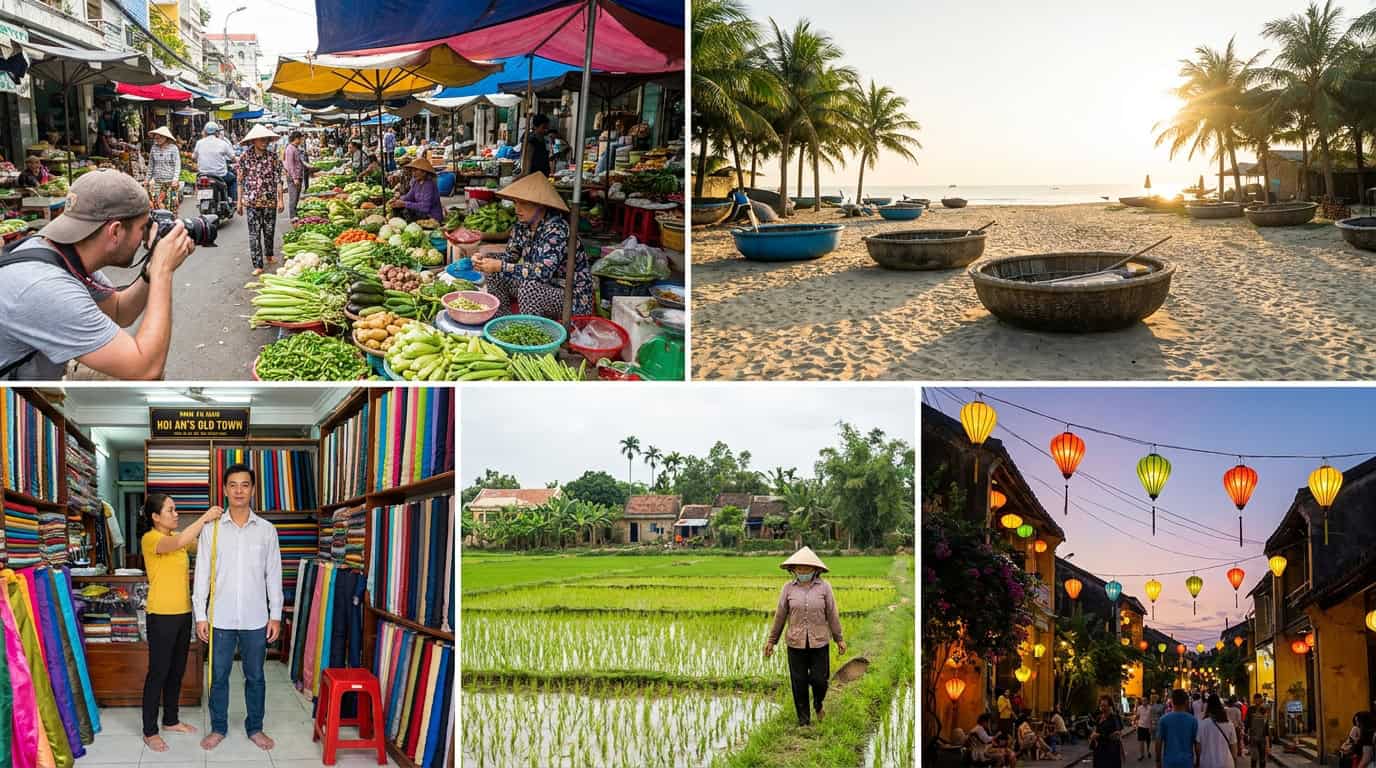
- Cao Lau — thick chewy noodles with pork, greens, and crispy croutons, made with water supposedly drawn from a specific well in the Ancient Town. Order at Thanh Cao Lau (26 Thai Phien) or any market stall in Hoi An Central Market.
- White Rose Dumplings (Banh Bao Vac) — translucent shrimp dumplings, only sold by one family who supplies most restaurants in town. Ask any local restaurant; they all buy from the same source.
- Banh Mi Phuong — the banh mi stall that Anthony Bourdain called the “best sandwich in the world” is still operating at 2B Phan Chau Trinh. Queue before 7:30 am or after 2 pm to avoid the longest waits.
- Mi Quang — turmeric-yellow noodles with pork, shrimp, and a small amount of rich broth, topped with rice crackers. Best at Mi Quang 1A (1A Hai Phong).
- Com Ga (Chicken Rice) — Hoi An-style chicken rice is distinct from Hainanese versions, with shredded poached chicken over fragrant turmeric rice. Phuong Hai Com Ga on Phan Chu Trinh is the standard reference.
Eat breakfast at the Hoi An Central Market for 30,000–60,000 VND per dish. The market opens at 5:30 am and the freshest cooking happens before 9 am.
Day Trips from Hoi An: My Son, Da Nang, and Marble Mountains
One day in your Hoi An travel guide itinerary should go to at least one day trip. The most popular options:
- My Son Sanctuary — a UNESCO-listed complex of Hindu temples built by the Cham civilisation between the 4th and 14th centuries. Located 40 km west of Hoi An. Most tours leave at 7 am to beat the heat. Half-day tour price: 200,000–350,000 VND including transport. Go independently by motorbike or join a guided group for the historical commentary.
- Marble Mountains (Ngu Hanh Son) — five limestone and marble hills midway between Hoi An and Da Nang, honeycombed with Buddhist sanctuaries and cave shrines. Entrance 40,000 VND; elevator option 15,000 VND. Combine with a stop at Non Nuoc stone-carving village. Accessible by bicycle if you’re comfortable riding 18 km in heat.
- Da Nang city — 30 minutes north by taxi. The Dragon Bridge breathes fire on Friday and Saturday nights at 9 pm. My Khe Beach is one of the longest urban beaches in Southeast Asia. Worth a half-day combined with an evening back in Hoi An for dinner.
- Tra Que Vegetable Village — a 3 km cycling detour from the Ancient Town. Farming families grow herbs and vegetables using traditional methods on a small island surrounded by water. Cooking classes here are 300,000–500,000 VND and excellent for families.
Best Time to Visit Hoi An
The driest and most pleasant months are February through August. February and March offer cool temperatures (22–27°C) with low humidity — ideal for walking and cycling. April through August is hotter (30–34°C) but reliably sunny, perfect for beach days. September through November brings heavy rainfall, and October–November sees the highest flood risk in the Ancient Town, when Thu Bon River can overflow into the ground-floor streets. According to the Vietnam National Administration of Tourism (2025 visitor data), April–June is now the peak domestic travel season to Hoi An following the post-pandemic rebound, making early booking for accommodation essential during public holidays including April 30 and May 1.
If you’re travelling from Ho Chi Minh City, the February–April window is ideal — Saigon’s dry season aligns, flight prices are moderate, and Hoi An is at its most beautiful under clear skies.
Where to Stay in Hoi An
Accommodation in Hoi An splits into three zones:
- Inside or adjacent to the Ancient Town — boutique guesthouses and small hotels within walking distance of everything. Expect to pay 600,000–1,500,000 VND/night for a clean, well-located room. Anantara Hoi An Resort (riverside, luxury tier) and Little Hoi An Boutique Hotel (mid-range, excellent breakfast) are standouts.
- The beach zone (An Bang/Cua Dai) — quieter evenings, sunrise swims, but requires a bicycle or taxi for every dinner. Four- and five-star resorts like Four Seasons Nam Hai and Naman Retreat are located here. Budget beach bungalows start at 400,000 VND.
- Between town and beach — the growing mid-zone of newer hotels. Good value but lacks the character of the Ancient Town lanes. Best for travellers who want a pool and AC without the resort price tag.
Book at least 3–4 weeks ahead for February, April, and July travel — occupancy rates in central Hoi An consistently run above 85% during these months.
Hoi An Itinerary: 4–5 Days from Saigon
This is a practical blueprint for anyone planning a trip using this Hoi An travel guide as a starting point from Ho Chi Minh City:
- Day 1 — Arrival and Ancient Town evening: Morning flight from Tan Son Nhat, arrive Da Nang by 9 am, transfer to Hoi An. Check in, rent a bicycle, do a slow loop of the Ancient Town streets. Buy your UNESCO ticket and walk the Japanese Covered Bridge at dusk. Dinner at the Central Market.
- Day 2 — Deep Ancient Town + tailor: Early morning walk before 8 am. Visit Phuc Kien Assembly Hall and Tan Ky Old House. Spend the afternoon at your tailor for measurements. Evening: lantern release on the river (best on the 14th and 1st of each lunar month).
- Day 3 — Beach day: Cycle to An Bang Beach by 8:30 am. Swim, lunch at a beachside restaurant, back to town by 3 pm. Tailor fitting in the afternoon. Sunset cocktails at one of the rooftop bars on Nguyen Thai Hoc.
- Day 4 — Day trip (My Son or Marble Mountains): Half-day tour in the morning. Afternoon: pick up tailored clothes, last market shopping, cooking class or street food crawl.
- Day 5 — Slow morning, return flight: Final banh mi from Phuong, riverside coffee, transfer to Da Nang Airport for afternoon flight back to Saigon.
Hoi An is Vietnam’s most photogenic town. Fly from Saigon in 1.5 hours, explore for 4–5 days, then return to your D1 apartment refreshed — it’s one of the most complete short breaks available from Ho Chi Minh City without crossing an international border.
Practical Tips for Your Hoi An Travel Guide Checklist
- Cash is king. Many small restaurants, market stalls, and bicycle rental shops don’t accept cards. Withdraw VND from an ATM in Da Nang airport or the Agribank/Vietcombank ATMs near the Ancient Town entrance.
- Wear light clothing. The Ancient Town lanes have limited shade and heat is intense from 10 am–3 pm. A sun hat is essential, not optional.
- Respect the residential zones. Many streets inside the Old Town are residential. Keep noise down after 10 pm and avoid smoking inside heritage buildings.
- Hire a local guide for My Son. The site’s history is dense and a guide dramatically increases what you understand. Expect 200,000–400,000 VND for a licensed English-speaking guide.
- Book transfers in advance. Da Nang airport to Hoi An by pre-booked private car (Grab, Baolau, or hotel transfer) is 350,000–500,000 VND and avoids negotiating with touts outside arrivals.
- Bring a small padlock if staying in budget guesthouses — locker access in shared rooms is not always provided.
You May Also Find Useful
Once the route is settled, Booking.com and Agoda are the quickest way to see what is still available on your dates in Hoi An.
Frequently Asked Questions
How many days do I need in Hoi An?
Four to five days is the ideal duration. Two days covers the Ancient Town thoroughly, one day is needed for a beach visit, and one day is best used for a day trip to My Son or Da Nang. Anything under three days feels rushed and doesn’t leave time for tailoring.
Is Hoi An expensive for Vietnamese domestic travellers?
Hoi An sits in the mid-range bracket by Vietnamese standards. Budget accommodation starts at 300,000–500,000 VND/night, market meals cost 30,000–80,000 VND, and bicycle rental is 50,000–80,000 VND/day. The main costs that can add up quickly are tailoring, resort stays near the beach, and organised tours. A realistic daily budget for comfortable travel is 600,000–1,200,000 VND per person excluding accommodation.
What is the best way to get around Hoi An?
Bicycle is by far the best option for most of Hoi An. The Ancient Town is compact, the beach roads are flat, and cycling to Tra Que Village or An Bang Beach takes 20–30 minutes. Motorbike rental (100,000–150,000 VND/day) is better for day trips to My Son or the Marble Mountains. Grab operates in Hoi An for longer distances.
When is the lantern festival in Hoi An?
The Full Moon Lantern Festival (Hoi An Phố Cổ by Night) takes place on the 14th day of each lunar month. Electric lights in the Ancient Town are switched off, and the streets are lit entirely by hundreds of silk lanterns. Paper lanterns are released on the Thu Bon River. The most atmospheric months for this event are February (coincides with Tet season), April, and July. Check the Vietnamese lunar calendar to align your travel dates.
Can I do a day trip to Hoi An from Da Nang?
Yes, but it’s not recommended if you want to experience the town properly. The 30 km transfer each way costs time and money, and you lose the magic of the Ancient Town at dawn and dusk — the two best times to be there. If you’re based in Da Nang for a longer trip, Hoi An works as a day trip, but for anyone flying in from Saigon, staying in Hoi An directly for 4–5 nights is clearly the better approach.
Official Resources
For the most up-to-date information on hoi an travel guide, visit the Vietnam National Administration of Tourism.