
Humidity in Saigon is genuinely high — and if you are moving to Ho Chi Minh City for the first time, it will be the first thing you notice when you step off the plane. The average relative humidity sits between 75% and 80% year-round, spiking above 90% during the wet season from May to November. That is not a minor inconvenience; it shapes how you sleep, how you dress, how you store your belongings, and how much energy your air conditioning consumes every month. This guide covers everything long-stay residents in HCMC need to know about managing humidity saigon throws at you daily.
Key Takeaways
- Ho Chi Minh City’s average relative humidity ranges from 75–80%, rising above 90% during the May–November wet season.
- The dry season (December–April) offers the most comfortable humidity levels, typically 65–70% in the afternoon.
- Mold, electronics corrosion, and respiratory irritation are the most common practical problems caused by high humidity saigon residents face.
- Dehumidifiers, moisture-absorbing products, and proper ventilation are the front-line defenses for apartments without climate-controlled air conditioning.
- Choosing a well-managed serviced apartment with dehumidifier-equipped AC dramatically reduces humidity-related maintenance and health issues.
What Is the Average Humidity in Saigon?
Ho Chi Minh City sits just 10 degrees north of the equator in the Mekong Delta region, which means the air is perpetually warm and moisture-laden. According to Vietnam’s National Hydro-Meteorological Service (2024 annual report), HCMC recorded a mean annual relative humidity of 79.3%, with monthly averages never dropping below 65% even in the driest months. For comparison, London averages around 75% and Bangkok around 74%, but neither city combines that humidity with Saigon’s consistently high temperatures — the combination is what makes it feel so oppressive.

The humidity saigon residents experience is not static throughout the day either. Early mornings and evenings regularly push past 85–90%, while afternoon heat (peaking 34–37°C) provides brief windows of slightly drier air. If you schedule outdoor activities, late morning is your best window before the afternoon thunderstorms roll in from May onwards.
Saigon Wet Season vs. Dry Season: Humidity Differences
Understanding the two-season cycle is essential for planning your stay and protecting your possessions.
- Wet season (May–November): Humidity regularly exceeds 85%, often touching 90–95% during and after heavy downpours. Afternoon storms can dump 50–80mm of rain in under two hours. Everything feels damp — walls, clothing left on hangers, leather goods, and wooden furniture.
- Dry season (December–April): This is when humidity saigon drops to its lowest, settling around 65–70% in the afternoon. Mornings are still humid but much more manageable. This is the period most first-time visitors prefer, and for good reason.
The transition months — late April into May and late October into November — are particularly unpredictable, oscillating between both extremes within the same week. Pack and plan accordingly.
How High Humidity Saigon Affects Your Health
Persistent high humidity is not just uncomfortable; it has measurable health effects. The most common complaints among long-stay expats include:

- Respiratory irritation: Mold spores thrive above 70% relative humidity. In poorly ventilated apartments, mold grows on walls, ceilings, and air conditioning filters within weeks, triggering allergies, asthma flare-ups, and chronic sinus congestion.
- Skin issues: Fungal infections, heat rash, and persistent sweating are more common. The skin never fully dries between showers in an uncontrolled environment.
- Fatigue and poor sleep quality: The body struggles to cool itself through perspiration when the air is already saturated. Sleeping in a room above 70% humidity without proper AC leads to broken, restless sleep.
- Dehydration: Counterintuitively, high humidity causes greater fluid loss through sweat even when you do not feel the exertion.
According to a 2025 study published in the Asia-Pacific Journal of Public Health, residents in tropical Southeast Asian cities who sleep in climate-controlled environments with humidity kept at or below 60% report significantly better sleep quality and lower rates of respiratory complaints compared to those in uncontrolled conditions. The study surveyed over 2,400 long-stay urban residents across five cities including HCMC.
What High Humidity Does to Your Belongings
The humidity saigon produces is merciless on certain categories of possessions. Long-stay residents learn quickly to adapt storage habits or risk costly damage.
- Electronics: Circuit boards corrode. Laptops, cameras, and audio equipment stored in humid rooms without silica gel or dehumidifying cases develop oxidation on connectors within months. A dry cabinet (sold widely in HCMC electronics shops) is a worthwhile investment for cameras and sensitive gear.
- Leather and suede: Shoes, bags, and belts develop mold within two to three weeks if left in a closed wardrobe without airflow. Silica gel packets and cedar inserts help significantly.
- Books and documents: Paper warps and yellows. Important documents should be stored in zip-lock bags or plastic document sleeves.
- Wooden furniture and musical instruments: Guitars especially are vulnerable — necks warp, tuning pegs stick, and lacquer bubbles. Guitar humidifiers and case storage with silica packs are essential.
- Clothing: Garments left damp on hangers (common in apartments without tumble dryers) develop mildew smell within 24 hours. A dehumidifier or heated drying rack is indispensable.
How Long-Stay Expats Manage Humidity in Saigon Day-to-Day
After a few weeks in the city, most long-stay residents develop a practical routine. Here is what experienced HCMC expats consistently recommend:
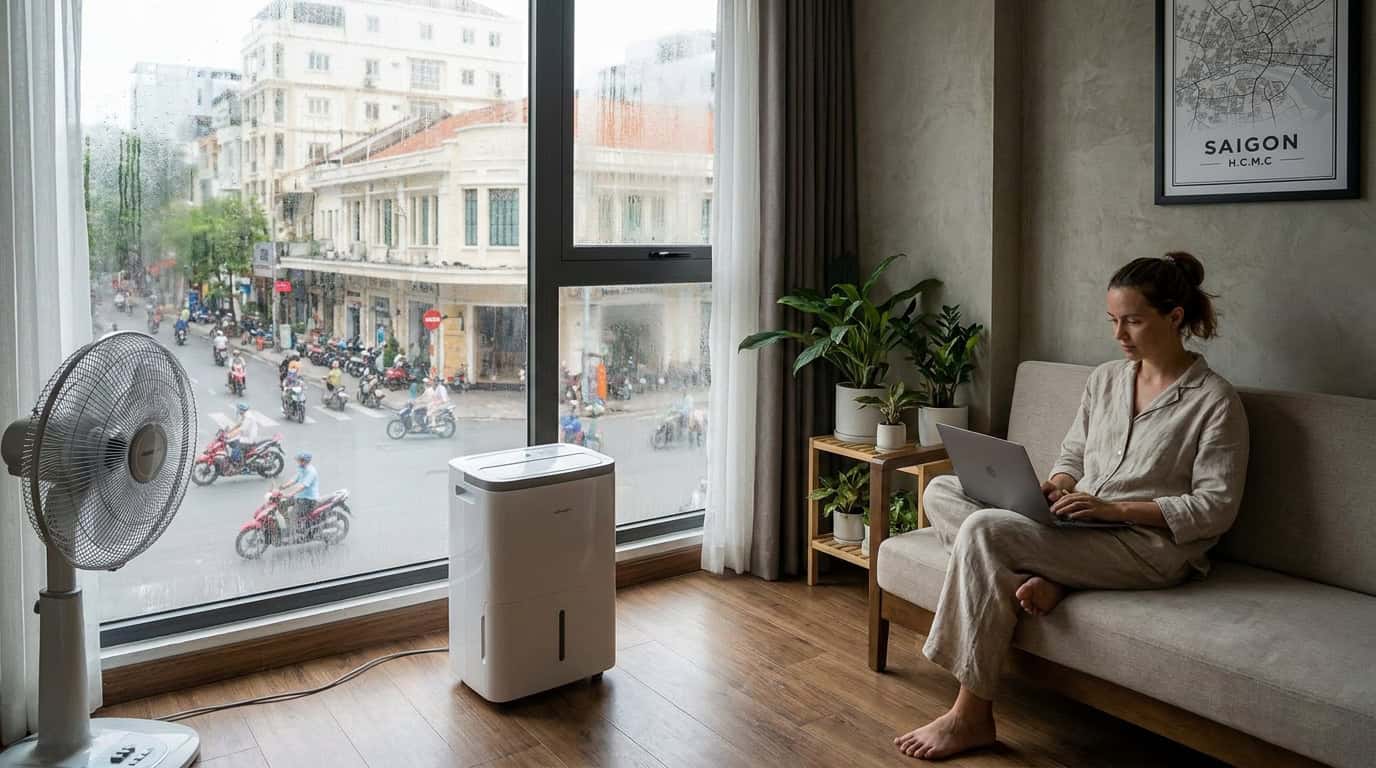
- Run AC with dehumidification mode overnight. Most modern inverter AC units have a dedicated dry mode (indicated by a water droplet icon). Using this rather than pure cool mode consumes less electricity while targeting humidity directly. High humidity is real — which is why our D1 apartments come with dehumidifier-equipped air con and fresh linens weekly, so you never have to fight damp bedding or a clammy bedroom.
- Use standalone dehumidifiers in rooms without AC. Bathrooms, storage rooms, and home offices that are not air-conditioned accumulate moisture rapidly. A 10–12L/day portable dehumidifier handles an average HCMC room.
- Silica gel everywhere it matters. Wardrobe, shoe rack, electronics drawer, camera bag — replace packs every 2–3 months or use rechargeable versions.
- Keep air circulating. Ceiling fans and standing fans do not reduce humidity, but they prevent the stagnant pockets of moist air that encourage mold growth on walls and ceilings.
- Wipe bathroom walls and squeegee shower screens daily. Standing water evaporates into room air. This single habit dramatically reduces bathroom mold.
- Choose bedding carefully. Microfibre and synthetic bedding traps moisture. Natural cotton or bamboo fabrics breathe better and dry faster.
The Best Districts to Live In If Humidity Saigon Bothers You
Interestingly, the district you choose can affect your perceived experience of HCMC’s humidity. District 1 and District 3, being more developed with wider streets and better building quality, tend to have better airflow and more professionally managed air conditioning systems. High-rise buildings above the 10th floor benefit from slightly more consistent breezes that help with perceived comfort even without running AC constantly.
By contrast, alleys and narrow streets in outer districts like Binh Thanh or Tan Binh can feel noticeably more stagnant. The urban heat island effect in densely packed low-rise areas traps both heat and moisture. If your primary concern is managing humidity saigon levels in your living space, a well-ventilated apartment in a managed building in D1, D2 (Thu Duc), or D7 (Phu My Hung) is the practical choice.
Mold Prevention: The Number One Humidity Saigon Problem for Renters
Mold is the single most complained-about humidity-related issue in HCMC rental apartments. It grows on grout, silicone seals, ceilings near AC vents, the backs of wardrobes, and any wall that backs onto an exterior surface without proper insulation. Here is how to prevent and address it:
- Prevention: Maintain indoor humidity below 65% using AC or a dehumidifier. Ensure there is no standing water anywhere. Ventilate kitchens and bathrooms during and after use.
- Treatment: A diluted bleach solution (1 part bleach, 10 parts water) applied with a soft brush handles surface mold on tiles and walls. For painted drywall, specialist anti-mold spray is more appropriate. Always wear a mask when treating mold.
- Landlord responsibility: In Vietnam, mold caused by structural issues (leaking exterior walls, poor waterproofing) is generally a landlord obligation. Document it photographically and report it formally in writing — WeChat and Zalo messages count as written evidence under Vietnamese law.
Air Conditioning Tips for Managing Humidity in Saigon Apartments
Your air conditioning unit is doing double duty in HCMC — it is removing heat and moisture simultaneously. Understanding how to use it efficiently will save money and keep your apartment comfortable year-round.
- Set the thermostat to 26°C rather than 22°C and let the fan run continuously. This removes more moisture per unit of electricity than blasting the room cold for short periods.
- Clean or replace AC filters monthly during wet season. A clogged filter recirculates mold spores and reduces dehumidification efficiency by up to 40%.
- Ensure the AC drain pipe is clear and draining properly. A blocked drain causes condensation to accumulate inside the unit, creating a perfect mold habitat that blows spores directly into your room.
- For apartments where the bedroom does not have a dedicated AC unit, a portable evaporative cooler will make humidity worse — opt instead for a refrigerant-based portable AC unit.
Humidity and Food Storage in Saigon
HCMC’s humidity creates unique food storage challenges that catch new arrivals off guard. Bread goes moldy in 24–36 hours at room temperature. Crackers, cereal, and chips absorb moisture from the air and go soft within hours of opening. Rice in open sacks develops weevils faster than in drier climates. Practical adaptations:
- Store all opened dry goods in airtight containers immediately.
- Keep bread in the refrigerator, not on the counter.
- Check the refrigerator door seals regularly — a failing seal causes condensation inside the fridge and accelerates spoilage.
- Do not leave cooking pots with lids on the stovetop — the trapped steam encourages mold on surrounding surfaces.
Seasonal Humidity Calendar: Month-by-Month Guide
Use this quick reference to plan your year in Ho Chi Minh City around humidity saigon patterns:
- January–February: Most comfortable. Humidity 65–70%, little rain. Ideal for new arrivals to acclimatize.
- March–April: Heat builds rapidly, humidity begins climbing towards 75–80%. Occasional pre-season storms.
- May–June: Wet season onset. Humidity surges to 80–90%. Daily afternoon storms. AC running full-time becomes necessary.
- July–August: Peak wet season. Flooding in low-lying streets common. Mold risk highest.
- September–October: Continued heavy rain. Historically the months with highest flood risk. Humidity stays elevated.
- November: Wet season tailing off. Still unpredictable but improving. Humidity begins to ease by late November.
- December: Dry season returns. The most pleasant month of the year for most expats.
Choosing an Apartment That Handles Humidity Well
Not all apartments in HCMC are equal when it comes to humidity management. When evaluating a property for a long stay, check these specific factors:
- AC unit age and type: Inverter ACs with a dedicated dry/dehumidify mode are far superior to older fixed-speed units. Ask to see the model number and check its rated moisture removal capacity (measured in litres per hour).
- Building orientation: South-facing and west-facing rooms absorb significantly more heat and moisture. North-facing units with cross-ventilation are most comfortable.
- Window quality: Single-pane windows sweat with condensation during the wet season, contributing to humidity and mold around the frames. Double-glazed units are still uncommon in HCMC but worth seeking out in premium buildings.
- Linen and cleaning service: Damp bedding and towels are major contributors to bedroom humidity. A weekly fresh linen service eliminates the moisture that accumulates in fabric over seven days — our D1 apartments include this as standard.
- Building management response time: Mold and AC issues need prompt attention. Ask existing residents how quickly maintenance requests are handled before committing to a lease.
You May Also Find Useful
- Saigon Apartment for Rent 2026: Complete Guide for Expats and Long-Stay Residents
- District 1 Saigon 2026: Complete Neighborhood Guide for Visitors and Long-Stay Residents
- Ho Chi Minh City Weather: Month-by-Month Guide for Visitors and Long-Stay Residents
- Premium Apartments in District 1 Saigon 2025: The Complete Guide for Discerning Long-Stay Residents
Frequently Asked Questions
Is the humidity in Saigon worse than Bangkok or Singapore?
All three cities are tropical and consistently humid, but Ho Chi Minh City’s wet season is typically more intense than Bangkok’s in terms of sustained high humidity. Singapore maintains humidity at similar or slightly higher levels year-round but benefits from better building infrastructure and more widespread use of commercial dehumidification. Most expats moving from Singapore to HCMC find the humidity manageable but notice the difference in building quality and AC maintenance standards.
What is the most humid month in Ho Chi Minh City?
September and October are statistically the most humid months, coinciding with the peak of the wet season. During these months, average relative humidity regularly exceeds 85% and can touch 95% during and immediately after heavy storms. If you are visiting for a short trip and want to experience the city most comfortably, December through February is strongly preferable.
Does humidity saigon affect electronics and cameras?
Yes, significantly. Prolonged exposure to humidity above 75% causes oxidation on metal contacts and connector pins, accelerates capacitor degradation in circuit boards, and can cause lens fungus in cameras stored without desiccants. Any serious photographer or someone with expensive audio equipment should invest in a dry cabinet or at minimum store gear in sealed bags with silica gel packs that are replaced monthly.
How do locals deal with humidity in Saigon?
Locals who have lived in HCMC their whole lives are largely acclimatized to the humidity, but they still use AC, fans, and moisture-absorbing products routinely. Vietnamese households commonly use hút ẩm (moisture absorber) sachets in wardrobes and use ceiling fans alongside AC rather than AC alone. Many local families also air out bedding and clothing by hanging them in direct sunlight during dry season mornings, which both dries and sanitizes fabric naturally.
Can I reduce humidity in a Saigon apartment without an air conditioner?
It is difficult but not impossible. A standalone dehumidifier rated for 10–16 litres per day can meaningfully reduce humidity in a room up to about 25 square metres. Activated charcoal bags, calcium chloride moisture absorbers (widely available in Vietnamese supermarkets as DampRid-style products), and improved ventilation all contribute. However, during peak wet season these measures will not fully substitute for a properly functioning AC with dehumidification capability. For long-term comfortable living in HCMC, functioning AC in the bedroom is effectively non-negotiable.
Official Resources
For the most up-to-date information on humidity saigon, visit the Vietnam Tourism Official Guide.