
Living expenses in Vietnam vary by city and lifestyle, but rent, food, transport, healthcare, and visas are the core budget lines.
Living expenses in Vietnam are significantly lower than in most Western countries, with the majority of expats and retirees in Ho Chi Minh City spending between $800 and $2,500 USD per month depending on their lifestyle. A comfortable life in Saigon with a modern apartment, daily restaurant meals, and regular social outings typically runs $1,200 to $1,800 per month, while a budget-conscious retiree can live well on $900 to $1,100. This guide breaks down every major spending category month by month so you know exactly what to expect before you arrive.
Key Takeaways
- A comfortable expat lifestyle in Ho Chi Minh City costs $1,200 to $1,800 USD/month; retirees on a budget can manage on $900 to $1,100.
- Rent is the single largest expense — a modern 1-bedroom in District 2 or District 7 ranges from $500 to $900/month fully furnished.
- Food costs vary dramatically: street food dining runs $150 to $250/month, while restaurant-heavy lifestyles add $400 to $600.
- Healthcare is a major financial advantage — private hospital visits cost $20 to $60 USD and comprehensive expat health insurance averages $150 to $200/month.
- Your actual monthly spend in Vietnam only stabilises after the first three months once you understand local pricing, neighbourhoods, and habits.
Why Living Expenses in Vietnam Attract Thousands of Expats Every Year
Vietnam consistently ranks among the top five most affordable countries for Western expats and retirees, and Ho Chi Minh City leads that list. The combination of low rent, cheap transportation, affordable healthcare, and an active social scene makes it possible to live at a genuinely high standard without the financial pressure common in Singapore, Bangkok, or Bali. According to Numbeo’s 2025 Cost of Living Index, Ho Chi Minh City is approximately 62% cheaper than New York City when adjusted for comparable lifestyle quality.
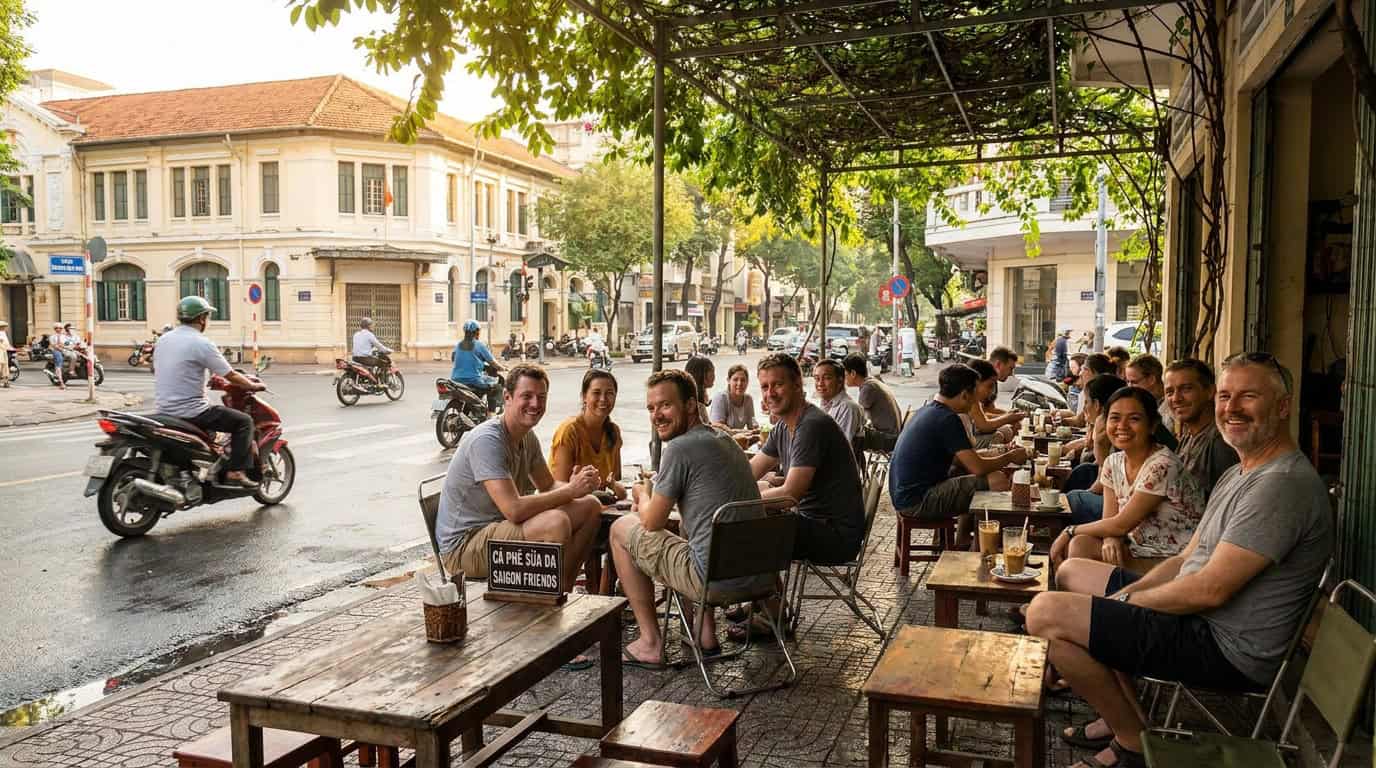
The appeal goes beyond numbers. Saigon offers fast fibre internet, modern hospitals, international schools, and a thriving expat community at a fraction of what similar infrastructure costs in the West. But living expenses in Vietnam are not flat. They shift based on your neighbourhood choice, dining habits, transport preferences, and how frequently you travel domestically. Understanding each category before your first full month prevents the budget surprises that catch most newcomers off guard.
Living Expenses in Vietnam: Rent and Housing Costs by District
Rent accounts for 35 to 50% of most expat budgets in Ho Chi Minh City and is the single decision that shapes every other number. Prices vary sharply by district, building quality, and whether furniture is included.
- District 1 (City Centre): 1-bedroom serviced apartment: $700 to $1,200/month. High walkability, rooftop bars, but noisy and tourist-heavy.
- District 2 / Thu Duc (Thao Dien): 1-bedroom modern condo: $550 to $900/month. Most popular expat neighbourhood — leafy streets, international schools, riverside dining.
- District 7 (Phu My Hung): 1-bedroom in a managed complex: $500 to $850/month. Korean and Japanese expat hub, very clean, strong amenity packages.
- Binh Thanh / District 3: Local-leaning areas offering good value: $400 to $700/month for a modern 1-bedroom.
- 2-bedroom apartments in District 2 or District 7 typically run $800 to $1,400/month fully furnished with gym, pool, and security.
Utilities including electricity, water, and internet add roughly $60 to $120/month depending on air-conditioning usage. Electricity is the variable cost; running AC continuously in a Saigon summer can push bills to $80 to $100 alone. Most apartments include high-speed fibre internet at $10 to $15/month as a separate bill or bundled into rent.
Food and Dining: Street Food vs. Expat Restaurants
Food is where living expenses in Vietnam deliver the most dramatic savings compared to life back home. Saigon gives you a genuine choice between two entirely different food economies running side by side.

Local street food and markets: A bowl of pho costs 40,000 to 60,000 VND ($1.60 to $2.50). Banh mi: 25,000 to 40,000 VND ($1.00 to $1.60). A full meal at a local com tam (broken rice) shop: 50,000 to 80,000 VND ($2.00 to $3.20). Eating almost exclusively local food, your monthly food budget drops to $150 to $250.
Mid-range expat restaurants and cafes: Western breakfast at a cafe: $4 to $8. Dinner at a decent restaurant in Thao Dien: $10 to $20. A craft beer at a rooftop bar: $3 to $5. Expats eating out most meals at mid-range venues spend $400 to $600/month on food and drink.
Cooking at home using supermarket ingredients from Co.opmart, VinMart, or international stores like Annam Gourmet sits in the middle at roughly $200 to $350/month. Most long-term expats settle into a hybrid pattern: local coffee and lunches on weekdays, Western dining on weekends, landing the food budget at $300 to $450/month.
Transportation Costs in Ho Chi Minh City
Saigon has no full metro network yet, so daily transportation means motorbikes, ride-hailing apps, and taxis. Living expenses in Vietnam for transport are low by any global standard.
- Grab (ride-hailing): Average short trip of 3 to 5 km costs 30,000 to 55,000 VND ($1.20 to $2.20). Budget $60 to $120/month for daily Grab use.
- Renting a motorbike: $50 to $100/month for a reliable semi-automatic. Petrol adds $10 to $20/month. Total: $60 to $120/month including maintenance.
- Owning a motorbike: Purchase price $500 to $1,500 for a quality used bike. Annual registration and insurance: $20 to $40. Most cost-effective option for stays longer than 6 months.
- Taxis and metered cabs: For occasional use including airport runs and late nights, budget $20 to $40/month as a supplement.
Very few expats maintain a car in Saigon. Parking is difficult, traffic is chaotic, and the total cost of car ownership adds $300 to $500/month that ride-hailing eliminates entirely.
Healthcare and Medical Costs: A Key Advantage for Retirees
Healthcare is one of the most financially compelling reasons to retire in Vietnam. According to the International Living Annual Global Retirement Index 2025, Vietnam scores in the top tier for healthcare value, with private hospital consultations costing $20 to $60 USD and specialist visits rarely exceeding $80 without insurance.
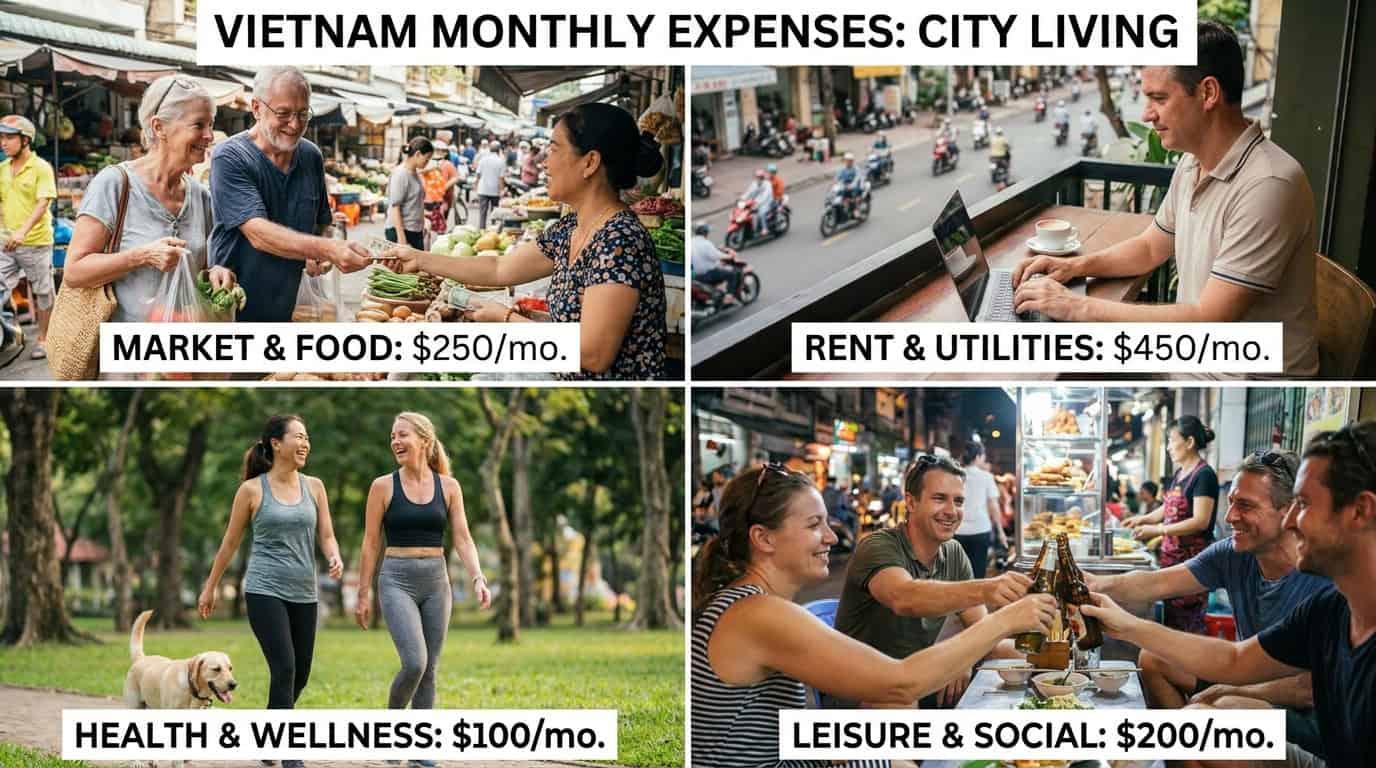
Major international hospitals in Ho Chi Minh City including FV Hospital, Vinmec, and Columbia Asia operate to Western clinical standards. A GP visit at FV Hospital costs approximately 600,000 to 900,000 VND ($24 to $36). Dental cleanings: $15 to $30. Eye examinations: $15 to $25. Prescription medication is substantially cheaper than in Europe or North America for most common drugs.
Expat health insurance is strongly recommended and adds $100 to $250/month depending on age, coverage level, and provider. Cigna, Allianz Care, and AXA are the most common in Vietnam. Retirees over 60 should budget toward the higher end. Many expats under 45 with no chronic conditions opt for a high-deductible international plan at $80 to $130/month and pay minor costs out of pocket.
Entertainment, Social Life, and Leisure Spending
Saigon’s social scene is one of its most underrated assets. A night out involving dinner and drinks for two at a mid-range restaurant rarely exceeds $40 to $60. A gym membership at a modern facility in District 2 costs $30 to $60/month. Yoga studio: $40 to $80/month. Netflix, Spotify, and local streaming services combined: $10 to $15/month.
- Regular cinema visits: $4 to $6 per ticket at CGV or Lotte
- Domestic weekend travel (Da Lat, Mui Ne, Phu Quoc): $80 to $200 all-in for a long weekend
- Day trips and Mekong Delta tours: $20 to $50 per person
- Golf: $40 to $80 per round at courses in Binh Duong or Long An
A sociable expat spending on regular dining out, gym, occasional travel, and entertainment typically allocates $300 to $500/month to this category. Those with more active travel habits push it to $600 to $800.
Visas, Admin Costs, and One-Time Setup Expenses
Visa costs are an often-overlooked component of living expenses in Vietnam, particularly for those staying longer than 90 days. The main options available in 2025 and 2026 are:
- E-visa (90 days, multiple entry): $25 USD per application. Available online, extendable via exit and re-entry.
- 1-year multiple-entry visa: Available through sponsoring companies or approved agents at roughly $200 to $400/year all-in for fees and agent costs.
- Retirement or investor visas: More complex, usually requiring a legal agent. Budget $300 to $600 one-time in fees.
One-time setup costs when first arriving include: SIM card and data plan ($5 to $10 setup, $8 to $15/month ongoing), basic household items ($200 to $500), and apartment deposit (typically 1 to 2 months rent). Total first-month costs are usually $1,000 to $1,500 above your regular monthly budget.
Month-by-Month Budget Breakdown: What to Expect Each Quarter
Most expats discover their real monthly spend only after the first three months. Long-stay residents start knowing it. The pattern is consistent: Month 1 runs over budget due to setup costs and exploratory dining; Month 2 stabilises as routines form; Month 3 is when your true baseline emerges.
Month 1 (Arrival): $2,000 to $3,000
Apartment deposit covering 2 months, first month’s rent, SIM setup, household purchases, frequent taxis while learning the city, and eating out at every meal while you find your feet. Budget 50 to 80% above your expected ongoing monthly spend.
Months 2 to 3 (Settling): $1,400 to $2,000
Rent and utilities now normalised. You have found your local coffee shop, your preferred market, your gym. Dining still skews toward restaurants as you explore. Transport costs drop as you learn Grab patterns or rent a motorbike.
Month 4 Onward (Stable): $900 to $1,800
This is your true monthly baseline. Budget-focused retirees land at $900 to $1,100. Comfortable mid-range expat lifestyles settle at $1,200 to $1,600. Those maintaining a Western-equivalent lifestyle with frequent travel and premium accommodation run $1,800 to $2,500.
Sample Monthly Budget Tables by Lifestyle Tier
Budget Retiree: $950 to $1,100/month
- Rent (District 7 or Binh Thanh, 1-bed): $450 to $550
- Food (mostly local, some home cooking): $200 to $250
- Transport (motorbike and occasional Grab): $50 to $70
- Health insurance: $100 to $130
- Utilities and internet: $70 to $90
- Entertainment and leisure: $100 to $150
Comfortable Expat: $1,400 to $1,800/month
- Rent (District 2, modern 1-bed condo): $700 to $900
- Food (mix of local and Western dining): $350 to $450
- Transport (Grab-heavy): $80 to $120
- Health insurance: $130 to $180
- Utilities and internet: $80 to $110
- Entertainment and leisure: $250 to $350
Premium Lifestyle: $2,000 to $2,800/month
- Rent (serviced apartment or large 2-bed, District 1 or 2): $1,100 to $1,500
- Food (mostly restaurants, imported groceries): $500 to $700
- Transport (private car or frequent taxis): $200 to $300
- Health insurance (comprehensive): $200 to $280
- Utilities: $100 to $150
- Entertainment, travel, and social: $400 to $600
Living Expenses in Vietnam Compared to Other Southeast Asian Cities
Living expenses in Vietnam, specifically in Ho Chi Minh City, compare favourably to every major Southeast Asian expat hub when quality of life is factored in alongside cost.
- Ho Chi Minh City vs. Bangkok: HCMC is 10 to 20% cheaper overall. Bangkok’s elevated rail system makes transport easier, but rent and dining costs are higher in comparable neighbourhoods.
- HCMC vs. Bali (Canggu): Bali’s expat scene has inflated significantly since 2022. A comparable lifestyle in Canggu now costs 20 to 35% more than in Saigon.
- HCMC vs. Penang, Malaysia: Comparable overall costs, but Malaysia offers easier long-stay visa pathways and English is more widely spoken. Vietnam wins on food quality, energy, and social scene.
- HCMC vs. Manila, Philippines: Manila’s expat areas in BGC and Makati carry higher rent and dining costs than Saigon. English fluency is broader in Manila, but infrastructure quality and daily safety favour Saigon.
Practical Tips to Control Your Monthly Spend in Saigon
The most common reason expat budgets run higher than expected is not restaurants or entertainment — it is rent. Choosing an apartment 10 minutes further from a central expat hub typically saves $150 to $250/month with minimal lifestyle impact. Other effective adjustments:
- Negotiate rent on stays longer than 6 months — most landlords offer 5 to 10% discounts for annual leases paid quarterly.
- Use local markets (cho) for produce and protein — Ben Thanh Market, An Dong Market, and neighbourhood wet markets price 40 to 60% below supermarkets for fresh food.
- Rent rather than buy a motorbike for your first 3 months until you decide which district suits you, preserving flexibility without the upfront purchase cost.
- Get a local SIM on a data plan — a Viettel or Vietnamobile SIM with 4G data costs $8 to $12/month and is essential for Grab and navigation.
- Plan domestic travel during shoulder seasons (March to May, September to November) when flights and accommodation to Phu Quoc, Da Nang, and Ha Long are 30 to 50% cheaper than peak periods.
You May Also Find Useful
Frequently Asked Questions
How much money do you need to live comfortably in Vietnam?
Most expats and retirees live comfortably in Ho Chi Minh City on $1,200 to $1,800 USD per month. This covers a modern 1-bedroom apartment in a good district, daily dining at a mix of local and Western restaurants, ride-hailing transport, gym membership, health insurance, and regular social outings. Those on tighter budgets can manage on $900 to $1,100 by choosing more local-oriented neighbourhoods and dining habits.
Is $1,000 a month enough to live in Vietnam?
Yes — $1,000/month is workable in Ho Chi Minh City for a retiree or single person with modest lifestyle expectations. It covers basic rent ($400 to $500 in a local-area 1-bedroom), local food ($200 to $250), motorbike transport ($50 to $70), health insurance ($100 to $130), and utilities ($70 to $90). There is limited room for frequent dining out, international travel, or savings, but day-to-day comfort is achievable.
What are the biggest hidden costs of living in Vietnam?
The three most common budget surprises for new arrivals are: (1) electricity bills from heavy air-conditioning use, which can reach $80 to $120/month in summer and are often not disclosed clearly upfront; (2) visa renewal costs and agent fees that accumulate over 12 months; and (3) one-time setup costs in Month 1 including deposits, household purchases, and exploratory dining that push the first month 50 to 80% over steady-state spending.
How do living expenses in Vietnam differ between Hanoi and Ho Chi Minh City?
Ho Chi Minh City generally runs 5 to 15% more expensive than Hanoi for comparable lifestyle tiers, primarily due to higher rent in popular expat districts and a more developed international dining and entertainment scene. Hanoi offers a cooler climate in winter and slightly lower overall costs, but HCMC’s economic energy, international connectivity, and warmer year-round weather attract the majority of long-stay expats.
Do expats in Vietnam pay income tax on overseas income?
Vietnam taxes individuals on worldwide income if they are considered tax residents — generally defined as spending 183 or more days in Vietnam in a calendar year, or having a permanent registered place of residence. Many retirees living on pension or investment income from abroad manage their tax residency carefully. This is a complex area and you should consult a Vietnam-registered tax adviser before making long-term plans.
Official Resources
For the most up-to-date information on living expenses in vietnam, visit the Numbeo – Cost of Living in Ho Chi Minh City.