
Luxury apartments in Saigon sit at a distinct premium over the standard rental market — and for good reason. In Ho Chi Minh City’s fast-moving real estate landscape, “luxury” is not just a marketing label. It describes a specific tier of amenity, management quality, location, and lease flexibility that draws both high-earning expats and affluent Vietnamese professionals. If you are searching for luxury apartments in Saigon, this guide breaks down exactly what you pay for, where the best addresses are, and how to tell genuine premium stock from overpriced ordinary units.
Key Takeaways
- Genuine luxury apartments in Saigon deliver a combination of prime location (District 1, District 2 Thao Dien, Binh Thanh riverfront), full amenity stacks, and professional property management — not just high-end finishes alone.
- Monthly rents for verified luxury stock range from USD 1,800 to USD 6,000+ depending on district, floor, view, and furnished quality.
- According to CBRE Vietnam’s 2025 Market Overview, Grade A serviced apartments in Ho Chi Minh City recorded average occupancy of 85% in 2024, reflecting sustained demand from multinational executives and long-stay expats.
- Boutique buildings in District 1 frequently outperform larger high-rise complexes on service quality, lease flexibility, and net livability for single tenants and couples.
- Understanding what is — and is not — included in a luxury lease (utilities cap, cleaning frequency, gym/pool access, parking) is the single most important due-diligence step before signing.
What “Luxury” Actually Means in the Saigon Rental Market
The word luxury is used liberally across Vietnamese real estate listings, but the market applies a loose definition. A genuine luxury classification in Saigon’s rental segment requires more than granite countertops and a city view. Experienced tenant-side agents and relocation consultants use four tests: location within or adjacent to District 1’s core, a minimum amenity set (rooftop pool or gym, 24-hour security, concierge or on-site management), imported or designer-grade furnishings if serviced, and a landlord or management company with a verifiable track record. When all four apply, you are looking at true luxury stock. When only two or three apply, you are in the premium-mid tier — comfortable, but not the same product.
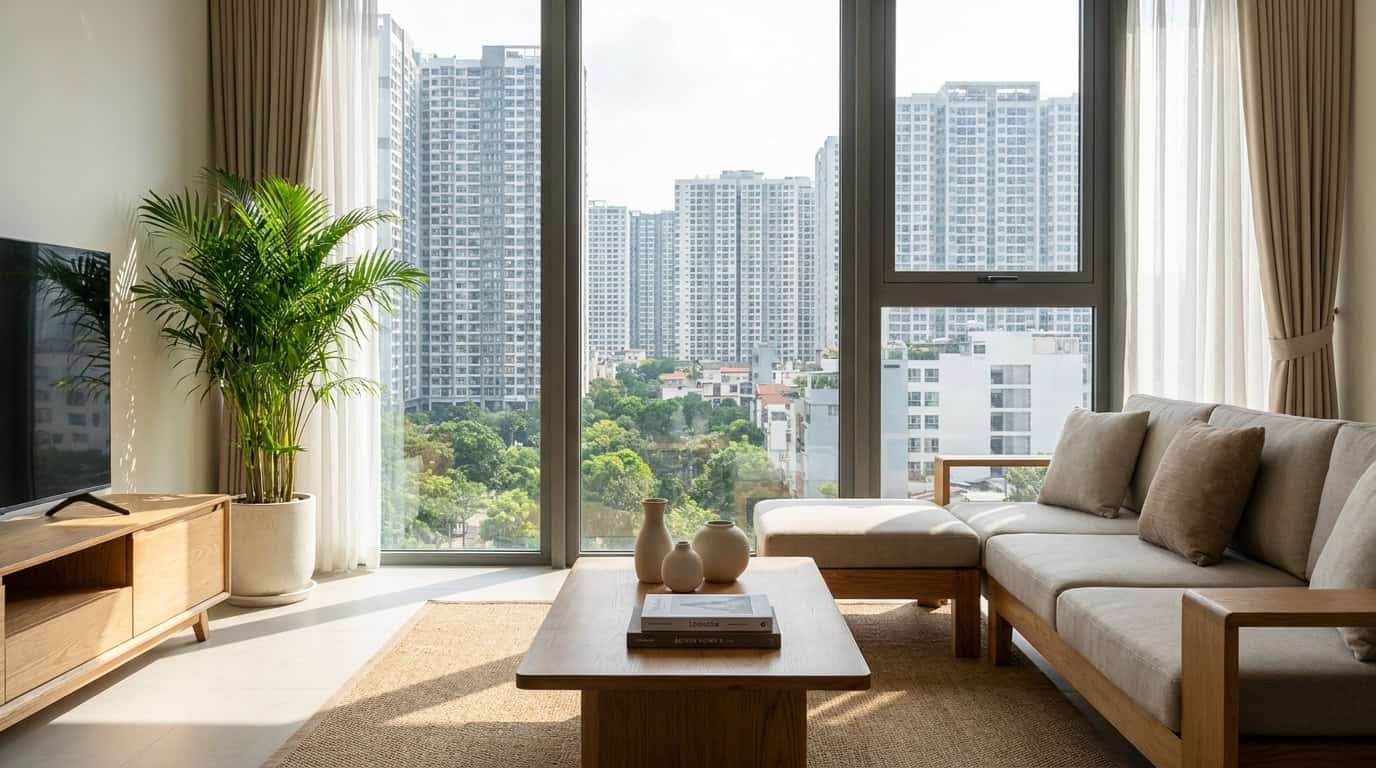
The True Cost of Luxury Apartments in Saigon: Rent Ranges by District
Pricing varies sharply by district and building category. In District 1 — the CBD and the city’s undisputed prestige address — luxury one-bedroom apartments start at USD 1,800 per month fully furnished with services and can reach USD 3,500 for larger units with river or park views. District 2’s Thao Dien enclave, which houses much of the city’s Western expat community, prices similar units at USD 1,500–USD 2,800, with the trade-off of a 20-minute commute into the CBD. Binh Thanh district’s riverfront towers (Vinhomes, Saigon Pearl) position themselves as luxury but function closer to the upper-mid tier at USD 1,200–USD 2,200 for comparable sizes.
For the very top of the market — duplex penthouses, full-floor residences in branded towers — prices exceed USD 5,000 per month. According to Savills Vietnam’s Q4 2024 Residential Report, the average asking rent for luxury serviced apartments in District 1 increased 6.3% year-on-year in 2024, driven by constrained Grade A supply and rising demand from regional headquarters relocations.
District 1 vs. District 2 vs. Binh Thanh: Which Address Delivers the Most Value?
The district debate is real among long-term expat residents. District 1 delivers walkability to the city’s business core, consulates, international restaurants, and nightlife — a genuine urban lifestyle with no commute overhead. It is the right choice for executives with daily meetings in the CBD and for those who want Saigon’s energy at their doorstep. District 2 Thao Dien suits families prioritising international school proximity (British Vietnamese International School and International School Ho Chi Minh City are both close), a quieter neighbourhood feel, and larger apartment footprints per dollar. Binh Thanh offers river views and newer high-rise stock at a softer price point, but the district lacks the neighbourhood infrastructure of the other two.
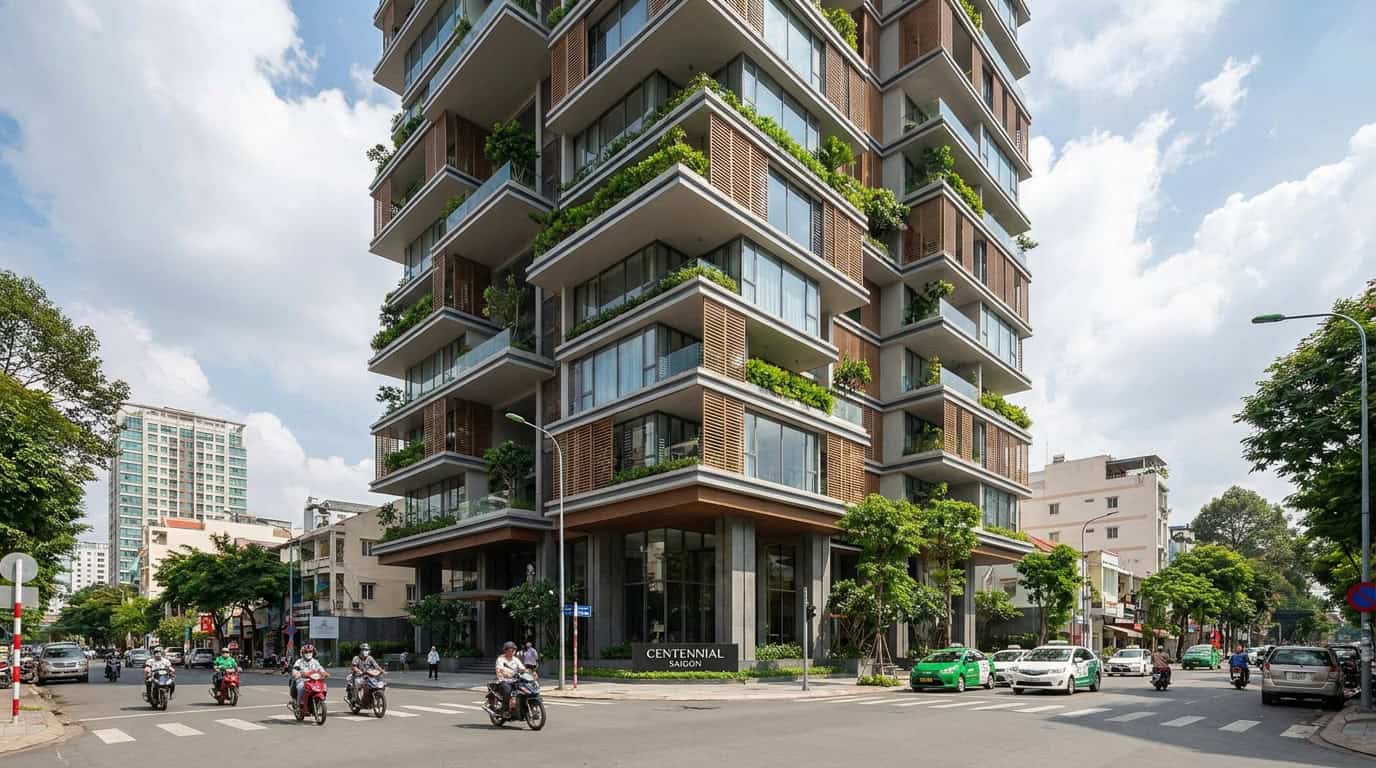
For single professionals and couples without children, District 1 boutique apartments consistently score highest on net livability. The time and transport cost of living in District 2 erodes perceived value faster than many tenants anticipate.
What You Actually Get: The Standard Luxury Amenity Stack
When you rent a luxury apartment in Saigon at the genuine tier, the expected package includes the following. A rooftop or podium swimming pool with maintenance staff. A fully equipped gym with at minimum cardio and free weights. 24-hour security with CCTV coverage and controlled lobby access. Concierge or front-desk staff fluent in English. High-speed fibre internet (100Mbps minimum is now standard in Grade A buildings). Air conditioning systems that are either brand new or recently serviced. Backup generator coverage for common areas and typically the apartment itself. On-site or responsive maintenance response within four hours for urgent issues.
In serviced apartment buildings, add daily or bi-weekly housekeeping, fresh linen and towel service, and in-house reception with booking assistance. The distinction between a serviced luxury apartment and a non-serviced luxury condo is significant — serviced units cost 20–40% more monthly but eliminate the friction of managing household logistics independently.
How Saigon Boutique Apartments Differ from Large High-Rise Complexes
The large branded towers — Vinhomes Central Park, Landmark 81, The Estella Heights — dominate Saigon’s luxury apartment conversation, but boutique buildings consistently receive higher satisfaction scores from long-stay tenants. The reasons are structural. In a 50-unit boutique building, management knows residents by name, maintenance requests receive personalised responses, and the landlord or operator has financial incentive to retain each tenant. In a 500-unit tower, individual tenant experience is inherently deprioritised.
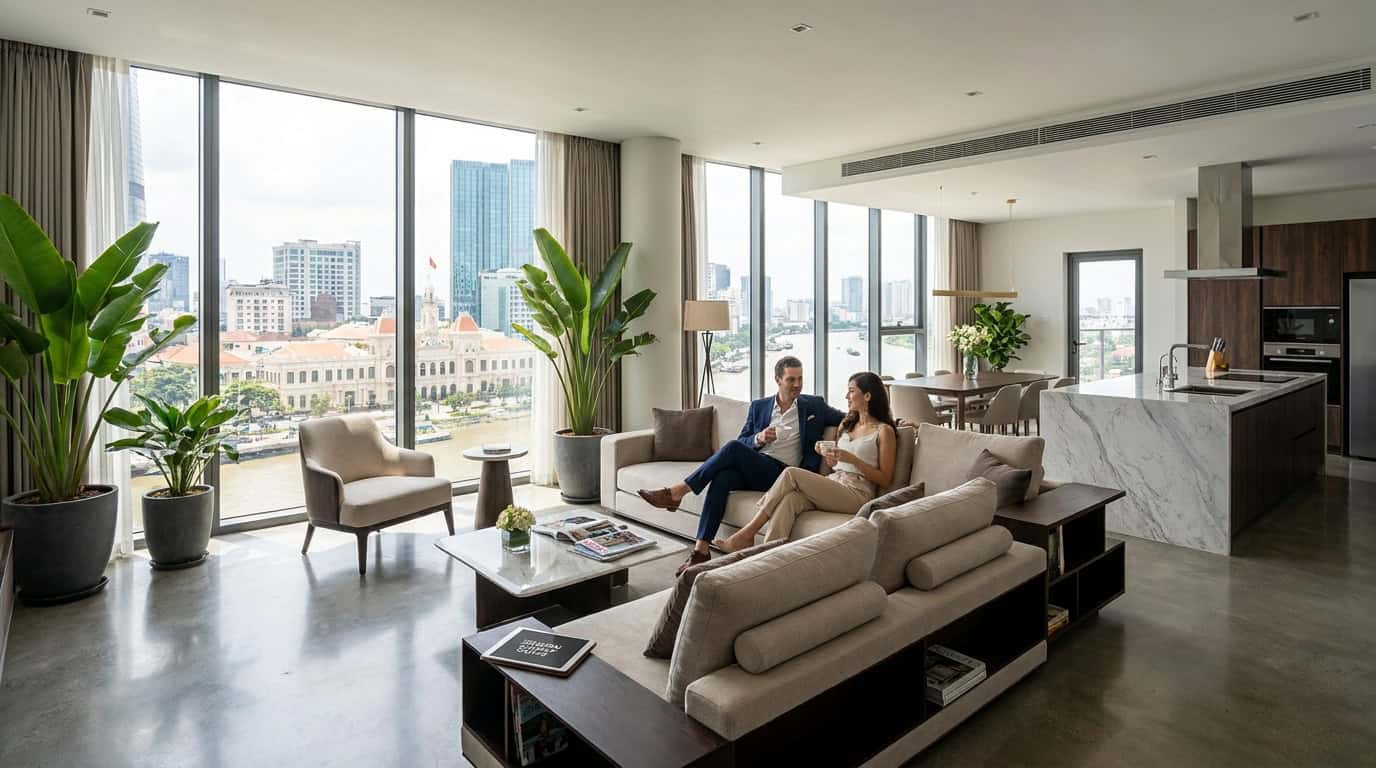
Boutique buildings in District 1 also tend to occupy street-level addresses within the walkable CBD grid, meaning residents leave the building and are immediately in the city rather than inside a gated mega-complex that requires its own internal transport. For professionals who live and work in the city, this is a material quality-of-life difference.
Luxury in Saigon means the right address, the right management, and the right lease terms. saigonapartment.vn’s District 1 boutique apartments deliver on all three. View availability at.
Lease Terms and Flexibility: What Luxury Tenants Should Negotiate
Luxury apartments in Saigon are typically offered on 12-month leases, but the best buildings and management companies accommodate 3- and 6-month terms at a modest premium (usually 10–15% above the annualised monthly rate). For executives on regional postings or project-based assignments, this flexibility is not a nice-to-have — it is a requirement. Always clarify whether the quoted rent includes utilities or imposes a cap. Many District 1 luxury buildings quote base rent and charge electricity at the Vietnamese government rate, which is fair; others mark up electricity by 20–30%, which adds meaningfully to monthly cost.
Negotiate early termination clauses before signing. Standard Vietnamese lease contracts impose a two-month penalty for early exit, but buildings competing for quality long-term tenants often accept a 30-day notice provision after the first six months. Get this in writing as an addendum to the tenancy agreement.
Identifying Genuine Luxury Stock: Red Flags and Green Flags
Green flags in a luxury Saigon listing include professionally managed buildings with a named operator (not a sole landlord for a 50-unit building), recent renovation dates or new construction, English-language lease contracts with clear utility terms, and verifiable reviews from previous international tenants. Red flags include listings that describe furnishings as “luxury” without specifying brands or ages, buildings without a 24-hour security presence, landlords unwilling to provide a walk-through before deposit payment, and monthly rents that sit suspiciously below the district average — a signal of deferred maintenance or management issues.
Ask directly about building management’s response time for maintenance. Any landlord or operator who cannot give a specific answer (same-day for urgent, 24–48 hours for standard) is not operating at the luxury standard.
The Expat Tenant Experience: What Long-Term Residents Say About Saigon’s Luxury Market
Conversations with long-term expat residents in Ho Chi Minh City surface consistent themes. The tenants most satisfied with their luxury apartment experience share three things: they chose buildings with on-site English-speaking management, they inspected the unit thoroughly and documented existing condition before signing, and they selected addresses within walking distance of their primary daily needs rather than relying on ride-hailing for every errand. The tenants who felt their premium rent was not justified typically lived in large-complex towers where management responsiveness dropped after the first month, or in buildings marketed as luxury that lacked functional amenities (pools under repair, gyms with broken equipment).
The District 1 boutique segment addresses these failure modes structurally. Smaller buildings with active management and owner-operators who live locally have measurably higher tenant retention rates than institutional towers.
2025 Market Outlook: Is Now a Good Time to Rent a Luxury Apartment in Saigon?
The luxury apartment in Saigon rental market entering 2025 and 2026 is characterised by supply tightness at the genuine Grade A tier. According to CBRE Vietnam’s 2025 Market Overview, new Grade A serviced apartment supply in Ho Chi Minh City is limited through 2026, with most pipeline projects in the premium-mid category rather than true luxury. This means that well-located, well-managed luxury units — particularly in District 1 — are holding occupancy above 80% and seeing landlords hold firm on price.
For tenants, this argues for moving decisively when a suitable unit is available rather than waiting for price softening that the data does not support in the short term. The mid-tier market (USD 800–1,400/month) has more supply and more price flexibility; the luxury tier does not.
How to Search for and Secure a Luxury Apartment in Saigon
Effective search strategy for luxury apartments in Saigon starts with district filtering based on your actual daily routine, not aspirational lifestyle. If your office is in District 1, search District 1 and inner Binh Thanh. If your primary social and family life centres on Thao Dien, search District 2 and An Phu. Once district is fixed, shortlist buildings by management operator reputation rather than photos — marketing photography in Saigon’s luxury segment is uniformly excellent and rarely reflects operational reality.
Request in-person viewings on weekday mornings when building operations are active. Check lobby cleanliness, staff responsiveness, and elevator condition. Speak directly with existing tenants if possible. Verify internet speed with a speed test on the in-unit connection, not a promise from the listing agent. For the negotiation, submit offers with a clear proposed start date and lease length — landlords of quality buildings prefer certainty over top-dollar tenants who are vague about timelines.
You May Also Find Useful
- Airbnb Saigon 2026: What You Actually Get vs What the Photos Show (Honest Review)
- Craft Beer Saigon: Breweries, Taprooms, and the Best Cans You Can Actually Find
- Weekly Housekeeping Apartments in Saigon 2025: Why It Matters and How to Find It in D1
- Wi-Fi Speed in Saigon 2026: What Remote Workers Actually Get and Where
For a first month while you look at longer leases, Booking.com and Agoda both list serviced apartments in Ho Chi Minh City on monthly rates — a useful baseline before you start dealing with local agents.
Frequently Asked Questions
What is the average rent for a luxury apartment in Saigon in 2025?
For genuine luxury apartments in Saigon, expect to pay between USD 1,800 and USD 3,500 per month for a one-bedroom or studio in District 1, and USD 1,500–USD 2,800 for comparable units in District 2 Thao Dien. Larger apartments (two or three bedrooms) in premium buildings range from USD 2,500 to USD 6,000+ depending on floor, view, and service level.
Which district in Saigon is best for luxury apartment living?
District 1 is the preferred address for professionals working in the CBD and for tenants who value walkability and urban convenience. District 2 Thao Dien suits families prioritising international schools and a quieter neighbourhood environment. The right answer depends on your daily routine — proximity to workplace and lifestyle infrastructure matters more than prestige perception.
What is the difference between a serviced and non-serviced luxury apartment in Saigon?
A serviced luxury apartment includes housekeeping (typically daily or bi-weekly), fresh linen and towels, front-desk reception, and often utilities within the monthly rent. A non-serviced luxury apartment provides the physical space and amenities (pool, gym, security) but the tenant manages cleaning, utilities, and household logistics independently. Serviced units cost 20–40% more monthly but are standard for executive relocations and short-stay professionals.
How long is the typical lease for a luxury apartment in Saigon?
The standard lease term is 12 months. Many quality buildings also offer 3- and 6-month options at a 10–15% premium on the monthly rate. Month-to-month leases are available in some serviced buildings but carry the highest per-month cost. For longer-term assignments, a 12-month lease with a negotiated early-exit clause after month six is the most cost-effective and flexible structure.
Are utilities included in Saigon luxury apartment rents?
It varies by building and lease type. Fully serviced apartments typically include utilities within the monthly rate or apply a reasonable cap. In non-serviced luxury condos, electricity is usually billed separately at the Vietnamese government rate or, in some cases, at a marked-up building rate. Always confirm the utility billing structure before signing — air conditioning usage in Saigon’s climate can add USD 100–250 per month to out-of-pocket costs if not included.
Official Resources
For the most up-to-date information on luxury apartments saigon, visit the Vietnam Real Estate Association.