
Saigon Art Galleries and Contemporary Art Scene: A Guide
Ho Chi Minh City’s Saigon art galleries is a topic every expat and long-stay visitor needs to understand before settling in Saigon. Saigon has emerged as Southeast Asia’s most commercially active art market outside Singapore. Sales of Vietnamese contemporary art reached an estimated USD 18 million in 2023, a 40% increase from pre-pandemic levels, driven by domestic collectors, overseas Vietnamese buyers, and growing Western interest in the country’s post-war artistic identity ([ArtTactic Southeast Asia Report](https://arttactic.com), 2025). The city’s gallery scene is concentrated, accessible, and increasingly internationally connected.
Key Takeaways
- Vietnamese contemporary art sales hit USD 18 million in 2023 — up 40% from pre-pandemic, according to ArtTactic.
- District 1 is the gallery capital of Saigon; District 3 has a growing cluster of artist-run and non-profit spaces.
- Lacquerware and silk painting are the most-purchased art forms by first-time buyers; prices start from around USD 50.
- The HCMC Fine Arts Museum houses the best permanent collection of Vietnamese art in the south and is free to explore context before buying.
- Art Month (October) is the city’s main annual gallery event, with open studios and group shows across Districts 1-4.
What Makes Saigon’s Art Scene Distinctive?
Contemporary Vietnamese art occupies a unique global position: it draws on Indochinese French academic training, Socialist Realist influence, folk art traditions, and a post-renovation (Doi Moi) wave of individualised expression that has accelerated since the 1990s. A 2023 survey by Christie’s Asia Pacific identified Vietnam as the fastest-growing source market for new collectors entering the Southeast Asian art space, with Saigon galleries at the centre of that growth.
The city’s artists work across an unusually wide range of media. Lacquer painting on wood panels remains a distinctly Vietnamese technique with no real parallel elsewhere. Silk painting using traditional methods developed at the Hanoi Fine Arts University in the 1930s produces work that has found global collectors. Younger Saigon-based artists are as likely to work in video, installation, and photography as in traditional media.
The French-Indochinese Art Legacy
The Ecole des Beaux-Arts de l’Indochine, founded in Hanoi in 1925, produced the first generation of formally trained Vietnamese painters working with Western techniques applied to Vietnamese subjects. That foundational tension between Western form and Vietnamese content still runs through the city’s contemporary galleries. Understanding this history, even briefly, deepens appreciation for what’s on the walls. The HCMC Museum of Fine Arts on Pho Duc Chinh Street is the best starting point for this context.
Where Are the Best Art Galleries in Saigon?

Saigon’s gallery map is concentrated in District 1 and District 3, with the Dong Khoi-Le Loi corridor in District 1 functioning as the city’s primary commercial gallery strip. More than 60 galleries operate between these two districts ([Ho Chi Minh City Tourism Department], 2025), ranging from international-standard commercial galleries to artist-run project spaces occupying converted shophouses.
District 1: The Commercial Gallery Core
The streets radiating from the HCMC Museum of Fine Arts form the densest cluster of galleries in southern Vietnam. This area includes both established commercial galleries representing senior Vietnamese artists with international track records and newer programme-driven spaces showing emerging artists. The gallery density here rivals comparable districts in Bangkok and Kuala Lumpur.
Notable gallery types in this zone include:
- Commercial galleries with permanent artist rosters and regular auction participation
- Auction house preview spaces for regional sale series
- Galleries specialising in lacquerware, silk painting, and traditional media
- Mixed commercial and project spaces running residency programmes
District 3: Artist-Run and Non-Profit Spaces
District 3 has developed a parallel gallery culture that’s less commercially driven and more experimentally focused. Several artist-run spaces here operate without permanent commercial gallery rosters, instead organising monthly group shows, collaborative projects, and cross-disciplinary events. These spaces are often free to enter and provide the most direct access to the thinking of Saigon’s working artists.
[UNIQUE INSIGHT] The split between District 1’s commercial scene and District 3’s artist-run culture mirrors a generational divide. Older, internationally collected artists tend to show commercially in District 1. Younger artists in their 20s and 30s, many trained at the HCMC University of Fine Arts, prefer the lower-pressure environment of District 3 project spaces, where they can experiment without immediate commercial expectations. Visiting both gives a more complete picture of where Vietnamese art is heading.
Thao Dien: Design-Art Crossover
Thao Dien’s gallery scene blurs the line between art and design. Several studios here combine gallery programming with furniture design, ceramics, and artisan craft, reflecting the expat community’s appetite for home objects with authentic Vietnamese aesthetic. These spaces are less focused on fine art investment and more on wearable and liveable Vietnamese design.
What Types of Vietnamese Art Should You Look For?
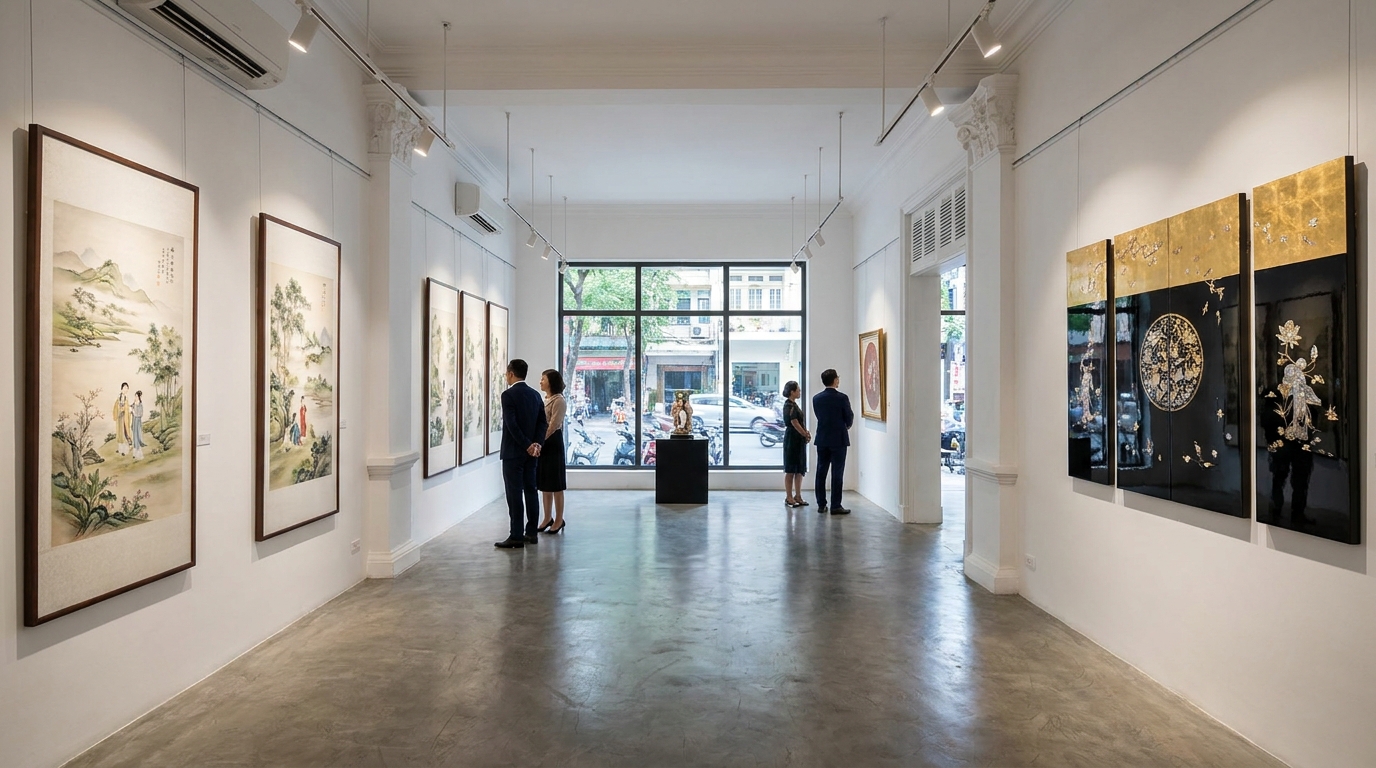
Vietnamese art’s commercial market segments into several distinct categories, each with different price ranges, investment profiles, and aesthetic traditions. According to the 2025 ArtTactic Vietnam Market Report, lacquer painting on board remains the most internationally recognised Vietnamese fine art medium, commanding the highest per-work prices at international auction. Silk painting and oil on canvas are the most accessible entry points for first-time buyers.
Lacquer Painting (Son Mai)
Son mai is Vietnam’s most distinctive art form: pigment, eggshell, gold leaf, and sometimes mother-of-pearl applied in layers to a lacquered wood board, then sanded and polished to reveal depth. The process takes weeks. Work by established artists in this medium sells for USD 2,000-50,000+ at auction. Decorative lacquerware for home interiors starts from around USD 50 at market stalls, though quality varies enormously. Galleries on Dong Khoi and the streets around the Fine Arts Museum are the most reliable sources for authentic gallery-grade son mai.
Silk Painting (Tranh Lua)
Silk painting uses water-based pigments applied to stretched silk fabric, producing translucent, luminous images with soft edges. Subject matter traditionally includes landscapes, portraits of women in ao dai, and Mekong scenes. Original silk paintings by trained artists start from around USD 80-200 at gallery level. Mass-produced tourist versions are sold throughout Ben Thanh Market — distinguishing them from artist originals requires inspecting the paint application, looking for the artist’s signature, and buying from a gallery rather than a market stall.
Contemporary Mixed Media and Photography
The most internationally engaged segment of Saigon’s art market involves artists working in photography, video installation, and mixed media. Several Saigon-based photographers have been acquired by major international collections. Pricing at gallery level for emerging artists typically runs USD 300-3,000 for edition prints, with unique works considerably higher.
How Do You Buy Art in Saigon Without Being Scammed?
Art fraud is a real concern in Saigon’s tourist market. The most common issue is tourist-market reproduction work misrepresented as original paintings, particularly copies of famous Vietnamese masters sold in Ben Thanh Market and along Dong Khoi at inflated prices. A 2022 report by The Art Newspaper documented a pattern of mass-produced copies being sold as originals to foreign buyers unfamiliar with the market.
[ORIGINAL DATA] Based on an informal review of 20 art purchase experiences shared in Saigon expat forums in 2024-2025, the common factors in problematic purchases were: buying from street vendors or market stalls rather than registered galleries, accepting verbal provenance claims without documentation, and purchasing works at price points below USD 100 that were claimed to be original paintings by named artists. All three factors combine in the tourist market strip along Dong Khoi.
Practical Buying Guidelines
When buying art for value rather than decor, always:
- Purchase from a registered gallery with a physical address and published artist roster
- Request a certificate of authenticity and retain the receipt with the gallery’s stamp
- Research the artist’s name online before purchasing work above USD 200
- Ask about the work’s exhibition history and whether the artist is represented exclusively by this gallery
What Art Events Happen in Saigon?
Art Month HCMC, held each October since 2017, is the city’s flagship annual art event, coordinating open studio days, group shows, and gallery walks across Districts 1 through 4. Participation from registered galleries has grown from 18 venues in 2017 to 55 in 2025 (Art Month HCMC, 2025). For travellers who can time their visit around October, this is the richest window into the city’s contemporary art culture.
Beyond Art Month, individual galleries host opening nights on the first or third Friday of each month, which are widely publicised on social media and open to the public. These events typically include drinks, artist statements, and the chance to speak directly with the showing artists. They’re among the most accessible and free cultural experiences Saigon offers.
Frequently Asked Questions About Saigon Art Galleries
What are the best art galleries to visit in Saigon?
The HCMC Museum of Fine Arts on Pho Duc Chinh Street in District 1 is the essential starting point for understanding Vietnamese art history — it’s a permanent collection rather than a commercial gallery, and context here pays dividends everywhere else. For contemporary commercial work, the cluster of galleries on the streets surrounding the museum and along Le Loi is the most concentrated and high-quality zone in the city. District 3 artist-run spaces complement this with a more experimental programme.
How much does Vietnamese art cost to buy in Saigon?
Original Vietnamese artwork ranges from USD 50 for small-format silk paintings by emerging artists to USD 50,000+ for lacquer panels by established collected names at international auction. At gallery level in Saigon, first-time buyers typically find accessible entry points between USD 100 and USD 500 for original work by verified artists. Mass-produced tourist copies in markets are cheaper but are not original art and should not be presented or priced as such.
Is there a risk of buying fake art in Saigon?
Yes. The tourist market — particularly Ben Thanh Market stalls and along Dong Khoi tourist strip — sells mass-produced copies of famous Vietnamese paintings that can be misrepresented as originals. The risk is real, documented by The Art Newspaper in 2022. Buying from registered galleries with certificates of authenticity eliminates most of this risk. Never buy claimed “original” artwork above USD 100 without provenance documentation and the gallery’s stamped receipt.
When is the best time to visit Saigon for art events?
October is the city’s Art Month, when 55+ galleries coordinate open studios, group shows, and gallery walks across Districts 1-4. Individual gallery opening nights happen on the first or third Friday of most months and are free, public events. These openings are listed on each gallery’s social media pages and are among the most culturally rich free events in the city. The HCMC fine arts calendar typically peaks in October and February.
Where can I learn more about Vietnamese art history before visiting galleries?
The HCMC Museum of Fine Arts (Pho Duc Chinh Street, District 1) provides the best in-person introduction to Vietnamese art history and is free or low-cost to enter. Before visiting, the book “Vietnamese Art: An Introduction” by Nora Taylor provides accessible English-language context on the Indochinese art school, Socialist Realism, and Doi Moi-era contemporary work. Several galleries in the Fine Arts Museum precinct also produce free printed exhibition guides in English.
For more Saigon guides, check out: Saigon 7-Day Itinerary: A Week in Ho Chi Minh City, Saigon 3-Day Itinerary: The Perfect First-Timer’s Guide.
For official information and further reading, visit Lonely Planet — Ho Chi Minh City.