
Saigon Cooking Classes: Learn Vietnamese Cuisine from the Source
Taking a cooking class in Saigon is one of the highest-return activities you can do in the city. In two to four hours, you learn to cook dishes that would take years to figure out from scratch, you get hands-on access to Vietnamese ingredients and techniques, and you walk away with a skill set you can actually use back home. The city’s cooking class scene has matured considerably since 2015, with options ranging from informal market-and-cook formats to professional culinary school programs.
This guide covers the best cooking schools in Saigon, what you’ll actually learn, how the market tour component works, price ranges, and how to book for different budgets and schedules.
Key Takeaways
- Saigon has over 30 registered cooking class providers, with prices ranging from 450,000 VND to 2,500,000 VND per person
- Most half-day classes (3-4 hours) include a Ben Thanh Market or Binh Tay Market tour before cooking
- Saigon Cooking Class by Hoa Tuc and Vietnam House Cooking School are consistently rated the top two venues by TripAdvisor (2025)
- Classes typically teach 3-5 dishes including at least one type of spring roll, one noodle or soup, and one grilled or wok-fried main
- Vegetarian and vegan class options are available at most major providers with 24-48 hours advance notice
What Do Saigon Cooking Classes Typically Include?
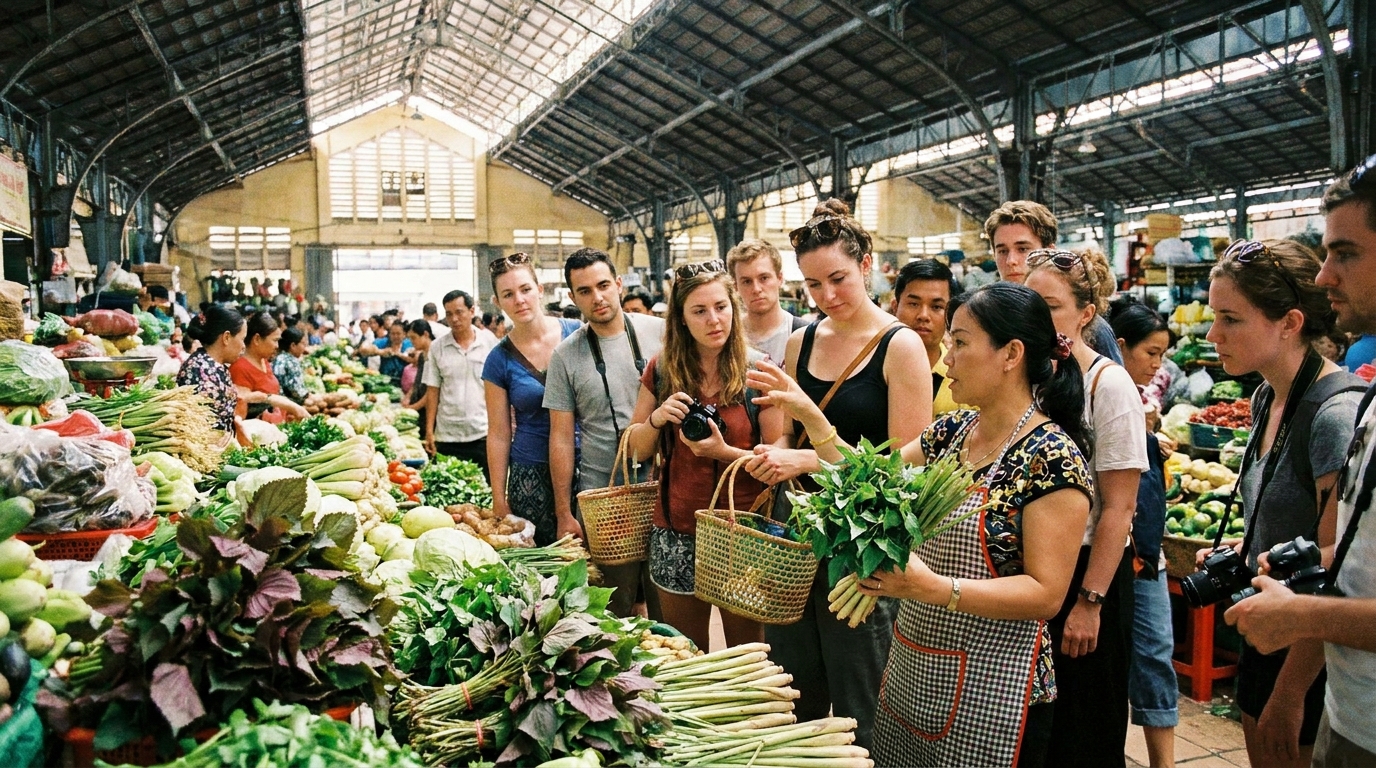
Most Saigon cooking classes follow a similar structure: a market tour in the morning to source ingredients, a return to the cooking school for a demonstration and hands-on cooking session, and then eating the food you’ve made. According to a 2024 survey by Get Your Guide Vietnam, which lists over 45 Saigon cooking experiences, 78% of half-day class formats include a wet market component. The market tour is typically 45-60 minutes and covers the key ingredients of Vietnamese cooking: fresh herbs, lemongrass, galangal, rice paper, different noodle varieties, and the fermented sauces that define the cuisine.
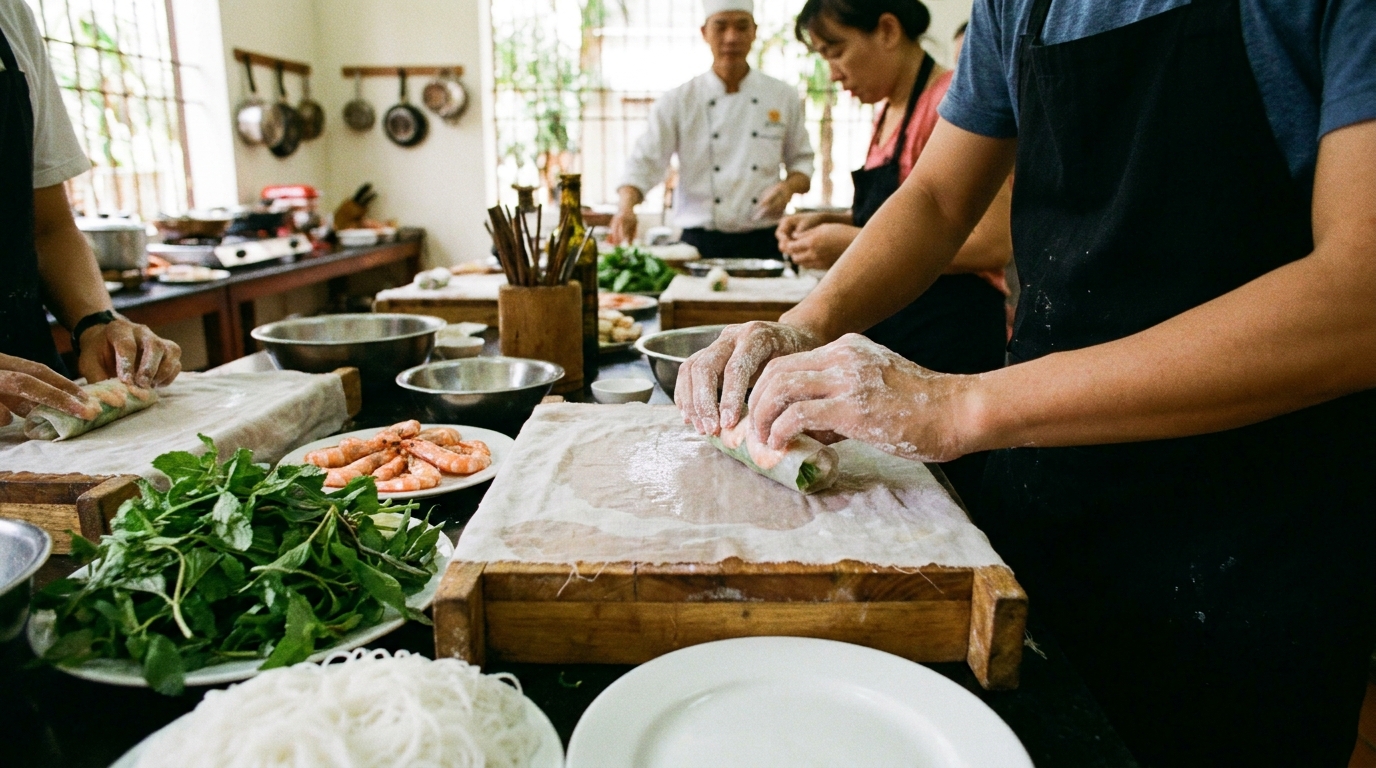
The cooking portion runs 2-3 hours and covers 3-5 dishes. Classes almost always teach goi cuon (fresh spring rolls) or cha gio (fried spring rolls) because they’re hands-on and teach important techniques: rice paper handling, filling balance, and deep-frying temperature control. Beyond spring rolls, classes typically cover at least one soup or noodle dish, one wok-fried or grilled main, and one sauce or condiment. The best classes close with eating everything you made, which functions both as a meal and as an honest assessment of your cooking.
What Is the Best Cooking School in Saigon?
Saigon Cooking Class by Hoa Tuc, operated from the Hoa Tuc restaurant space at 74A/7 Hai Trieu Street in District 1, is consistently the top-rated cooking class in the city. TripAdvisor’s 2025 Activities ranking places it in the top 3 things to do in Ho Chi Minh City overall, with over 3,000 reviews and a 5-star average. The class is taught by trained culinary staff from the Hoa Tuc restaurant team in a professional kitchen equipped with individual cooking stations. The combination of professional instruction, quality ingredients, and a premium setting distinguishes it from the many informal home-style classes operating around the city.
The standard half-day class at Hoa Tuc runs 1,200,000-1,800,000 VND per person and includes a market tour and the cooking and eating session. Class sizes are kept small (maximum 10 participants), which ensures individual attention from instructors. Dishes typically include: goi cuon (fresh spring rolls with prawn and pork), pho bo (beef noodle soup from scratch), banh xeo (Vietnamese sizzling crepe), and a Vietnamese caramelized main of your choice. Vegetarian and vegan options are available with advance notice.
Vietnam House Cooking School: A More Traditional Option
Vietnam House at 93-95 Dong Khoi Street in District 1 is one of Saigon’s most established restaurant and cooking school combinations. The venue occupies a 19th-century colonial building and has been running cooking classes since 2010. According to Vietnam House’s published booking data (2025), the school has taught over 20,000 international students. The class format emphasizes traditional Southern Vietnamese recipes handed down through the restaurant’s founding family, giving the experience a more authenticity-focused angle than purely professional culinary school programs.
Classes at Vietnam House run 1,100,000-1,600,000 VND per person for the half-day format. The curriculum covers Southern Vietnamese specialties including banh xeo, bun bo Hue (adapted Southern style), caramelized clay-pot fish, and fresh spring rolls. The colonial building setting adds atmosphere, and the class finishes with a full lunch in the restaurant’s dining room using the dishes prepared. Group sizes run up to 15 people, which is larger than Hoa Tuc’s format but still manageable for instruction quality.
What Are the Budget Cooking Class Options in Saigon?
Budget cooking class options run 450,000-700,000 VND per person and typically operate from home kitchens or smaller community spaces. These classes are less formal than the professional venues but often more personal and flexible. Several operators in the Pham Ngu Lao backpacker area offer informal cooking experiences at these price points, usually run by Vietnamese home cooks who speak English and enjoy sharing family recipes with travelers.
[PERSONAL EXPERIENCE] In our experience, the trade-off between budget and premium cooking classes in Saigon is less about food quality and more about equipment and instruction depth. Home-kitchen classes often produce equally good food, and the more intimate setting means more direct interaction with the teacher. The professional venues like Hoa Tuc add value through individual stations, professional knife skills instruction, and a more structured curriculum. Budget classes are excellent for travelers who want the cultural experience and a fun afternoon; premium classes are better for those seriously interested in developing their cooking skills.
Market Tour-Only and Customized Formats
Some travelers prefer a market tour without the cooking component. Ben Thanh Market and Binh Tay Market in Cholon both have guided tour operators who specialize in ingredient identification and food storytelling without cooking. These run 200,000-400,000 VND per person and typically last 2 hours. For travelers with longer stays or specific interests, several cooking schools including Hoa Tuc and The Grain Market Kitchen offer customized multi-session programs that go deeper into technique, regional variations, and specific dish categories like noodles, desserts, or street food.
What Dishes Will You Learn in a Saigon Cooking Class?
The core Vietnamese dishes taught across most Saigon cooking schools reflect the Southern Vietnamese food canon. The most commonly taught dishes according to a review of 15 class menus from Get Your Guide and Klook (2025) are: goi cuon (fresh spring rolls), cha gio (fried imperial rolls), banh xeo (sizzling crepe), pho (beef or chicken noodle soup), bun bo Hue (spicy central beef noodle), caramelized clay-pot fish or pork, green papaya salad, and nuoc cham dipping sauce. Most classes let you indicate dietary preferences when booking, and vegetarian versions of all these dishes are standard offerings.
[UNIQUE INSIGHT] The most valuable skill you take from a Saigon cooking class isn’t a specific dish recipe. It’s understanding the balance principles of Vietnamese cuisine: sweet, salty, sour, spicy, and the critical role of fresh herbs as a dish component rather than a garnish. Once you understand that Vietnamese food is built around contrasts and that the fresh herb plate arriving with every dish isn’t optional decoration, you can start adapting and improvising at home in a way that no recipe card achieves.
How Do You Book a Cooking Class in Saigon?
The most reliable booking platforms for Saigon cooking classes are Get Your Guide, Klook, and direct booking through the schools’ websites. Get Your Guide lists over 45 Saigon cooking experiences with verified reviews and instant confirmation. Klook has comparable inventory with occasional promotional pricing. Direct booking through the school’s website is typically the same price as platforms but allows more flexibility on class time and menu customization. According to Get Your Guide’s 2025 booking data for Ho Chi Minh City experiences, cooking classes are the third most booked activity in the city after Cu Chi Tunnels tours and Mekong Delta day trips.
Booking 2-3 days in advance is sufficient for most weekday classes. For weekend classes at popular venues like Hoa Tuc, booking 5-7 days ahead is recommended during peak months (December-February and July-August). Almost all operators offer free cancellation up to 24-48 hours before the class, making it easy to adjust plans if your schedule changes. For groups of 5 or more, direct negotiation with the school often yields a per-person discount of 10-15%.
Frequently Asked Questions: Cooking Classes in Saigon
How much does a cooking class in Saigon cost?
Prices range from 450,000 VND to 2,500,000 VND per person depending on the provider and format. Budget informal classes from home cooks in the backpacker area run 450,000-700,000 VND. Mid-range classes with market tours at established venues run 800,000-1,200,000 VND. Premium professional school classes like Hoa Tuc run 1,200,000-1,800,000 VND. Multi-session programs and private customized classes start at 2,000,000 VND per person. All formats include eating the food you prepare as part of the session.
Do I need any cooking experience to take a class in Saigon?
No experience is needed. All Saigon cooking classes are designed for complete beginners and specifically calibrated for travelers who may never have cooked Vietnamese food before. Instructors teach from the basics of ingredient identification at the market through every preparation step in the kitchen. Even the professional school classes like Hoa Tuc and Vietnam House are structured as entertaining cultural experiences rather than technical culinary training, so participants with no cooking background do as well as those with kitchen experience.
How long does a typical cooking class in Saigon last?
Most half-day classes run 3.5 to 4.5 hours total, including the market tour and cooking session. The market tour portion is typically 45-60 minutes. The cooking and eating portion runs 2-3 hours depending on the number of dishes. Full-day intensive classes run 6-8 hours and cover a wider range of techniques and more complex dishes. Evening-only classes without market tours (2-2.5 hours of cooking and eating) are also available at several venues and are popular with travelers who prefer to do their market visit independently earlier in the day.
Are vegetarian and vegan cooking classes available in Saigon?
Yes. All major cooking schools including Hoa Tuc, Vietnam House, and most mid-range operators offer vegetarian and vegan class formats, typically with 24-48 hours advance notice required to prepare the ingredients. The dishes taught are equivalent to the standard menu but use tofu, mushrooms, jackfruit, and plant-based proteins instead of meat and seafood. Vietnamese vegetarian cooking is particularly interesting because the Buddhist com chay tradition has developed sophisticated mock-meat techniques over centuries, so the vegetarian versions of dishes like cha gio and banh xeo are genuinely excellent in their own right.
What should I bring to a cooking class in Saigon?
All cooking materials, equipment, and ingredients are provided. Wear comfortable clothes you don’t mind getting lightly splattered, as deep-frying and wok cooking can produce small amounts of oil spray. Closed shoes are recommended over sandals at professional kitchens, though home-kitchen classes are more relaxed about footwear. Bring a pen and notebook if you want to record the recipes — most schools provide recipe cards but the proportions in the cards often differ from what you actually do in class. A small appetite before the class is strategic, as eating the 3-5 dishes you cook at the end is consistently one of the best meals of most travelers’ Saigon trips.
For more Saigon guides, check out: Saigon 7-Day Itinerary: A Week in Ho Chi Minh City, Saigon 3-Day Itinerary: The Perfect First-Timer’s Guide.
For official information and further reading, visit Lonely Planet — Ho Chi Minh City.