
Saigon Parks and Green Spaces: The Best Places to Escape the City
Ho Chi Minh City has approximately 0.55 square meters of public green space per person, one of the lowest ratios of any major city in Asia and well below the WHO recommended minimum of 9 square meters (World Health Organization, 2023). Despite this, Saigon’s parks function as genuine community hubs — places where residents exercise, socialize, and decompress. This guide covers every park worth visiting, how locals actually use them, and what you’ll find if you arrive at the right time.
Key Takeaways
- Saigon has just 0.55 sq m of green space per person — far below WHO’s 9 sq m recommendation (WHO, 2023).
- Tao Dan Park (10 hectares, District 1) is the best centrally located park for visitors.
- Early morning (05:00-08:00) is peak park time — tai chi, badminton, and aerobics fill every available space.
- Can Gio Mangrove Forest (60km south) is the best natural escape from the city.
- All public parks in Saigon are free to enter; only the Saigon Zoo, Dam Sen, and similar facilities charge admission.

What Is the Best Park in Saigon?
Tao Dan Park at 3 Truong Dinh, District 1 is the best centrally-located green space in the city. Its 10 hectares of shaded paths, exercise stations, and concrete benches host one of the most concentrated displays of Vietnamese park culture you’ll find anywhere in Saigon. According to HCMC Planning and Architecture Department (2024), Tao Dan is the most-used public park in the city by daily visitor count, drawing an estimated 20,000 visitors on peak weekend mornings.
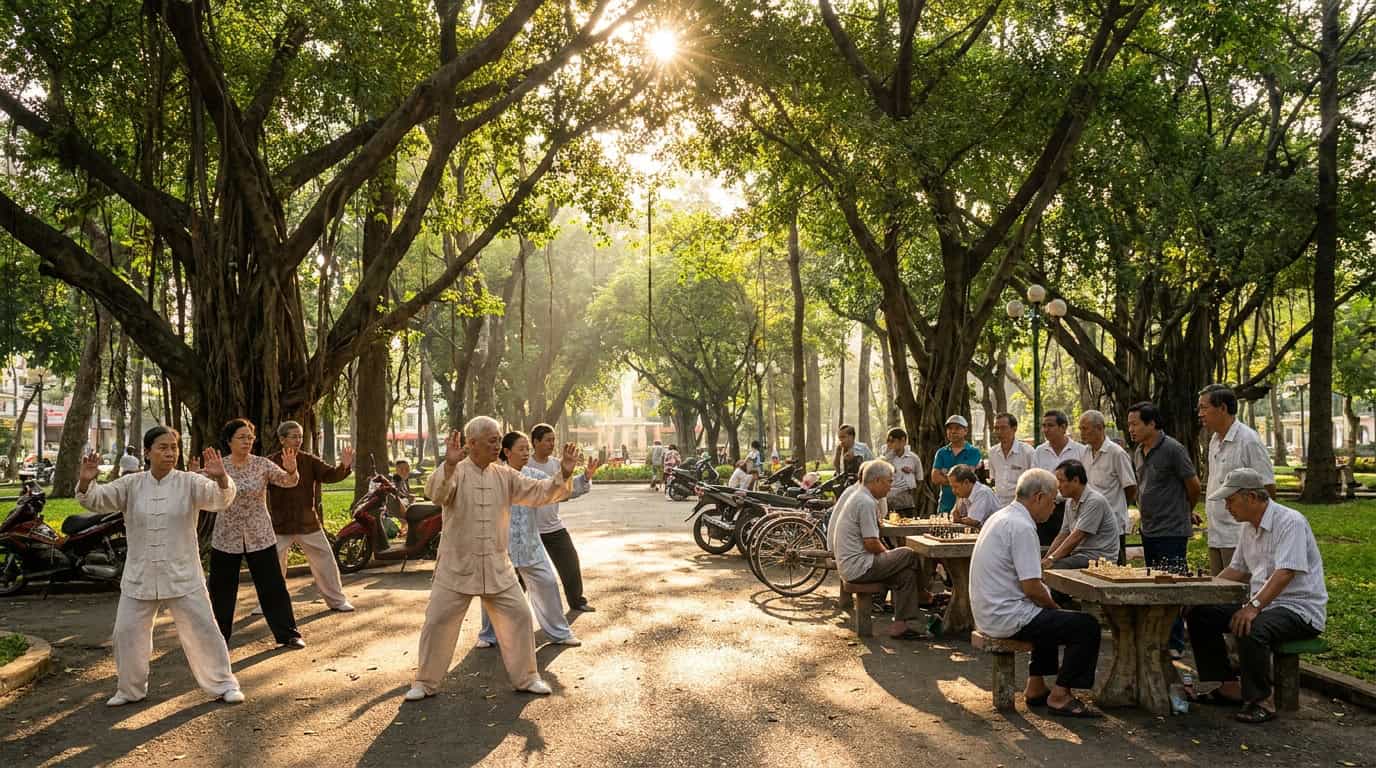
The park’s canopy is mature and dense — old rain trees create full shade even at midday, which is rare in Saigon’s flat urban grid. In the early morning, every shaded corner is in use: elderly residents practice tai chi in coordinated groups, badminton games run across the main paths, and bird owners bring their caged birds to hang in the trees and “sing” competitively. This is not a tourist performance — it’s a genuine slice of daily life. Arrive before 07:30 to see it at its most active.
Le Van Tam Park: Quieter and More Local
Le Van Tam Park on Dien Bien Phu Street, District 3 is a smaller but pleasant alternative to Tao Dan, with a similar morning exercise culture and somewhat fewer tourists. It connects easily with a District 3 exploration itinerary. The park includes a small children’s play area and is particularly popular with families in the late afternoon (16:00-18:00) before the heat of the day fully breaks. No admission charge.
What Is the Saigon Zoo and Botanical Garden?
The Saigon Zoo and Botanical Garden at 2 Nguyen Binh Khiem, Binh Thanh District is the oldest botanical garden in Vietnam, established by the French in 1864. It covers 33 hectares and is simultaneously a working zoo, a botanical garden, and the location of the History Museum (Saigon Zoo and Botanical Garden, 2025). Entry is 40,000 VND for adults and 20,000 VND for children; open daily 07:00-18:00.
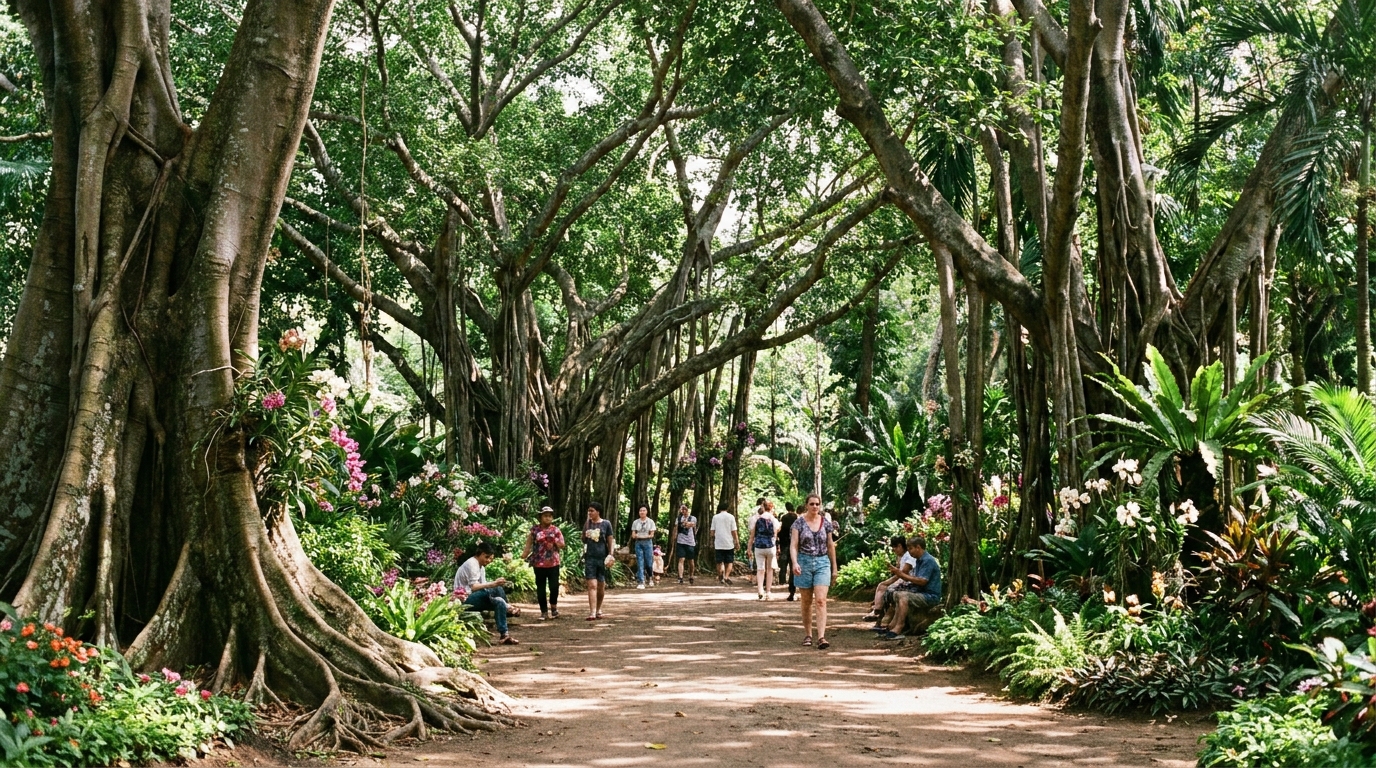
The botanical garden section is worth visiting independently of the zoo — its tropical tree collection is extensive and the shaded pathways are a practical escape from midday heat. The History Museum within the grounds houses a collection of Cham and Khmer artifacts alongside Vietnamese historical objects. The zoo itself is functional rather than exceptional by modern standards, but the setting of enclosures within a mature botanical garden gives it more character than most urban zoos in the region.
Where Can You Find Nature Near Saigon?
Can Gio Mangrove Forest, 60km south of HCMC by road and ferry, is the most accessible natural escape from the city. Designated a UNESCO Biosphere Reserve in 2000, Can Gio covers 75,000 hectares of mangrove forest, with macaque monkey populations and boat tour infrastructure that makes it a viable day trip (UNESCO, 2000). The journey takes 1.5-2 hours each way by motorbike or car via the My Thanh Ferry.
Within the city limits, Binh Quoi Tourist Village in Binh Thanh District offers a riverside garden atmosphere on a peninsula of the Saigon River — outdoor restaurants under mango trees, a genuinely green environment within 20 minutes of D1. It’s technically a commercial tourist village rather than a public park, but the green space is real and the riverside setting is difficult to find elsewhere in the inner city.
Cu Chi (70km northwest) is more commonly visited for its wartime tunnel network than for nature, but the forest above the tunnels is genuinely peaceful and the Saigon River area around Cu Chi has significant natural character. A Cu Chi tour takes a half day from central Saigon and can reasonably include time walking in the forested areas around the tunnel site.
What Do Locals Actually Do in Saigon Parks?
Early morning is the defining park experience in Saigon. From around 05:00 to 08:00, parks fill with residents who have been waking at dawn to exercise before the city heats up — a pattern documented across Vietnamese cities and rooted in the climate, not just habit (National Institutes of Health, 2022, on outdoor exercise patterns in tropical urban settings). Tai chi groups, aerobics classes, badminton games, and jogging loops all run simultaneously in a coordinated daily ritual that disappears almost entirely by 09:30.
The afternoon parks are quieter and hotter. From 11:00 to 15:00, most parks are nearly empty — the tropical sun makes outdoor activity uncomfortable for most people. Families return in the late afternoon from around 16:30, and park use extends into the early evening in areas with good lighting. The bird-singing culture — elderly men bringing caged songbirds to compete — is a morning-only phenomenon and one of the most genuinely Saigon experiences available to visitors.
[PERSONAL EXPERIENCE] In our experience, visitors who go to Tao Dan at 07:00 on a weekday come away with a stronger sense of daily Vietnamese life than from any structured tour. The chess players, the tai chi groups, the caged bird owners — none of it is performed for tourists, and the contrast with the tourist-facing version of Saigon is striking.
Frequently Asked Questions
What is the best park in Saigon?
Tao Dan Park (3 Truong Dinh, D1) is the best centrally-located park — 10 hectares of shaded paths, exercise equipment, and benches popular for morning tai chi, chess, and badminton. The Saigon Zoo and Botanical Garden at 2 Nguyen Binh Khiem covers 33 hectares and includes both the zoo and the separate History Museum within its grounds. Both are within 10 minutes of the D1 center. For early morning atmosphere, Tao Dan is unbeatable.
Is there anywhere to walk in nature near Saigon?
Can Gio Mangrove Forest (60km south) is the best natural escape — a UNESCO Biosphere Reserve with mangrove trails, boat tours, and macaque monkey populations, accessible as a day trip. Cat Tien National Park (150km north) requires an overnight stay for justice. Cu Chi is a viable half-day trip that includes forested areas around the tunnel site. Within the city, Binh Quoi Tourist Village in Binh Thanh District provides a riverside garden setting 20 minutes from D1.
What do locals do in Saigon parks?
Early morning (05:00-08:00) is peak park time — tai chi, badminton, jogging, and group aerobics are all common. Elderly residents play chess and walk caged songbirds for the bird-singing competitions. Afternoon visits see families and children. Parks are significantly quieter midday due to heat. The bird-singing culture, where owners bring caged birds to compete on vocalization, is a uniquely Vietnamese park activity worth witnessing at Tao Dan any weekday morning before 08:30.
Are Saigon parks free?
All public parks in Saigon including Tao Dan, Le Van Tam, Nguyen Van Binh, and the riverside promenades are free to enter. The Saigon Zoo and Botanical Garden charges 40,000 VND for adults and 20,000 VND for children. Dam Sen Water Park charges approximately 100,000-220,000 VND depending on facilities. The riverside park at Bach Dang Wharf and the Nguyen Hue pedestrian boulevard are free public spaces open at all hours.
What is Dam Sen Park in Saigon?
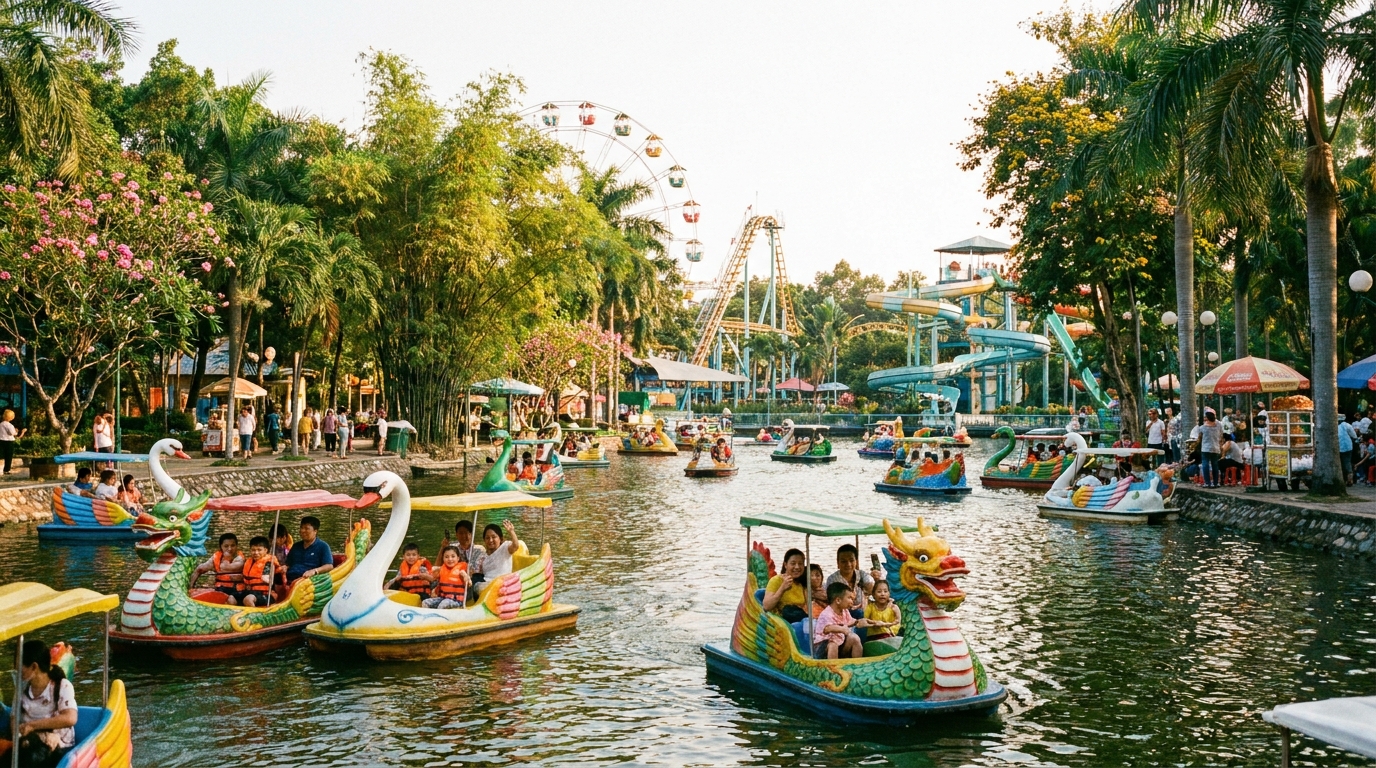
Dam Sen Cultural Park is a large recreational park in District 11, covering 50 hectares with a lake, water slides, a large outdoor swimming area, gardens, and cultural performance spaces. Entry is approximately 100,000-220,000 VND depending on the facilities used. Popular with Vietnamese families on weekends. More of a theme park experience than a nature retreat, but one of the few genuinely large green and water recreation spaces in the city. Best visited on weekday mornings to avoid weekend crowds.
Meta description: Complete guide to Saigon’s parks and green spaces — Tao Dan Park, Saigon Zoo and Botanical Garden, Dam Sen, Thu Le, and where to find nature near Ho Chi Minh City. 2026.
Planning to make Saigon your base?
For more Saigon guides, check out: Saigon 7-Day Itinerary: A Week in Ho Chi Minh City, Saigon 3-Day Itinerary: The Perfect First-Timer’s Guide.
Explore more: Ho Chi Minh City Nightlife: The Complete Guide to a Big Night Out in D1 · Phở Saigon vs Hanoi Style: What’s Different and Where to Find Both in HCMC · Expat Guides to Saigon · Saigon Apartment Residences