
Saigon International Schools: Complete Guide for Expat Families
Access to quality Saigon schools education is a top priority for expats relocating with families to Ho Chi Minh City.

Choosing a school is often the decision that determines where a family lives in Saigon. The city’s international school landscape has grown substantially over the past decade, but the best schools still have waiting lists that surprise families who leave enrollment too late. This guide covers the schools worth knowing, the fees you should plan for, where to live to be near them, and how the application process actually works in 2026.
School selection shapes everything else: which district you rent in, your daily commute pattern, and which social community your children join. Getting this right early makes the whole family’s adjustment to Saigon far smoother.
Key Takeaways
- Top-tier schools (BIS, AIS, RISC) have waiting lists of 6-18 months for popular year groups in 2026.
- Annual tuition: $8,000-16,000 for early years; $12,000-22,000 for primary; $15,000-28,000 for secondary.
- Most international schools cluster in Thao Dien (Thu Duc City) and Phu My Hung (District 7).
- Apply by March-April for September enrollment; BIS accepts applications up to 2 years in advance.
- Budget an additional $3,000-8,000 for one-time registration and capital levy fees beyond annual tuition.
Saigon Schools Education: What Are the Best International Schools in Saigon?
Ho Chi Minh City has over 60 international and foreign-language schools as of 2025, according to the HCMC Department of Education and Training, with enrollment growing 18% over the past three years as the city’s expat population expands (HCMC Department of Education and Training, 2025). Not all 60 are suitable for non-Vietnamese-speaking expat children. The schools that consistently meet international family expectations fall into two tiers.

Tier 1 – Highest fees, longest waiting lists:
- British International School (BIS): The most sought-after school in Saigon for British curriculum families. Follows the full English National Curriculum from Early Years to A-Level. Strong academic results, extensive extra-curricular program, and the largest expat parent community in the city. Two campuses in Thao Dien. Application wait times of 6-18 months for Years 1-6 and Years 9-11.
- Renaissance International School (RISC): British curriculum, consistently strong academic outcomes, slightly smaller and more intimate than BIS. The school community is known for being welcoming to new families and has strong pastoral care. Located in Binh Thanh, making it accessible from both D1 and Thao Dien.
- Australian International School (AIS): Australian curriculum (ACARA), located in Phu My Hung (District 7). The natural choice for Australian families and popular with families from other nationalities who want a balanced curriculum. Excellent facilities including a full-size sports field and modern science block.
Tier 2 – Strong reputation, more accessible enrollment:
- International School Ho Chi Minh City (ISHCMC): Full IB continuum from PYP to IB Diploma. Located in Thao Dien. A strong academic choice for families prioritizing the IB pathway. Generally easier to access than BIS without the long wait times.
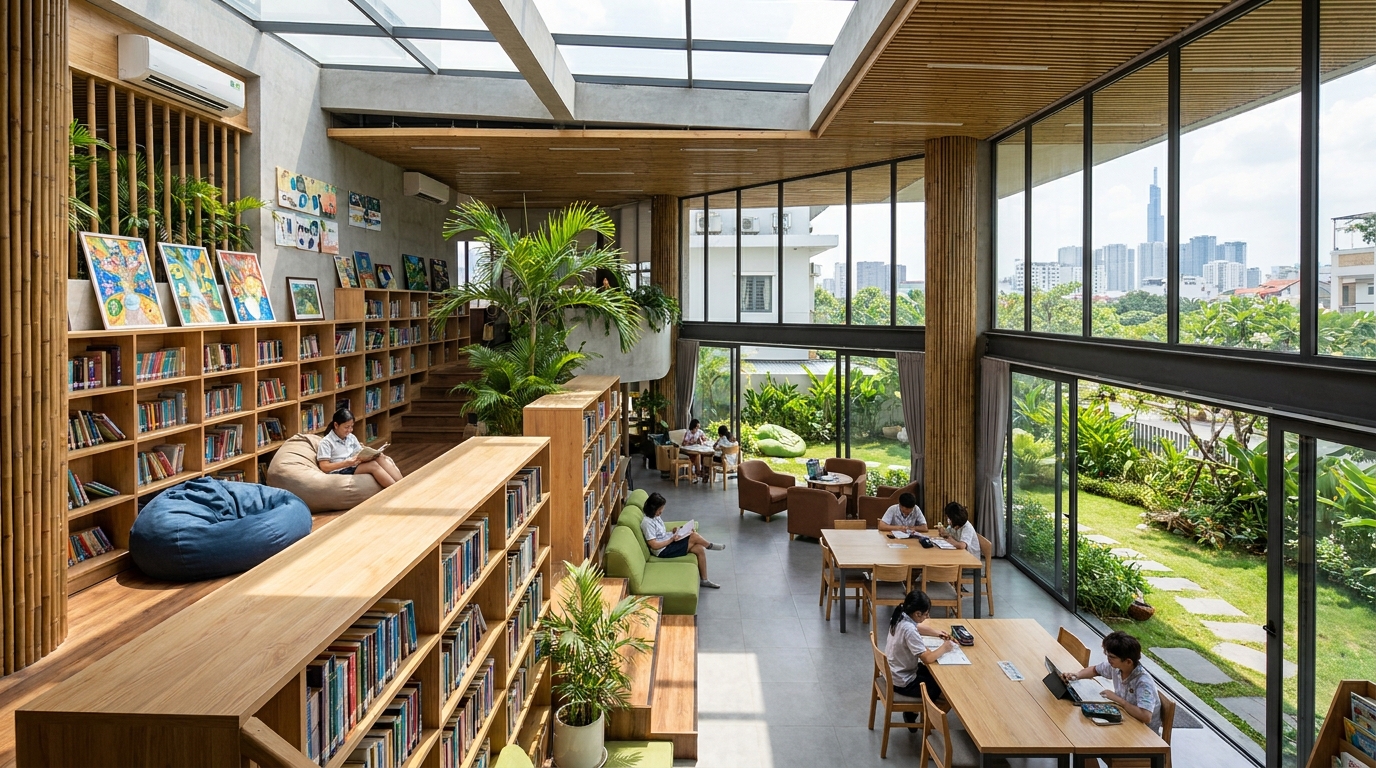
- Saigon South International School (SSIS): American curriculum, located in Phu My Hung. Popular with North American families and those seeking the AP pathway for university applications. Has expanded capacity in recent years, improving accessibility.
- European International School (EIS): IB curriculum across all levels, genuinely multilingual environment, smaller community feel than the larger schools. Located in Thao Dien area, popular with European families (particularly French, German, and Dutch communities).
Citation Capsule: Ho Chi Minh City’s international and foreign-language school sector grew 18% in enrollment between 2022 and 2025, according to the HCMC Department of Education and Training (2025). The city has over 60 such institutions, but practical options for non-Vietnamese-speaking expat children who require English-medium education number approximately 15-20 schools. Top-tier schools such as BIS, RISC, and AIS carry waiting lists of 6-18 months for popular year groups.
How Much Do International Schools in Saigon Cost?
International school fees in Saigon follow the global pattern: they’re significant, they’re rising, and they typically don’t include every cost. A 2025 HSBC Expat survey found that education costs are the single largest driver of expat family budget overruns globally, with 54% of expat parents reporting they underestimated first-year school costs by 20% or more (HSBC Expat Survey, 2025). Saigon follows this pattern.
Here’s the honest fee breakdown, including the costs that often catch families by surprise:
The capital levy catches families most by surprise. This one-time building fund contribution is common at BIS, AIS, and RISC, running $8,000-15,000 per family. It’s charged once and does not repeat in subsequent years, but it needs to be in your planning budget from the start.
Uniform and activity fees add $1,000-3,000 per year. School bus passes for families living outside easy walking distance of their school cost 4,000,000-8,000,000 VND ($160-320) per month depending on distance. Budget the full picture, not just the headline tuition figure.
How Long Are International School Waiting Lists in Saigon?
BIS, RISC, and AIS carry active waiting lists for most popular year groups, with waits of 6-18 months for Year 1-2, Year 7, and Year 10 being the most consistently cited. A 2025 survey by the Saigon Expat Parents Network found that 71% of families who enrolled at their first-choice school applied at least 8 months before their desired start date (Saigon Expat Parents Network, 2025).
Practical timing advice for families planning a Saigon relocation:
- Apply as early as possible. BIS accepts applications up to two years before the intended entry date. There is no downside to applying early; most schools maintain rolling waitlists and update you on position.
- Contact schools directly in March-April for September enrollment. This is the primary enrollment window. Applications received after June for September entry may face longer waiting periods even at Tier 2 schools.
- ISHCMC and SSIS are easier to enter without long waits. Mid-year enrollment is possible at both, and rolling admissions mean spaces can appear throughout the year.
- EIS is a strong alternative with shorter waits. The smaller school size and IB curriculum make it attractive, and it rarely has the same capacity pressure as the larger British and Australian schools.
[PERSONAL EXPERIENCE] In our experience advising families relocating to Saigon, the most common school-related regret is not applying early enough to BIS or AIS. Families who begin the school research process only after accepting a job offer typically find themselves settling for their second or third choice because their first choice has a full waiting list. If there’s any possibility of a Saigon move, contact schools for an initial inquiry conversation as soon as the possibility arises, even if you haven’t confirmed the move.
Where Should Expat Families Live to Be Near International Schools?
School location largely determines family neighborhood choice in Saigon. According to CBRE Vietnam’s 2025 Family Residential Report, 82% of expat families with school-age children in Saigon live within the school bus catchment area of their primary school, typically Thao Dien or Phu My Hung (CBRE Vietnam, 2025).
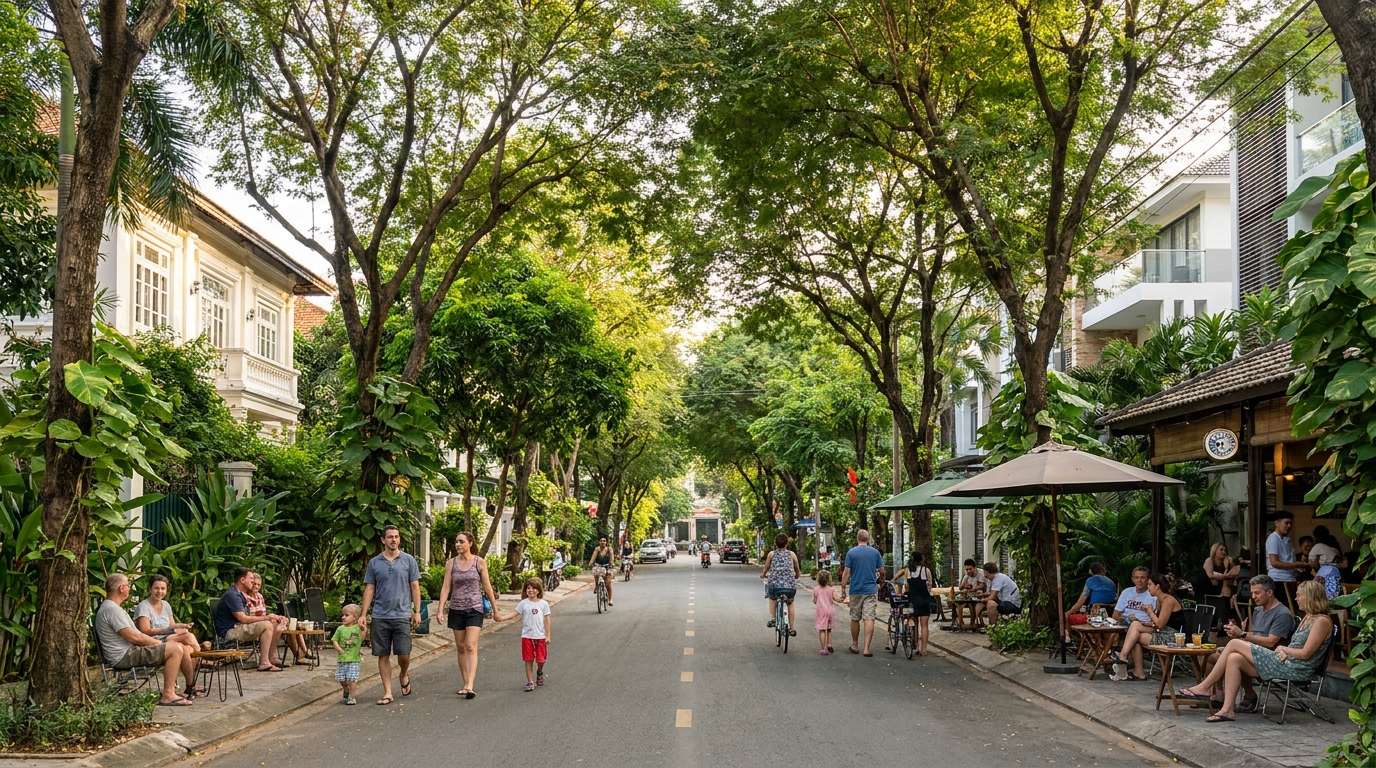
Thao Dien (Thu Duc City, formerly District 2) is the default family neighborhood. BIS, ISHCMC, SSIS, and EIS are all clustered within this area. The neighborhood has Saigon’s strongest Western restaurant and cafe scene outside of District 1, a farmers market, an active running community, and walking streets. Most Thao Dien apartments are in modern condo developments with pools, gyms, and family facilities.
Phu My Hung (District 7) is the alternative family hub, centered on the master-planned Phu My Hung development. AIS and Columbia International School are here. The neighborhood is newer, quieter, and more suburban than Thao Dien. Less character but more space, and many families with younger children prefer the relative calm. Strong medical access via FV Hospital, also in District 7.
Both neighborhoods have school bus networks that cover District 1, District 3, and Binh Thanh for families who prefer a more central location. The school bus adds $160-320 per child per month but eliminates the daily school run. Many families with two working parents consider this a genuine quality-of-life investment.
[UNIQUE INSIGHT] One factor that shapes school-neighborhood decisions more than people anticipate: the school gate social network. The expat parent community at each school forms its own distinct social world. BIS families tend to cluster in Thao Dien’s river-facing developments. AIS families are concentrated in Phu My Hung. SSIS families split between Phu My Hung and Thao Dien. Your school choice is also your social network choice for the duration of your posting. It’s worth asking recently relocated families about the community culture at each school, not just the academic outcomes.
Frequently Asked Questions: Saigon International Schools
What are the best international schools in Saigon?
Tier 1 (highest fees, longest waiting lists): British International School (BIS), Renaissance International School (RISC), Australian International School (AIS). Tier 2 (strong reputation, more accessible): International School Ho Chi Minh City (ISHCMC), Saigon South International School (SSIS), European International School (EIS). Best for IB Diploma: ISHCMC and BIS both offer the full IB continuum. Best for Australian curriculum: AIS in Phu My Hung. Best for British curriculum: BIS with two Thao Dien campuses.
How much do international schools in Saigon cost?
Annual tuition ranges: early years (age 3-5): $8,000-16,000; primary (age 6-11): $12,000-22,000; secondary (age 12-18): $15,000-28,000. Top-tier schools (BIS, AIS) are at the upper end; mid-tier (SSIS, EIS) are 15-30% lower. Registration fees: $1,500-5,000. Capital levy (one-time building fund): $8,000-15,000 at some schools. Factor in uniform and activity fees of $1,000-3,000 per year and school bus passes of $160-320 per child per month if living away from the school.
How long are international school waiting lists in Saigon?
BIS, RISC, and AIS have waiting lists of 6-18 months for popular year groups. Apply as early as possible; BIS accepts applications up to two years before intended entry. ISHCMC and SSIS have more accessible enrollment without long waiting periods. Mid-year enrollment is possible at most schools with rolling admissions, but spaces are genuinely limited in popular year groups, particularly Year 1-2 and Year 7. Contact schools in March-April for September enrollment.
Where do most expat families live in relation to Saigon schools?
Most international schools are in or near Thao Dien (Thu Duc City, formerly District 2): BIS, ISHCMC, SSIS, and EIS are all in this area. AIS is in District 7’s Phu My Hung. Most expat families with school-age children base themselves in Thao Dien or D7 to minimize the daily school run. School bus networks typically cover D1, D3, and D7 from Thao Dien-based schools, adding $160-320 per child per month for families in central districts.
Do Saigon international schools teach in English?
All international schools listed teach primarily in English. Most offer Vietnamese language classes as a compulsory or elective second language, with some also offering Mandarin or French. The Vietnamese national curriculum teaches entirely in Vietnamese and is not practical for non-Vietnamese-speaking expat children. A few bilingual schools (Vinschool, Ischool) combine Vietnamese and English programs but are primarily designed for Vietnamese students, not expat families seeking an internationally-recognized qualification.
Planning Your Family’s Move to Saigon
The school decision is the organizing principle around which everything else falls into place. Get it right, and your children’s social integration, your neighborhood community, and your daily logistics all benefit. Leave it until the last minute, and you may find yourself in your second-choice school and a neighborhood that doesn’t suit the family.
Start the school research process as early as possible, ideally 12 months before your target arrival date. Visit school websites, submit initial inquiry forms, and where possible, arrange school tours during an advance visit to Saigon before the full family moves. Most schools accommodate prospective family visits and many offer virtual tours for families who haven’t yet arrived in the country.
Saigon’s international school community is large, active, and genuinely welcoming to new families. The transition for expat children is typically smoother than parents anticipate, partly because the international school environment is specifically designed to absorb new arrivals from around the world. The school community does much of the integration work that feels daunting before you arrive.
Planning to make Saigon your base?
For more Saigon guides, check out: Saigon 7-Day Itinerary: A Week in Ho Chi Minh City, Saigon 3-Day Itinerary: The Perfect First-Timer’s Guide.