
Thao Dien Saigon: The Expat Neighborhood Guide
Ho Chi Minh City’s Saigon thao dien guide is a topic every expat and long-stay visitor needs to understand before settling in Saigon. Thao Dien houses the largest concentration of expatriate residents in Ho Chi Minh City, with an estimated 15,000 to 20,000 foreign nationals living in the ward, according to the HCMC Department of Foreign Affairs (2025). The neighbourhood sits within Thu Duc City (formerly District 2), roughly 7 kilometres from the District 1 centre, separated from the main city by the Thu Thiem Bridge and Ben Thanh-Suoi Tien Metro Line 1. It has a different pace, a different street scale, and a food and coffee scene built partly around international residents who’ve been here long enough to expect quality.
This guide covers the neighbourhood’s main areas, the best places to eat and drink, the practical realities of living here, and what Thao Dien offers visitors who want to see a different side of Saigon beyond the tourist centre.
Key Takeaways
- Thao Dien is Saigon’s primary expat hub, home to an estimated 15,000-20,000 foreign residents (HCMC Dept. of Foreign Affairs, 2025)
- The area is 7km from District 1 and now connected by Metro Line 1 (opened December 2024)
- Best food and cafe streets: Xuan Thuy, Quoc Huong, and the riverside strip near Thao Dien Pearl
- Apartment rents run 15-40 million VND/month for a 2-bedroom unit, significantly higher than other Saigon districts
- Thao Dien Market is the best spot for imported groceries, fresh herbs, and international produce in HCMC
Saigon Thao Dien Guide: What Makes Thao Dien Different from the Rest of Saigon?
Thao Dien’s street layout is fundamentally different from central Saigon. The ward developed largely through villa construction on residential plots rather than the dense shophouse rows that define most of the city. According to urban planning research from HCMC University of Architecture (2024), Thao Dien has one of the lowest building density ratios among inner-city wards in Ho Chi Minh City, which translates to wider pavements, more mature tree cover, and a walkable scale unusual for Saigon.
The neighbourhood’s expat community began growing seriously in the 2000s, when serviced apartments and international schools made it the logical base for foreign professionals working in the city. That community is now multi-generational, with long-term residents who’ve built businesses, raised children in local schools, and developed the cafe, restaurant, and services ecosystem that makes the area function for international residents.
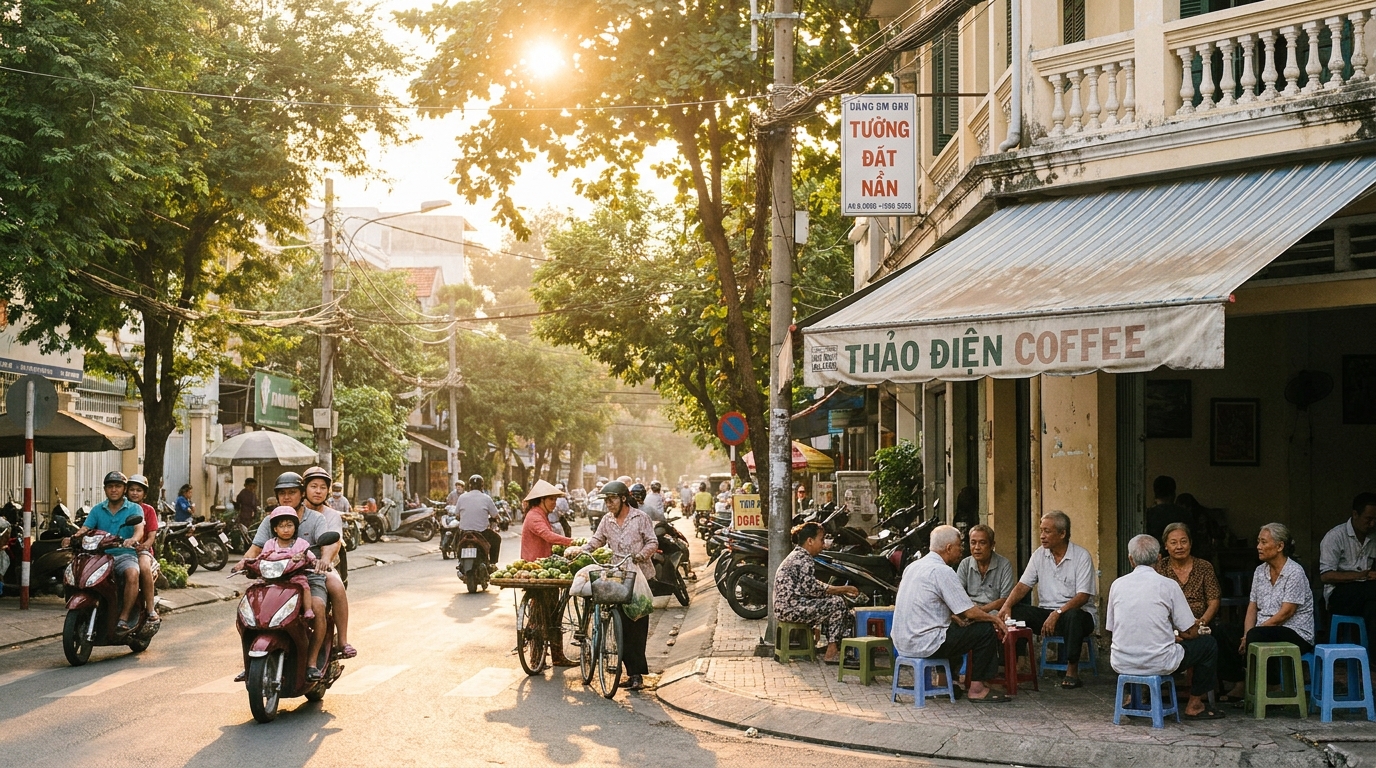
For visitors, Thao Dien offers a glimpse of what long-term Saigon life looks like, distinct from the backpacker strip of Pham Ngu Lao or the tourist-facing District 1 centre. The coffee here is excellent. The restaurants span Vietnamese, Japanese, Korean, Italian, and Middle Eastern cuisines, all operating at higher quality than their price points would suggest.
Where Are the Best Cafes in Thao Dien?
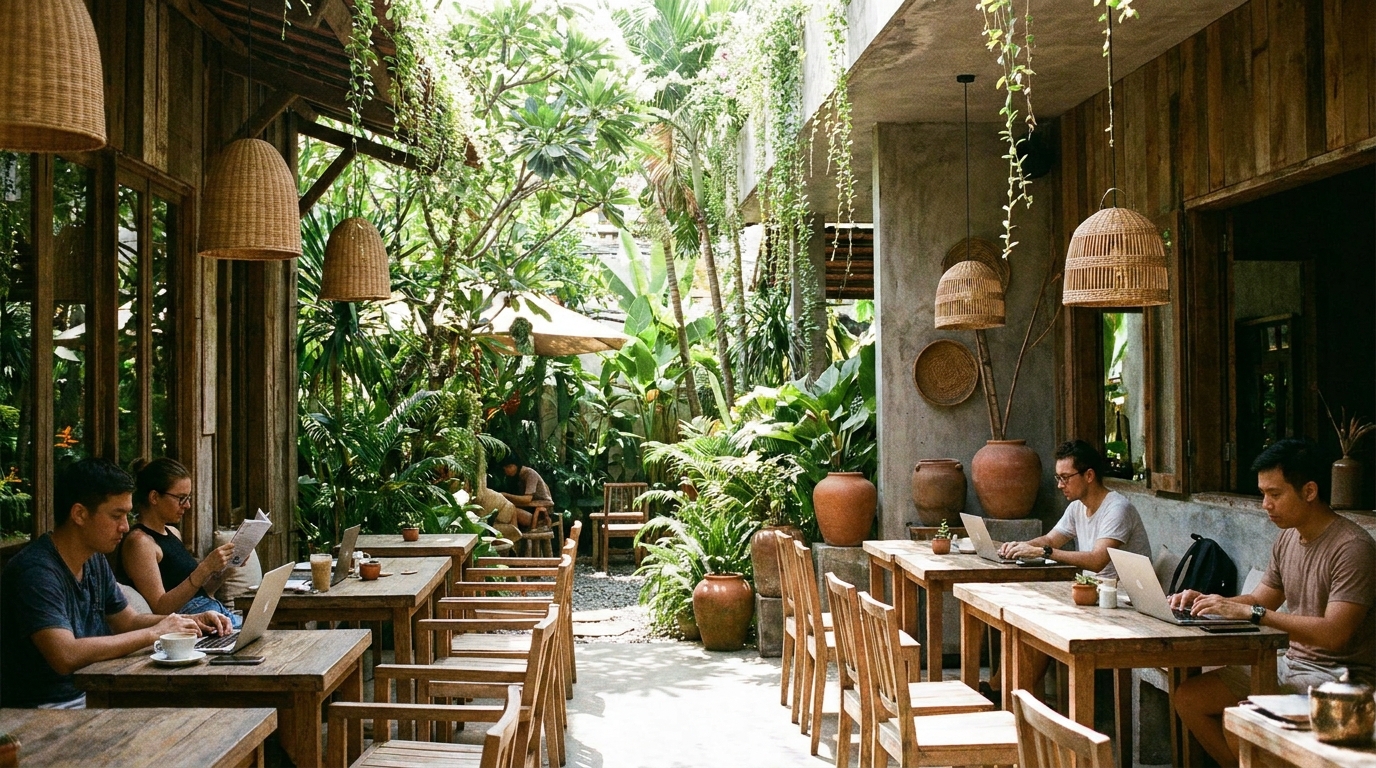
Thao Dien’s cafe scene is one of the strongest in Saigon. A 2025 review aggregation by the F&B trade publication Vietnam Beverage Business identified Thao Dien as containing more specialty coffee shops per square kilometre than any other neighbourhood in Ho Chi Minh City. Most are owner-operated spaces in converted villas or shophouses on quiet lanes off the main streets.
Xuan Thuy Street
Xuan Thuy is Thao Dien’s main commercial artery and the street with the highest concentration of cafes. It runs roughly north to south through the ward and is lined with a mix of Vietnamese coffee shops, Western brunch cafes, and newer specialty roasters. The street gets busy on weekend mornings. Several of the best-reviewed cafes in HCMC are on or just off Xuan Thuy.
The format here ranges from open-air garden spaces set back from the street to air-conditioned espresso bars that could drop into any major city and look at home. Vietnamese-style iced coffee (ca phe sua da) is universally good here, but the specialty scene is strong enough that flat whites, pour-overs, and cold brews are done properly. Prices are higher than local Saigon averages: expect 50,000 to 90,000 VND for a coffee versus 20,000 to 40,000 VND at a local street cafe.
Quoc Huong and the Side Streets
Quoc Huong runs parallel to Xuan Thuy and is quieter, with more residential-feeling cafes in garden settings. Many of the neighbourhood’s best-kept spaces are on the lanes between these two streets. Walking the block between them on a weekend morning is one of the better things to do in Thao Dien if you’re not in a hurry.
[PERSONAL EXPERIENCE] We’ve found the most interesting cafes in Thao Dien are consistently on the unnamed lanes that connect Xuan Thuy and Quoc Huong. Worth wandering rather than following a specific list, as the area changes faster than any guide can track.What Are the Best Restaurants in Thao Dien?
Thao Dien has the broadest international restaurant selection in Saigon outside of District 1. According to Foody Vietnam’s 2025 restaurant index, the ward contains over 200 restaurants, covering cuisines from Vietnamese street food to fine dining Japanese omakase. The area is particularly strong on Asian cuisines, with multiple well-regarded Korean, Japanese, and Thai restaurants competing at a high standard.
Vietnamese Food in Thao Dien
The Vietnamese food in Thao Dien skews toward the cleaner, more cafe-restaurant style of Vietnamese cooking rather than street food. There are exceptions: a few excellent pho and banh mi spots on the back streets that operate at street food prices. But the dominant format is the Vietnamese restaurant aimed at mixed Vietnamese and international clientele, where presentation is polished and prices are moderate by Saigon standards (150,000 to 400,000 VND for a full meal per person).
International Dining
The Japanese restaurant scene in Thao Dien is particularly strong, reflecting the large Japanese expat community in the area. Multiple sushi and ramen spots operate at standards that would be competitive in Japan itself. Korean barbecue restaurants cluster around the area near the Korean school. Italian restaurants, Middle Eastern shawarma spots, and burger places fill out a scene that can satisfy most international cravings without going back to District 1.
What Is Shopping and Markets Like in Thao Dien?
Thao Dien Market is the neighbourhood’s main fresh market and one of the best places in all of HCMC to find imported groceries alongside local Vietnamese produce. According to expat community resource Expat Advisory Vietnam (2025), the market supplies roughly 60% of the imported fresh produce consumed in the Thao Dien and District 2 expat community. It operates from early morning to around noon.
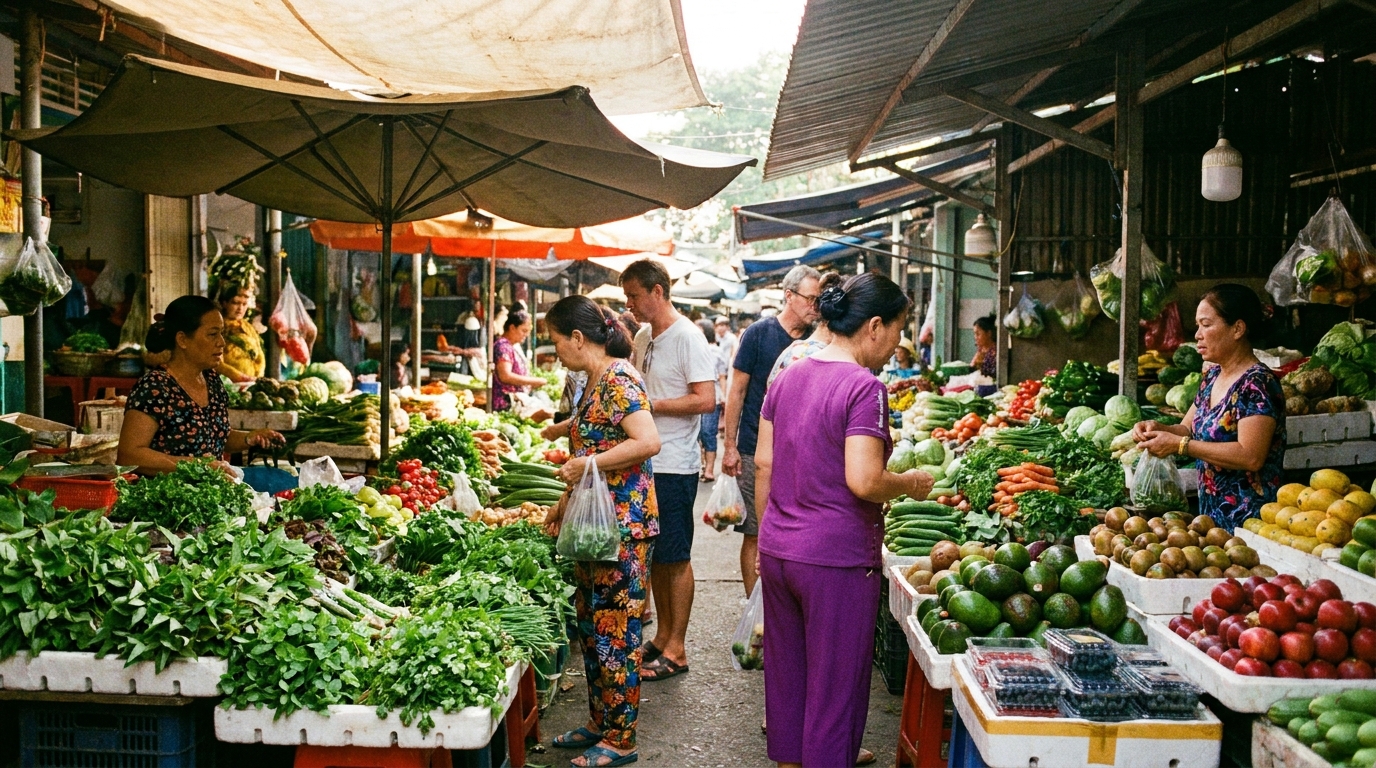
The market sells Vietnamese staples alongside imported items from Europe, Australia, and Japan: European cheese, Australian beef, French butter, Japanese condiments. It’s also one of the better places in Saigon to find specialty produce for home cooking. Prices are higher than wet markets elsewhere in the city, which is the tradeoff for availability and quality.
For larger grocery runs, An Phu Supermarket and the Vinmart on Xuan Thuy cover most needs. The An Phu area, at the northern end of Thao Dien, has a small cluster of international supermarkets and convenience stores that stock a wider range of imported goods than supermarkets in central Saigon.
What Is It Like to Live in Thao Dien?
Thao Dien is the most expensive residential neighbourhood in Saigon outside of the Vinhomes Central Park complex in Binh Thanh. According to PropertyGuru Vietnam’s Q1 2025 rental index, average rents for a two-bedroom apartment in Thao Dien run 15 to 40 million VND per month, with fully furnished units in newer residential towers reaching 50 million VND or more. Villas with gardens rent for 40 to 80 million VND per month.
The higher cost reflects the schools, the quality of the food and services ecosystem, the relative quiet, and the sense of community among long-term residents. International schools in the area include the British Vietnamese International School (BVIS) and several Korean, Japanese, and American-curriculum schools serving the respective expat communities.
Getting to District 1 is easier than it was before Metro Line 1 opened in December 2024. The Thao Dien Metro station connects to Ben Thanh in around 15 minutes for 15,000 to 26,000 VND depending on distance. Before the metro, the commute by taxi or Grab during peak hours took 30 to 45 minutes. The metro has meaningfully changed the commute calculus for Thao Dien residents.
 [UNIQUE INSIGHT] Thao Dien’s expat community is considerably less transient than the District 1 backpacker belt. Many residents have been here five to fifteen years and have built genuine local relationships, businesses, and community structures. The neighbourhood has the feel of an established international quarter rather than a temporary landing pad, which makes it a more interesting and less performatively foreign place to spend time than its reputation might suggest.
Frequently Asked Questions
Where exactly is Thao Dien in Saigon?
Thao Dien is a ward in Thu Duc City (formerly District 2), about 7 kilometres northeast of Saigon’s District 1 centre. It sits on the western bank of the Saigon River, accessible via the Thu Thiem Bridge, the Saigon Bridge, or Metro Line 1 from Ben Thanh Station. The metro ride from Ben Thanh to Thao Dien takes approximately 15 minutes. By Grab or taxi from District 1 the journey takes 15 to 30 minutes depending on traffic.
Is Thao Dien worth visiting as a tourist?
Yes, for a half-day. Thao Dien offers some of Saigon’s best cafes, a strong international restaurant scene, and a residential neighbourhood pace that’s a genuine contrast to the tourist centre. The market is worth visiting. The riverside area near Thao Dien Pearl has pleasant walking and decent food. It’s not a sightseeing destination, but it’s a good place to understand what the city looks like beyond District 1, and the coffee alone makes it worth the trip.
How much does it cost to live in Thao Dien?
Rents for a two-bedroom apartment in Thao Dien run 15 to 40 million VND (~$600-1,600 USD) per month for a furnished unit, according to PropertyGuru Vietnam’s Q1 2025 rental index. Villas rent for 40 to 80 million VND per month. Daily living costs are higher than other Saigon districts due to the concentration of international-standard cafes, restaurants, and supermarkets. Budget an additional 20-30% on food and lifestyle costs compared to District 1 or District 3.
What is the best way to get to Thao Dien from District 1?
Metro Line 1 (opened December 2024) is the fastest and cheapest option: Ben Thanh to Thao Dien takes about 15 minutes and costs 15,000 to 26,000 VND. Grab or taxi takes 15 to 30 minutes depending on traffic and costs 50,000 to 120,000 VND. Motorbike riders use the Thu Thiem Bridge or Saigon Bridge. The metro is strongly recommended for avoiding peak-hour traffic, which can make the bridge crossing slow in both morning and evening rush hours.
Are there international schools in Thao Dien?
Yes. Thao Dien and the surrounding District 2 area contain the highest concentration of international schools in Ho Chi Minh City. Schools in or near the ward include the British Vietnamese International School (BVIS), the Australian International School (AIS), the Korean International School, the Japanese School of Ho Chi Minh City, and several smaller international-curriculum providers. This school concentration is a primary reason for the area’s strong expat residential demand, particularly among families.
For more Saigon guides, check out: Thao Dien Saigon Guide: Expat Village, Cafes, and Where to Stay, District 4 Saigon Guide: Seafood, Locals, and Hidden Gems Near D1.
For official information and further reading, visit Lonely Planet — Ho Chi Minh City.