
The fastest way from Saigon to Da Lat is by plane — just 45 minutes on Vietnam Airlines or VietJet. But if you want to save money or soak in the scenery, a sleeper bus takes 7–8 hours and costs a fraction of the airfare. This complete dalat travel guide breaks down every transport option, what to expect, current prices, and which choice suits your trip — whether you’re heading up for a cool weekend escape or a longer highland adventure.
Key Takeaways
- Plane is the fastest option (45 min), with flights from Tan Son Nhat costing roughly 400,000–900,000 VND one-way when booked early.
- Sleeper buses depart nightly from Pham Ngu Lao and Ben Thanh, taking 7–8 hours for around 180,000–280,000 VND.
- No direct train runs from Saigon to Da Lat — the old Tháp Chàm–Da Lat mountain railway is tourist-only; the realistic rail route requires a connection via Phan Rang.
- Da Lat’s climate sits at 1,500 m elevation — pack a jacket even in summer; temperatures regularly drop to 12–15°C at night.
- Da Lat in 45 minutes by plane, or 8 scenic hours by sleeper bus — our D1 apartments are minutes from both options, making it easy to head up for a long weekend.
Why Saigon Residents Love Da Lat as a Weekend Escape
For anyone living in Ho Chi Minh City, Da Lat sits in a sweet spot: close enough for a two-night trip, different enough to feel like a genuine escape. The city swaps 35°C humidity for pine forests, misty hills, and French colonial villas. According to the Vietnam National Administration of Tourism, Da Lat received over 7 million visitors in 2024, with a significant share traveling from Ho Chi Minh City — making it consistently one of Vietnam’s top domestic destinations. As a practical dalat travel guide for Saigon residents, this post focuses on the journey itself, not just what to do when you arrive.
Option 1 — Flying from Tan Son Nhat to Lien Khuong Airport
Lien Khuong International Airport sits about 28 km south of Da Lat city centre. Vietnam Airlines, VietJet Air, and Bamboo Airways all operate daily routes from Ho Chi Minh City’s Tan Son Nhat (SGN) to Lien Khuong (DLI). Flight time is approximately 45 minutes wheels-up to wheels-down.
- Booking window: Fares drop significantly when booked 3–6 weeks ahead. Last-minute prices can triple.
- Price range (2025–2026): 380,000–950,000 VND one-way for economy, excluding luggage fees on budget carriers.
- Airport transfer to Da Lat town: Shared airport taxis charge around 80,000–120,000 VND per person; private taxis run 200,000–280,000 VND. Grab is available but surge pricing applies on arrival.
- Best for: Travellers with limited time, those visiting during peak holiday weekends (Tết, April 30, September 2) when buses sell out fast.
One practical note: Lien Khuong is a small airport. Arrivals are quick, but departures can get congested during national holidays. Build in 90 minutes before domestic departure.
Option 2 — Sleeper Bus: The Classic Backpacker and Budget Route
The sleeper bus is how most budget travellers and Vietnamese locals make the trip. Departures cluster around 7–9 PM from the Pham Ngu Lao backpacker district and from Mien Dong Bus Station, arriving in Da Lat by 3–5 AM. Some operators run daytime services departing around 6–7 AM, arriving mid-afternoon — better if you want scenery rather than sleep.
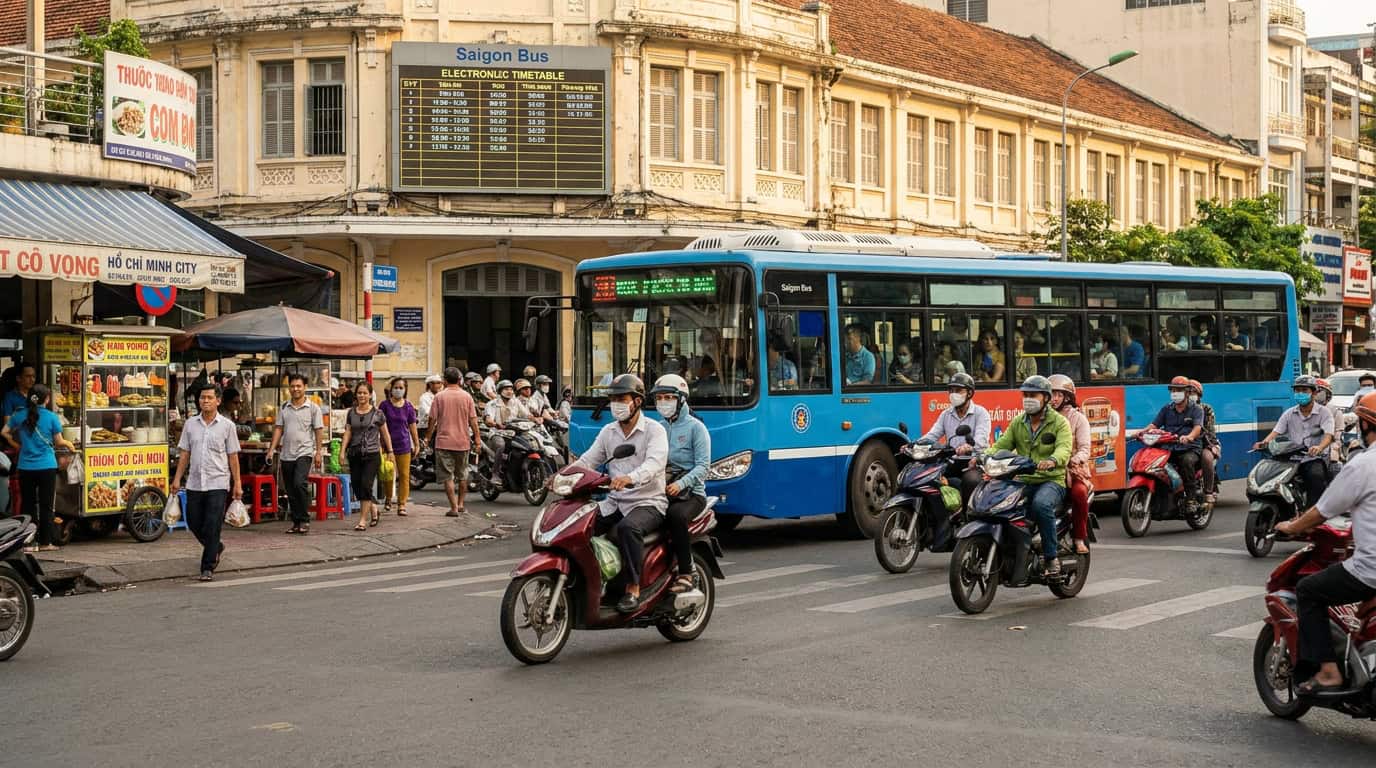
- Operators: Phuong Trang (Futa Bus), The Sinh Tourist, Kumho Samco, Hanh Cafe.
- Ticket price: 180,000–280,000 VND for a sleeper berth; VIP cabin buses run up to 350,000 VND.
- Journey time: 7–8 hours depending on traffic leaving HCMC and road conditions on Highway 20.
- Drop-off point: Most coaches terminate at Da Lat Bus Station (Ben Xe Da Lat) on 1 Tháng 4 Street — a 10-minute taxi ride from the central market area.
- Best for: Budget travellers, solo backpackers, groups who want flexibility without flight schedules.
Phuong Trang (Futa) is generally considered the most reliable operator with newer vehicles. Book through their app or website to guarantee a berth on peak weekends. The mountain section on Highway 20 includes sharp hairpin bends — if you’re prone to motion sickness, take medication before boarding and choose a lower berth toward the front of the bus.
Option 3 — The Train Question: Is There a Direct Service?
This is one of the most searched questions in any dalat travel guide. The short answer: there is no direct train from Ho Chi Minh City to Da Lat.
The historic Tháp Chàm–Da Lat mountain railway, built by the French and once considered an engineering marvel, partially reopened as a tourist attraction. The 7-kilometre tourist segment runs between Da Lat Station and Trai Mat village — a pleasant 30-minute scenic ride, but not a transport option from Saigon.
The closest practical rail option involves taking a train from Saigon (Sai Gon Railway Station, Hoa Hung) to Tháp Chàm station near Phan Rang-Tháp Chàm, then connecting by bus or taxi to Da Lat. Total journey time: 10–13 hours depending on train timing and connection wait. This route suits slow travellers or those combining a Da Lat trip with Ninh Thuan province. For most Saigon residents, it’s not practical for a weekend escape.
Option 4 — Private Car or Self-Drive Motorbike
Renting a self-drive car or motorbike is popular among groups and experienced road-trippers. The route via Highway 20 through Bao Loc and Di Linh is genuinely beautiful — rubber plantations, tea hills, and the dramatic ascent to the plateau.

- Motorbike: 5–6 hours riding time for experienced riders; rent a semi-automatic from Pham Ngu Lao for 150,000–250,000 VND/day. The mountain climbs require a reliable engine — avoid under-powered scooters.
- Private car rental with driver: 1,800,000–2,800,000 VND round-trip for a 4–7 seat vehicle. Split among 4 people, this often competes with flight prices.
- Self-drive car: Requires an international or Vietnamese licence; rental rates start around 700,000–1,000,000 VND/day. Fuel for the round trip adds approximately 300,000–400,000 VND.
- Best for: Groups of 3–5, photography enthusiasts, travellers combining Da Lat with Mui Ne or Nha Trang.
Comparing All Options: Time, Cost, and Comfort
Here is a direct comparison to help you choose based on your priorities as you use this dalat travel guide:
- Plane: 45 min flight + 1.5 hr airport transfers = ~3 hrs door-to-door | 600,000–1,200,000 VND total | Best: speed, peak travel dates
- Sleeper Bus: 7–8 hrs overnight | 180,000–280,000 VND | Best: budget, convenience, no fixed departure airport
- Train + Bus Connection: 10–13 hrs | 250,000–450,000 VND | Best: slow travel, combining destinations
- Private Car with Driver: 6–7 hrs | 450,000–700,000 VND per person (group of 4) | Best: flexibility, scenery, groups
- Self-Drive Motorbike: 5–6 hrs | 200,000–350,000 VND total | Best: experienced riders, adventure travel
Da Lat in 45 minutes by plane, or 8 scenic hours by sleeper bus — our D1 apartments are minutes from both Tan Son Nhat Airport and the main bus departure points, making it easy to head up for a long weekend without wasting time crossing the city.
Best Time to Visit Da Lat: Climate and Crowds
Da Lat has a two-season pattern distinct from coastal Vietnam. The dry season runs from November to April — cooler nights (12–16°C), clear mornings, and the city’s famous flower festival in January. This is peak tourist season; book transport and accommodation 2–4 weeks ahead for weekends.
The rainy season (May to October) brings daily afternoon showers, dramatic mist, and lush green landscapes. Crowds thin noticeably — a favourite among photographers and travellers wanting Da Lat without the weekend rush. Mornings are usually clear; plan outdoor activities before noon.
According to data from the Lam Dong Department of Tourism, visitor arrivals to Da Lat peak sharply in December–January and around Vietnamese national holidays, with weekend occupancy rates in central hotels exceeding 95% during these periods. Booking your Saigon-to-Da Lat transport at least 10 days ahead during these windows is strongly advised.
Da Lat Arrival: Getting Around the City
Da Lat city is hilly and compact but not easily walkable between key sites. Transport options once you arrive:
- Grab: Available and reliable in the central area; slightly more expensive than Hanoi or Saigon due to topography and distance factors.
- Xe om (motorbike taxi): Negotiated rides; useful for short hops to markets and cafes. Agree on price before riding.
- Rental motorbike: The most flexible option — 150,000–220,000 VND/day for a manual or semi-automatic. Many guesthouses arrange rentals directly.
- Bicycle: Possible in the central area; the hills make it challenging for longer distances.
What to See and Do: Core Highlights for a 2–3 Day Trip
A dalat travel guide wouldn’t be complete without covering the key attractions. Da Lat rewards slow exploration — the city’s charm is in its neighbourhoods, cafes, and viewpoints as much as its formal sights.
- Xuan Huong Lake: The central lake ringed by a 5 km promenade — best at dawn before tour groups arrive.
- Truc Lam Pagoda: A working Zen monastery accessible by cable car; serene and architecturally striking.
- Crazy House (Hang Nga Villa): An eccentric architectural landmark — part guesthouse, part sculpture garden.
- Da Lat Flower Gardens (Vuon Hoa Da Lat): Year-round blooms; peak during the annual Flower Festival in January.
- Langbiang Mountain: 12 km from town; a jeep ride and short trek to the summit at 2,167 m rewards with panoramic plateau views.
- Da Lat Market (Cho Da Lat): The city’s social hub — strong local coffee, strawberries, artichokes, and dried persimmon are regional specialities worth bringing back to Saigon.
- Valley of Love (Thung Lung Tinh Yeu): Popular with Vietnamese couples; pleasant gardens and paddleboats on a reservoir.
Where to Stay in Da Lat
Da Lat’s accommodation ranges from atmospheric French colonial villas and boutique guesthouses to budget hostels near the central market. The area around Phan Dinh Phung Street and Nguyen Thi Minh Khai concentrates most mid-range and backpacker options. For a quieter stay, guesthouses on the hillside above the lake offer better views and less noise.
For travellers flying up from Saigon and using this as a base for regional exploration, staying centrally gives easy access to both the market area and tour operators running canyoning, trekking, and motorbike tours. Prices for decent mid-range rooms run 400,000–900,000 VND/night outside holiday periods.
Practical Tips for the Saigon-to-Da Lat Journey
- Pack layers: Even if you leave Saigon in shorts and a t-shirt, temperatures drop sharply above 1,000 m. A light jacket and long trousers are essential for evenings.
- Buy bus tickets in advance: For Friday night departures and any weekend around a national holiday, book through operator apps or agents the week before — popular berths sell out.
- Flight check-in: Vietnam’s domestic carriers enforce luggage limits strictly on budget fares. Add checked baggage at booking rather than at the airport to avoid surcharges.
- Currency: Da Lat city centre has ATMs; smaller sites and market stalls are cash-only. Withdraw before heading out of town.
- Best overall schedule: A Thursday night sleeper bus arrives Friday morning — full two days before Sunday return, avoiding the Sunday evening traffic crawl back into Saigon.
You May Also Find Useful
If you are planning a stay in Da Lat, it is worth checking what is available on Booking.com or Agoda while you work out the dates.
Frequently Asked Questions
How long does the bus from Saigon to Da Lat take?
The sleeper bus from Ho Chi Minh City to Da Lat takes approximately 7–8 hours. Overnight services typically depart between 7 PM and 10 PM and arrive in Da Lat between 3 AM and 5 AM. Daytime services departing around 6–7 AM arrive mid-afternoon. Journey time can extend during heavy rain on Highway 20’s mountain sections.
Is there a direct train from Ho Chi Minh City to Da Lat?
No direct train service runs between Saigon and Da Lat. The old mountain railway no longer operates as a long-distance route. The only active rail option is to take a train to Tháp Chàm (near Phan Rang) and then travel by bus or taxi to Da Lat — a combined journey of 10–13 hours. For most travellers this dalat travel guide covers, the plane or sleeper bus is far more practical.
What is the cheapest way to get from Saigon to Da Lat?
The sleeper bus is consistently the cheapest option, with fares between 180,000–280,000 VND one-way. Book directly through Phuong Trang (Futa Bus) or Kumho Samco apps for the lowest prices. Flights can occasionally match or beat bus prices if booked 4–6 weeks in advance during promotional periods, but average ticket prices remain higher once luggage fees are added.
How far is Lien Khuong Airport from Da Lat city centre?
Lien Khuong Airport is approximately 28 km south of Da Lat’s central market. By shared airport taxi the transfer takes 30–40 minutes and costs around 80,000–120,000 VND per person. A private taxi or Grab runs 200,000–280,000 VND for the whole car. Factor in 60–90 minutes for the airport-to-city leg when planning your total travel time.
What should I pack for a trip to Da Lat from Saigon?
Even in the hottest months, Da Lat evenings drop to 15–18°C. Pack at least one warm layer (a fleece or light jacket), long trousers, and comfortable walking shoes for the hilly terrain. If visiting during the rainy season (May–October), a compact rain jacket or poncho is essential. Sunscreen is often overlooked but necessary — UV levels at 1,500 m altitude are higher than at sea level in Saigon.
Official Resources
For the most up-to-date information on dalat travel guide, visit the Vietnam National Administration of Tourism.