
Saigon weather by month follows one of the most predictable patterns in Southeast Asia: a dry season that runs roughly November through April, and a wet season from May through October. Knowing which months bring blazing sunshine, which bring afternoon downpours, and which deliver perfect blue-sky mornings helps you plan every aspect of life in Ho Chi Minh City — from what to pack and when to sightsee, to how aggressively to run your air conditioning and whether to book a scooter or a grab for your commute.
Key Takeaways
- Ho Chi Minh City has two distinct seasons: dry (November–April) and wet (May–October), with no true “winter” cold.
- January and February are peak dry-season months — ideal for outdoor activities, lower humidity, and Tet festival crowds.
- May through October brings daily afternoon rain, but mornings usually stay clear; flooding risk is highest in September and October.
- April is the hottest month, regularly hitting 38–39°C before the rains arrive to cool things down.
- November and December offer the single best combination of low humidity, comfortable temperatures, and clear skies in the entire year.
Understanding Saigon’s Two-Season Climate
Before breaking down saigon weather by month, it helps to understand the big picture. HCMC sits at roughly 10° north of the equator, which means it stays hot all year — average temperatures rarely dip below 25°C even in the coolest months. What actually changes is rainfall and humidity driven by the southwest monsoon. The monsoon arrives around late April or May, drenches the city through October, then retreats. The northeast monsoon that gives Hanoi its cold winters barely reaches this far south, so Saigon’s “cool season” is really just a drier, slightly less humid version of warm.
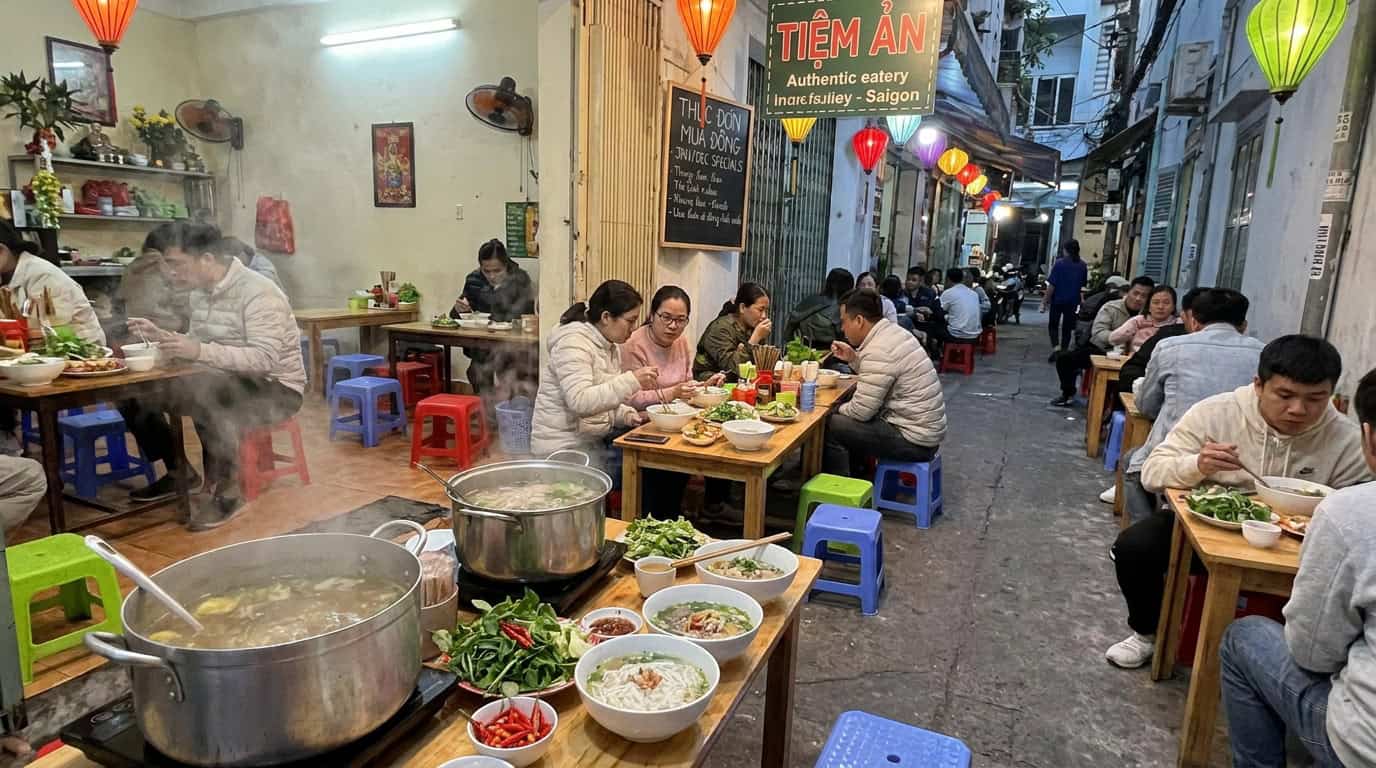
According to the Vietnam Meteorological and Hydrological Administration, Ho Chi Minh City receives an annual average of 1,800–2,000 mm of rainfall, with roughly 80 percent of that falling between May and October. Planning around that single statistic will save you more headaches than any other piece of climate knowledge.
Saigon Weather by Month: January
January is one of the most comfortable months to be in the city. Temperatures average 26–32°C, humidity drops to its annual low, and rainfall is minimal — often just a few millimetres for the entire month. Skies are reliably blue by mid-morning and stay that way. Outdoor dining, rooftop bars, and long walks through District 1 are all genuinely enjoyable. The trade-off is tourist crowds, especially around the second half of the month as Vietnamese New Year (Tet) preparations ramp up. Expect higher accommodation prices and packed flights into Tan Son Nhat.
Saigon Weather by Month: February
February carries over January’s pleasant conditions and is traditionally the month of Tet itself (the exact date shifts each year on the lunar calendar). During Tet week the city empties dramatically — up to 70 percent of residents head home to their provinces — so traffic dissolves, restaurants go quiet, and Saigon briefly becomes almost serene. Temperatures remain in the 26–33°C range with low humidity. If you can time a visit or a lease start around Tet, you’ll experience a version of the city most long-term expats treasure.
Saigon Weather by Month: March
March marks the beginning of the “hot dry” phase. Temperatures start climbing toward 35°C and above, but rain is still rare. UV index readings are intense — midday sun is unforgiving on fair skin. The upside: no flooding, reliable sunshine, and excellent visibility for day trips to destinations like the Mekong Delta or Cu Chi Tunnels. Utility bills start ticking upward as air conditioning runs longer each afternoon.
Saigon Weather by Month: April
April is Saigon’s hottest month. Heat indexes regularly push past 40°C in direct sunlight, and the city can feel oppressive between 11am and 4pm. Locals shift their schedules — markets open earlier, parks fill up at dusk rather than midday. Late April sometimes delivers the first pre-monsoon thunderstorms, brief but violent and accompanied by spectacular lightning over the skyline. These storms signal that the wet season is approaching and often provide welcome, if temporary, relief. Staying comfortable means a well-insulated apartment with reliable air conditioning, and ideally blackout curtains facing west.
Saigon Weather by Month: May and June
The monsoon typically establishes itself in May. Rain arrives in the afternoons — usually a hard downpour lasting 30 to 90 minutes — and then clears. Mornings remain bright and hot. By June the pattern becomes extremely reliable: wake up to sunshine, work through a warm morning, then expect rain roughly between 2pm and 5pm. Temperatures actually moderate slightly compared to April, settling back into the 28–34°C band, and the humidity that comes with the rain makes evenings feel stickier. Flooding in low-lying areas of Districts 6, 8, and Binh Tan can be significant during heavy events.
According to Time Out’s 2024 Ho Chi Minh City climate report, June–August afternoons see measurable rainfall on approximately 20 out of 30 days, making umbrella etiquette an essential part of daily life for residents.
Saigon Weather by Month: July and August
July and August are solidly mid-wet-season months. The afternoon rain pattern continues, sometimes intensifying into longer or multi-day periods of overcast skies. Street flooding is common after particularly heavy events. Humidity levels are at their annual peak, which makes outdoor activity feel more draining and increases wear on electronics, clothing, and furniture. On the positive side, the constant rain keeps dust down, the city’s parks and green spaces look their lushest, and fruit markets overflow with seasonal produce — mangosteen, rambutan, and durian are all at their best. Indoor lifestyle adapts well; cafes, co-working spaces, and shopping centres thrive.
Saigon Weather by Month: September and October
September and October are the months that test Saigon residents the most. Cumulative rainfall peaks, and the city’s drainage system — still a work in progress — struggles after back-to-back heavy events. Some streets in Binh Thanh and Thu Duc flood regularly enough that residents keep spare shoes at their offices. Typhoon activity in the South China Sea occasionally pushes extra moisture into the region, producing multi-day grey skies rather than the usual quick afternoon shower. Expats on annual leases often plan trips abroad during this window. That said, mornings can still be lovely, and the tourist-light atmosphere gives the city a more local, relaxed feel.
Staying multiple months? Our flexible lease terms let you ride out the best weather and leave before the worst.
Saigon Weather by Month: November
November is a turning point that longtime residents look forward to all year. Rainfall begins dropping sharply, humidity retreats, and afternoon temperatures become genuinely comfortable — hovering around 28–31°C. The light changes too; mornings take on a golden quality that makes District 3’s tree-lined streets look cinematic. Outdoor restaurant terraces refill, running clubs restart evening sessions, and weekend trips to Vung Tau or Mui Ne become far more appealing. November is arguably the month when Saigon shows its best self, and it tends to attract a wave of new expat arrivals who chose their start date wisely.
Saigon Weather by Month: December
December consolidates November’s conditions and adds festive atmosphere. The city decorates heavily for Christmas — Nguyen Hue walking street and the Notre-Dame Cathedral area are illuminated nightly. Temperatures average 25–30°C with comfortable humidity. Christmas week sees a significant influx of international visitors, and New Year’s Eve draws large crowds to the downtown riverfront. Weather-wise it’s as close to perfect as HCMC gets: dry, bright, warm without being brutal, and breezy enough at night to consider leaving the AC off and opening the balcony door.
Best and Worst Months to Visit or Move to Saigon
Understanding saigon weather by month ultimately comes down to your priorities. For pure weather quality, November through February is the undisputed sweet spot — lower humidity, less rain, and temperatures that make exploring the city genuinely enjoyable rather than endurance sport. March and April are tolerable if you can handle the heat; the lack of rain is useful for day trips. May through October demands adaptation: embrace the morning window, carry an umbrella everywhere, and choose accommodation with solid flood drainage. September and October are the months most long-term expats would choose to avoid if their schedule allows flexibility.
For apartment seekers specifically, the wet season also has a practical upside: you can directly test whether a unit has damp walls, adequate drainage on the balcony, and well-sealed windows — all issues that only become visible when rain actually arrives.
Packing and Living Tips for Each Season
For the dry season (November–April): lightweight cotton or linen clothing, high-SPF sunscreen (SPF 50+ is standard at Vietnamese pharmacies), a reusable water bottle, and sunglasses. A light cardigan for heavily air-conditioned restaurants and shopping centres is genuinely useful.
For the wet season (May–October): a compact umbrella you keep permanently in your bag, quick-dry fabrics, waterproof sandals or a dedicated pair of “flood shoes,” and a small drybag for your phone and laptop when riding on a motorbike. Ground-floor apartments with direct street access are convenient but more flood-prone; upper floors avoid that problem entirely.
Year-round, air conditioning is not optional — it’s a health and sleep necessity. When evaluating apartments, check the age of AC units, whether they cover both bedroom and living room, and whether electricity is billed at city rates or marked up by the building. Energy costs vary considerably across saigon weather by month, spiking in the April heat and again during the humidity peaks of August and September.
You May Also Find Useful
Frequently Asked Questions
What is the best month to visit Saigon weather-wise?
November and December offer the best combination of low humidity, minimal rain, and comfortable temperatures. January and February are close runners-up, with the added bonus of Tet festival atmosphere. If you must visit during the wet season, aim for May or June when the rainy pattern is still fairly predictable afternoon showers rather than extended overcast periods.
Does it ever get cold in Ho Chi Minh City?
No — not by any northern-hemisphere definition of cold. The lowest overnight temperatures recorded in HCMC rarely fall below 20°C, and those readings occur only on the coldest nights of January or February. Most “cool” evenings hover around 23–25°C. You won’t need a jacket, but a light long-sleeved layer is occasionally welcome on December and January evenings.
How bad is flooding in Saigon during the wet season?
Flooding ranges from minor street-level puddles to knee-deep water in the worst-affected low-lying districts. Districts 6, 8, Binh Tan, and parts of Thu Duc city (formerly District 2 and 9) are most vulnerable. Central Districts 1, 3, and most of Phu Nhuan are at lower risk but not immune. The city has ongoing drainage improvement projects, and newer developments in District 7 and Binh Chanh are generally better engineered for drainage.
Is saigon weather by month similar every year?
The seasonal pattern is consistent year to year, but the timing and intensity vary. El Niño years tend to extend the dry season and intensify the April heat. La Niña years typically bring heavier-than-average wet season rainfall. Climate data from 2023–2025 shows a trend toward more intense short-duration downpours rather than longer moderate rains, which has increased localised flash flooding even in traditionally safer areas.
When does Tet happen relative to Saigon’s weather?
Tet falls in late January or early February depending on the lunar calendar — squarely in the dry season. Weather during Tet week is typically excellent: clear skies, low humidity, and temperatures in the comfortable 26–30°C range. This makes outdoor celebrations, flower markets, and temple visits very pleasant, which is part of why the timing has always felt well-matched to the festivity.
Official Resources
For the most up-to-date information on saigon weather by month, visit the Vietnam Tourism – Food and Drink.