
A serviced apartment district 1 gives you the best of both worlds in Ho Chi Minh City: the central location of a hotel with the space, privacy, and cost efficiency of a residential lease. District 1 is Saigon’s commercial and cultural nerve centre — home to Bến Thành Market, the Opera House, the city’s top restaurants, and the main expat business corridor along Lê Lợi and Nguyễn Huệ. Whether you are relocating for work, on a three-month project assignment, or simply want a fully managed home base in the city, the serviced apartments in this district offer a calibre of living that standard rentals cannot match.
Key Takeaways
- District 1 serviced apartments combine hotel-grade management with residential space — ideal for stays of one month to two years.
- Monthly rates typically range from USD 800 for a studio to USD 3,500+ for a two-bedroom with premium amenities.
- The best managed residences include utilities, weekly housekeeping, Wi-Fi, and often gym or pool access in the base rate.
- Location within District 1 matters greatly — Bến Nghé, Phạm Ngũ Lão, and the Lê Lợi corridor each serve different lifestyle and budget profiles.
- Long-stay discounts of 10–25% are common; always negotiate a three-month or six-month rate before signing.
What Makes a Serviced Apartment Different from a Regular Rental in District 1
In Saigon’s rental market, the word “serviced” carries real meaning — or it should. A genuine serviced apartment in District 1 includes professional on-site management, regular housekeeping, all utilities bundled into one monthly invoice, and furnished interiors maintained to a consistent standard. You do not deal with a landlord hunting down a plumber at 10 pm; the building’s team handles it.

Standard condominiums in District 1 — even high-end ones — are typically owner-managed. The furniture varies by unit, maintenance response times are unpredictable, and utility billing is handled separately. For a short- to mid-term resident, this creates friction. Serviced apartments eliminate that friction entirely, which is why they command a premium and why demand from corporate relocatees remains strong year-round.
District 1 Neighbourhoods: Where Your Serviced Apartment Actually Sits
District 1 is divided into roughly a dozen wards, and the ward your apartment sits in shapes your daily life as much as the unit itself.
- Bến Nghé ward — The CBD core. Walking distance to consulates, international banks, and the Saigon River waterfront. Best for corporate professionals and those who want zero commute to the financial district.
- Bến Thành ward — Centred on the market and the new metro station (Ben Thanh Metro Hub). High foot traffic but excellent transport links. Good for first-time Saigon residents who want to be in the middle of everything.
- Phạm Ngũ Lão ward — Budget-friendly end of District 1, vibrant backpacker energy. Serviced apartments here tend to be smaller but well-priced. Suits digital nomads and solo travellers on longer stays.
- Tân Định (border with District 3) — Quieter residential streets, excellent French-Vietnamese café culture, proximity to expat schools. A favourite among families and long-stay professionals who prefer a slower pace inside the district.
Average Rental Rates for Serviced Apartments in District 1 (2025–2026)
Pricing in this segment has shifted meaningfully since 2023. According to CBRE Vietnam’s Q4 2025 Residential Market Report, average occupancy rates for serviced apartments in Ho Chi Minh City’s central districts reached 82%, with monthly asking rents for Grade A stock up approximately 7% year-on-year. That tightening supply-demand dynamic means quality inventory moves fast.
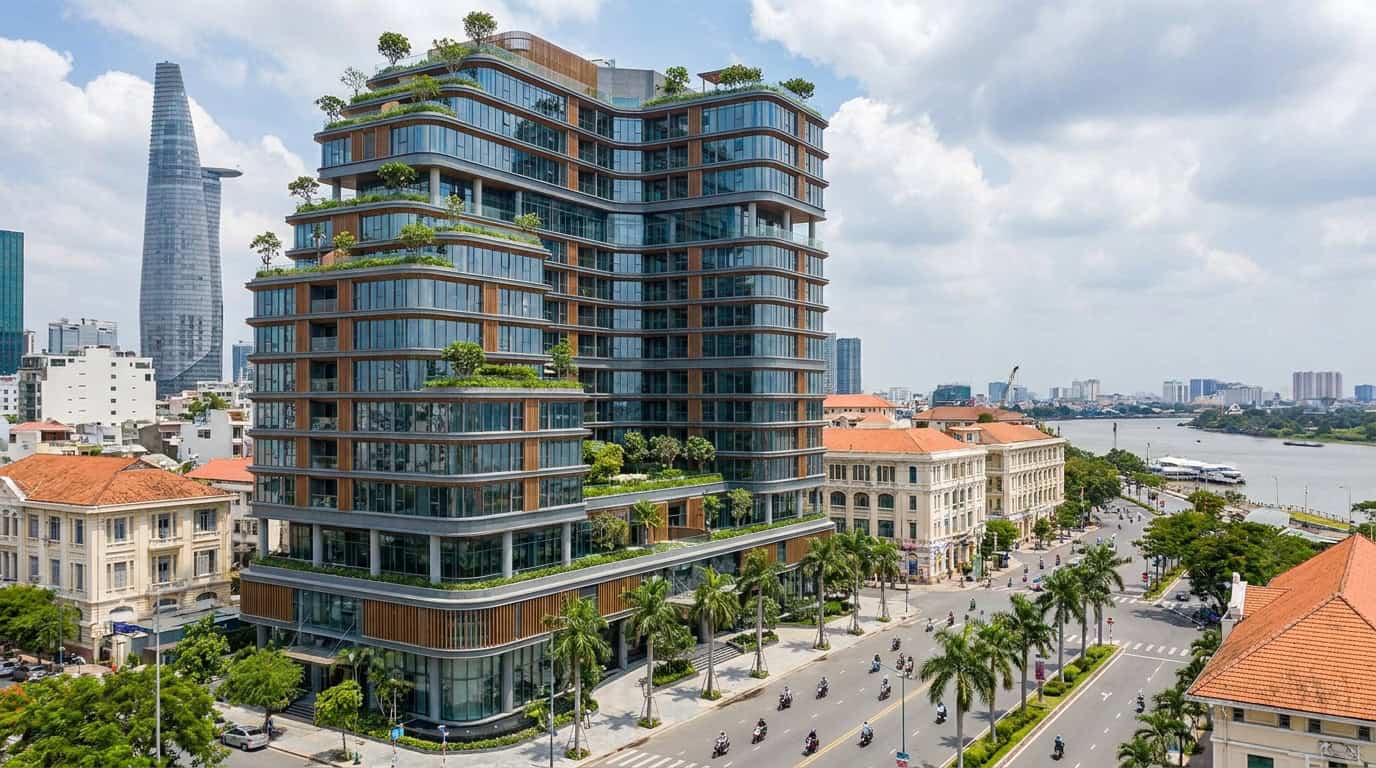
As a general benchmark for a serviced apartment district 1 in mid-2026:
- Studio (25–35 m²): USD 800–1,300/month
- One-bedroom (40–60 m²): USD 1,200–2,200/month
- Two-bedroom (70–100 m²): USD 2,000–3,800/month
- Three-bedroom (100 m²+): USD 3,500–6,000/month
These figures assume full furnishing, utilities, and weekly housekeeping are included. Raw condo rentals in the same district run 15–30% lower but add the hidden costs of furniture deposits, utility setup, and unreliable service.
What Is Typically Included — and What You Should Always Confirm
Before signing any lease, verify the following with any serviced apartment district 1 provider:
- Utilities: Are electricity, water, and internet fully bundled, or is electricity billed at commercial rates above a cap? This matters enormously in Saigon’s summer months.
- Housekeeping frequency: Weekly is standard at quality residences; some budget options offer biweekly or charge extra for additional visits.
- Maintenance SLA: How quickly does the building respond to a broken air conditioner? In a Saigon summer, a same-day guarantee is non-negotiable.
- Visa support: Reputable buildings will register your temporary residence with the local ward authority (tạm trú) — legally required for stays over 30 days and often overlooked by casual landlords.
- Lease flexibility: Can you break the lease with 30 or 60 days’ notice? Expat assignments change. A building that locks you into 12 months with no exit clause is a risk.
Amenities That Separate Premium Residences from Mid-Tier Serviced Apartments
Not all managed residences in District 1 are created equal. At the premium end of the serviced apartment district 1 market, you should expect:

- Rooftop or podium pool with year-round access
- Fully equipped gym (not a single treadmill in a converted storage room)
- 24-hour front desk and security — not just a night guard
- In-unit washing machine (not a shared laundry floor)
- Dedicated workspace or co-working lounge — increasingly standard post-2022
- Concierge services: restaurant bookings, taxi coordination, package handling
According to Savills Vietnam’s 2025 Serviced Apartment Tenant Survey, high-speed Wi-Fi and responsive maintenance were ranked as the top two priorities by corporate tenants — above pool access and gym quality. A beautiful pool means nothing if your video call drops in the middle of a client meeting.
The Long-Stay Advantage: Why Expats Choose Serviced Over Hotels
If your assignment in Ho Chi Minh City runs longer than three weeks, a serviced apartment district 1 almost always makes better financial and practical sense than a hotel. A mid-range hotel in District 1 costs USD 80–150 per night — or USD 2,400–4,500 per month — for a room that lacks a kitchen, a proper desk, and the psychological separation of a home. A serviced apartment at USD 1,500/month gives you more space, a kitchen, a washing machine, and a genuine sense of residence rather than transit.
The psychological component is underrated. Long-stay hotel living induces a kind of chronic temporariness that wears on focus and wellbeing. Having a space that is yours — where you can cook a meal, invite colleagues for dinner, and store your bicycle — changes the quality of your time in Saigon significantly.
How to Evaluate Management Quality Before You Sign
The “serviced” in serviced apartment is only as good as the team running the building. Here is how to assess management quality before committing:
- Walk in unannounced. The state of the lobby, lifts, and common areas on a random weekday afternoon tells you everything about day-to-day operations.
- Ask for a current tenant reference. Any building confident in its service should connect you with a satisfied long-stay tenant within 24 hours.
- Check Google Maps and Booking.com reviews specifically for maintenance complaints. Filter for reviews mentioning “broken,” “slow,” or “management” — these patterns reveal systemic issues.
- Review the house rules. Overly restrictive visitor policies or excessive fees for guests are red flags for a management team more focused on control than hospitality.
- Test response time. Email or WhatsApp the property before signing and see how long they take to reply and how clearly they answer your questions. That response time and tone is what you will experience every time you have a maintenance request.
Serviced Apartment District 1 for Corporate Relocations
Human resources teams and relocation consultants placing staff in Ho Chi Minh City consistently favour District 1 serviced apartments for several structural reasons. Proximity to the central business district reduces commute times and transportation costs. Single-invoice billing simplifies expense reporting. Consistent furnishing standards mean employees in different units of the same building have comparable living conditions — important for team equity and morale.
Corporate rates are available from most managed residences for bookings of five or more units or stays of six months or more. If your company places staff in Saigon regularly, negotiating a master agreement with a single property is far more efficient than sourcing individual units each rotation.
District 1 has several serviced apartment options but very few that combine boutique design, consistent service, and long-stay community. We are one of them — compare at saigonapartment.vn/residences.
Comparing Boutique Residences vs. Large-Scale Serviced Apartment Towers
District 1 hosts both large branded serviced apartment towers with 200+ units and smaller boutique residences with 20–60 apartments. Each model has genuine advantages depending on your profile.
Large-scale towers often have more on-site amenities — larger pools, multiple restaurant options, business centres. Their management processes are standardised and their corporate account infrastructure is mature. The trade-off is a more institutional feel and less personalised service at scale.
Boutique residences offer higher staff-to-resident ratios, greater design coherence, and a genuine community among long-stay tenants. Staff know you by name within the first week. Maintenance requests get escalated personally rather than entering a ticketing queue. For residents staying three months or longer, this human dimension significantly affects quality of life.
The right choice depends on whether you prioritise amenity breadth or service depth. Most experienced Saigon expats with options choose depth.
Practical Tips for Moving Into a Serviced Apartment in District 1
Once you have selected your serviced apartment district 1, the move-in process itself deserves attention:
- Photograph everything on day one. Document any pre-existing damage to furniture, walls, and appliances before the building does its check-in inspection. Email the photos to management immediately to establish a timestamp.
- Register your tạm trú promptly. Your building should assist with this. Do not wait — overstays without registration can complicate future visa extensions.
- Set up a local SIM and bank account in the first week. Most Saigon buildings accept bank transfer; having a local Vietcombank or Techcombank account saves international transfer fees on monthly rent.
- Understand the aircon settings. Vietnam’s electrical systems run on 220V; most modern serviced apartments have inverter aircon that runs efficiently when set to 26°C. Leaving it at 18°C all day generates eye-watering electricity bills if your plan is not truly all-inclusive.
- Join any building WhatsApp or Zalo group. These resident communities are often the fastest source of local recommendations — from the best nearby pho stall to which xe ôm driver is most reliable at 6 am.
You May Also Find Useful
- Rooftop Pool Apartments in Saigon 2025: The Complete Guide to the Best Buildings in District 1
- Saigon Hotel District 1 vs Serviced Apartment: The Real Cost Comparison Over 30 Days
- Short-Term Apartments in Saigon 2026: Best Options for 1-4 Week Stays in District 1
- Your District 1 Saigon Residences: A Complete Guide to Booking, Staying, and Extending
For a first month while you look at longer leases, Booking.com and Agoda both list serviced apartments in Ho Chi Minh City on monthly rates — a useful baseline before you start dealing with local agents.
Frequently Asked Questions
What is the minimum stay for a serviced apartment in District 1?
Most quality serviced apartments in District 1 offer a minimum stay of one month, though some buildings will accommodate two-week stays at a slight premium. For stays under one month, short-term rental rates apply and are typically 20–40% higher per night than the equivalent monthly rate. If you expect to stay at least 30 days, always ask for the monthly rate — it will be significantly better.
Are utilities included in District 1 serviced apartment rates?
Reputable serviced apartments bundle electricity, water, and internet into the monthly rent. However, some buildings cap electricity usage and charge excess at commercial rates — which can be high if you run multiple air conditioning units continuously. Always confirm exactly what is included and whether there is a usage cap before signing. The best buildings offer truly all-inclusive pricing with no surprise invoices.
How does a serviced apartment in District 1 compare to District 2 or District 7?
District 1 commands a premium for its central location and walkability to the CBD, waterfront, and cultural sites. Districts 2 (Thảo Điền) and 7 (Phú Mỹ Hưng) offer larger apartments at lower per-square-metre costs and are popular with families prioritising international schools and quieter residential environments. For single professionals or couples prioritising work proximity and city access, District 1 remains the strongest choice. For families on longer postings, Districts 2 or 7 often win on overall lifestyle value.
Do District 1 serviced apartments help with visa and work permit registration?
Yes — legitimate, professionally managed serviced apartments handle temporary residence registration (tạm trú) as a standard part of the check-in process. This is a legal requirement for foreign nationals staying more than 30 days and your building is obligated to assist. Be cautious of any property that seems unfamiliar with this process; it may indicate informal or non-compliant operations that could create issues for your visa history.
Is it safe to live in a serviced apartment in District 1 as a solo expat?
District 1 is one of the safest central districts in Ho Chi Minh City for foreign residents. Street crime directed at residents is uncommon, and quality serviced apartment buildings add a further layer of security with 24-hour front desk staff, key card access systems, and CCTV coverage of common areas. Solo expats — including women living alone — consistently rate District 1 as a comfortable and well-lit environment. As with any major Asian city, standard awareness around personal belongings on motorbike-heavy streets applies, but building security itself is generally not a concern.
Official Resources
For the most up-to-date information on serviced apartment district 1, visit the Vietnam Real Estate Association.