
Vietnam Itinerary: The Best Route for First-Time Visitors Entering Through Saigon
The best vietnam itinerary for first-time visitors entering through Saigon runs north over 10–14 days: Ho Chi Minh City (3 nights) → Hoi An (3 nights) → Hue (2 nights) → Hanoi (2–3 nights) → Ha Long Bay (1–2 nights). This north-south spine hits every highlight, works with direct international flights into Tan Son Nhat, and leaves room to slow down in the places that earn it.
Key Takeaways
- A 10–14 day vietnam itinerary starting in Saigon covers HCMC, Hoi An, Hue, Hanoi, and Ha Long Bay on a logical south-to-north route.
- Flying into Tan Son Nhat (SGN) and out of Noi Bai (HAN) saves backtracking and keeps budget flights on VietJet or Bamboo Airways affordable.
- According to the Vietnam National Authority of Tourism, over 17.5 million international arrivals were recorded in 2024, with Ho Chi Minh City consistently ranking as the top entry point.
- Three nights in Saigon is the right minimum — one day for Districts 1 & 3, one for the war museums and Ben Thanh, one day-trip to Cu Chi or the Mekong Delta.
- Staying in District 1 puts you within walking distance of every major Saigon attraction, the airport bus, and the intercity bus/train terminals.
Vietnam Itinerary for First-time Visitors: Why Start Your Vietnam Itinerary in Saigon
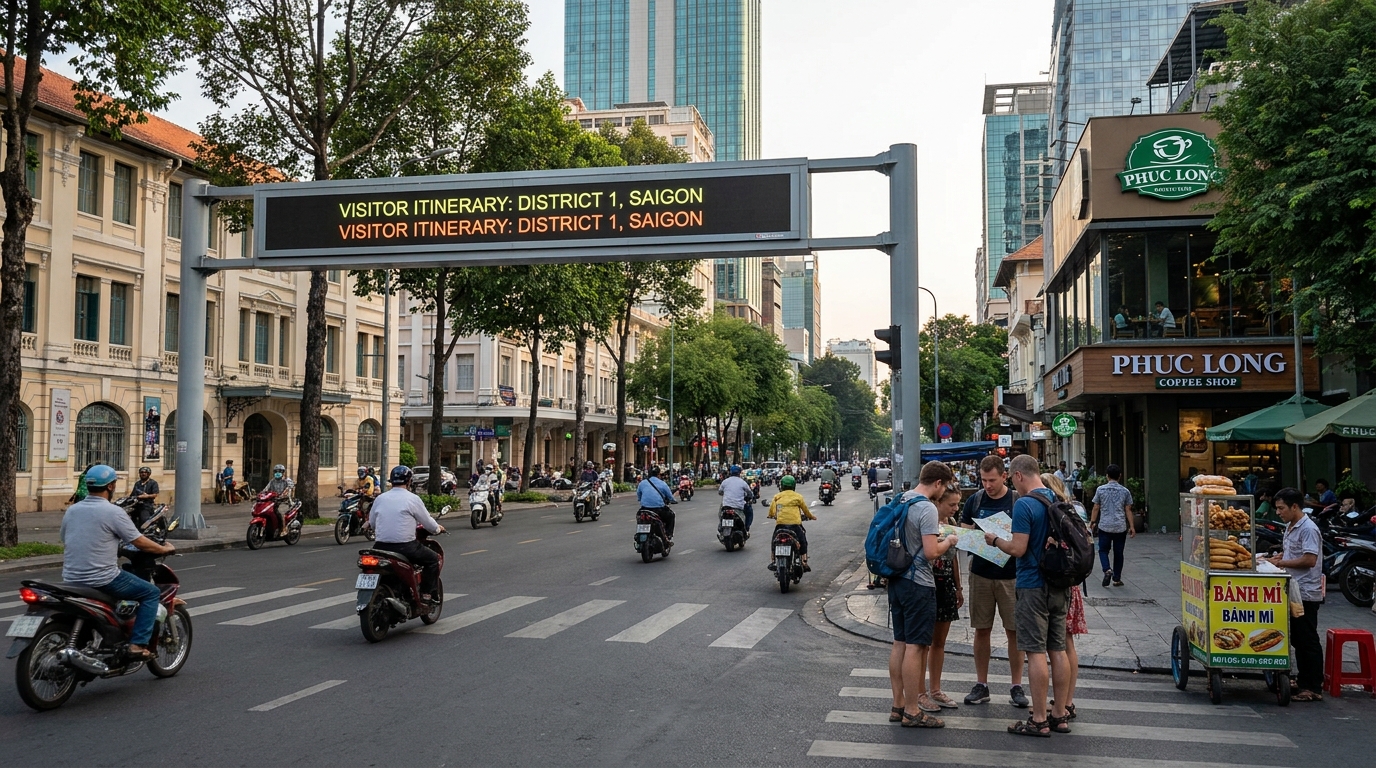
Ho Chi Minh City is Vietnam’s commercial engine and its most internationally connected airport. More long-haul flights land at Tan Son Nhat than anywhere else in the country, which means less dead time and a more energetic introduction to Vietnamese life. Saigon also front-loads the complexity: the traffic, the noise, the sheer density of things happening at street level. Once you’ve absorbed that sensory overload, everywhere else in Vietnam feels approachable.
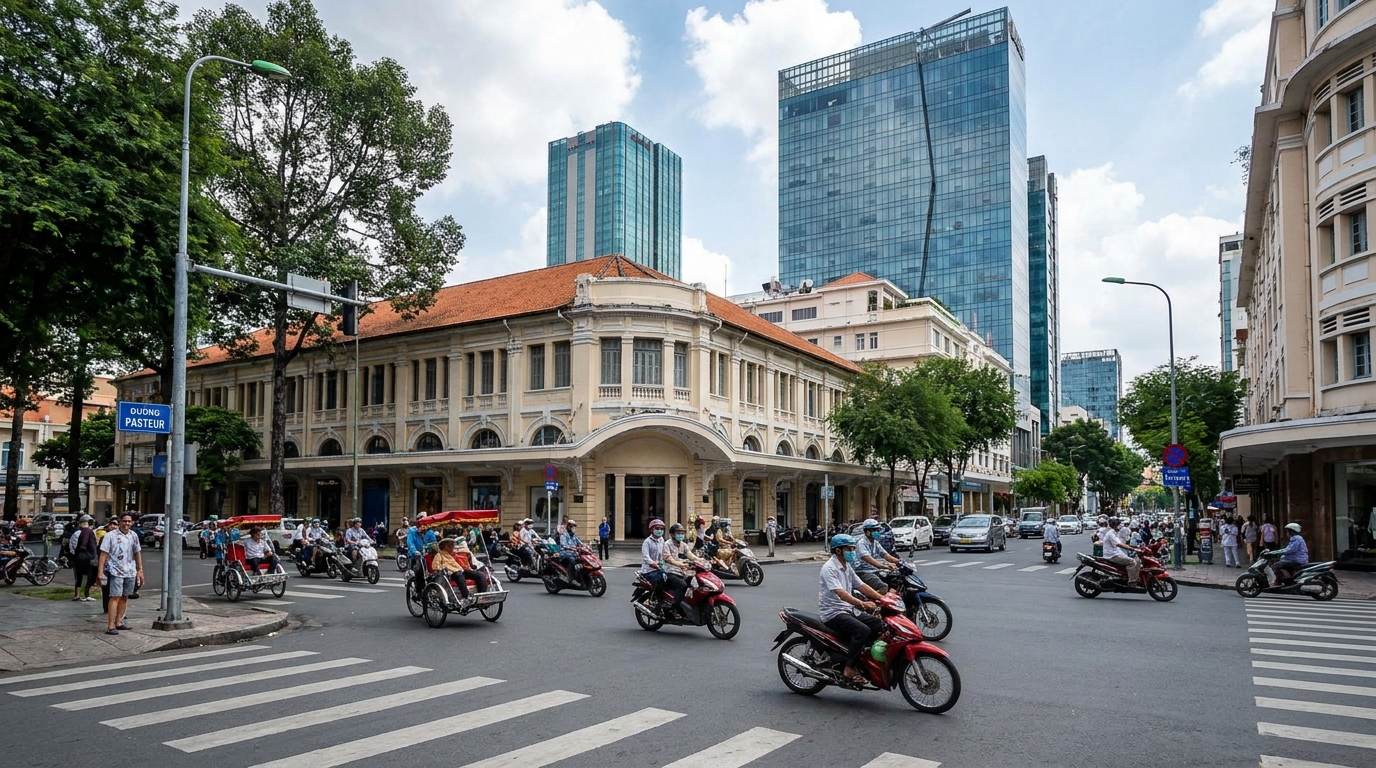
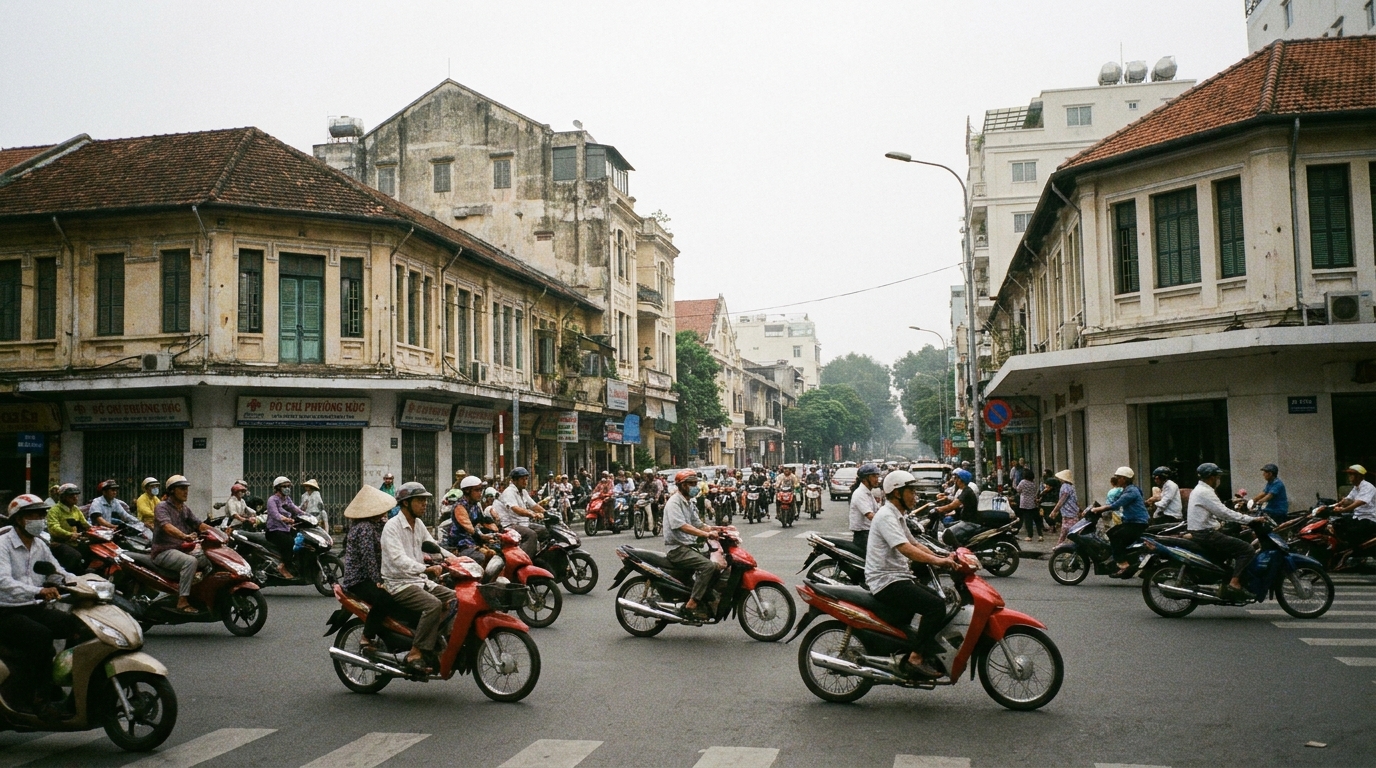
Most Vietnam itineraries start in Saigon — staying at saigonapartment.vn in D1 gives you a premium launch pad. Serviced apartments in District 1 put you on foot-distance from the Reunification Palace, the War Remnants Museum, Notre-Dame Cathedral, the Central Post Office, and the entire backpacker corridor on Pham Ngu Lao — without the hotel-corridor isolation that keeps first-timers from actually experiencing the city.
How Many Days Does a Good Vietnam Itinerary Need?
Ten days is the realistic minimum for a south-to-north vietnam itinerary that doesn’t feel rushed. Fourteen days is the sweet spot. Three weeks allows genuine slow travel. Here’s a quick reference:
- 10 days: HCMC (3) → Hoi An (3) → Hanoi (2) → Ha Long Bay (2). Skip Hue or do it as a half-day from Da Nang.
- 14 days: HCMC (3) → Mekong Delta day trip → Hoi An (3) → Hue (2) → Hanoi (3) → Ha Long Bay (2).
- 21 days: Add Ninh Binh, Sapa, Mui Ne, or a full Mekong Delta immersion depending on season.
Budget at least one buffer day across the trip. Vietnamese trains run late, budget airline delays are common, and the best experiences — a street-food tour that runs long, an impromptu conversation with a motorbike driver — are unscheduled.
Day-by-Day Vietnam Itinerary: Saigon (Days 1–3)
Day 1 — Orientation: Land, check in to your District 1 apartment, and do nothing ambitious. Walk Dong Khoi Street, eat pho for breakfast, drink ca phe trung (egg coffee) at a rooftop cafe. Saigon rewards slow first days.
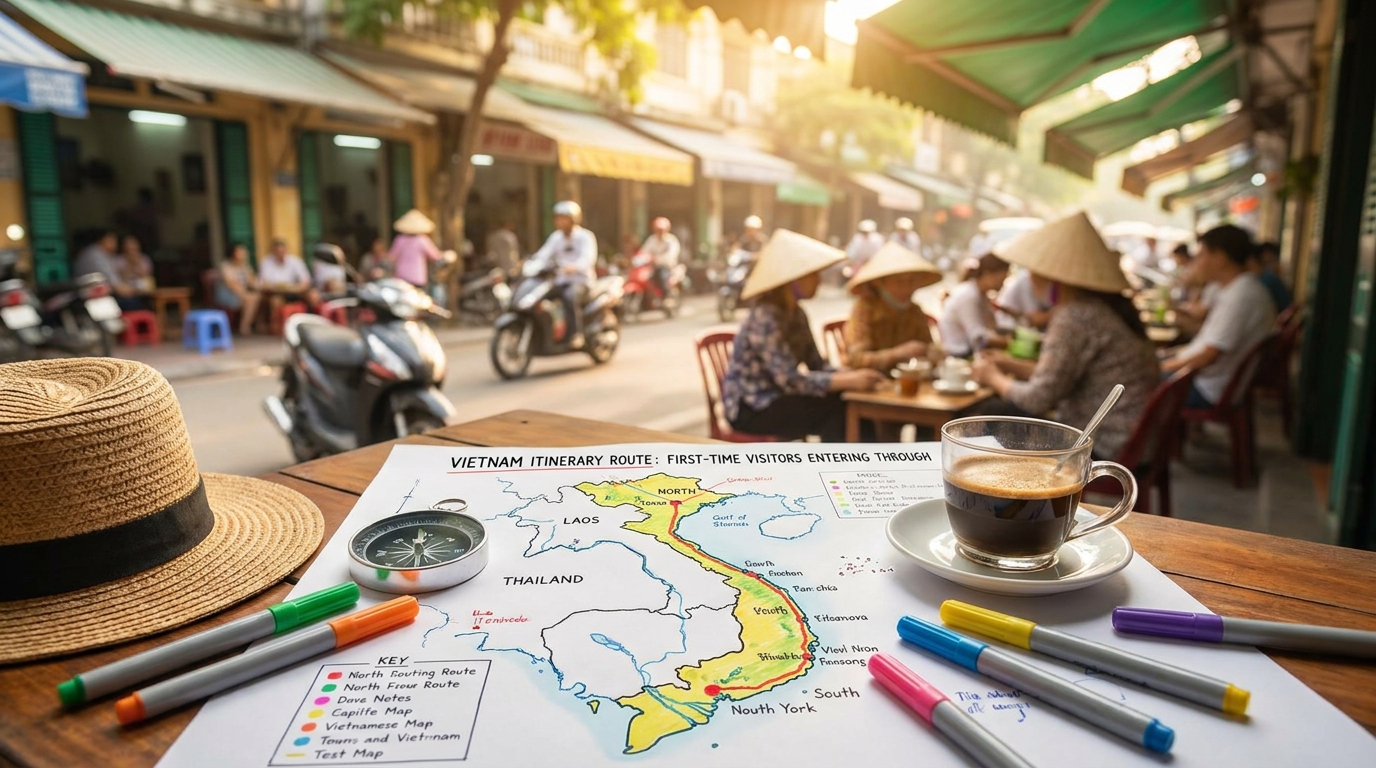

Day 2 — History and Markets: Start at the War Remnants Museum (allow 2.5 hours; it is heavy but essential). Walk to the Reunification Palace. Afternoon at Ben Thanh Market for price-orientation, then dinner on Bui Vien Walking Street or in a local quan nhau (beer garden) on Ly Tu Trong.
Day 3 — Day Trip: Choose Cu Chi Tunnels (half day, book a morning tour departing 07:30) or the Mekong Delta (full day, Ben Tre or My Tho circuits). Return by evening. Saigon by night — rooftop bars on Bui Thi Xuan or cocktails at the Caravelle terrace — is a different city entirely.
Getting Out of Saigon: Transport Options on Your Vietnam Itinerary
The domestic flight is the standard move for most vietnam itinerary planners, and it makes sense: Saigon to Da Nang (nearest airport to Hoi An) takes 70 minutes on VietJet, Bamboo Airways, or Vietnam Airlines. Fares booked 4–8 weeks out typically run 800,000–1,500,000 VND ($32–60 USD) one way.
The overnight train — the Reunification Express — is slower but genuinely beautiful. Saigon to Da Nang is roughly 16–17 hours. Soft-sleeper berths (four-person cabin) cost around $35–50 USD and include a legitimate bed, which means you save a hotel night. Book through the official dsvn.vn portal or a local agent at least a week ahead.
Open-bus tickets (Sinh Tourist, Phuong Trang/FUTA) connect every major city for very low prices but are extremely slow and best suited to travelers with time rather than those on a 10-day clock.
Hoi An: The Anchor of Any Vietnam Itinerary
No vietnam itinerary is complete without Hoi An. The Ancient Town, a UNESCO World Heritage Site, is the most photogenic collection of merchant-house architecture in Southeast Asia. Three nights is correct — one for the lantern-lit Ancient Town, one for a cooking class (loads of excellent options from $25–35 USD), one for My Son Sanctuary or An Bang Beach.
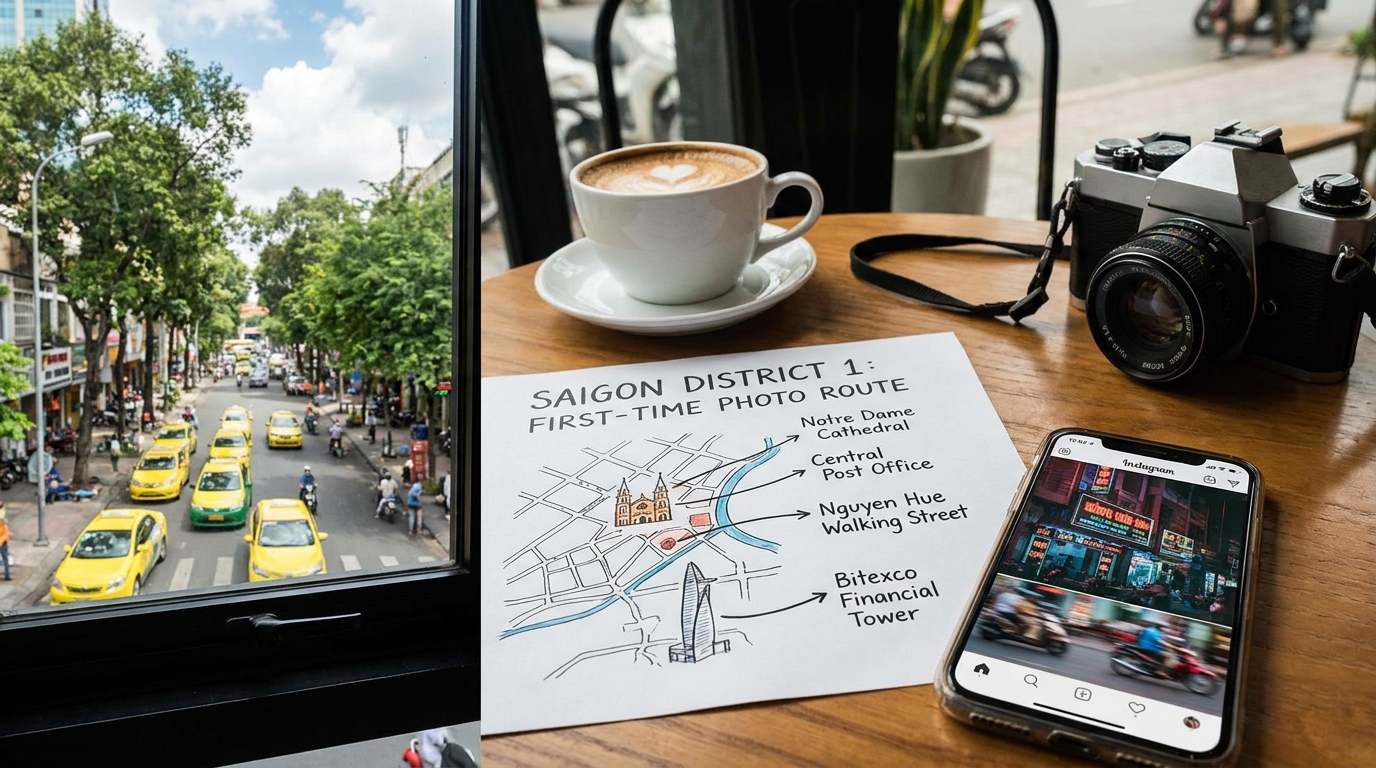
Practical note: Da Nang airport is the entry point. Grab a Grab car to Hoi An (30–40 minutes, roughly 200,000–250,000 VND). Da Nang itself deserves a half-day — the Dragon Bridge fire-breathing on weekend evenings is worth timing your arrival around.
Hue: Where Vietnamese History Gets Serious
Hue is optional on a 10-day sprint but essential on 14 days. The Imperial Citadel, the elaborate royal tombs of Tu Duc and Minh Mang, and the Thien Mu Pagoda along the Perfume River are all within a single long day. Two nights is better: use day one for the citadel complex, day two for a motorbike loop through the tombs.
Food in Hue is arguably Vietnam’s most sophisticated regional cuisine. Bun bo Hue (spicy beef noodle soup), banh khoai (crispy pancake), and com hen (baby clam rice) are all local to Hue and worth deliberate meals.
According to the Vietnam General Statistics Office, domestic tourism to Hue increased 22% year-on-year in 2024, reflecting renewed interest in Vietnam’s imperial heritage among both international and Vietnamese travelers.
Hanoi: The Northern Capital on Your Vietnam Itinerary
Hanoi is Saigon’s opposite in almost every measurable way: slower, cooler, more formal, architecturally French-colonial at its center. Two nights is the minimum; three nights lets you breathe. The Old Quarter’s 36 guild streets, Hoan Kiem Lake, the Temple of Literature, and the Ho Chi Minh Mausoleum complex fill two full days without rushing.
Street food in Hanoi deserves a separate budget line: bun cha (grilled pork noodles), pho bo (beef pho in its northern form), cha ca La Vong (turmeric fish), and banh mi from the hole-in-the-wall stalls near the train street.
Ha Long Bay: How to End Your Vietnam Itinerary Right
Ha Long Bay is the natural conclusion for a vietnam itinerary that ends in the north. A two-day, one-night cruise on a mid-range or premium junk boat covers kayaking through limestone karsts, cave exploration at Thien Cung or Sung Sot, and sunrise over the bay from the boat deck.
Choose your operator carefully. Emeraude Classic Cruises, Paradise Cruises, and Bhaya Cruises consistently deliver reliable boats and food. Budget roughly $150–250 USD per person for a solid mid-range two-day cruise. The budget end (below $80) correlates strongly with older boats and worse food hygiene.
Lan Ha Bay, adjacent to Ha Long and accessed from Cat Ba Island, is less crowded and equally stunning — worth considering for travelers who visit in summer peak season.
Vietnam Itinerary Variations: Extend South or East
If three weeks are available, two extensions make strong additions to the core vietnam itinerary:
- Phu Quoc Island: Vietnam’s largest island sits in the Gulf of Thailand, a short flight from Saigon. Three nights of beaches, fish sauce farms, and night markets slot in after HCMC before heading north.
- Ninh Binh: Often called “Ha Long Bay on land,” Ninh Binh’s karst landscape, rice paddies, and boat rides through Trang An are two hours south of Hanoi by bus. Add it between Hanoi and the return flight.
- Sapa: Rice terrace trekking in the northern highlands requires a night train from Hanoi each way (or a short flight to Lao Cai). Best added on a 21-day itinerary in late September–November or March–May.
Practical Vietnam Itinerary Planning: Visas, Money, SIM Cards
Visa: Most Western passport holders can access Vietnam’s 90-day e-visa through evisa.xuatnhapcanh.gov.vn for $25 USD. Apply at least 5 business days before travel. The e-visa covers a single or multiple entry and works at all land, sea, and air borders.
Money: Vietnam is a cash-forward economy at the street level. ATMs in major cities are plentiful; Techcombank and Vietcombank ATMs typically have the lowest foreign-card fees. Budget roughly $50–80 USD per day for comfortable mid-range travel including accommodation, food, transport, and entrance fees.
SIM Card: Buy a Viettel or Vinaphone SIM at Tan Son Nhat airport arrivals (30,000–100,000 VND for a 30-day data plan with 4–20GB). Data is fast and cheap; your home carrier’s roaming is not worth the cost.
Weather windows: November–April is dry season for most of southern and central Vietnam. The central coast (Da Nang, Hoi An, Hue) catches typhoon rains from October–December. Hanoi is cool and pleasant October–March. There is no single perfect time for the entire country — pick the region that matters most to you.
Budget Guide for a 14-Day Vietnam Itinerary
Vietnam remains one of Southeast Asia’s strongest value destinations. Here is a realistic breakdown for one person:
- Budget traveler: $40–55/day. Hostels or basic guesthouses, street food, overnight trains and buses, budget domestic flights booked ahead.
- Mid-range: $80–120/day. Serviced apartments or boutique hotels, sit-down restaurant meals, Grab taxis between sights, one mid-range cruise on Ha Long Bay.
- Comfortable/premium: $150–250/day. Boutique heritage hotels, cooking classes, premium Ha Long cruise, private airport transfers, wine with dinner.
Internal flights (Saigon → Da Nang → Hanoi) run $60–100 USD total if booked 3–6 weeks out. This is often cheaper and faster than any combination of trains and buses.
You May Also Find Useful
- HCMC in 48 Hours: The Perfect Weekend Itinerary for First-Time Visitors
- Ho Chi Minh City Guide for Tourists and First-Time Visitors 2025
- Where to Stay in Ho Chi Minh City 2026: The Complete Neighborhood Guide for First-Time Visitors
- Vietnam Backpacking Itinerary: 2-Week, 3-Week, and 4-Week Route Options
Once the route is settled, Booking.com and Agoda are the quickest way to see what is still available on your dates in Ho Chi Minh City.
Frequently Asked Questions
How many days do I need for a Vietnam itinerary as a first-timer?
Ten days is the workable minimum for a south-to-north vietnam itinerary covering Saigon, Hoi An, and Hanoi with Ha Long Bay. Fourteen days is more comfortable and allows Hue plus a Mekong Delta day trip. If you have fewer than 10 days, focus on one region rather than rushing the full country.
Is it better to travel Vietnam north to south or south to north?
South to north is almost always the better choice when flying in and out of different airports. Flying into Saigon (SGN) and out of Hanoi (HAN) — or vice versa — eliminates backtracking and is usually the same price as a return to the same city. The route from Saigon northward aligns naturally with increasing historical and cultural complexity.
What is the best time of year to visit Vietnam?
For a full north-to-south vietnam itinerary, November to February offers the most reliable weather across the country. The south is dry, central Vietnam has post-typhoon clarity, and Hanoi is cool but manageable. Summer (June–August) means heat in the south and rains in the central regions but is peak season for Ha Long Bay.
Do I need a visa for Vietnam?
Most Western passport holders (US, UK, EU, Australia, Canada) require a visa but can obtain a 90-day e-visa online at evisa.xuatnhapcanh.gov.vn for $25 USD. Some nationalities (including UK citizens for stays under 45 days) receive visa-free entry as of 2024. Always check the current policy for your specific passport before travel.
Where should I stay in Ho Chi Minh City on a Vietnam itinerary?
District 1 is the optimal base for first-timers. It puts you within walking distance of the War Remnants Museum, Reunification Palace, Ben Thanh Market, and the major transport connections for onward travel. Serviced apartments in D1 offer more space and kitchen access than equivalent-price hotels, which matters for a multi-day stay at the start of a longer journey.
Official Resources
For the most up-to-date information on vietnam itinerary, visit the Vietnam Tourism Official Guide.