
Vietnam Visa Fee: What Every Nationality Pays in 2026
The Vietnam visa fee depends on your nationality, visa type, and how you apply — but most travelers pay between $0 and $50 USD for a standard tourist visa in 2026. Citizens of 45+ countries enter Vietnam completely free under the e-visa or visa exemption program, while others pay a government-set fee ranging from $25 to $50 USD for an e-visa. Understanding exactly what you will pay before you book flights is essential, and this guide breaks down every cost by nationality and visa category.
Key Takeaways
- The standard Vietnam e-visa fee is $25 USD for most nationalities applying online — it covers a single 90-day stay with single or multiple entries.
- Citizens of 45 countries (including Germany, France, Italy, Spain, UK, and many Southeast Asian nations) enjoy visa-free entry for 30–90 days at zero cost.
- Visa-on-arrival requires a letter of approval from a sponsor agency (typically $10–$20 USD) plus a stamping fee of $25–$50 USD paid at the airport.
- The DL25 one-year multiple-entry visa — popular with expats and digital nomads in Ho Chi Minh City — costs approximately $130–$145 USD including service fees.
- Hidden costs like agency service fees, passport photo requirements, and express processing can add $10–$40 USD to your total vietnam visa fee — budget accordingly.
Vietnam Visa Fee Overview for 2026
Vietnam’s immigration policy underwent a significant overhaul in August 2023, and those rules remain in effect through 2026. The government unified most tourist visas under a single 90-day e-visa system, scrapping the old 30-day limit that frustrated long-stay visitors. For the majority of travelers, the vietnam visa fee now comes down to one of three scenarios: free (visa exemption), $25 USD (e-visa), or variable (visa-on-arrival or embassy visa). According to Vietnam’s Ministry of Public Security, over 17.5 million international visitors arrived in Vietnam in 2024, the majority using the e-visa system — a testament to how streamlined the process has become.
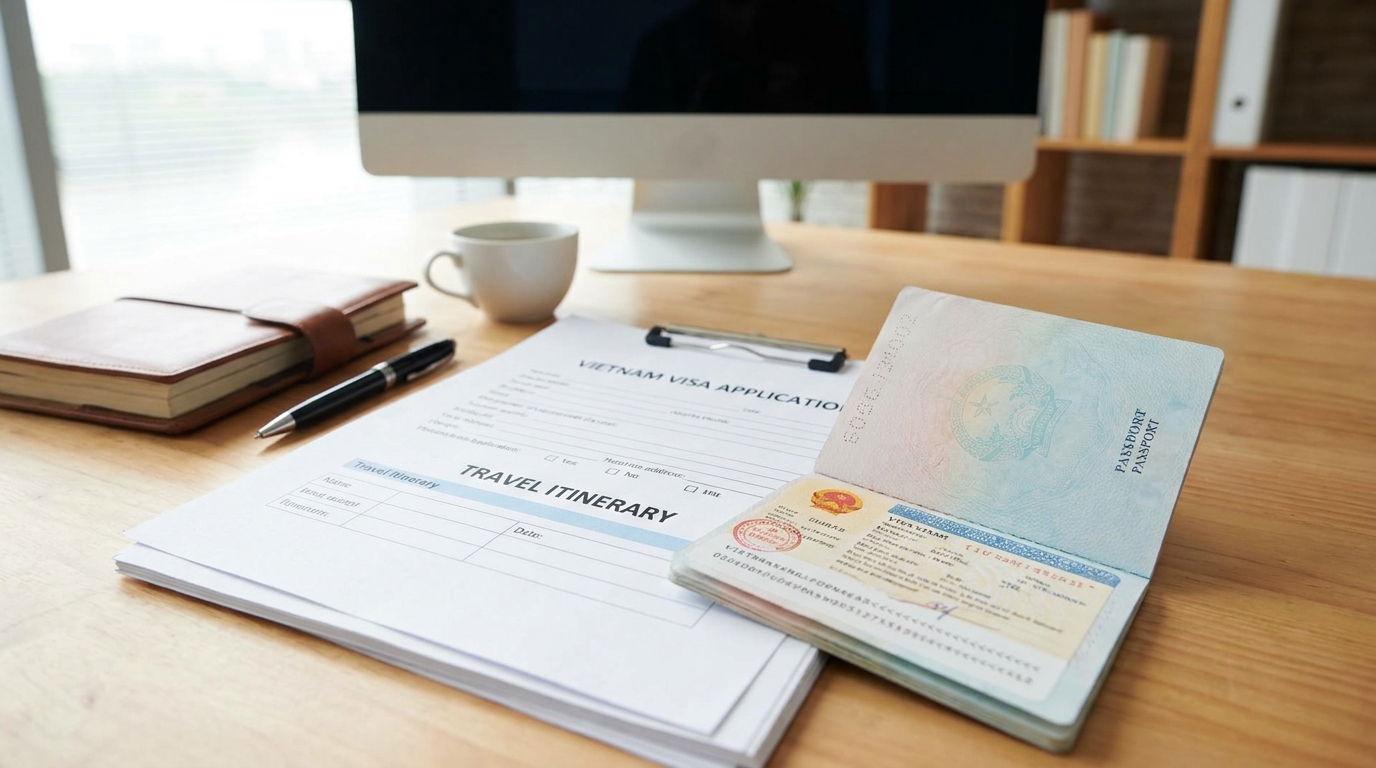
Countries That Pay Zero Vietnam Visa Fee
If your passport is from one of the visa-exempt countries, you pay absolutely nothing to enter Vietnam. As of 2026, the full list of visa-free nationalities and their permitted stay durations includes:
- 90 days (visa-free): Germany, France, Italy, Spain, United Kingdom, Belarus, Denmark, Finland, Norway, Sweden, Russia, Japan, South Korea, Chile
- 45 days (visa-free): Australia, Canada, United States, Ireland, New Zealand, Switzerland, Netherlands, Portugal, Belgium, Austria, Czech Republic, Hungary, Poland, Romania, Bulgaria, Croatia, Slovakia, Slovenia, Luxembourg, Estonia, Latvia, Lithuania, Greece, Cyprus, Malta
- 30 days (visa-free): All ASEAN member states — Thailand, Singapore, Malaysia, Indonesia, Philippines, Cambodia, Laos, Myanmar, Brunei
American passport holders were added to the 45-day visa-free list in mid-2023 — one of the most impactful changes for the expat and digital nomad community in Ho Chi Minh City. If you hold one of these passports, your vietnam visa fee is literally zero.
Vietnam E-Visa Fee: The $25 USD Standard
For nationalities not on the exemption list, the Vietnam e-visa is the easiest and most cost-effective route. The official government fee is $25 USD, paid online at evisa.xuatnhapcanh.gov.vn. This covers:
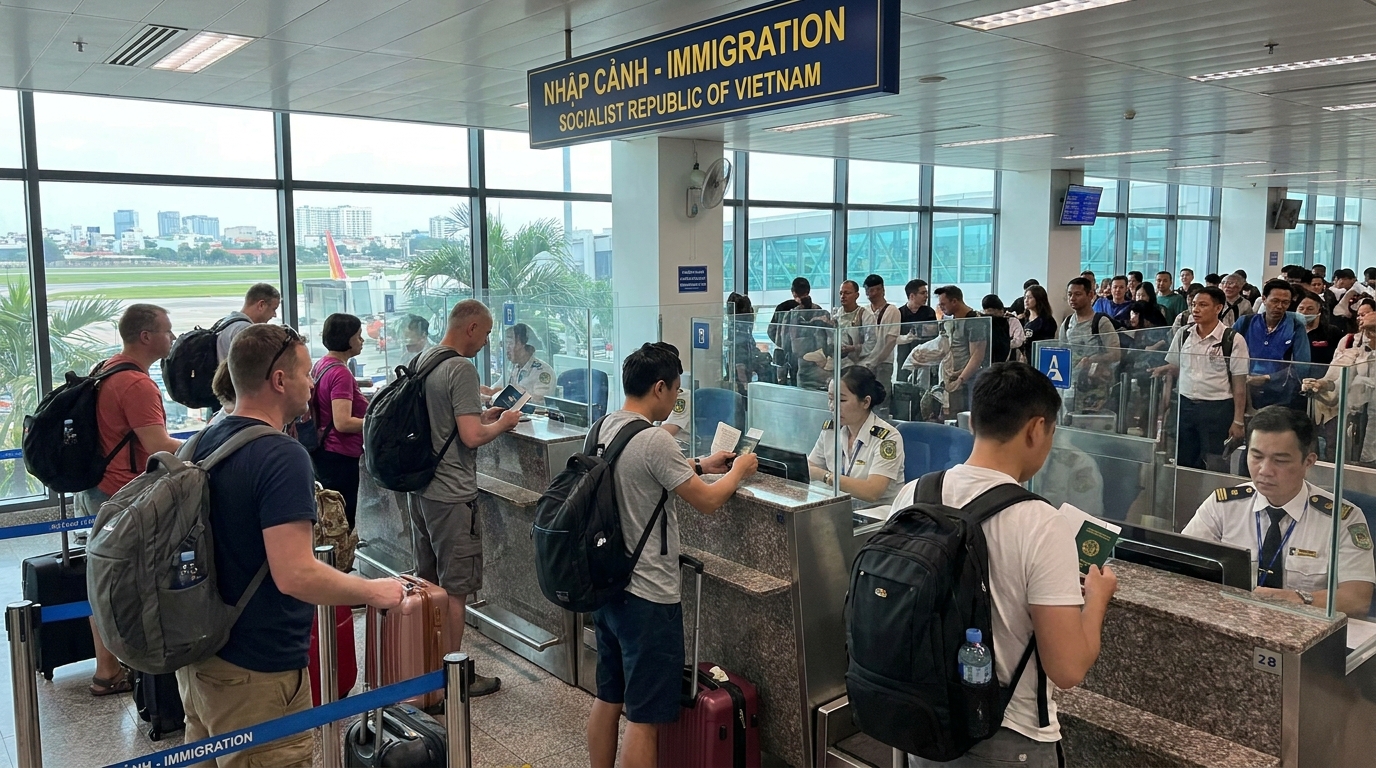
- A single visa valid for 90 days
- Choice of single-entry or multiple-entry (same price)
- Processing time of 3 business days (standard)
There is no official “express” government e-visa option — anyone charging you $50–$80 for a “fast-track” e-visa is a third-party agency adding a markup. The government portal processes all applications at the same $25 flat rate. Pay only on the official immigration website to avoid overpaying your vietnam visa fee.
Visa-on-Arrival Fees: What You Actually Pay at the Airport
Visa-on-arrival (VOA) is technically still available but requires advance preparation. You must obtain a letter of approval from a Vietnamese travel agency before traveling — this is where costs vary significantly:
- Agency letter fee: $10–$20 USD (paid online to the agency before departure)
- Airport stamping fee: $25 USD (single entry, 30 days) or $50 USD (multiple entry, 30 days)
- Passport photo: 2 photos required; bring them or pay $2–$5 at the airport kiosk
Total VOA cost: roughly $35–$75 USD depending on entry type and agency. Given that the e-visa is only $25 and can be done entirely online, VOA rarely makes financial sense in 2026 unless you have an urgent last-minute trip.
Long-Stay Visa Fees: The DL Visa for Expats in Ho Chi Minh City
For those planning to live in Saigon long-term — working remotely, teaching, or running a business — the visa landscape is more nuanced. The most popular options and their vietnam visa fee breakdown:
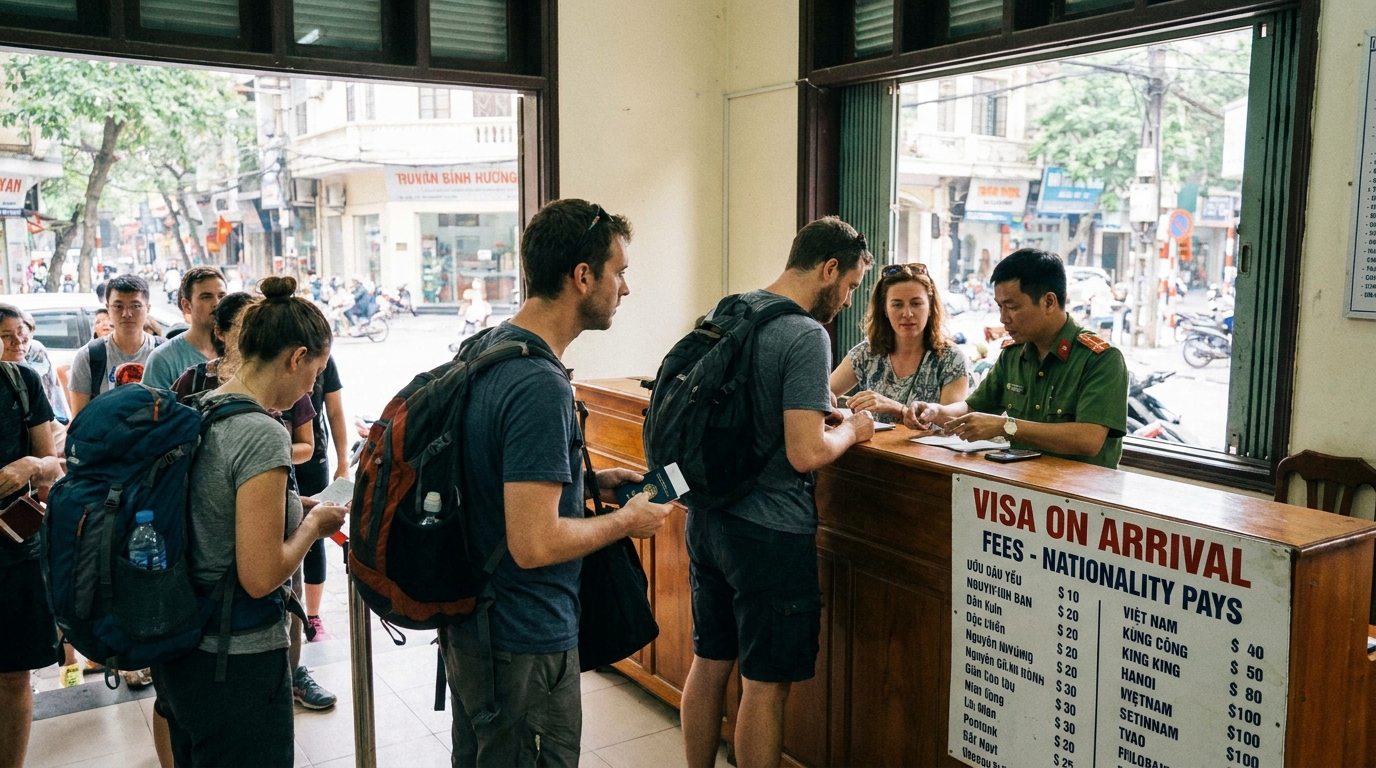
- DL (tourist/long-stay) 6-month multiple-entry: ~$50–$70 USD via embassy, or arranged through a local agent
- DL 1-year multiple-entry: ~$130–$145 USD through licensed agents in HCMC
- LD (labor) / work permit route: Sponsored by employer; government fee ~$150–$200 USD plus work permit costs
- Investor visa (DN): Varies significantly; expect $200+ USD in government fees alone
Many HCMC expats use the “visa run” approach — exiting to Cambodia, Thailand, or Singapore and re-entering — but this adds flight costs and uncertainty. The 1-year DL visa, while more expensive upfront, offers peace of mind for anyone committed to a Saigon base.
Embassy Visa Fees by Region
Applying through a Vietnamese embassy in your home country is another option, particularly for nationalities that want a multi-year visa or specific visa categories not available via e-visa. Fee structures differ by country:
- United States: $85 USD (single entry), $145 USD (multiple entry) — fees set by Vietnamese consulates in the US
- United Kingdom: £50–£80 GBP depending on entry type and consulate
- India: ₹2,000–₹4,500 INR depending on duration and entry
- China: ¥150–¥300 CNY for standard tourist visa
- South Africa: R450–R900 ZAR
Embassy fees are set locally and can change without much notice. Always verify the current vietnam visa fee directly with the Vietnamese embassy or consulate in your country before applying.
Hidden Costs That Inflate Your Total Vietnam Visa Fee
The official government fee is just the starting point. Here are the extra costs many travelers overlook when budgeting their vietnam visa fee:
- Third-party agency service fees: $10–$40 USD if you use an agent to fill out the e-visa form on your behalf
- Passport photos: 2 photos needed for VOA and embassy applications ($2–$8 USD)
- Notarized documents: Some visa categories require certified translations — budget $20–$50 USD
- Bank transfer or card processing fees: Some payment methods charge 1–3% on top of the visa fee
- Extension fees: If you overstay or need to extend in-country, the fine starts at 500,000 VND (~$20 USD) and escalates quickly
According to data from Vietnam’s General Statistics Office, the average international tourist spent approximately $1,200 USD total per trip to Vietnam in 2024 — with visa costs representing a small but often-overlooked line item in travel budgets.
Vietnam Visa Fee for Business Travelers
Business visitors have specific visa categories (DN, NN) that may be required for attending formal meetings, signing contracts, or representing a foreign company. The vietnam visa fee for business visas:
- Business e-visa (DN): $25 USD — same as tourist, valid 90 days, multiple entry available
- Business visa via embassy: $85–$145 USD depending on country and duration
- Conference/event visa: Often arranged through the hosting Vietnamese organization at no cost to the traveler
For most short-term business visitors, the standard e-visa covers all legitimate activities including meetings, site visits, and conferences — there is no requirement to pay a higher business visa fee for typical corporate travel to HCMC.
How to Pay the Vietnam Visa Fee Online
The official e-visa payment portal accepts the following payment methods:
- International credit/debit cards: Visa, Mastercard, JCB — most common method
- UnionPay: Accepted for Chinese applicants
- Online banking: Available for holders of some Vietnamese bank accounts
Important: The government portal does not store your card details and does not charge recurring fees. You pay once, receive a confirmation, and that is the end of the transaction. Be wary of websites that look similar to the official portal — there are numerous scam sites designed to charge inflated fees.
Planning Your Stay in Ho Chi Minh City After Sorting Your Visa
Once your visa is sorted, accommodation is the next major budget item for Saigon. Visa budget mapped — now plan your accommodation. Our transparent pricing has no hidden fees. Whether you are coming for a week on a tourist e-visa or settling in for a year on a DL long-stay, having a clear cost picture from arrival to apartment lease puts you firmly in control of your Vietnam budget.
HCMC neighborhoods like District 1, District 7 (Phu My Hung), and Binh Thanh each offer very different price points for short and long-term stays. Knowing your visa allows you to plan around your permitted stay duration — no point signing a 3-month apartment lease if your visa only covers 45 days without extension.
Vietnam Visa Extension and Overstay Fees
If your plans change and you need to stay longer, here is what extending costs inside Vietnam:
- E-visa extension: Currently not possible — you must exit and re-apply
- Tourist visa extension (through agent): $50–$120 USD depending on duration and agent
- Overstay fine: 500,000 VND (~$20 USD) for 1–5 days; escalates significantly beyond that
- Overstay ban: Overstaying by more than 30 days can result in a 1–3 year entry ban
The safest strategy for long-term HCMC residents is to apply for the appropriate long-stay visa before arrival rather than trying to extend a tourist visa in-country.
Vietnam Visa Fee Summary Table by Nationality
A quick reference for the most common nationalities visiting Vietnam in 2026:
- USA, Canada, Australia, NZ: Visa-free 45 days → $0; beyond that, e-visa $25 USD
- UK, Germany, France, Russia: Visa-free 90 days → $0
- India, Pakistan, Bangladesh: E-visa $25 USD (90 days)
- China: Visa-free 15 days → $0; e-visa $25 USD for longer stays
- Nigeria, Ghana, Kenya: E-visa $25 USD (90 days)
- Brazil, Argentina, Mexico: E-visa $25 USD (90 days)
- Saudi Arabia, UAE, Egypt: E-visa $25 USD (90 days)
The vietnam visa fee structure is genuinely one of the most straightforward in Southeast Asia — a flat $25 for nearly all nationalities not exempt means there are no confusing tier systems to navigate.
You May Also Find Useful
Frequently Asked Questions
How much is the Vietnam visa fee in 2026?
The standard Vietnam e-visa fee is $25 USD for most nationalities. Citizens of 45+ countries pay zero thanks to visa exemption agreements. Visa-on-arrival costs $25–$50 USD in stamping fees plus $10–$20 USD for an agency letter. Embassy-applied visas range from $50–$145 USD depending on your country and entry type.
Can I get a Vietnam visa on arrival in 2026?
Yes, visa-on-arrival is still available at major international airports including Tan Son Nhat (Ho Chi Minh City), Noi Bai (Hanoi), and Da Nang. However, you must arrange an approval letter from a Vietnamese agency before you fly. Given that the e-visa costs only $25 USD and is processed entirely online, VOA offers little advantage for most travelers in 2026.
Is the Vietnam visa fee the same for all nationalities?
The e-visa fee of $25 USD applies equally to all eligible nationalities — there is no nationality-based pricing for the government e-visa. However, some nationalities are visa-exempt (paying nothing), and embassy visa fees vary by country due to bilateral fee agreements and local consulate pricing policies.
How long does a $25 Vietnam e-visa allow me to stay?
The $25 Vietnam e-visa is valid for 90 days and can be issued as single-entry or multiple-entry at the same price. This means you can leave and re-enter Vietnam multiple times within that 90-day window without paying additional visa fees — a significant improvement over the old 30-day limit.
What is the cheapest way to get a Vietnam visa for a long stay in Ho Chi Minh City?
For stays up to 90 days, the $25 e-visa is unbeatable. For longer stays, the DL (long-term tourist) visa arranged through a licensed HCMC agent typically costs $130–$145 USD for a 1-year multiple-entry, which works out to roughly $11–$12 per month — far cheaper than repeated visa runs. If you are working legally, a sponsored work permit and labor visa (LD category) is the most secure long-term option despite higher upfront costs.
Official Resources
For the most up-to-date information on Vietnam Visa Fee: What Every Nationality Pays in 2026, visit the Vietnam Tourism Official Guide.