
Why live in Saigon is a question many long-stay visitors ask when comparing Vietnam with Bangkok, Singapore, Kuala Lumpur, or Bali.
If you’re asking why live in Saigon, the short answer is this: low cost, high energy, world-class food, and a city that rewards people who show up and stay. Ho Chi Minh City is home to an estimated 80,000–100,000 long-stay foreign residents, and the number has grown steadily since 2022. But the more honest answer requires getting past the surface-level pitch. The 15 reasons below come from people who have been here three, five, even ten years — not tourists doing a trial month.
Key Takeaways
- Saigon’s cost of living is roughly 55–65% lower than comparable cities in Western Europe or North America, according to Numbeo’s 2025 Cost of Living Index.
- The city’s food scene — from 30,000 VND street pho to Michelin-recommended restaurants — is a primary reason long-stay expats cite for not leaving.
- District 1 puts international schools, co-working spaces, hospitals, and riverside dining within a 10-minute motorbike ride.
- Visa options have expanded: the e-visa now allows 90-day stays with re-entry, and digital nomad-friendly policies are under active legislative discussion in 2025.
- The social scene is self-reinforcing — one expat introduces you to five more, and within 60 days most new arrivals have a functioning social network.
Why Do So Many Expats Choose to Live in Saigon Over Other Southeast Asian Cities?
The honest comparison is usually Saigon versus Bangkok, Bali, or Kuala Lumpur. Saigon wins on energy density. Everything — work, food, nightlife, errands — happens within a few square kilometres in the city core, and the pace is faster than anywhere else in the region. According to Numbeo’s 2025 Cost of Living Index, Ho Chi Minh City scores significantly lower than Bangkok on rent and consumer prices, while offering comparable infrastructure and a larger expat professional community.
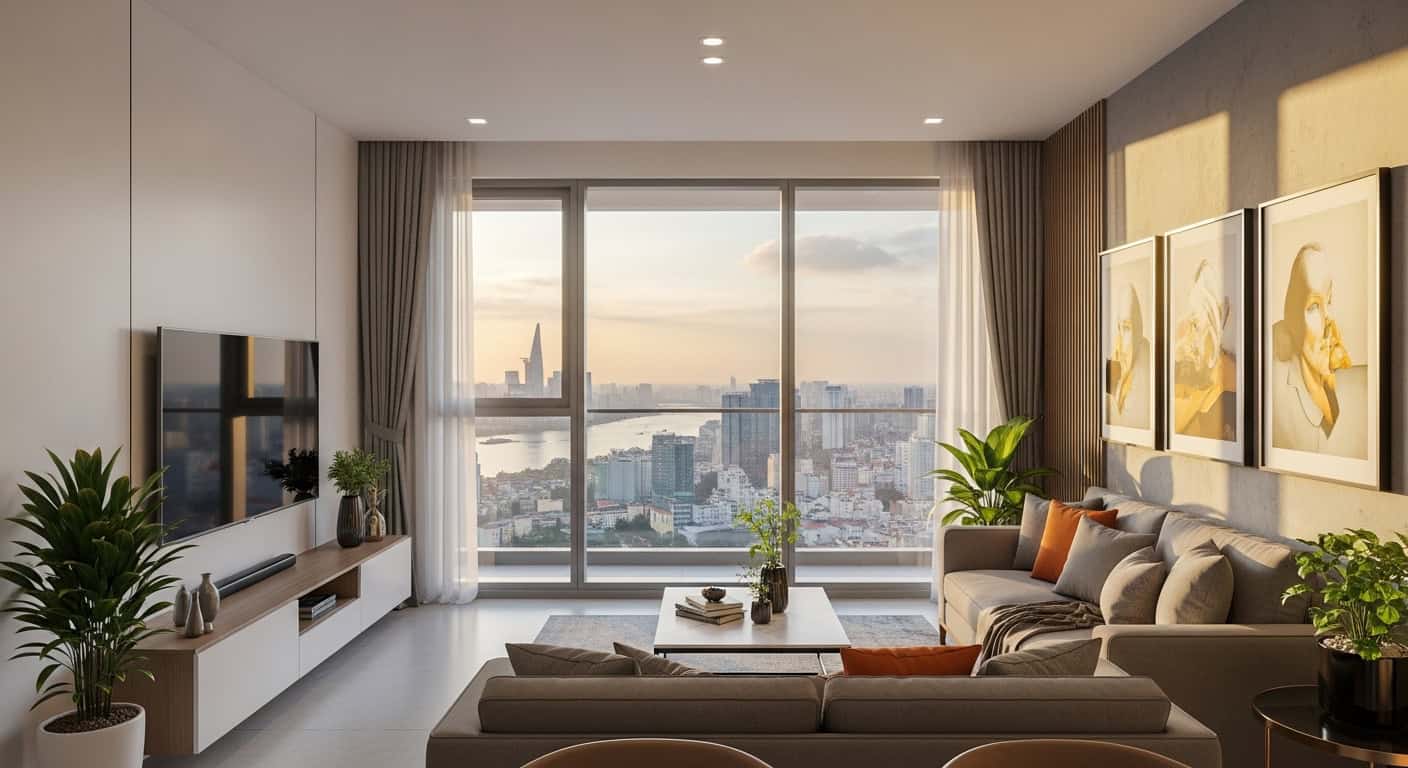
The other differentiator is momentum. Saigon is visibly changing year on year. New metro lines, new co-working buildings, new international school campuses — people who have been here five years describe a city they barely recognise compared to when they arrived. That sense of being present during something is hard to replicate in a more static market.
Reasons 1–3: Cost of Living That Actually Works for Real Budgets
According to Numbeo’s 2025 Cost of Living Index, a single person in Ho Chi Minh City can live comfortably on USD 1,200–1,500 per month including rent, food, transport, and leisure — roughly 60% less than the equivalent lifestyle in London, Sydney, or Toronto. That number goes further when you account for what you get: a serviced apartment in District 1 with a rooftop pool, daily pho from the street vendor downstairs, and a gym membership for less than the monthly tube pass back home.
Reason 1 — Rent. A modern one-bedroom in District 1 or Binh Thanh runs USD 500–900 per month fully furnished. The same spec in a comparable Asian financial hub costs two to three times more.
Reason 2 — Food costs. A proper banh mi costs 25,000–35,000 VND. A full meal at a mid-range restaurant is rarely above 150,000 VND. Even eating out three times a day, food costs stay genuinely low.
Reason 3 — Transport. Grab handles most inter-district journeys for under 50,000 VND. Motorbike ownership adds flexibility without the insurance and parking costs of a car-dependent city. The new metro Line 1 — opened late 2024 — adds a car-free option for the Ben Thanh to Thu Duc corridor.
Reasons 4–6: The Food Is Not a Travel Cliche — It’s the Reason People Stay
Ask any long-stay expat what they’d miss most if they left Saigon, and food comes up in the first sentence. Ho Chi Minh City has a street food density that few cities match: competing pho shops on the same block, regional Vietnamese dishes from every province represented across a single street market, and a growing fine-dining scene that earned its first Michelin Guide listings in 2023.
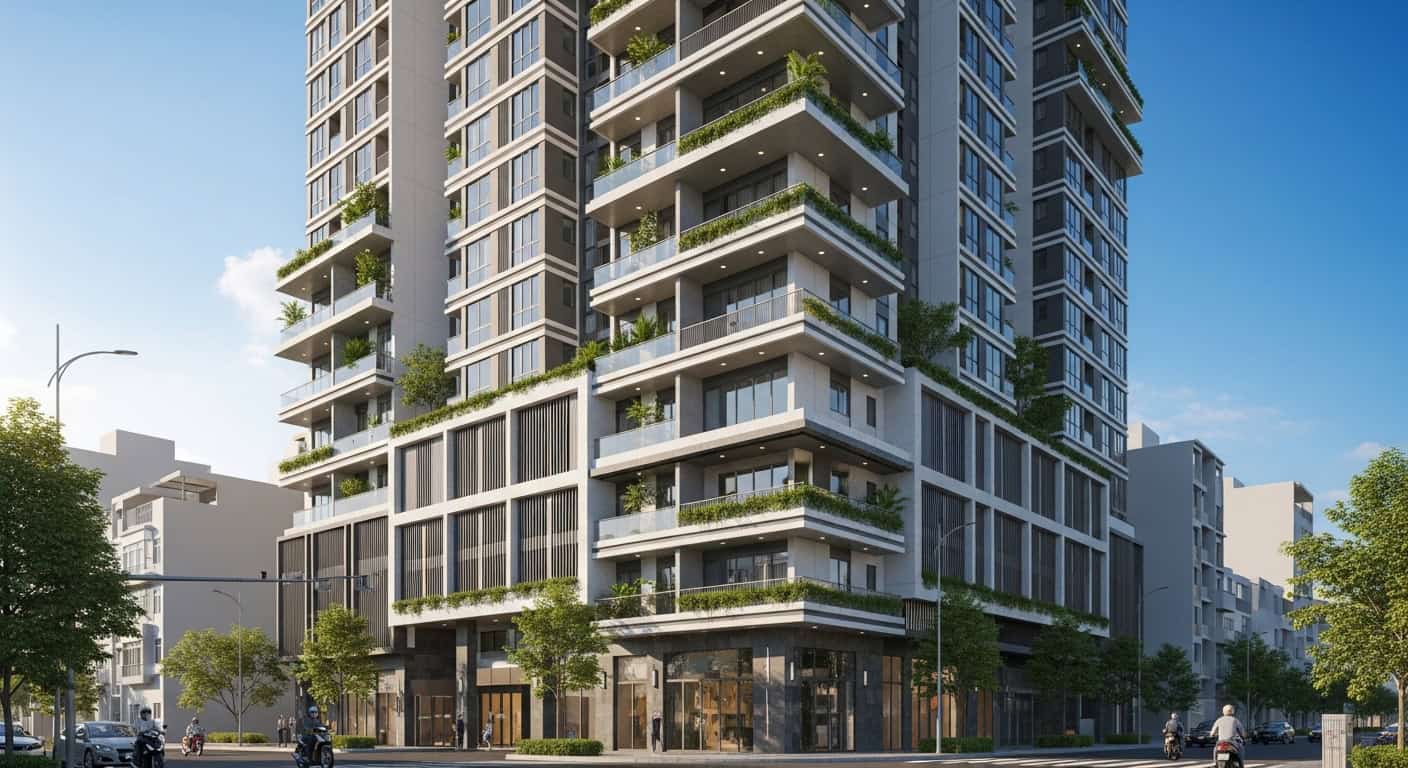
Reason 4 — Street food culture. The 24-hour food cycle is real. Bun bo Hue at midnight, banh cuon at 6am, bot chien as an afternoon snack — food availability shapes the city’s rhythm in ways that make it feel alive at every hour.
Reason 5 — Regional diversity. The south’s coconut-heavy sweetness, the central’s chilli heat, the north’s cleaner broths — all available within a 2km radius of most central apartments. Saigon functions as a culinary capital for the whole country.
Reason 6 — The price-to-quality upgrade path. When you want a sit-down meal, the price step-up is modest. Rooftop restaurants with river views, tasting menus, omakase counters — the range runs from street vendor to Michelin mention without the sticker shock of Tokyo or Paris. Long-stay residents who’ve built neighbourhood loyalty describe Saigon’s food scene as personally curated in a way that tourist-heavy cities rarely allow.
Reasons 7–9: District 1 Compactness, Metro Access, and Regional Hub Position
District 1 is one of the clearest practical answers to why live in Saigon for working professionals. The central business district, the main expat social areas, the best international hospitals, co-working spaces, and international school access are within a 10–15 minute radius. That compactness reduces daily friction. Errands that take half a day in a sprawling city take an hour here.
Reason 7 — Walkability in the core. The Ben Thanh area, Nguyen Hue walking street, and the riverside promenade are genuinely pleasant on foot in the morning and evening once you’ve adapted to the heat. The city isn’t walkable everywhere, but the central districts are more navigable than their reputation suggests.
Reason 8 — Metro expansion. Line 1 opened in late 2024 connecting Ben Thanh to Thu Duc. Lines 2 and 3b are in active construction. The city is investing seriously in surface-level transit, which reduces motorbike dependency for those who prefer not to ride.
Reason 9 — Regional hub position. Direct flights to Bangkok, Singapore, Hong Kong, and Tokyo run daily from Tan Son Nhat. Phu Quoc, Da Nang, and Hoi An are domestic flights under two hours. Saigon’s location makes it the best base in Southeast Asia for both regional travel and regional business.
Reasons 10–11: The Expat Community and Why the Social Scene Compounds
The reasons people move to Saigon are predictable. The reasons they stay are more interesting. This article collects the 15 most honest answers from long-stay D1 residents — and if any of them resonate, the next step is.
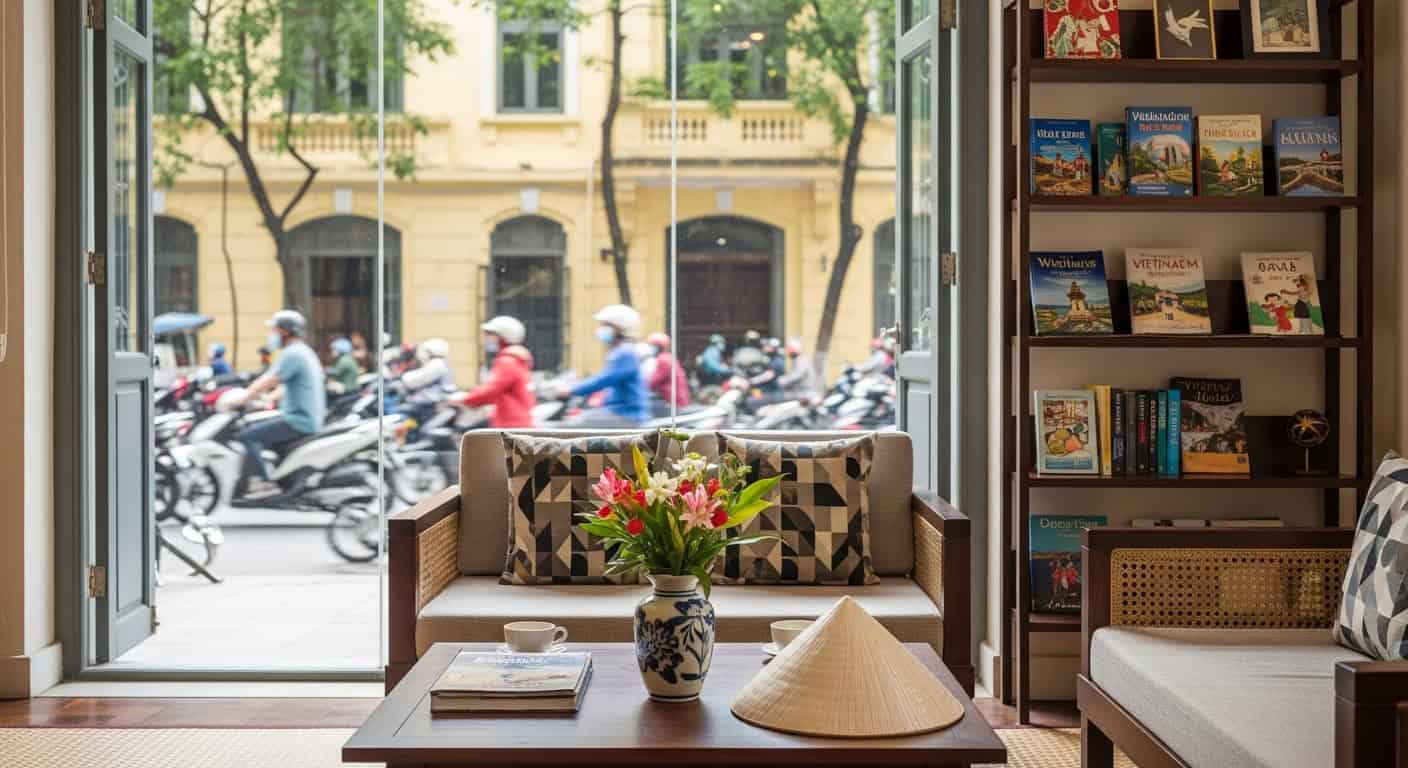
Reason 10 — A self-generating social network. Saigon’s expat community is large enough to be diverse but concentrated enough to be accessible. One introduction leads to five more. Within 60 days, most arrivals have a functioning social circle across multiple nationalities and industries. The city has a well-earned reputation for being easy to enter socially — not something you can say about Tokyo or Seoul.
Reason 11 — Co-working culture and professional density. The city has more co-working spaces per expat than most Southeast Asian cities. Toong, WeWork, and dozens of independent operators in Binh Thanh and District 3 serve remote workers with reliable fibre, air conditioning, and coffee. The freelance and startup community has real depth: product managers, designers, developers, marketers — the professional density is high enough for genuine collaboration, not just networking events.
Reason 12: Healthcare Quality That Surprises Most New Arrivals
Healthcare is the concern most prospective expats raise before arriving and the thing most long-stay residents stop worrying about within the first year. Ho Chi Minh City has several internationally accredited hospitals — FV Hospital (French-managed), Vinmec, Hanh Phuc International — with English-speaking staff, short wait times, and costs a fraction of private healthcare in the UK, US, or Australia. According to Expat Financial’s 2024 Southeast Asia Health Report, HCMC ranks in the top five Southeast Asian cities for international healthcare accessibility and affordability.
Reason 12 — Accessible, affordable international healthcare. Expats managing ongoing conditions routinely report that care in Saigon is less stressful than navigating public health systems back home — not because quality is uniformly higher, but because access is faster and out-of-pocket costs are dramatically lower. A GP consultation at a private international clinic runs USD 30–60. The same visit in Sydney or London costs five to ten times more.
Reason 13: The Vietnamese Business Environment and Entrepreneurial Energy
Saigon moves fast because the people who built it move fast. The entrepreneurial culture of Ho Chi Minh City is visible at every level — from the vendor who’s been at the same corner for twenty years to the twenty-five-year-old running three online businesses from a co-working space. Foreign entrepreneurs and remote workers consistently describe the local business environment as energising once initial setup hurdles are cleared.
Vietnam has one of Southeast Asia’s highest rates of STEM graduates relative to population, and Saigon concentrates the best of that talent. For businesses building regional teams, the combination of cost, skill level, and work ethic is the primary draw. The city’s young, tech-literate workforce is a structural advantage that compounds over time.
Reason 14: Climate — Honest About What It Is, and Why Long-Stay Residents Adapt
The climate question is where honesty matters most. Saigon is hot and humid year-round: 28–38°C, wet season from May to November, dry season from December to April. It’s not for everyone. But long-stay expats who’ve been here five or more years almost universally describe an adaptation process that takes six to twelve months, after which the heat becomes background rather than obstacle.
The practical upsides: no winter, no heating costs, no grey months. Outdoor dining is available 365 days a year. The rainy season brings afternoon downpours that cool the air and empty the streets briefly — something most long-timers come to appreciate. For anyone relocating from London or Toronto, the absence of winter is its own measurable quality-of-life improvement.
Reason 15: Why Live in Saigon if You Want a Passive Experience? The City Rewards Effort
The last honest reason is the most important: Saigon is not a passive city. It doesn’t hand you a curated expat bubble. It requires engagement — learning a few words of Vietnamese, finding your neighbourhood vendor, figuring out the unwritten rules of motorbike traffic, building relationships through shared meals rather than app-based networking. The people who leave after six months are usually those who expected the city to come to them. The people who stay ten years are those who went to the city.
That’s a feature, not a flaw. The effort creates genuine connection. You build fluency with a place that most visitors never access. The city you know after three years of living here is a fundamentally different city from the one you walked around as a tourist — more textured, more personal, more worth staying for. That depth is the real answer to why live in Saigon: the city keeps giving back in proportion to what you put in.
You May Also Find Useful
- Saigon Apartment for Rent 2026: Complete Guide for Expats and Long-Stay Residents
- Vietnam Visa Guide for Expats: E-Visa, Work Visa and Long-Stay Options (2026)
- Making Saigon Home: The 12-Month Long-Stay Guide for Expats in District 1
- Vietnam vs Thailand Expats 2026: Which Country Has Better Long-Stay Value?
Frequently Asked Questions
Is Saigon a good place to live for foreigners?
Yes — Ho Chi Minh City consistently ranks among Southeast Asia’s top expat destinations. According to Numbeo’s 2025 Cost of Living Index, it offers a cost of living 55–65% lower than comparable Western cities, strong international healthcare access, and a large, accessible expat community that makes social integration faster than most Asian capitals.
What is the average cost of living in Saigon for an expat?
A single expat can live comfortably in District 1 or Binh Thanh on USD 1,200–1,500 per month, covering a furnished one-bedroom apartment, food, transport, and leisure. Remote workers earning in USD or EUR find purchasing power significantly higher than back home, often with money left over to save or travel regionally.
Is Saigon safe to live in long-term?
HCMC is generally considered safe for foreign residents. Violent crime against expats is rare. The main day-to-day considerations are motorbike traffic (requires adaptation and situational awareness) and petty theft in tourist-heavy areas. Long-stay residents consistently rate personal safety higher than they expected before arriving.
How do expats get a long-stay visa for Vietnam?
Vietnam’s e-visa was expanded to 90-day validity with re-entry as of August 2023. Longer-stay options include business visas, investor visas, and temporary residence cards (TRC) for those with employment or business sponsorship. Digital nomad visa legislation was under active parliamentary discussion through 2025, with outcomes expected in 2026.
Which district is best for expats living in Saigon?
District 1 offers the highest density of services, restaurants, co-working spaces, and transport links — the default choice for newcomers and professionals. Binh Thanh and District 3 offer a quieter, more residential feel with strong connectivity. District 2 (now part of Thu Duc City) suits families prioritising international schools and larger living spaces.
Official Resources
For the most up-to-date information on why live in saigon, visit the Vietnam Tourism Official Guide.