
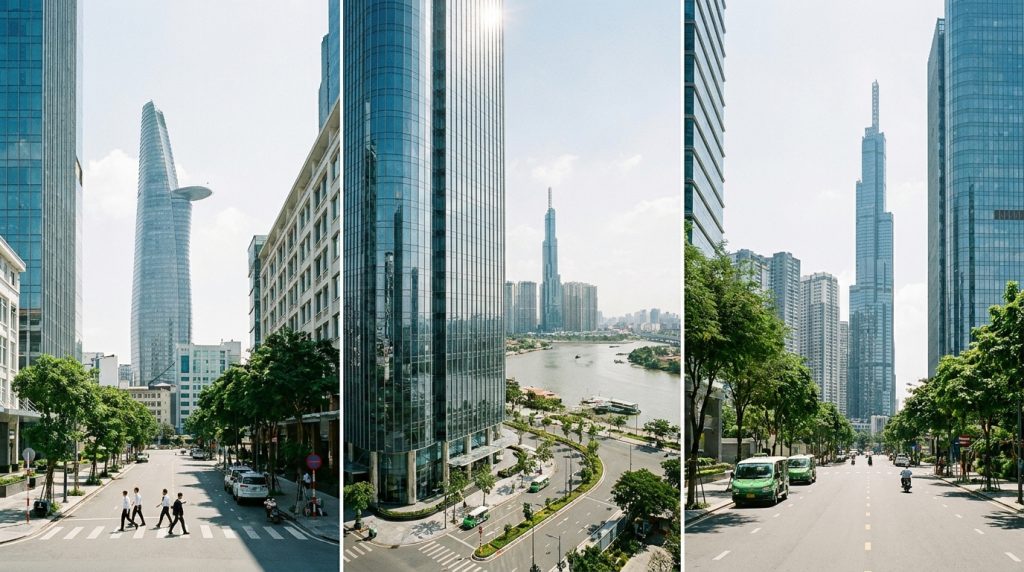
The cost of living in Da Nang runs roughly 20–30% cheaper than Ho Chi Minh City across most expense categories — but that headline figure hides a more complicated trade-off that every expat eventually confronts. Da Nang delivers affordable beach living with a slower pace; Saigon delivers career infrastructure, social density, and international opportunity at a premium that most working expats find completely justified.
Key Takeaways
- The cost of living in Da Nang averages $800–$1,100/month for a comfortable single expat lifestyle versus $1,200–$1,700 in Saigon — a real but not dramatic gap.
- Rent is the biggest differentiator: a modern 1BR in Da Nang costs $350–$500 versus $600–$900 for equivalent quality in District 1 or District 2.
- Saigon’s higher cost comes with proportionally higher earning potential — remote workers and local hires both access deeper job markets and networking pools.
- Da Nang wins on beach proximity, air quality, and a quieter lifestyle; Saigon wins on international schools, medical care, nightlife, and professional ecosystems.
- For most career-focused expats, the Saigon premium pays for itself within the first year.
Cost of Living in Da Nang: Monthly Budget Breakdown
Let’s start with hard numbers. A single expat living comfortably — not frugally, not lavishly — in Da Nang can expect to spend in the following ranges:

- Rent (1BR, modern building): $350–$500/month
- Utilities (electric, water, internet): $60–$100/month
- Groceries: $150–$250/month
- Eating out (mix of local and Western): $200–$350/month
- Transport (grab, scooter rental, fuel): $50–$100/month
- Entertainment and leisure: $100–$200/month
- Health insurance and gym: $80–$150/month
Total: approximately $990–$1,650/month, with most comfortable expats landing around $1,100. That is genuinely cheaper than Saigon, and the beach lifestyle is real.
Cost of Living in Da Nang vs Saigon: Side-by-Side Comparison
The cost of living in Da Nang comparison with Saigon is most useful when you go category by category rather than relying on a single average figure.
- Rent: Da Nang $350–$500 / Saigon $600–$900 for a comparable 1BR
- Coffee and coworking: Da Nang ~$1.50 local coffee / Saigon ~$2–$3 specialty; coworking spaces $80–$150 vs $100–$200/month
- Western groceries: Similar — both cities import from the same distributors; Saigon has slightly more competition keeping prices down
- Beer at a bar: Da Nang $1–$2 local / Saigon $2–$4 depending on venue and neighborhood
- Motorbike taxi or Grab: Both cities are roughly comparable per kilometer
- International school fees: Da Nang has limited options at $8,000–$15,000/year; Saigon has dozens of options from $10,000 to $30,000+, giving families real choice
According to Numbeo’s 2025 Cost of Living Index, Ho Chi Minh City scores about 15% more expensive than Da Nang overall — but that blended figure underweights rent, which is where the real gap sits.
Rent in Da Nang: What You Get and Where
The cost of living in Da Nang is most attractive at the rent line. The city’s apartment stock skews toward mid-rise buildings in My An, An Thuong, and the beachside strip along Vo Nguyen Giap. For $400–$500 per month you can secure a fully furnished 1-bedroom with a pool, gym, and sea view — something that costs $1,200+ in a comparable Saigon building.
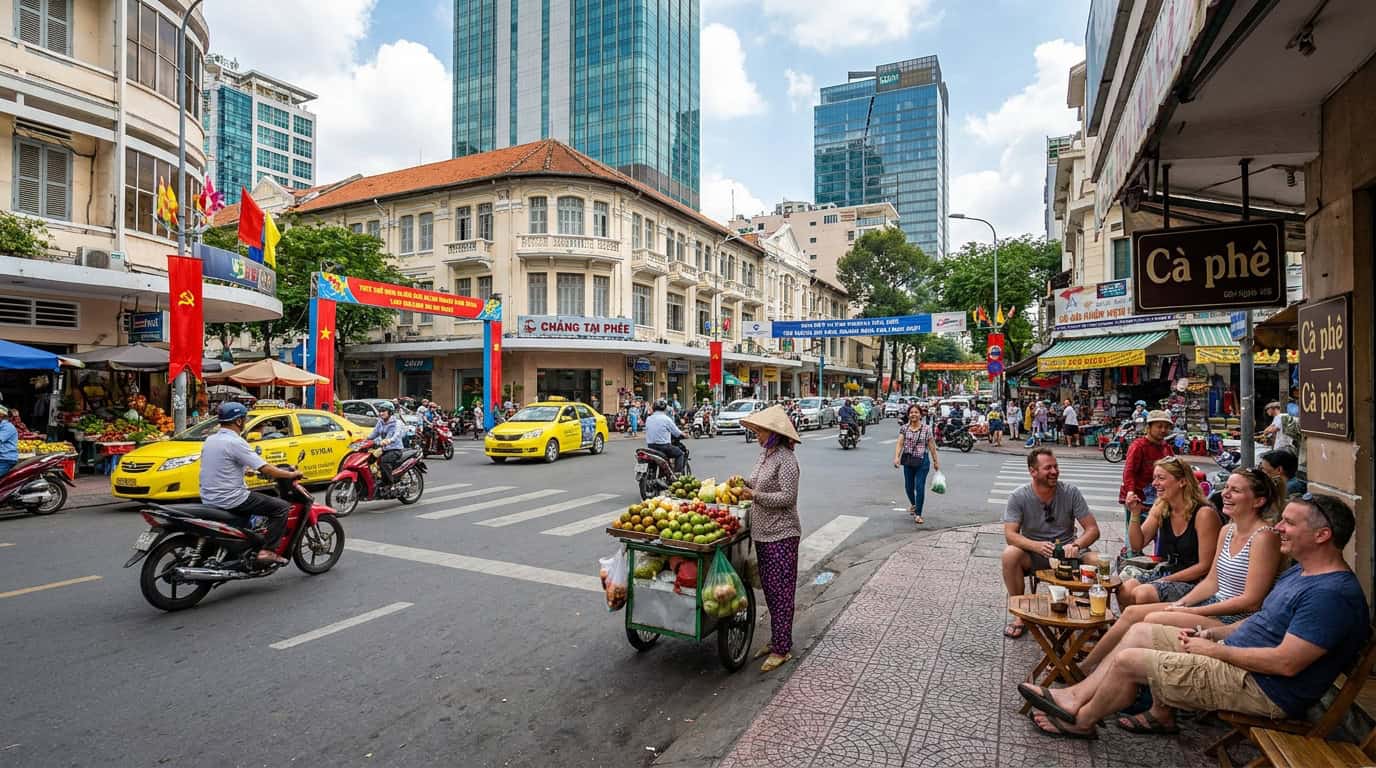
Popular expat neighborhoods include:
- My Khe / An Thuong: Dense with bars, cafes, and other expats; closest to the beach; slightly pricier within Da Nang’s scale
- My An: Quieter, family-friendly, good local food scene
- Son Tra Peninsula: Scenic, isolated, better suited to remote workers than social types
The catch: Da Nang’s expat apartment market is smaller and less competitive than Saigon’s. Quality varies sharply between buildings and landlords, and maintenance responsiveness is patchy compared to Saigon’s professionally managed serviced apartment sector.
Food and Dining Costs in Da Nang
Da Nang has an excellent local food scene — Mi Quang, Banh Mi, fresh seafood, and a growing number of quality Western restaurants. A sit-down meal at a good local restaurant costs $3–$6; a Western restaurant meal runs $8–$15. That is slightly cheaper than Saigon’s equivalent, but not dramatically so.
Where Da Nang really wins on food is seafood. Being a coastal city, fresh seafood is both cheaper and higher quality than what you find in landlocked or river-city contexts. A seafood dinner for two at a good beachside restaurant can cost $15–$25 — extraordinary value.
Saigon has more culinary diversity — every cuisine, every price point, every dietary need is catered for across 10 million residents and a mature F&B industry. If you eat out frequently and value variety, the Saigon food scene is worth the slight premium.
Internet, Utilities, and Infrastructure Costs
Utility costs in both cities are low by global standards. In Da Nang, electricity runs $0.07–$0.12 per kWh depending on consumption tier; air conditioning is the dominant variable. Expats running AC heavily during summer months can see electric bills of $80–$120. Water is negligible. Fiber internet is fast and cheap — 200Mbps plans cost around $10–$15/month from Viettel or VNPT.

Saigon’s utility structure is nearly identical. The main difference is that newer Saigon apartment buildings include utilities in service fees, making budgeting slightly cleaner. Infrastructure in Saigon — roads, hospitals, airports, logistics — is simply more developed, which matters for quality of life even if it does not appear directly in a budget spreadsheet.
Transport Costs: Da Nang vs Saigon
Da Nang is compact enough that a motorbike or bicycle handles most daily movement. Grab rides within the city cost $1–$3. If you own a scooter, monthly fuel and maintenance runs $20–$40. There is no subway; traffic is light compared to Saigon.
Saigon transport is more expensive but more capable. The metro Line 1 (Ben Thanh to Suoi Tien) opened in late 2024 and provides a genuine alternative for east–west commuters. Grab costs are comparable per kilometer but total monthly spend is higher given greater distances. Expats in District 1, District 2, or Binh Thanh can manage without a vehicle; the city is increasingly walkable in dense zones.
According to Vietnam’s General Statistics Office 2024 data, Ho Chi Minh City’s registered vehicle count exceeded 9.5 million — a figure that reflects both the city’s scale and the continued need for ride-hailing as the most predictable transport option for expats navigating unfamiliar routes.
Healthcare Costs and Quality
This is one category where Saigon wins unambiguously, and it matters for long-term expat planning. Saigon hosts several internationally accredited hospitals — Family Medical Practice, FV Hospital, Vinmec, and Columbia Asia — with English-speaking staff, modern equipment, and direct insurance billing. GP consultations cost $40–$80; specialist visits $80–$150; most international health insurance plans cover these directly.
Da Nang has improved significantly — Da Nang International Hospital provides reasonable primary care — but for serious conditions, complex diagnoses, or specialist treatment, most expats fly to Saigon or Bangkok. That emergency transport cost, while infrequent, is a real variable in any honest cost of living in Da Nang calculation.
Dental care is excellent and affordable in both cities: $15–$30 for a cleaning, $60–$120 for a crown.
Entertainment, Nightlife, and Social Costs
Da Nang’s entertainment scene is centered on the beachfront, An Thuong bar street, and a handful of rooftop venues. It is pleasant, friendly, and genuinely relaxing. Monthly entertainment costs for an active social expat run $150–$300. The expat community is tight-knit but small — roughly 2,000–4,000 long-term foreign residents — which creates warmth but also limits social variety over time.
Saigon’s nightlife and entertainment ecosystem is one of Southeast Asia’s best. Bui Vien, Thao Dien, District 1 rooftops, live music venues, art galleries, international sporting events, film festivals — the social calendar never empties. Monthly entertainment spend for an active Saigon expat runs $200–$500, more if you frequent premium venues. But you are buying access to a city of real depth and cultural complexity, not just a beach bar rotation.
Income and Earning Potential: The Other Side of the Equation
Any honest comparison of the cost of living in Da Nang against Saigon must address the income side. Da Nang’s economy is tourism-dependent and smaller. Job opportunities for expats — whether in corporate roles, teaching, or the startup ecosystem — are a fraction of what Saigon offers. Remote workers can thrive in Da Nang; anyone who needs a local job market should weight this heavily.
Saigon hosts the Vietnamese headquarters of most multinationals, a dense startup ecosystem, a mature tech industry, and the country’s deepest English-teaching market. Salaries for skilled expats range from $2,000 for entry-level ESL to $5,000–$15,000 for corporate, finance, or tech roles. The premium you pay to live in Saigon is frequently offset — and then some — by the income you can earn there.
Da Nang wins on beach access. Saigon wins on everything else. For expats who want career optionality, social depth, and international infrastructure — District 1 is the correct choice.
Who Should Choose Da Nang vs Saigon?
The cost of living in Da Nang makes it the right choice for a specific type of expat — but not all expats.
Da Nang is the better fit if you:
- Work fully remotely with a stable income source outside Vietnam
- Prioritize beach access, outdoor lifestyle, and clean air over urban amenity
- Are semi-retired or on a fixed investment income
- Prefer a small, tight community to a sprawling anonymous city
- Are doing a trial run of Vietnamese living before committing
Saigon is the better fit if you:
- Need a local job market or are building a business
- Have children who require international school options
- Want access to specialist healthcare without flying
- Value social variety and cultural density
- Are building a long-term life in Vietnam with professional roots
Da Nang Cost of Living: Final Verdict
The cost of living in Da Nang is genuinely lower than Saigon — particularly on rent, the single largest expense — and the quality of life for beach-focused remote workers is legitimately excellent. But the savings of $300–$500 per month relative to Saigon should be weighed against what you give up: career infrastructure, social depth, medical access, and the sheer electric energy of Southeast Asia’s most dynamic city.
Most expats who try both cities long-term end up in Saigon. The ones who stay in Da Nang tend to be those who came to slow down deliberately — and found exactly what they were looking for. Neither answer is wrong. But they are answers to different questions.
You May Also Find Useful
Frequently Asked Questions
What is the average cost of living in Da Nang for a single expat?
A comfortable single expat lifestyle in Da Nang typically costs $900–$1,300 per month, covering rent, food, transport, utilities, and entertainment. Frugal living is possible at $700–$800; a more social or premium lifestyle pushes toward $1,500+.
Is Da Nang cheaper than Ho Chi Minh City for expats?
Yes, Da Nang is approximately 20–30% cheaper overall, with the biggest gap in rent. A comparable 1-bedroom apartment in Da Nang costs $350–$500 versus $600–$900 in Saigon’s expat districts. Food and entertainment are marginally cheaper; utilities are similar.
Can you live in Da Nang on $1,000 per month?
Yes, comfortably. At $1,000/month you can afford a decent furnished apartment, eat out regularly at local restaurants, cover transport and utilities, and have a reasonable entertainment budget. You will be living modestly but comfortably by Vietnamese standards.
How does the cost of living in Da Nang compare to Hanoi?
Da Nang and Hanoi are broadly similar in overall cost. Hanoi rent in central districts (Hoan Kiem, Tay Ho) runs $500–$800 for a quality 1BR — slightly more than Da Nang but less than Saigon. Hanoi winters require heating costs that Da Nang does not. Da Nang has the edge on beach access; Hanoi has the edge on cultural heritage and northern cuisine.
Is Da Nang good for long-term expat living or mainly short-term?
Da Nang attracts both, but the expat retention rate favors those with specific lifestyle priorities — remote work, beach living, semi-retirement. The city lacks the professional infrastructure and social density that keeps career-focused expats in Saigon long-term. Many expats spend 3–12 months in Da Nang as part of a broader Vietnam journey before settling in Saigon or Hanoi.
Official Resources
For the most up-to-date information on cost of living in da nang, visit the Numbeo – Cost of Living in Ho Chi Minh City.