
Best Districts to Live in Ho Chi Minh City for Expats: District-by-District Guide
If you’re searching for the best area to live Saigon expat life comfortably, the answer depends on how you work, commute, and relax. Ho Chi Minh City has no single perfect district. It has several strong options, each with a different mix of cost, convenience, noise, green space, and community.
For long-stay residents, the right district matters more than short-term visitors expect. Your daily coffee run, Grab ride, gym routine, and grocery choices shape your quality of life. District 1 offers convenience and prestige. District 3 feels central but calmer. Thao Dien in Thu Duc City has the strongest expat cluster. Phu Nhuan gives better value. Binh Thanh sits between local life and modern towers. So, where will your routine fit best?
Best Area to Live Saigon Expat: Key Takeaways
- District 1 is best for walkability, dining, and central access.
- District 3 suits expats who want a quieter, more residential central base.
- Thao Dien in Thu Duc City remains the strongest expat hub for families and remote workers.
- Binh Thanh offers modern apartments with better value near the center.
- Phu Nhuan works well for budget-conscious long-stay residents who still want convenience.
- Your best district depends on commute time, lifestyle, and housing priorities, not just rent.
Ho Chi Minh City, still widely called Saigon, is Vietnam’s economic engine. The IMF projected Vietnam’s 2024 real GDP growth at 5.8%, reflecting why the city keeps drawing professionals, founders, retirees, and remote workers from abroad. Growth brings opportunity, but it also creates traffic, uneven infrastructure, and fast-changing neighborhoods. Choosing where to live isn’t just about price. It’s about reducing friction every day.
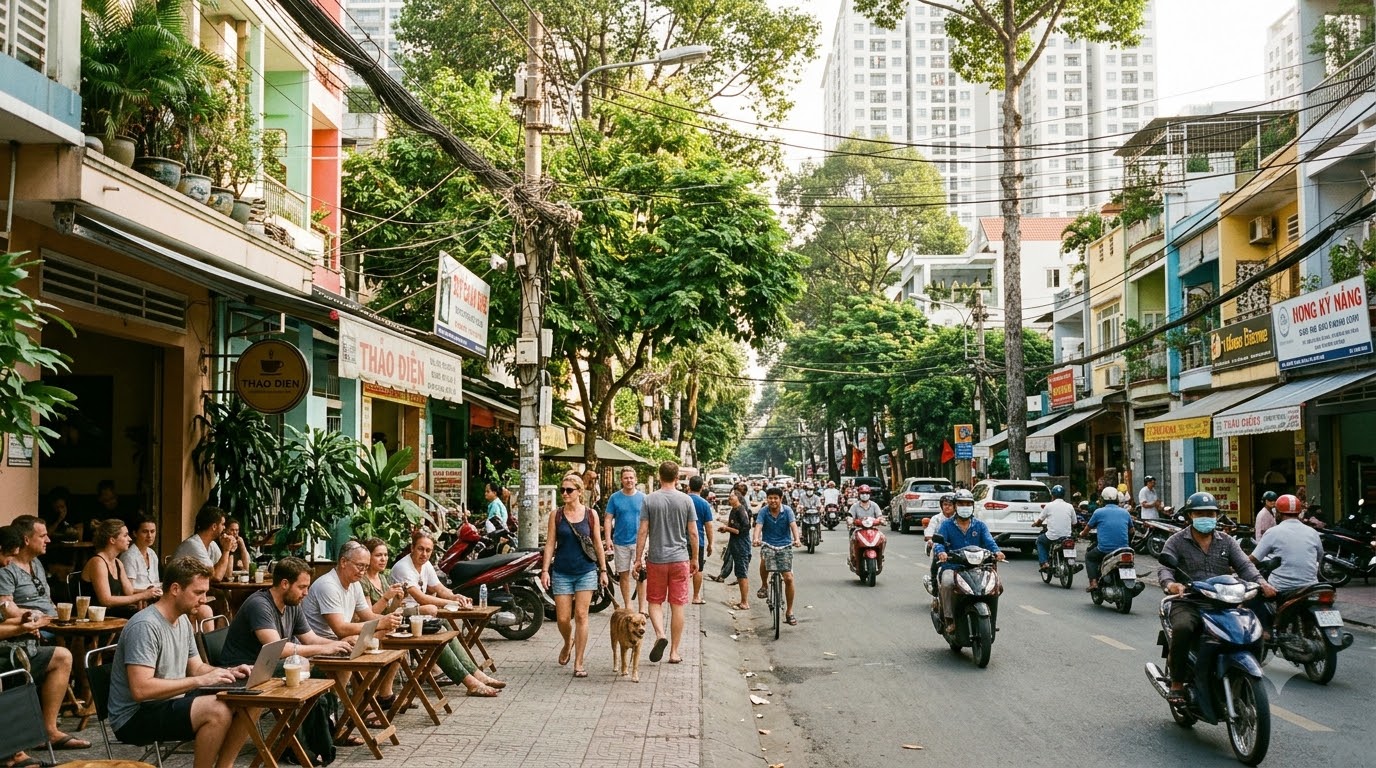
District 1 is the best overall area for expats who want convenience, walkability, and a truly central base. Numbeo’s 2025 Cost of Living data shows Ho Chi Minh City remains cheaper than many Asian expat hubs, but District 1 still commands premium rents because location saves time every day.
If you want everything close, District 1 is hard to beat. Offices, coworking spaces, embassies, clinics, malls, rooftop bars, and international restaurants are concentrated here. Many expats choose District 1 because they can walk to meetings, gyms, and nightlife instead of planning every move around traffic. Isn’t that a major advantage when the city gets busy?
District 1 suits solo professionals, couples, business travelers on extended stays, and remote workers who value immediate access. It’s also ideal if you’re new to Vietnam and want a soft landing. Daily life feels straightforward. English is more widely understood. Delivery coverage is excellent. Short taxi rides connect you to nearly every key district.
The trade-off is price and noise. Premium central apartments cost more, and some streets stay active late. If you need deep quiet, you’ll need a well-managed building with sound insulation and dependable services. That’s why many long-stay expats choose serviced apartments over standard rentals. Reliable housekeeping, front desk support, and included utilities reduce friction.
For many expats, that balance is the real luxury. You’re not only paying for square meters. You’re paying for time, ease, and the ability to build a routine fast.
District 3 is the best choice for expats who want central access with a calmer, more residential feel. According to the Ho Chi Minh City Statistics Office, the city had more than 9 million residents in recent official counts, making quieter central neighborhoods especially valuable.
District 3 sits right next to District 1, but it feels more settled. Tree-lined streets, older villas, coffee shops, local eateries, and lower building density create a softer pace. You still reach central offices and attractions quickly, yet you avoid some of District 1’s constant movement. Want central living without feeling like you’re in the middle of a hotel zone?
This district works well for writers, consultants, educators, and retirees who appreciate atmosphere. It has personality. Instead of giant towers everywhere, you’ll find local markets, classic apartment blocks, and heritage buildings mixed with newer residences. Many expats love it because it feels lived-in rather than designed only for visitors.
District 3 also tends to offer better value than District 1 for similar access. You may get more space or a quieter lane for the same budget. For long-term residents, that can make a clear difference. Sleep quality, neighborhood charm, and easier parking matter once the novelty of central city life fades.
The downside is that inventory can be inconsistent. Some buildings are charming but older. Management standards vary more than in larger modern developments. It’s worth prioritizing a professionally run property with stable internet, security, and cleaning support. If you want a central serviced lifestyle, compare what is included, not just what is advertised.
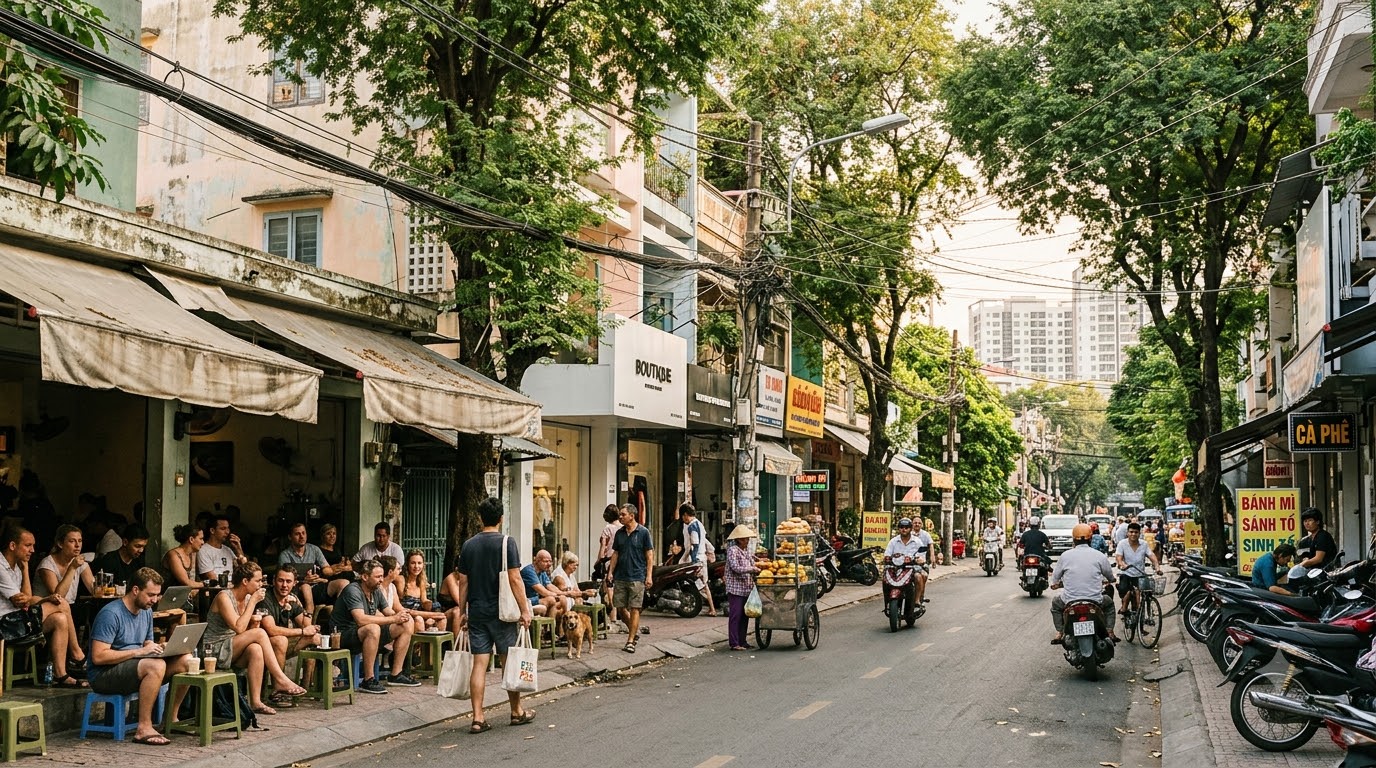
Thao Dien in Thu Duc City is the strongest expat enclave for families, remote workers, and residents who want international amenities. Reuters reported that Ho Chi Minh City launched Metro Line 1 operations in late 2024, improving connections between central areas and the eastern side of the city.
Ask where many foreigners live, and Thao Dien is often the first answer. It has international schools, organic grocers, boutique gyms, brunch spots, pet-friendly cafes, and large apartment compounds. For families, that ecosystem matters. For remote workers, it means easier routines and a built-in social network. Could any district feel more familiar to newly arrived expats?
Thao Dien’s appeal is clear, but it isn’t for everyone. Commutes into District 1 can be manageable or frustrating depending on traffic, timing, and exact location. Flooding has historically affected some roads during heavy rain, although infrastructure has improved in parts. If you work from home and mostly stay local, this may matter less.
Many residents accept the trade-offs because the lifestyle is spacious and community-driven. Larger apartments, pools, gyms, and family facilities are easier to find. If you have children, being near schools and extracurricular options can outweigh the extra commute. If you’re a solo urbanist who loves walking to everything, District 1 or 3 may still fit better.
Thao Dien is also one of the more expensive non-central residential areas in the city. Strong demand keeps prices firm. Before committing, calculate the full monthly cost: rent, transport, school runs, food delivery, and time. Convenience isn’t only about geography. It’s about how many decisions you can remove from each week.
Binh Thanh is the best value district near the center for expats who want modern towers and flexible budgets. Numbeo’s 2025 traffic index continues to rank Ho Chi Minh City as a congested city, so living close to District 1 can improve everyday quality of life.
Binh Thanh sits between central Saigon and the eastern districts, which gives it strategic appeal. Many new high-rise developments offer good facilities at rates below premium District 1 stock. You can often get more floor space, better views, and stronger building amenities without moving too far from the center. Isn’t that exactly what many long-stay residents want?
This district suits younger professionals, startup founders, hybrid workers, and couples who still want city energy but don’t need to be in the heart of tourist areas. Some parts of Binh Thanh feel highly urban and vertical. Others remain deeply local. That mix can be a positive if you want both convenience and exposure to everyday Vietnamese life.
Landmark-area developments attract many expats because of gyms, pools, shopping, and predictable management standards. However, traffic around major roads can be intense. Walking quality also varies by street. If you choose Binh Thanh, visit the exact neighborhood at different times of day. A five-minute map estimate can feel very different in practice.
For many residents, Binh Thanh offers the most balanced equation of cost, modernity, and location. You can be near District 1 without paying District 1 prices. If your priorities are building facilities and apartment size over historic charm or quiet lanes, Binh Thanh deserves a serious look.
Phu Nhuan is a practical district for expats who want affordability, airport access, and a more local neighborhood feel. According to the General Statistics Office of Vietnam, services remain a major driver of urban household spending, which makes daily convenience a key factor when choosing where to live.
Phu Nhuan often gets overlooked in expat guides, but that’s partly why it’s attractive. It sits between central districts and Tan Son Nhat Airport, with good access to Binh Thanh, District 1, and District 3. If you travel often or want lower rent without moving far out, it can be a smart compromise. Why pay more just for a postcode?
The district feels more local than Thao Dien or central District 1. You’ll find lively food streets, neighborhood cafes, markets, and practical services at resident prices. For budget-conscious digital nomads or retirees, that’s a real advantage. The district doesn’t have the same polished expat bubble, but many residents see that as a benefit rather than a drawback.
Housing options range from compact local apartments to newer serviced and boutique properties. Building quality varies, so due diligence matters. Visit in person if possible. Check alley width, noise, water pressure, internet speed, and nearby convenience stores. Long-term comfort often depends on these details more than photos.
Phu Nhuan works best for independent expats who are comfortable navigating a more local environment. If you want a richer sense of everyday Saigon without giving up access, this district deserves more attention than it gets in most roundups.
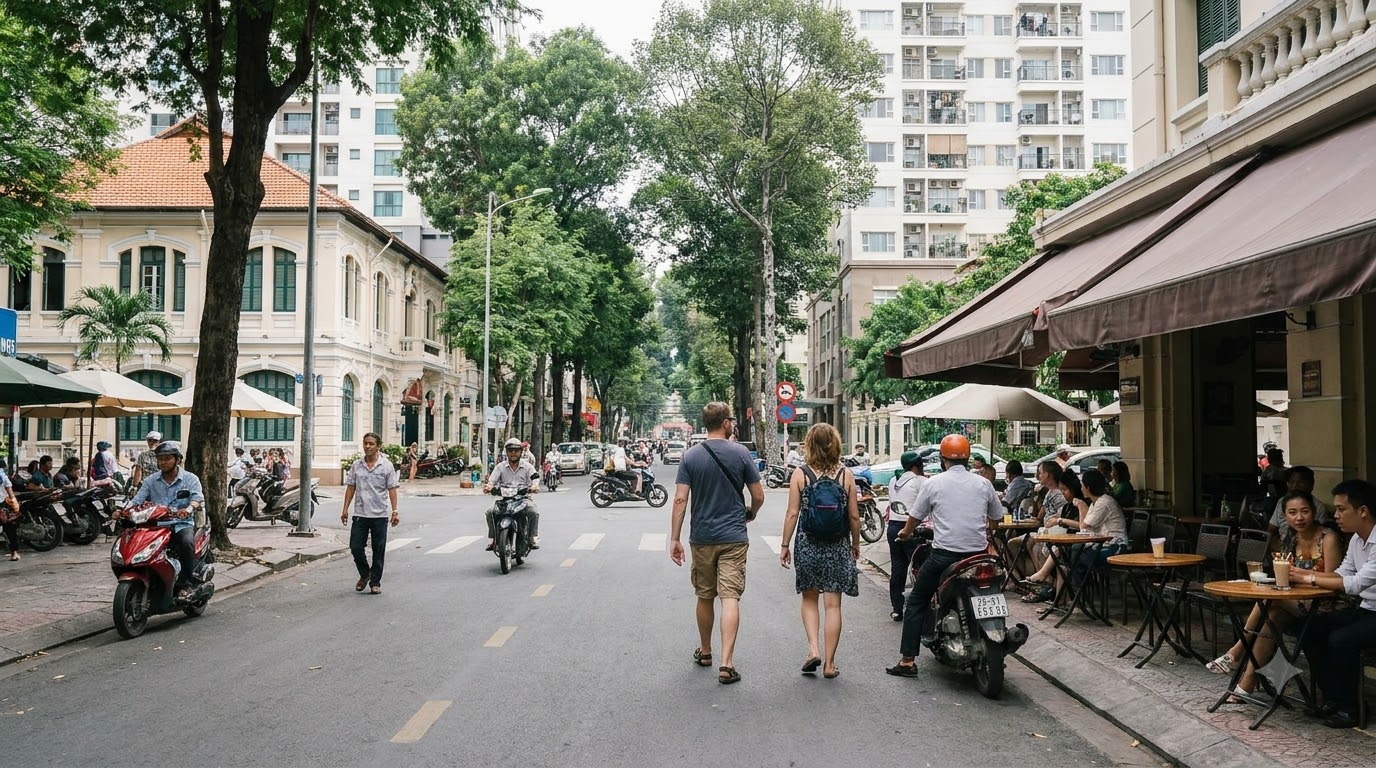
The best district ultimately depends on your routine, not online rankings. The World Health Organization recommends annual PM2.5 levels of 5 µg/m³, while many large Asian cities exceed that target, so air quality, commute length, and indoor comfort all affect liveability.
Expats often focus first on rent. That’s understandable, but it’s incomplete. A cheaper apartment loses value if your commute drains you, the building internet is unstable, or you spend extra daily on transport and convenience. What feels sustainable after six months? That’s the question that matters most.
Start with five filters. First, where do you work most days? Second, how often do you need the airport? Third, do you prefer local immersion or an international support network? Fourth, how much building service do you expect? Fifth, what level of walkability do you need?
If your answer is maximum convenience, choose District 1. If you want central but calmer, choose District 3. If you’re family-focused or fully remote, consider Thao Dien. If you want towers and value, shortlist Binh Thanh. If budget and practicality matter most, look at Phu Nhuan.
For many expats, serviced apartments remain the easiest entry point for long-term living. Included utilities, cleaning, reception support, and reliable maintenance reduce surprises. Explore the property’s amenities closely, because daily comfort comes from fast Wi-Fi, housekeeping standards, security, and responsive management as much as location.
If you’re planning a move and want a central home base, District 1 remains one of the strongest choices for working professionals and long-stay residents. It offers the shortest learning curve and the easiest access to the city’s best-known services. When you want Saigon to feel simple quickly, central living helps.
FAQ
Where do expats live in Saigon?
Most expats in Saigon cluster in District 1, District 3, Thao Dien in Thu Duc City, Binh Thanh, and parts of Phu Nhuan. District 1 and 3 attract professionals who want central access. Thao Dien draws families and remote workers. Binh Thanh appeals to residents who want modern apartments near the center at better value.
Where do most expats live in Vietnam?
In Vietnam, the largest expat communities are typically found in Ho Chi Minh City, Hanoi, and Da Nang. Ho Chi Minh City remains the most commercially active option, which attracts entrepreneurs, professionals, and long-stay residents. Within the city, central districts and Thao Dien are the most common choices because they combine housing options with practical support services.
Which district is best to live in Ho Chi Minh City?
District 1 is the best all-round choice for many expats because it offers convenience, walkability, and easy access to work, dining, and services. However, the best district depends on your needs. District 3 is better for a quieter central feel. Thao Dien suits families. Binh Thanh offers better value. Phu Nhuan suits tighter budgets.
Is District 1 or 3 better in Ho Chi Minh?
District 1 is better if you want maximum convenience, prestige, and quick access to offices, shopping, and nightlife. District 3 is better if you want a more residential atmosphere while staying central. Many long-term expats prefer District 3’s quieter streets, but newcomers often find District 1 easier for settling in quickly.
What should expats check before renting in Saigon?
Check commute time, building management, internet speed, noise, included services, contract terms, and nearby daily essentials. Also review flood risk, elevator reliability, and housekeeping standards if you’re choosing a serviced apartment. A district may look perfect on paper, but the exact building determines your real experience.
Conclusion
The best area to live Saigon expat life well isn’t the same for everyone. District 1 leads for convenience and fast settling-in. District 3 offers central calm. Thao Dien provides a strong international community. Binh Thanh balances modern living and value. Phu Nhuan gives practical affordability with good connections.
If you’re staying long term, choose the district that supports your routine instead of chasing trends. A great home should make work easier, rest better, and daily life simpler. If you want a professionally managed central base, explore serviced residences and see how the right location can change your whole Saigon experience.
Planning to make Saigon your base?
For more Saigon guides, check out: Saigon Live Music Guide: Jazz, Acoustic, and Where to Find It, Best Restaurants in Saigon: From Street Food to Fine Dining in 2026.