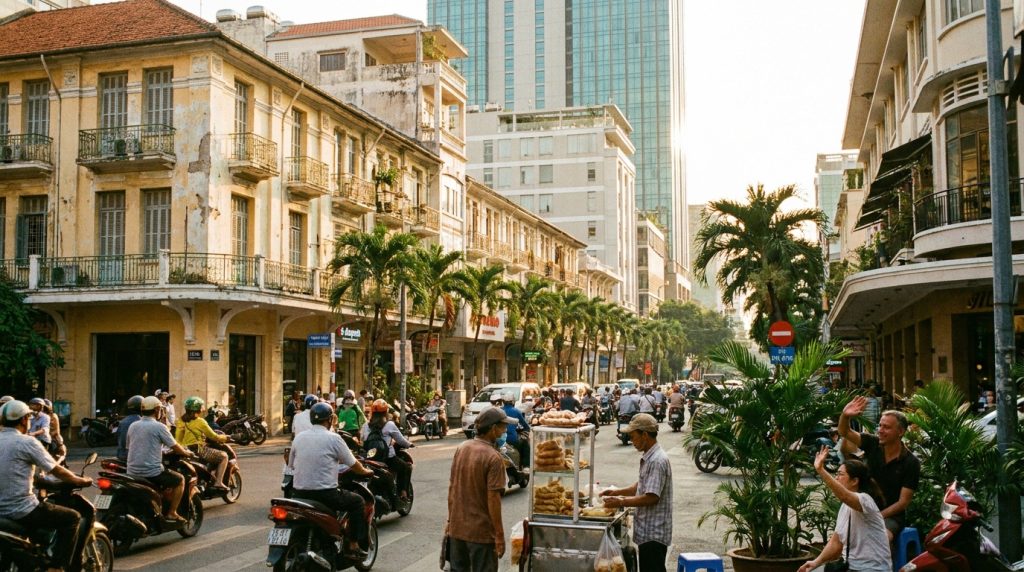
The best city to live in Vietnam for career-focused expats is Ho Chi Minh City — and it’s not particularly close. Vietnam’s commercial capital offers the highest salaries, the densest concentration of multinational corporations, and the most active startup ecosystem in Southeast Asia. That said, Hanoi and Da Nang each serve distinct expat profiles, and understanding the differences will help you make the right call for your career stage and lifestyle preferences.
Key Takeaways
- Ho Chi Minh City is the best city to live in Vietnam for career-focused expats — it hosts the majority of Vietnam’s Fortune 500 offices and generates roughly 25% of national GDP.
- Hanoi is the political capital and suits expats in government relations, NGOs, education, and diplomacy-adjacent roles.
- Da Nang is the lifestyle pick: lower cost, beachside living, and a growing tech scene — but far fewer senior-level jobs.
- According to the Vietnam General Statistics Office, HCMC’s GRDP grew 7.17% in 2024, outpacing both Hanoi and Da Nang.
- District 1, HCMC puts you within minutes of the CBD, co-working hubs, and the highest concentration of regional headquarters in Vietnam.
Why Ho Chi Minh City Is the Best City to Live in Vietnam for Professionals
HCMC — still widely called Saigon by residents — is Vietnam’s economic engine. The city accounts for roughly a quarter of national tax revenue and hosts the regional headquarters of companies including Samsung, Intel, Unilever, KPMG, Standard Chartered, and hundreds of mid-market multinationals. The talent pool is deep, the deal flow is constant, and the professional network effects compound quickly. If you’re chasing career growth, business development, or entrepreneurship in Vietnam, HCMC is where the action is.
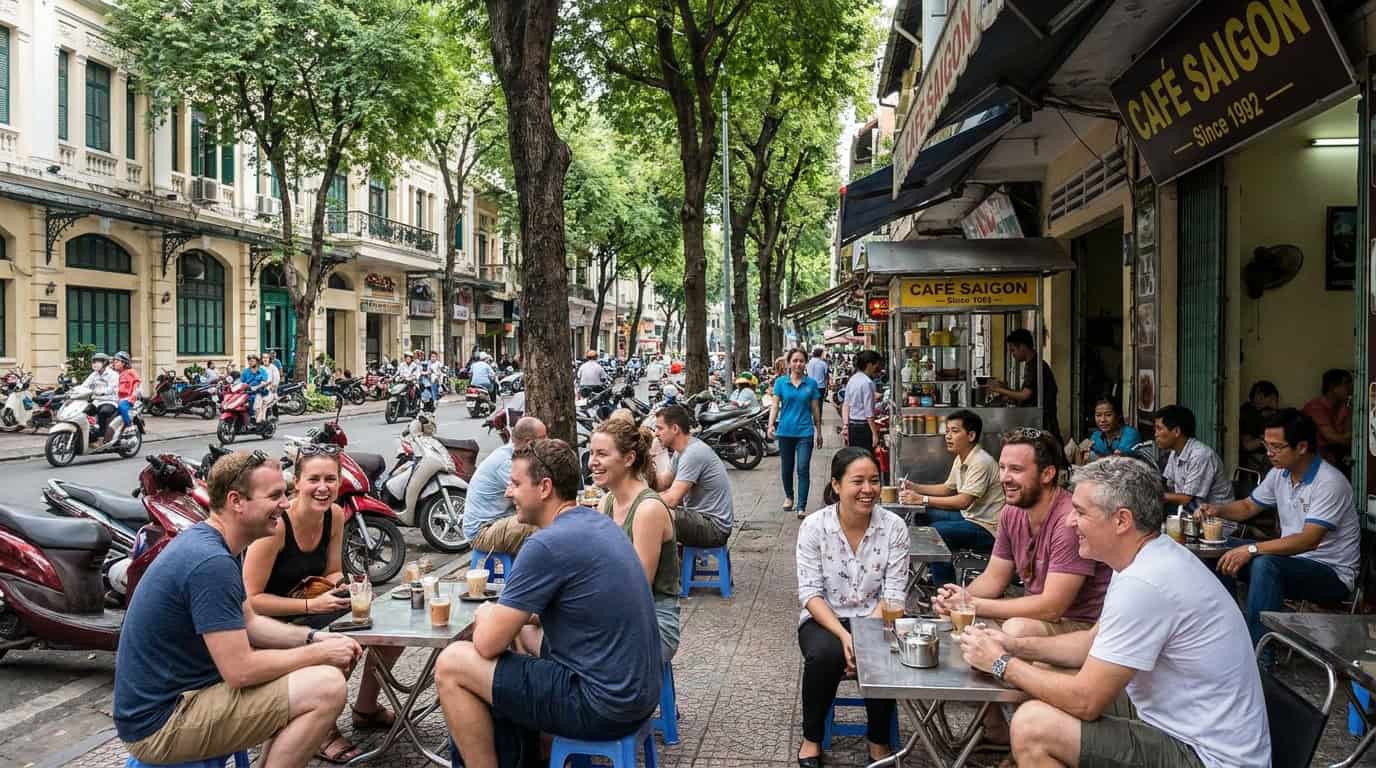
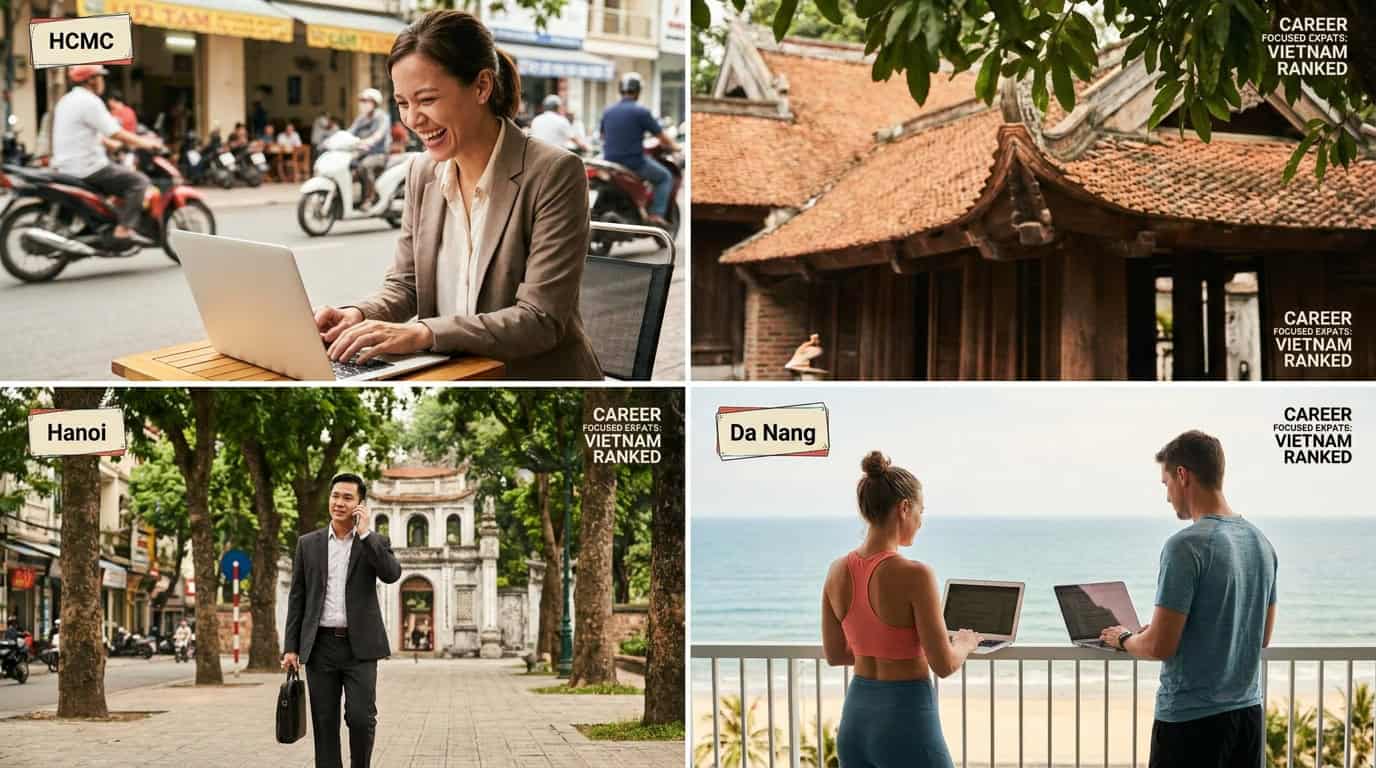
For career-focused expats, Ho Chi Minh City dominates: largest economy, most MNC offices, strongest startup scene. A well-run serviced building puts you five minutes from all of it.
HCMC vs Hanoi: Career Opportunities Compared
Hanoi is Vietnam’s political and administrative capital, which gives it a distinct professional character. Expats in international development, embassies, public policy, and education often prefer Hanoi for its proximity to government ministries and a more structured, relationship-driven business culture. The city also has a solid manufacturing and tech sector, anchored by Samsung’s massive R&D facility in the northern suburbs.
HCMC, by contrast, dominates in finance, FMCG, logistics, tech startups, and professional services. The Ho Chi Minh City Stock Exchange (HOSE) is Vietnam’s largest by market capitalisation. The city’s Saigon Hi-Tech Park houses over 160 companies and has attracted more than $12 billion USD in cumulative investment. If your career sits anywhere in private-sector commerce, HCMC wins the comparison decisively.
Da Nang: A Strong Lifestyle Option, but Limited Career Ladder
Da Nang consistently ranks as one of the most liveable cities in Vietnam for quality of life. The beaches are minutes from downtown, the traffic is manageable, and the cost of living is noticeably lower than Saigon or Hanoi. The city has invested heavily in its IT sector, and the Da Nang Software Park has become a genuine cluster for outsourcing companies and mid-sized tech firms.
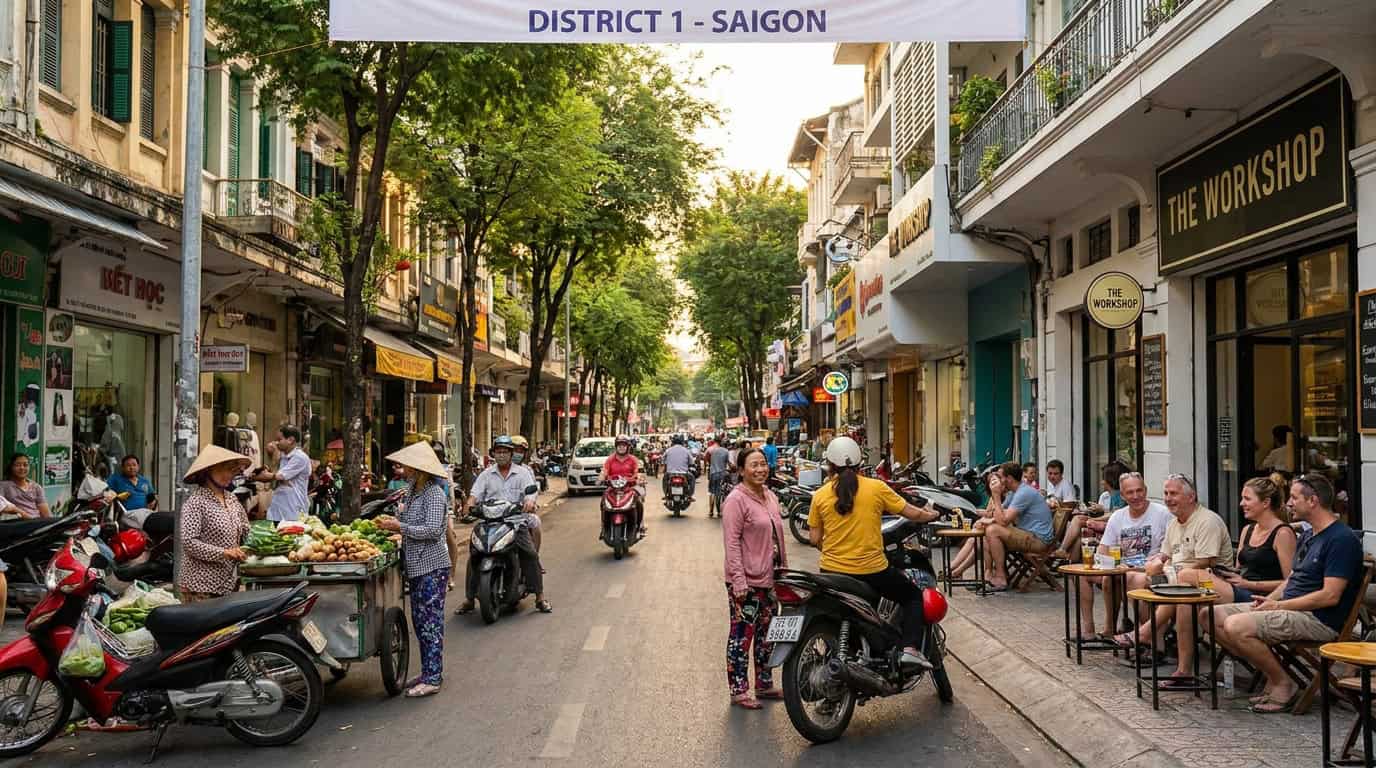
The honest assessment: Da Nang works well for remote workers, freelancers, early-career ESL teachers, and expats with location-independent income. For those who need a local job market with depth — senior roles, promotions, headhunters, competitive salaries — the city simply cannot match HCMC or Hanoi. It is a great city to live in Vietnam, but career progression is limited by market size.
Cost of Living: How the Three Cities Stack Up
Cost comparisons between Vietnamese cities shift constantly, but the broad hierarchy holds. Da Nang is cheapest, Hanoi sits in the middle, and HCMC commands a premium — particularly for serviced apartments and international schooling. According to Numbeo’s 2025 Cost of Living Index, Ho Chi Minh City ranks notably more expensive than Da Nang for housing, though both remain far below comparable Southeast Asian capitals like Singapore or Bangkok.
- HCMC: Higher rents in central districts (D1, D2/Thu Duc, D3, Binh Thanh), but offset by higher salaries and more career upside.
- Hanoi: Comparable rents to HCMC in premium areas (Tay Ho, Ba Dinh), slightly lower in mid-market neighbourhoods.
- Da Nang: Cheapest of the three for housing and dining; beach-view apartments at a fraction of Saigon pricing.
For most career-focused expats, the HCMC salary premium more than absorbs the cost differential. A regional manager role in HCMC routinely commands 20–40% higher compensation than the same title in Da Nang.
Visa, Work Permits, and Business Setup
Vietnam’s work permit and business registration ecosystem is largely national — the rules don’t differ significantly between cities. However, the practical experience does. HCMC has the most immigration lawyers, APEC card consultants, and business registration agents with experience serving foreign nationals. Processing times for work permits and temporary residence cards tend to be faster in HCMC simply because the volume creates specialised service providers who know every procedural nuance.
According to the Ministry of Planning and Investment, Ho Chi Minh City attracted over 6.4 billion USD in registered foreign direct investment in 2024, accounting for a disproportionate share of national FDI — a figure that reflects not just capital but the accompanying wave of expat professionals managing those investments.
International Schools and Family Expat Life
Families with school-age children frequently cite international schooling as a deciding factor when choosing the best city to live in Vietnam. HCMC leads comprehensively here. The city hosts the British International School, the American School, the Australian International School, Canadian International School, and dozens of smaller international programmes. Competition for places is real — particularly at top-tier schools — but options exist at every price point.
Hanoi also has a solid international school sector, particularly in the Tay Ho expat enclave. Da Nang’s international school options are more limited, which is a meaningful constraint for families with children in secondary education.
Healthcare Quality for Expats
Private healthcare for expatriates in Vietnam has improved dramatically over the past decade. HCMC leads with the broadest range of internationally accredited hospitals: FV Hospital (French-Vietnamese), Vinmec, City International Hospital, and several others accept international insurance directly and maintain English-speaking specialist teams across most departments. For serious or complex conditions, HCMC is also closest to Bangkok and Singapore for medical evacuation if needed.
Hanoi’s Tay Ho and Ba Dinh districts have good private clinic coverage, and the city’s Vinmec International Hospital is highly regarded. Da Nang has improved significantly but remains the weakest of the three for specialist care — most expats with serious conditions travel to HCMC or Bangkok.
Lifestyle, Food, and Social Scene
All three cities deliver an exceptional food culture — Vietnam is one of the great culinary destinations globally — but the social scene diverges sharply. HCMC has the densest expat community, the most active networking events (AmCham, EuroCham, BritCham all maintain busy calendars), and the broadest range of nightlife, dining, and weekend activities. The city never really stops.
Hanoi has a more intimate, slower-paced expat scene centred on Tay Ho’s West Lake neighbourhood. The cultural depth is genuine — French colonial architecture, Hoan Kiem Lake, and the Old Quarter provide a living-history backdrop that HCMC’s fast-moving urbanism doesn’t match. Da Nang’s social scene is smaller still, but beach culture, surfing, and easy weekend access to Hoi An and Hue compensate for the lack of metropolitan energy.
For the expat who wants to work hard and play hard in the same city, HCMC remains the most complete option and the best city to live in Vietnam for that combination.
Connectivity and Transport
Tan Son Nhat International Airport in HCMC handles more international routes than either Noi Bai (Hanoi) or Da Nang International. For expats who travel frequently for business — a common profile in regional roles — this matters. HCMC has direct connections to every major Southeast Asian hub, as well as frequent services to Hong Kong, Seoul, Tokyo, and major Chinese cities.
Hanoi’s Noi Bai is also well-connected internationally, particularly for routes to Northeast Asia. Da Nang’s airport has grown significantly but remains primarily regional with some direct international services. Within Vietnam, the train and domestic air network connects all three cities quickly — a Da Nang base with frequent flights to HCMC is a genuine option for some remote-working expats who value beach living over CBD proximity.
The Startup and Tech Ecosystem
Vietnam’s startup scene is concentrated in HCMC. The city is home to Vietnam’s largest unicorns (VNG, VNPay, MoMo), the most active VC community, and the densest cluster of accelerators and co-working spaces. Toong, Dreamplex, and Regus all maintain premium co-working facilities in District 1 and adjacent areas. The annual TECHFEST Vietnam and the Saigon Innovation Hub underpin a collaborative ecosystem that has attracted regional venture capital attention from Sequoia Capital Southeast Asia, Do Ventures, and others.
Hanoi has a growing tech scene, particularly around VinGroup’s technology subsidiaries and a number of government-backed innovation initiatives. Da Nang’s tech community is active but smaller — it punches above its weight for outsourcing but hasn’t yet produced consumer tech at scale. For expats building or joining early-stage companies, HCMC offers the deepest pool of co-founders, investors, and early customers.
Which City Is Right for You?
The best city to live in Vietnam depends entirely on what you’re optimising for. Here’s a simple framework:
- Choose HCMC if you’re in finance, FMCG, tech, logistics, startups, professional services, or any role that benefits from the largest urban economy in Vietnam.
- Choose Hanoi if your work is in government relations, international development, education, or if you strongly prefer a slower-paced city with rich cultural character.
- Choose Da Nang if you work remotely, value beach lifestyle, want to stretch your budget, or are in the early career stage without dependents.
For the majority of career-focused expats, HCMC’s combination of job density, salary levels, international infrastructure, and lifestyle quality makes it the clear answer. It is the best city to live in Vietnam for anyone whose career is the primary consideration.
You May Also Find Useful
- Best City to Live in Vietnam for Expats 2026: Da Nang vs Da Lat vs Hanoi vs Saigon
- Vietnam Best City for Expats: 2026 Ranking Across 6 Key Criteria
- Best Districts to Live in Ho Chi Minh City for Expats: District-by-District Guide
- International Health Insurance for Expats in Vietnam: Best Plans and Costs 2026
Frequently Asked Questions
Is Ho Chi Minh City or Hanoi better for expats?
Ho Chi Minh City is generally better for career-focused expats due to its larger private sector, higher concentration of multinational companies, and more active startup ecosystem. Hanoi is preferred by expats working in government, NGOs, education, or diplomatic roles. HCMC also has more international school options and a broader expat social scene.
What is the best city to live in Vietnam for quality of life?
Da Nang frequently tops quality-of-life surveys for Vietnamese cities, thanks to its beaches, manageable traffic, clean environment, and lower cost of living. However, for expats who need a strong job market alongside a good lifestyle, HCMC offers the most complete package — especially in District 1 and surrounding central districts.
How much does it cost to live in Ho Chi Minh City as an expat?
A comfortable expat lifestyle in HCMC — including a serviced apartment in a central district, international health insurance, dining out regularly, and occasional travel — typically costs between $2,000 and $4,500 USD per month depending on accommodation standards and lifestyle choices. Senior expat packages from employers often cover housing and schooling on top of salary.
Is Vietnam a good place to build a career as a foreign national?
Vietnam is increasingly attractive for expat careers, particularly in management, technology, finance, education, and entrepreneurship. The country’s sustained GDP growth, young workforce, and expanding FDI make it one of the most dynamic career environments in Southeast Asia. Work permits are required for most roles but are generally obtainable with the right documentation and an employing company sponsor.
Which Vietnam city has the most job opportunities for English-speaking expats?
Ho Chi Minh City has by far the most job opportunities for English-speaking expats. The city’s CBD and surrounding districts host the regional offices of hundreds of multinationals, a thriving startup scene, and the full range of professional services firms. Job boards like VietnamWorks, LinkedIn Vietnam, and Navigos Group all list significantly more roles in HCMC than in Hanoi or Da Nang.
Official Resources
For the most up-to-date information on best city to live in vietnam, visit the Vietnam Tourism Official Guide.