Where to stay in Saigon depends on whether you prioritize walkability, nightlife, family calm, office access, or monthly value.
If you’re deciding where to stay in Saigon, the short answer is: District 1 for first-timers who want everything within walking distance, District 3 for a quieter but still central base, and Thao Dien (District 2) for long-stay expats who want green streets and brunch spots. Every other district in Ho Chi Minh City has its own logic, and getting the match right between neighbourhood personality and your travel style makes the difference between a trip you forget and one you tell people about for years.
Key Takeaways
- District 1 (Ben Nghe / Pham Ngu Lao) is the best all-round base for first-time visitors: highest walkability, most accommodation choice, and direct access to Saigon’s top landmarks.
- According to the Vietnam National Administration of Tourism, Ho Chi Minh City welcomed over 5 million international visitors in 2024, with District 1 absorbing the majority of hotel and serviced-apartment bookings.
- District 3 and Binh Thanh offer a local residential feel at 20-40% lower nightly rates than comparable District 1 properties.
- Long-stay travellers (14+ nights) save significantly in serviced apartments versus hotels – kitchens, laundry access, and extra space shift the economics fast.
- Thao Dien (Thu Duc City, former District 2) is the expat heartland: international schools, co-working spaces, and a riverside cycling path make it ideal for remote workers.
Why Where You Stay in Saigon Changes Your Entire Experience
Ho Chi Minh City covers 2,061 square kilometres and holds more than 9 million residents across 22 districts. That scale matters. A hotel in Binh Chanh on the western fringe puts you 45 minutes from the Reunification Palace by taxi; a serviced apartment on Bui Vien Street puts you five minutes from it on foot. Distance in Saigon is not just about kilometres. Traffic turns a 10 km journey into a 40-minute ordeal during peak hours (7-8:30 am and 5-7 pm daily). Choosing the right district is arguably the most important logistical decision of your trip.
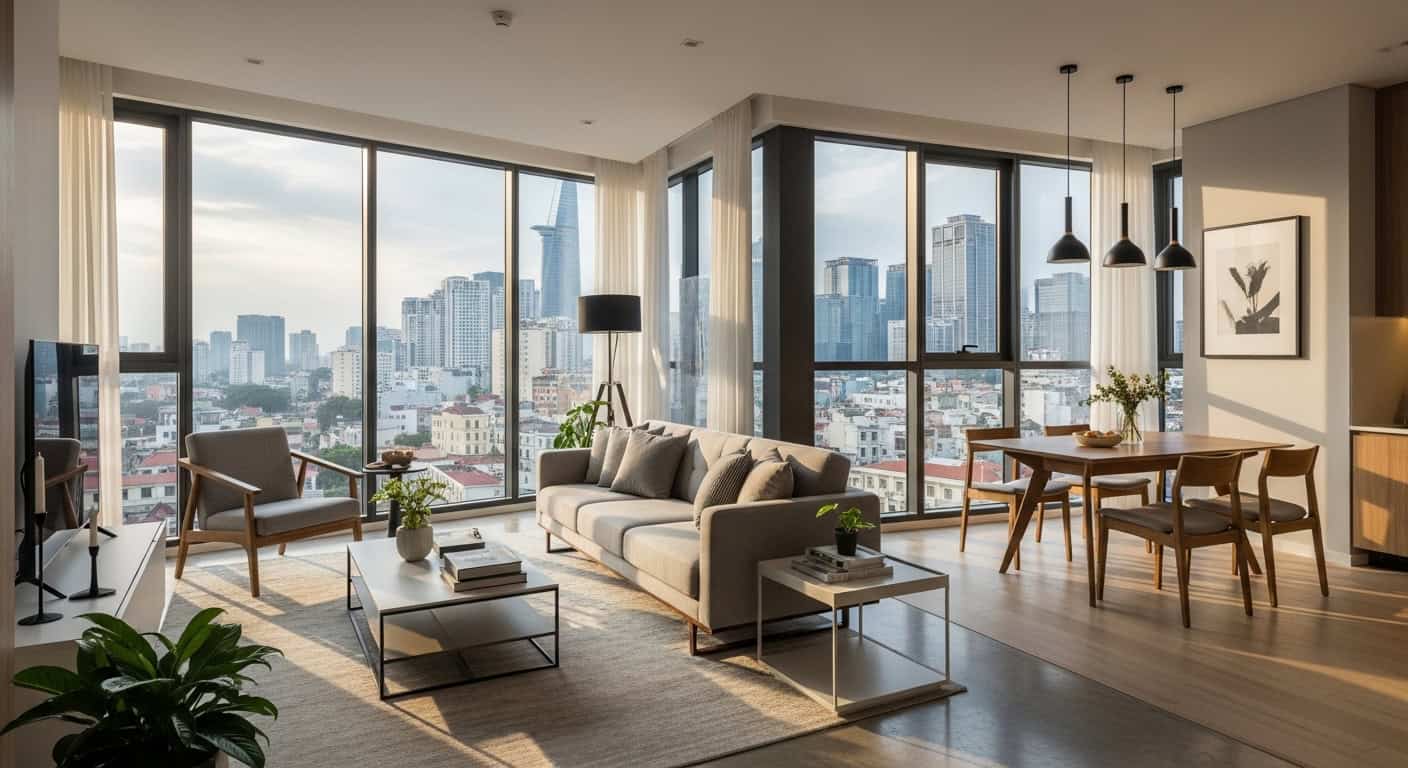
The city is split by the Saigon River. The west bank – Districts 1, 3, 4, 5, Binh Thanh, Phu Nhuan – holds the historic core and most tourist infrastructure. The east bank, now consolidated into Thu Duc City, includes the expat enclave of Thao Dien and the rapidly developing An Phu area. Both sides have very different energies, price points, and transport options.
Where to Stay in Saigon: District 1 – The Obvious Choice (With Good Reason)
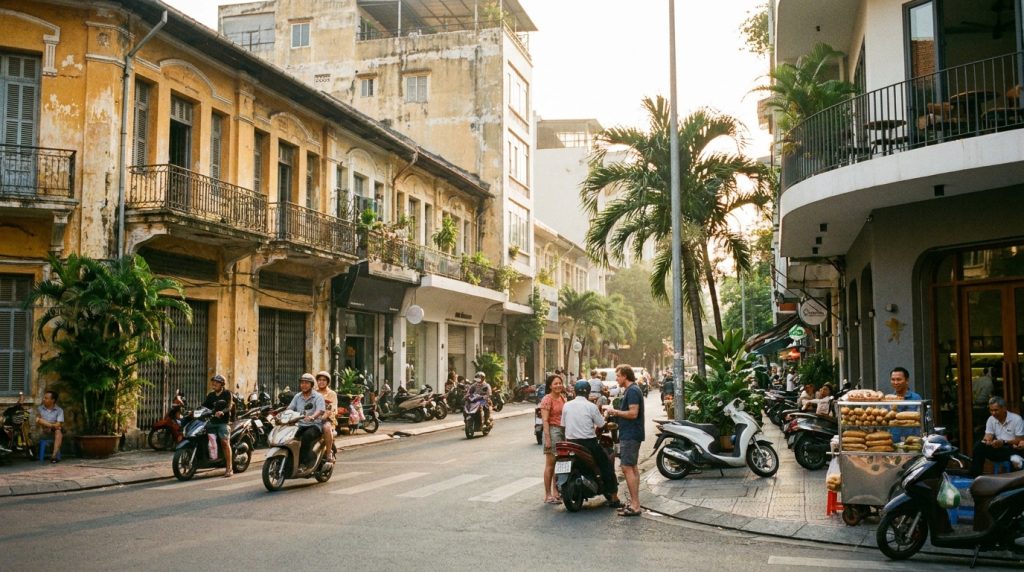
District 1 is where Saigon performs for visitors. The Reunification Palace, Ben Thanh Market, the Notre-Dame Cathedral, the Opera House, Dong Khoi Street designer boutiques, and the rooftop bars overlooking the river are all within a 2 km radius. For anyone visiting for fewer than seven nights and wanting maximum efficiency, nothing competes.
The district divides neatly into two zones. Ben Nghe ward (Dong Khoi, Le Loi, Nguyen Hue boulevards) is the upscale commercial core: five-star hotels, French-colonial architecture, and business-class restaurants. Pham Ngu Lao ward – the backpacker district – runs two streets west and offers budget guesthouses, cheap Vietnamese street food, and lively evenings at a fraction of the price.
Every district in Saigon has a personality. District 1 has the most – and a serviced apartment there lets you live it rather than visit it. See serviced apartments vs hotels in Saigon to compare your options.
Best for: First-time visitors, business travellers, short stays, anyone who wants to walk everywhere.
Budget range: Hostels from $10/night; mid-range hotels $45-$100; serviced apartments from $70/night; luxury from $150+.
Find your District 1 stay on the map
Live prices from Booking.com, Vrbo and more. Move the map or change dates to compare stays.
District 3: The Best-Kept Neighbourhood for Longer Stays
District 3 sits immediately north of District 1 and shares its walkability without the tourist-area pricing. The streets around Vo Thi Sau, Nam Ky Khoi Nghia, and Nguyen Dinh Chieu are lined with old French villas converted into independent cafes, family pho restaurants, and local wine bars. It is what people mean when they say they want to live like a local in Saigon – except the infrastructure (ATMs, pharmacies, Grab delivery times, English menus) is still excellent.
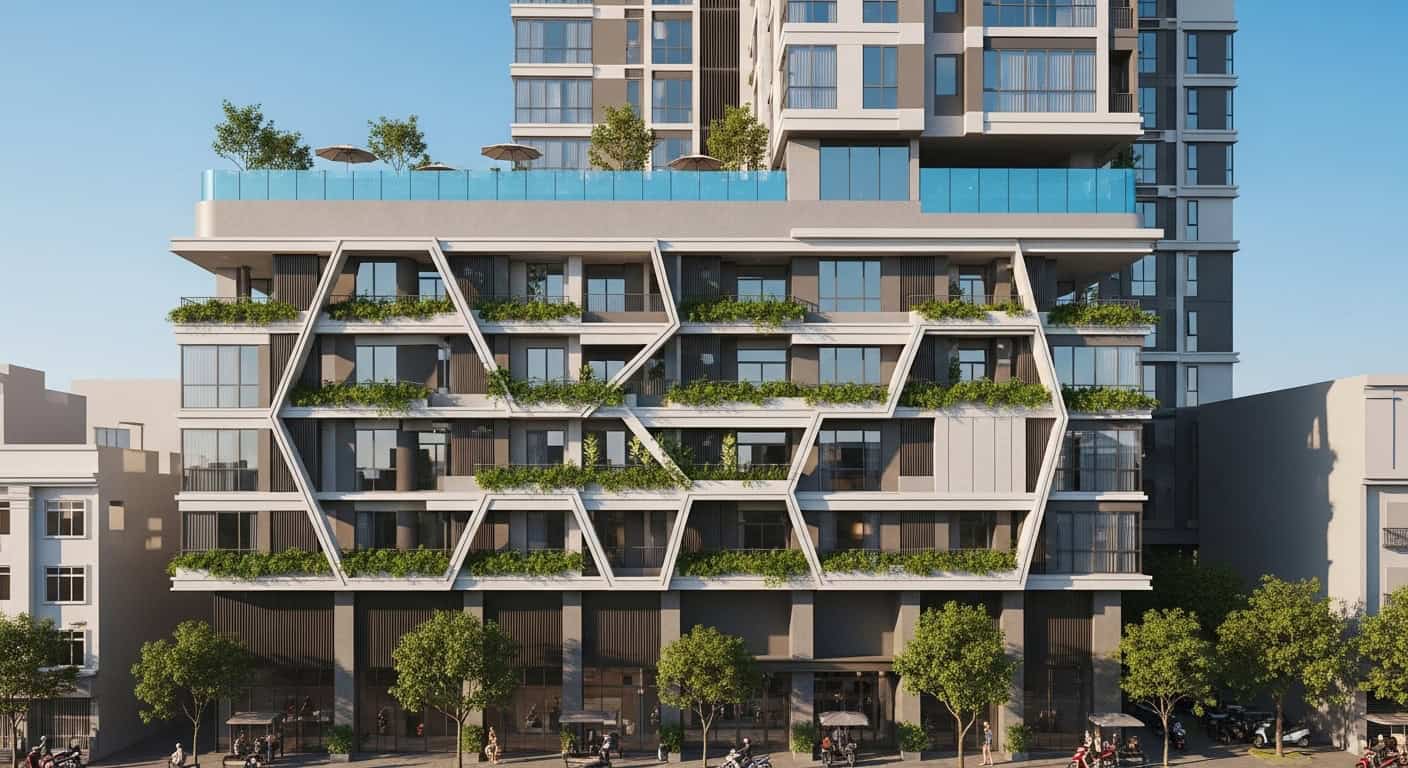
Nightly rates for a clean mid-range room in District 3 run 20-35% below comparable District 1 options. A serviced apartment here with a full kitchen, weekly cleaning, and reliable Wi-Fi typically comes in at $600-$900 per month – the sweet spot for digital nomads on a 30-90 day stay.
Worth considering: Switching from a District 1 hotel to a District 3 serviced apartment after your first week keeps the same landmark access (District 1 is one Grab ride away) with significantly lower noise levels and a much stronger sense of neighbourhood rhythm: morning banh mi vendors, evening chess games on the pavement, weekend markets at Ky Hoa park.
Best for: Repeat visitors, digital nomads, couples, anyone staying 7+ nights.
Budget range: Budget guesthouses $20-$35; mid-range hotels $50-$90; serviced apartments $800-$1,500/month.
Thao Dien and An Phu (Thu Duc City): Where the Expat Community Lives
Thao Dien is the most internationally oriented residential neighbourhood in Ho Chi Minh City. According to a 2025 CBRE Vietnam report on the HCMC residential market, Thu Duc City – which absorbed the former District 2 including Thao Dien – recorded the highest per-capita foreign demand for long-term leasing in Vietnam in 2024, driven by the concentration of international schools, co-working infrastructure, and riverside amenities.
What makes Thao Dien work for longer stays: a riverside cycling and jogging path along the Saigon River, a concentration of international schools (British, Australian, American curricula) within 3 km, over 40 co-working spaces and cafes with reliable fibre connections, and a restaurant scene that genuinely competes with Singapore expat enclaves. The tradeoff is distance – you are 25-35 minutes from District 1 by car, which makes spontaneous evening trips to Ben Thanh or the bar district less likely.
Best for: Expat families, long-term relocation, remote workers with school-age children, anyone prioritising green space over proximity to tourist sites.
Budget range: Apartments from $1,200/month; villas from $3,000/month; serviced apartments $900-$1,800/month.
District 4: Hidden Value One Bridge From the Action
Separated from District 1 only by the Kinh Te Canal – crossable in under three minutes – District 4 is one of Saigon’s most underrated stay options. The neighbourhood around Vinh Khanh Street has evolved into a serious street-food corridor: grilled seafood, bun rieu, banh xeo. Saigon residents visit specifically for the food, not just to tick a box. Accommodation here is predominantly local-market guesthouses and a growing number of boutique apartments targeting price-conscious travellers who still want central access.
The absence of large international hotels keeps District 4 off most visitor radars, which is precisely its value. Grab rides to District 1 landmarks cost 15,000-25,000 VND (under $1). Night market culture thrives here in a way it does not in the more polished parts of town.
Best for: Budget-conscious travellers who want character over convenience, food tourists, solo backpackers.
Budget range: Guesthouses $15-$30/night; boutique apartments $35-$60/night.
Binh Thanh District: Mid-Range Value With Fast Access to Both Banks
Binh Thanh sits north of District 1, hugging the Saigon River west bank, and connects to Thao Dien via the Binh Trieu and Binh Loi bridges. It is a transitional neighbourhood – more residential than tourist, but close enough to the centre (15 minutes to Ben Thanh by taxi outside peak hours) to work as a solid base for active visitors.
The Landmark 81 tower, Vietnam’s tallest building, anchors the district southern tip, drawing a strip of modern serviced apartments and lifestyle retail. For families visiting with children, the combination of Landmark 81’s observation deck, Vinpearl Aquarium, and the adjacent riverside park creates a more self-contained holiday environment than the chaotic District 1 streets.
Best for: Families, mid-range travellers who want modern amenities, visitors combining CBD business with leisure.
Budget range: Apartments $600-$1,200/month; hotels $55-$120/night.
District 5 (Cholon): Saigon Chinatown for Cultural Immersion
Cholon – big market in Cantonese – is one of Southeast Asia’s largest and most historically layered Chinatowns. The Thien Hau Temple, Binh Tay Market, and the dense network of wholesale trading streets have remained largely unchanged for generations. Visitors who base themselves here get a completely different city than the one sold in most guidebooks: Saigon without the tourist veneer.
Accommodation options are limited compared to District 1 – mostly mid-range Chinese-Vietnamese guesthouses and a handful of boutique hotels – but the food alone justifies the location. Dim sum breakfasts, congee vendors from 6 am, and roast-meat restaurants that open at midnight for the night-shift crowd mean you eat extremely well for a fraction of what the same quality costs in Ben Nghe.
Best for: History and culture enthusiasts, repeat visitors wanting a new angle, food-focused travellers.
Budget range: Guesthouses $20-$45/night; mid-range hotels $50-$85/night.
Where to Stay in Saigon on a Budget: Full Price Breakdown
Understanding actual accommodation costs across Saigon prevents the two most common mistakes: overpaying in District 1 for a location premium you do not need, or underpaying in a remote district and spending the difference on transport and lost time.
- Under $30/night: Pham Ngu Lao (District 1), District 4, and Binh Thanh all have clean hostel dorms and basic guesthouses. Pham Ngu Lao is the best value within this bracket – central-location advantage without the full hotel price.
- $30-$70/night: The widest choice band. District 3 wins here – boutique hotels, clean mid-range accommodation, and serviced studio apartments cluster in this range at excellent quality for the price.
- $70-$150/night: Serviced apartments with full amenities in Districts 1, 3, and Binh Thanh, plus mid-range international chain hotels in District 1. At this price point, a serviced apartment almost always beats a hotel room on stays of 4+ nights.
- $150+/night: Luxury hotels in District 1 (Caravelle, Park Hyatt, Sofitel) and high-end serviced residences in Thao Dien. The pool, concierge, and address are real differentiators at this level.
One practical note from regular observation: the listed nightly rate for a serviced apartment almost always drops 15-25% if you ask about a weekly or monthly rate directly, even for stays as short as five nights. Hotels rarely offer this. It is one of the structural advantages of the serviced-apartment model that does not show up on booking platforms.
Serviced Apartments vs Hotels in Saigon: What the Data Shows
According to CBRE Vietnam’s 2025 Ho Chi Minh City residential market report, the serviced apartment sector recorded an average occupancy rate of 84% in 2024, outperforming the broader hotel sector by 11 percentage points. The report attributes this to growing demand from long-stay business travellers and a structural shift toward live-work-stay arrangements across major Vietnamese cities.
For visitors, the practical difference comes down to three factors: kitchen access (eliminates one meal spend per day, saving $8-$20 daily), laundry (saves $5-$15 per hotel laundry cycle), and space (a standard serviced studio is typically 35-45 sqm versus 20-25 sqm for a comparable hotel room). On a two-week stay, those differences compound into a significant cost and comfort advantage.
The tradeoff is that serviced apartments rarely include daily housekeeping, 24-hour room service, or concierge infrastructure. For business travellers who need those services, the hotel model still wins. For everyone else – especially anyone staying longer than five nights – the maths favour serviced apartments almost every time.
How to Choose Where to Stay in Saigon: Framework by Travel Style
Matching neighbourhood to purpose is more useful than matching neighbourhood to budget. Here is the framework residents actually use when advising first-time visitors on where to stay in Saigon:
- First visit, 3-7 nights: District 1 (Ben Nghe or Pham Ngu Lao). You want landmarks, restaurant choice, and the ability to walk everywhere. Pay the location premium – worth it once.
- Return visit or 7-14 nights: District 3 or southern Binh Thanh. You already know what District 1 looks like. Now you want to eat where locals eat and take taxis to the landmarks.
- Long stay, 30+ nights or relocation: Thao Dien, An Phu, or Phu Nhuan depending on whether you prioritise expat infrastructure or local residential feel.
- Business travel: District 1 (Ben Nghe corporate zone) or near Phu My Hung in District 7 if your meetings are in the south of the city.
- Family with young children: Binh Thanh near Landmark 81, or Thao Dien for international school access and parks.
- Food tourism: Split your stay – a few nights in District 4 for Vinh Khanh seafood, a few nights in District 5 for Cholon dim sum, and base yourself in District 1 for the rest.
You May Also Find Useful
Rates in Ho Chi Minh City move a lot by season and by district. It is worth comparing current availability on Booking.com and Agoda before committing to anything.
Frequently Asked Questions
Where is the best area to stay in Saigon for first-time visitors?
District 1, specifically the Ben Nghe and Pham Ngu Lao wards, is the best starting point. The Reunification Palace, Ben Thanh Market, and the riverside promenade are all walkable. The Vietnam National Administration of Tourism reports that District 1 accounts for more than 60% of international visitor accommodation bookings in HCMC, reflecting consistent demand across all traveller types and budget levels.
Is it safe to stay in District 1 Saigon?
District 1 is safe for tourists by any standard measure. Petty theft – phone snatching from scooters, bag grabs in crowded markets – does occur as in any dense urban tourist district. Keep bags on the kerb-side, use inside pockets for valuables, and avoid displaying expensive cameras or phones at ground level on busy streets. The area is well-lit and heavily policed throughout the central zone.
Where should expats and digital nomads stay in Saigon long-term?
Thao Dien (Thu Duc City) and District 3 are the two most consistent recommendations. Thao Dien offers the best expat infrastructure – international schools, co-working hubs, a riverside cycling path, and a dense restaurant scene. District 3 offers a more Vietnamese residential experience at lower cost, with excellent central access. Both areas have reliable fibre internet in most modern apartment buildings.
What is the cheapest district to stay in Saigon without sacrificing safety?
District 4 and the Pham Ngu Lao area of District 1 both offer clean, safe accommodation from $15-$25/night. District 4 edges it for value – guesthouses here are slightly cheaper than comparable District 1 options, and the short bridge crossing keeps you connected to all central landmarks within a $1 Grab ride. The Vinh Khanh street-food strip is also one of the best free evening activities in the city.
How far in advance should I book accommodation in Saigon?
For peak season (December-January, late April around Vietnamese holidays, and the July-August foreign-visitor peak), book District 1 properties at least 3-4 weeks ahead. According to Agoda’s 2025 Southeast Asia booking window data, HCMC saw a 28% increase in advance booking lead time versus 2023, driven by tighter supply in the premium serviced-apartment segment. Outside peak periods, 7-10 days is typically sufficient.
The Bottom Line on Where to Stay in Saigon
Deciding where to stay in Saigon comes down to an honest assessment of what you will actually do each day. If you are spending your mornings at the War Remnants Museum and your evenings on a rooftop bar, pay for District 1 proximity – you will use every metre of it. If you are here for a month with a laptop and a curiosity about how Vietnamese urban life works, District 3 or Thao Dien will give you a richer experience at lower cost than any tourist-zone hotel.
The city rewards preparation. Traffic is real, distances are deceptive, and the neighbourhood you choose shapes every incidental experience – the coffee shop where you work for a morning, the pho stall you visit three times a week, the street market you pass on the way back from a meeting. Getting that neighbourhood right is not just a logistics decision. It is a quality-of-stay decision.
Use this guide, pick your district with intention, and Saigon will take care of the rest.
Official Resources
For the most up-to-date information on where to stay in saigon, visit the Vietnam Tourism Official Guide.