
The vietnamese sandwich banh mi is one of the most flavour-packed street foods on earth — a crusty French baguette stuffed with layers of savoury pork, pickled daikon, fresh herbs, and fiery chilli that somehow costs less than a cup of coffee back home. If you are arriving in Ho Chi Minh City for the first time, or if you have lived here for years and still want to understand what makes this sandwich so special, this guide covers everything: history, ingredients, the best stalls in each district, and how to order like a local.
Key Takeaways
- Banh mi is a direct legacy of French colonialism — the baguette arrived in Vietnam in the late 19th century and was fully transformed into a distinctly Vietnamese street food by the 1950s.
- The classic HCMC version contains pâté, chả lụa (pork roll), pickled daikon and carrot, cucumber, coriander, spring onion, and Maggi sauce — each vendor adds their own twist.
- According to the Michelin Guide 2024, banh mi stalls in Vietnam are among the most-recognised street-food categories in Southeast Asia.
- A great banh mi in District 1 costs 15,000–30,000 VND (under one US dollar) and is ready in under two minutes.
- Gluten-free and vegan versions are increasingly available across HCMC, making the vietnamese sandwich banh mi accessible to nearly every dietary preference.
The History Behind the Vietnamese Sandwich Banh Mi
The story of banh mi is inseparable from Vietnam’s colonial history. French administrators introduced wheat-flour bread — the baguette — to southern Vietnam in the 1860s. For decades it remained a food of the colonial elite, eaten plain or with butter and jambon. Everything changed in Saigon during the 1950s when street vendors began improvising. They hollowed out the baguette to reduce dough weight (making it cheaper and lighter to carry), then filled it with whatever protein they had — leftover cold cuts, liver pâté, and scraps of pork. Pickled vegetables, Vietnamese herbs, and a splash of Maggi or soy sauce completed the transformation.
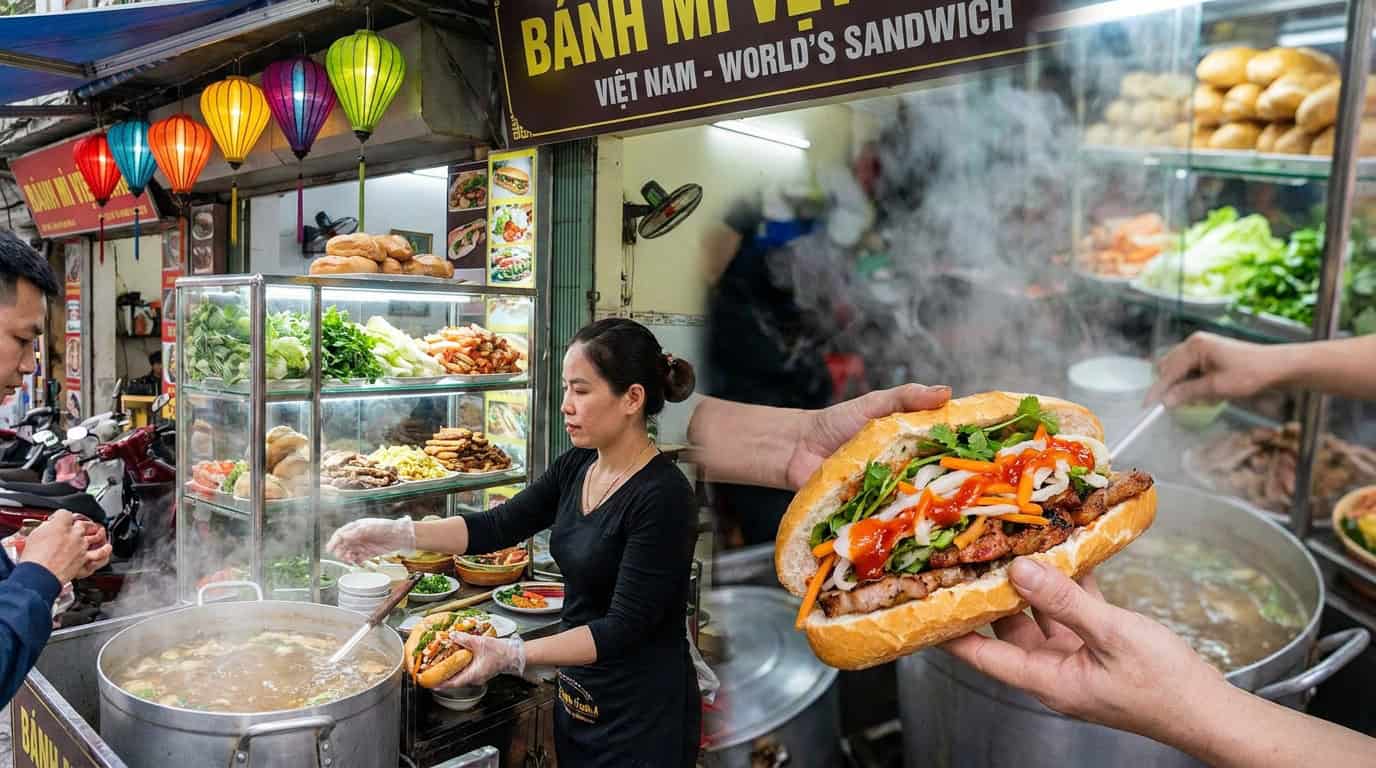
By the time South Vietnam fell in 1975, banh mi had become a defining food of Saigon’s streets. Vietnamese refugees carried the sandwich to the United States, Australia, and France, where it gained its first international following. Today the term “banh mi” appears in the Oxford English Dictionary, and the sandwich is recognised globally as one of the great street foods of the world.
Anatomy of a Perfect Vietnamese Sandwich Banh Mi
Understanding the components helps you judge quality quickly when you are standing in front of a street cart at 7 am.
The Bread
The baguette used for banh mi is not identical to a Parisian baguette. HCMC bakers use a mix of wheat and rice flour, producing a thinner, crispier crust with a lighter, airier crumb. The ideal loaf shatters audibly when you bite into it — if it is chewy or soft, the bread has been sitting too long or was never baked right.
The Protein Layer
Most classic HCMC-style banh mi contain several proteins simultaneously. Chả lụa is a steamed, garlic-scented pork roll sliced thin. Thịt nguội refers to Vietnamese cold cuts — head cheese, pork belly, or Vietnamese ham. Liver pâté (pa-tê) is spread directly onto the bread for richness. Many carts also add a fried egg, grilled pork (thịt nướng), or flaked fish for variety.
The Pickles and Freshness
Do chua — a quick-pickled mix of shredded daikon and carrot — is non-negotiable. It provides acidity and crunch that cuts through the fat. Sliced cucumber adds cool freshness, while a generous handful of coriander and spring onion brings herbal brightness. Sliced fresh chilli or a squeeze of house-made chilli sauce completes the build.
The Sauce
Maggi seasoning sauce is the classic condiment — a few drops add an umami depth that ties everything together. Some vendors use homemade fish-sauce caramel or a light soy-based drizzle instead.
Regional Variations Across Vietnam
The vietnamese sandwich banh mi looks different depending on where in the country you eat it. HCMC’s version is the richest — loaded with multiple proteins and sauces. Hoi An’s banh mi is equally famous; the bread there is slightly softer and the fillings tend towards pork belly and a house sauce that blends peanuts and soy. Hanoi’s bánh mì is less common as a street staple (the north favours pho and bun cha for breakfast) but where it exists, expect plainer fillings and fewer herbs. Da Nang sits between the two styles — generous portions, good bread, priced even lower than HCMC.
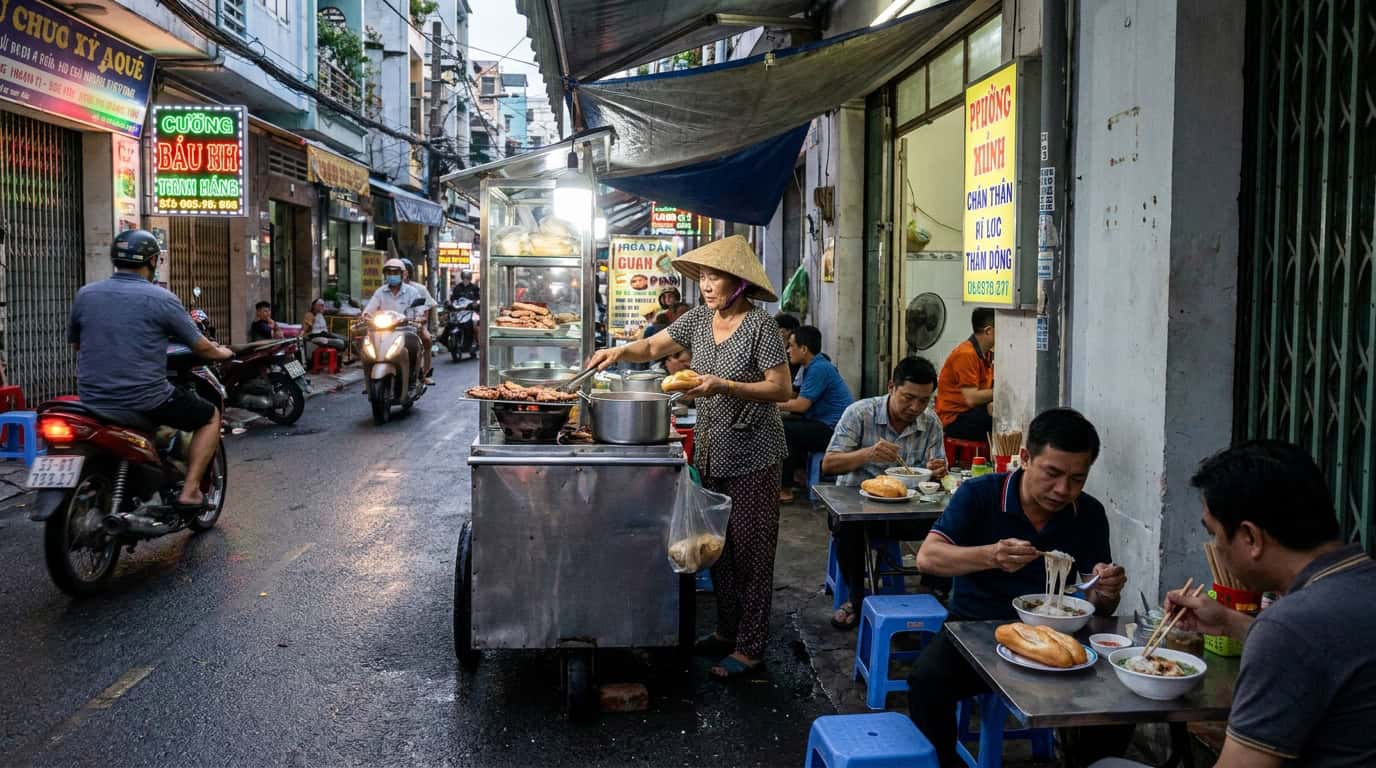
If you are based in Ho Chi Minh City, the Saigon style is the benchmark, and it is the one most international visitors mean when they say “the best banh mi I ever ate.”
Where to Eat Vietnamese Sandwich Banh Mi in Ho Chi Minh City
HCMC has thousands of banh mi carts and shopfronts. These are the addresses consistently praised by residents, not tourists.
District 1 (Central)
Banh Mi Huynh Hoa on Le Thi Rieng Street is the most famous standalone shop in the city. Queues form by 6 am. The portions are enormous — two pieces of every protein — and the bread is baked fresh several times a day. A great banh mi costs less than a dollar in D1 and takes two minutes to eat on your walk to the coworking space.
Banh Mi 37 Nguyen Trai is another D1 institution, popular with office workers for its clean flavours and fast service.
District 3
Banh Mi Phuong (a branch of the Hoi An original) operates here with its signature pork belly and peanut sauce. It is slightly pricier than a street cart but the consistency is excellent.
Binh Thanh and Phu Nhuan
These residential districts are where locals buy banh mi from neighbourhood carts at 6–7 am. There are no famous names — just generations of families who have been baking and filling since before you arrived. Walk any main street between 6 and 8 am and follow the smell of fresh bread.
How to Order Banh Mi Like a Local
Most vendors speak no English. These three phrases cover 95 percent of ordering situations.
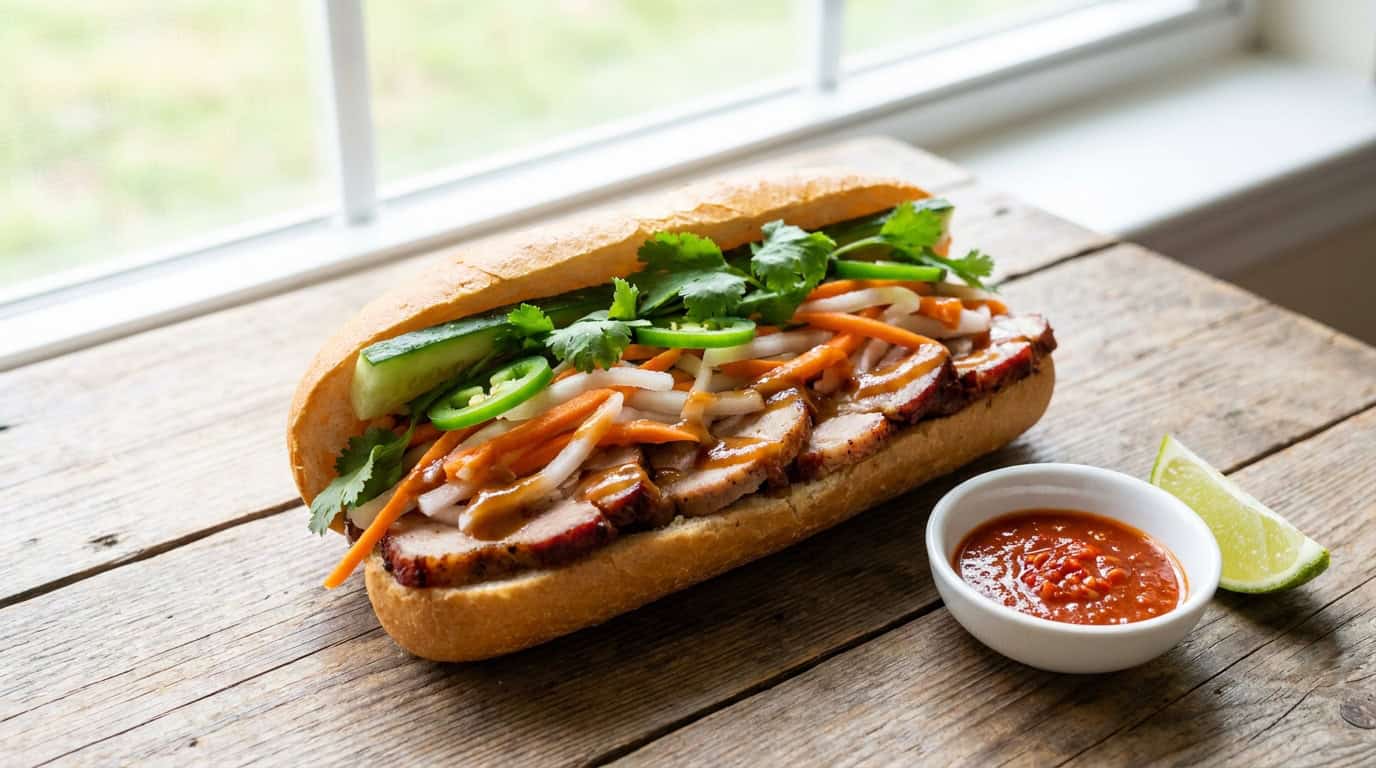
- “Một bánh mì đặc biệt” — one special banh mi (the full build, all proteins).
- “Không hành” — no spring onion, if you prefer.
- “Thêm ớt” — extra chilli, said with a smile.
Point at the cart’s display board if unsure. Most vendors are used to travellers and will build you something good even with zero shared language. Pay after you receive your sandwich — it is almost always a round number between 15,000 and 35,000 VND.
Nutritional Profile of the Vietnamese Sandwich Banh Mi
A standard full-protein banh mi (roughly 200 g) provides approximately 350–420 calories, 18–22 g of protein, 14–18 g of fat, and 38–44 g of carbohydrates. The pickled vegetables add negligible calories but meaningful amounts of fibre and probiotic bacteria. Sodium is relatively high — 700–900 mg — due to the pâté, cold cuts, and Maggi sauce, so if you are watching salt intake you can ask for light sauce (ít nước tương).
Compared to a Western-style deli sandwich of similar size, banh mi is generally lower in calories because the bread is lighter and the filling relies more on vegetables and lean pork than on heavy cheese or thick mayonnaise.
Banh Mi for Special Diets
The vietnamese sandwich banh mi has evolved to meet a wider range of diets than it once did.
Vegetarian and Vegan Banh Mi
Buddhist-oriented vegetarian stalls (quán chay) in HCMC make excellent plant-based banh mi using mock meat, tofu, and mushroom pâté. The pickles and herbs remain the same, so the overall flavour profile is surprisingly close to the original. Ben Thanh Market area and the streets around Xa Loi Pagoda in District 3 have reliable chay banh mi options.
Gluten-Free Considerations
The bread itself contains wheat, so true coeliac-friendly banh mi is rare from street stalls. A few health-focused cafés in the expat areas of District 2 (Thu Duc) and Thao Dien now offer rice-flour gluten-free rolls on request. The fillings are naturally gluten-friendly if you skip the Maggi sauce (which contains wheat).
Banh Mi vs Other Vietnamese Street Foods: How It Fits Your Morning
According to a 2025 survey by the Vietnam National Administration of Tourism, banh mi ranked as the number-one street food recommended by foreign visitors to HCMC, ahead of pho and bun bo Hue. Its portability is the decisive advantage — unlike a bowl of soup, a vietnamese sandwich banh mi requires no seat, no chopstick skills, and no slurping in public. It is the definitive grab-and-go breakfast for a city that wakes up fast and moves faster.
Pho is the more nourishing cold-weather meal. Com tam (broken rice) is the midday staple. Banh mi owns the morning commute.
Making Vietnamese Sandwich Banh Mi at Home
If you are cooking outside Vietnam, the biggest challenge is the bread. Here is a workable approach.
- Bread: Substitute a light French baguette or find a Vietnamese bakery in your city. Do not use sourdough — it is too dense and sour.
- Pâté: Chicken liver pâté from a deli works well. Spread it thinly on one side of the cut bread.
- Protein: Thin-sliced roast pork, Vietnamese ham from an Asian supermarket, or char siu pork all work.
- Pickles: Mix equal parts rice vinegar and sugar with a pinch of salt, pour over shredded daikon and carrot, and leave for 20 minutes minimum.
- Finish: Cucumber strips, fresh coriander, sliced chilli, and a few drops of Maggi or light soy sauce.
The result will be a convincing reproduction. It will not be the same as eating a vietnamese sandwich banh mi at 7 am outside a Saigon bakery, but it will be better than anything sold as “banh mi” in most airport food courts.
Why Banh Mi Became a Global Food Phenomenon
According to Google Trends data published in 2024, global search interest in “banh mi” grew by over 180 percent between 2015 and 2024, outpacing nearly every other street-food category. Several factors drove this growth. Vietnamese diaspora communities in the US, Australia, and Europe opened dedicated banh mi shops that introduced the sandwich to non-Vietnamese customers. Food media — particularly YouTube travel channels and Instagram — spread images of the sandwich’s photogenic cross-section. And the price-to-flavour ratio is simply unbeatable: no other food delivers this much complexity for under one dollar.
High-profile endorsements accelerated the trend. Anthony Bourdain called banh mi one of the greatest sandwiches in the world on multiple occasions. Michelin Bib Gourmand recognition for several HCMC vendors in 2024 added institutional credibility to what locals already knew.
You May Also Find Useful
Frequently Asked Questions
What exactly is in a traditional Vietnamese sandwich banh mi?
A traditional banh mi contains a rice-wheat baguette spread with liver pâté and mayonnaise, then filled with chả lụa (steamed pork roll), Vietnamese cold cuts, pickled daikon and carrot, cucumber slices, coriander, spring onion, and fresh chilli. Maggi seasoning sauce is drizzled over everything before serving. Regional and individual vendor variations are enormous, but these components define the classic Saigon version.
How much does banh mi cost in Ho Chi Minh City?
A standard banh mi from a street cart costs between 15,000 and 25,000 VND — roughly 60 cents to one US dollar. Upmarket shopfronts with premium fillings like grilled beef or prawn charge 35,000–60,000 VND. Even at the top end, a vietnamese sandwich banh mi in HCMC is dramatically cheaper than equivalent street food in most other Asian cities.
What is the difference between banh mi in HCMC and Hoi An?
HCMC banh mi uses a crispier, lighter baguette and stacks multiple proteins (pâté, cold cuts, chả lụa) with abundant herbs. Hoi An’s version uses a slightly softer roll and typically features thick pork belly or braised pork with a distinctive peanut-soy house sauce. Both styles are outstanding; which is “better” depends on personal preference for texture and richness.
Can vegetarians eat banh mi in Vietnam?
Yes. HCMC has many Buddhist vegetarian (chay) stalls that serve excellent plant-based banh mi with tofu, mushroom pâté, and mock pork. These stalls are especially common near pagodas and in markets. The pickled vegetables, herbs, and bread are naturally vegetarian, so the switch to plant protein is seamless.
Is banh mi eaten for breakfast, lunch, or dinner in Vietnam?
Banh mi is primarily a breakfast and mid-morning snack food in southern Vietnam. Most dedicated stalls are busiest between 6 and 10 am. However, banh mi carts operate throughout the day and into the evening in tourist-heavy areas of HCMC, and banh mi thịt nướng (grilled pork) is common as a late-night snack after 9 pm near university districts.
Official Resources
For the most up-to-date information on vietnamese sandwich banh mi, visit the Vietnam Tourism – Food and Drink.