
The best month to visit Saigon is December — but only if you want the most comfortable weather, reliable sunshine, and a city buzzing with international visitors. If you want cheaper hotels, fewer crowds, and a more local experience, the answer changes completely. Most travel blogs pick a single month and move on. This guide breaks down every month of the year from the perspective of someone who actually lives here, so you can match your trip to what you actually want from Ho Chi Minh City.
Key Takeaways
- December through February is Saigon’s cool, dry peak season — ideal for first-time visitors who want reliable weather and festive atmosphere.
- The dry season runs November to April; the wet season runs May to October, but rain is mostly short afternoon showers, not all-day downpours.
- March and April are the hottest months (regularly above 35°C), with low humidity — a trade-off many visitors underestimate.
- The shoulder months of November and March offer the best value: good weather at lower peak-season prices.
- Tet (Lunar New Year, usually late January or February) shuts much of the city down — great for atmosphere, bad for restaurants and services.
Why Most Travel Blogs Get the Best Month to Visit Saigon Wrong
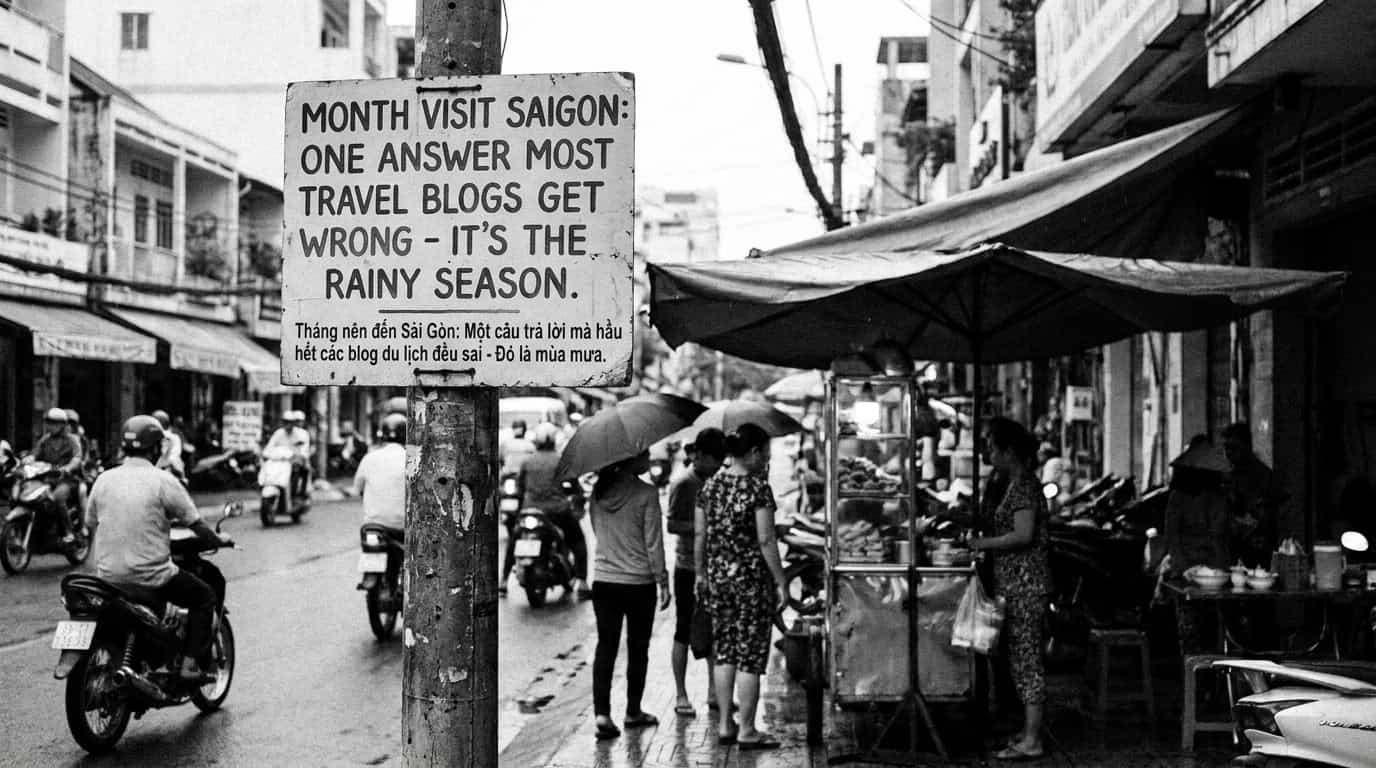
The standard advice is “visit in the dry season, avoid the wet season.” That oversimplification misses several important nuances. Saigon’s wet season is not like monsoon season in other parts of Southeast Asia. Rain typically falls in concentrated bursts — an hour or two of heavy afternoon rain — rather than grey, all-day drizzle. In practice, a rainy-season trip in June can be perfectly enjoyable, while a “peak season” trip in late February can coincide with Tet closures that catch first-timers completely off guard.
The better question is not simply “when is it dry?” but “what kind of trip do I want, and which month supports that?” That is the framework this guide uses.
Saigon’s Two Seasons: What They Actually Mean on the Ground
Ho Chi Minh City has a tropical monsoon climate with two distinct seasons:
- Dry season (November – April): Low humidity, abundant sunshine, temperatures ranging from 25°C at night in December to 38°C in the afternoon in April. This is the tourist high season, particularly December through February.
- Wet season (May – October): Higher humidity, daily afternoon thunderstorms, lush greenery, and temperatures that are actually slightly cooler than late dry season (typically 28–33°C). This is the local favourite period for many residents who find the post-rain air refreshing.
According to the Vietnam National Administration of Tourism, international arrivals to Ho Chi Minh City in Q4 2024 increased 18% year-on-year, with November and December accounting for the highest monthly inflow — confirming the dry-season premium in real booking data.
Month-by-Month Breakdown: The Honest Version
January
January sits in the heart of dry season and delivers Saigon at its most visitor-friendly. Daytime temperatures hover around 27–30°C, evenings are pleasantly warm, and there is virtually no rain. The city’s rooftop bars, street food corridors, and outdoor café culture are all fully operational. The downside: hotels are at or near peak pricing, and popular restaurants in District 1 can be booked out weeks in advance.
February
February is the Tet wildcard. The Lunar New Year festival (usually falling in late January or early February) transforms Saigon into something extraordinary — flower markets along Nguyen Hue Boulevard, fireworks over the Saigon River, and a city illuminated with lanterns and lights. However, the week of Tet itself sees many local businesses, restaurants, and services shut entirely. Plan around it, not through it: arrive before Tet for the build-up, or two weeks after for normalcy at dry-season prices.
March
March is arguably the most underrated month to visit Saigon. The rains have not yet arrived, post-Tet crowds have dispersed, and hotel rates drop noticeably. The catch is heat: March marks the beginning of Saigon’s hottest stretch, with afternoon temperatures regularly reaching 36–38°C. Mornings remain manageable, and the lack of humidity makes the heat more bearable than it sounds. For travellers who run hot, this is still a challenging month.
April
April is the peak heat month. Temperatures can exceed 40°C during heat events, and the city bakes under relentless sun. That said, April 30 (Reunification Day) and May 1 (Labour Day) create a long national holiday weekend that fills hotels and fills the streets with Vietnamese domestic tourists. If you enjoy national celebrations and do not mind the heat, early April is manageable. Late April is genuinely uncomfortable for anyone not acclimated.
May
May marks the arrival of the southwest monsoon. The first rains of the season bring immediate relief from the April heat, dropping temperatures by several degrees and cleaning the air. Rainfall is still relatively light and inconsistent in May — more “occasional heavy shower” than “daily monsoon.” Hotel prices fall significantly. This is an excellent month for budget travellers who do not mind carrying a compact umbrella.
June, July, and August
These are the core wet-season months. Afternoon downpours are reliable and can be heavy, occasionally causing flash flooding in low-lying streets. The Ben Thanh Market area and parts of District 7 are particularly prone to brief flooding. Despite this, the city is fully operational: museums, galleries, restaurants, coffee shops, and indoor attractions are all excellent wet-season refuges. Accommodation prices are at their annual low. According to data from Agoda’s 2025 Southeast Asia Travel Report, hotel rates in Ho Chi Minh City during June–August are on average 22% lower than in December–January peak season.
July is also when many Vietnamese families travel domestically, so popular tourist sites like the War Remnants Museum see increased local visitor numbers.
September and October
September and October represent the wettest months of the year. Rainfall is heaviest, and afternoon flooding is most common. These months are genuinely challenging for sightseeing-heavy itineraries. However, they remain popular with photographers and those seeking an off-the-beaten-track experience — the light after rain is extraordinary, the city feels more authentically local with fewer tourists, and prices are rock-bottom. The Mekong Delta day trips, which many visitors combine with a Saigon stay, are particularly lush and visually dramatic during this period.
November
November is the transition month, and it may be the single best value month to visit Saigon. The rains taper off dramatically after mid-November. Temperatures cool to the most comfortable range of the year (26–32°C), humidity drops, and the city begins its slow shift toward peak-season mode without the peak-season price tags. Many long-term expats consider November the “secret best month.” Book accommodation two to three weeks in advance and you can still secure excellent rates.
December
December is the classic answer to “best month to visit Saigon” — and for good reason. The weather is as close to perfect as a tropical city gets: dry, breezy, temperatures peaking around 30°C in the afternoon. The city decorates for Christmas and New Year with genuine enthusiasm (Saigon has a large Catholic community and a long French colonial heritage tied to Christmas celebrations). Rooftop bars are packed, Bui Vien Walking Street hits peak energy, and the riverside promenade along District 1 is spectacular at night. The trade-off is price and availability. This is the hardest month to find well-located accommodation at reasonable rates.
The Best Month to Visit Saigon Based on Your Travel Style
One month does not fit all travellers. Here is how to match your priorities to the calendar:
- First-time visitor, wants reliable weather: December or January.
- Budget traveller, flexible on rain: June or September for the lowest prices.
- Shoulder-season value seeker: November or March.
- Cultural experience and festivals: February (Tet build-up), but plan services carefully.
- Food and café culture focus: Any dry-season month; the outdoor street food experience suffers slightly in heavy rain months.
- Photography and landscapes: Wet season, especially October–November transition.
- Long-stay remote worker or expat: November through February is the established expat favourite for productivity and comfort.
Found your ideal month? Lock in your D1 apartment early – peak-season availability fills fast.
What to Expect Week-by-Week During Peak Season
Peak season in Saigon (December through early February) has its own internal rhythm that most travel guides overlook. The first two weeks of December are relatively relaxed, with good weather and manageable crowds. Christmas week (December 23–27) sees the city fill with both international visitors and domestic Vietnamese tourists. New Year’s Eve is spectacular along the Nguyen Hue pedestrian boulevard and the Saigon River, but requires advance planning for restaurants and rooftop venues. January is calm and excellent. The pre-Tet period (two to three weeks before Lunar New Year) is visually stunning but progressively busier, with flower markets and decorations transforming major boulevards.
Saigon Weather Myths Worth Debunking
Several persistent myths circulate in travel blogs and guide books about Saigon weather:
- Myth: The wet season is miserable. Reality: Most rain falls in the late afternoon for one to two hours. Morning and evening activities are largely unaffected.
- Myth: December is always cool. Reality: Midday in December can still reach 31–33°C. “Cool” means cool relative to April, not cool by European or North American standards.
- Myth: You need to avoid Saigon during Tet. Reality: The pre-Tet week is one of the most visually spectacular times in the city. The Tet week itself (3–5 days) is quiet but not unpleasant — more like a ghost town with fireworks.
- Myth: September flooding makes the city impassable. Reality: Flooding is localised and temporary, usually clearing within an hour. A pair of flip-flops or waterproof sandals resolves the issue entirely.
How the Best Month to Visit Saigon Affects Where You Should Stay
Timing your visit intersects directly with accommodation strategy. District 1 — the city’s central hub and the area with the highest concentration of rooftop bars, heritage sites, and walking-distance restaurants — sees the steepest price swings between low and peak season. During December and January, well-located District 1 serviced apartments and boutique hotels can command rates two to three times their off-season equivalent, and availability dries up fast.
For stays longer than five days, especially during peak season, a serviced apartment in District 1 consistently outperforms hotels on both value and practicality. You get a kitchen, a living space, and a neighbourhood base rather than a room. For short stays during wet season, the price advantage of being in a central District 1 property is even greater — you want to be able to walk to attractions and wait out rain showers without needing a taxi.
Practical Packing and Planning Tips by Season
The right preparation makes any month workable in Saigon:
- Dry season (November–April): Light cotton clothing, high-SPF sunscreen (the UV index regularly hits 11–12, classified as extreme), a reusable water bottle, and comfortable walking shoes. A light layer for aggressively air-conditioned shopping malls and restaurants.
- Wet season (May–October): A compact foldable umbrella (available everywhere in the city for under 50,000 VND), quick-dry clothing, and waterproof sandals or shoes for flooded streets. A dry bag is useful if you plan motorbike rides.
- Year-round: Grab and Be apps for transport, a VPN if you rely on certain international services, and a Vietnamese SIM card from the airport (Viettel or Mobifone offer 30-day data plans for around 150,000 VND).
You May Also Find Useful
Frequently Asked Questions
What is the best month to visit Saigon for the first time?
December is the most universally recommended month for first-time visitors. The weather is dry and comfortable, the city is lively with Christmas and New Year celebrations, and virtually every attraction and restaurant is fully operational. January is a strong alternative with identical weather and slightly lower prices after the New Year peak.
Is Saigon worth visiting during the rainy season?
Yes, particularly for budget travellers and those seeking a less touristy experience. The rain is mostly confined to late afternoon showers rather than all-day downpours. June and September offer hotel rates 20–25% below peak-season pricing, and the city’s indoor attractions — museums, galleries, coffee shops, and restaurants — are completely unaffected by rain.
Should I avoid visiting Saigon during Tet?
Not necessarily, but you need to plan carefully. The two weeks before Tet (Lunar New Year) are spectacular — flower markets, decorations, and a city in festive mode. During the actual Tet holiday (typically three to five days), many local restaurants and shops close. Book hotels well in advance and have a list of open restaurants ready. The atmosphere during this period is unlike any other time of year.
What is the hottest month in Saigon and should I avoid it?
April is the hottest month, with afternoon temperatures regularly exceeding 37–38°C. Whether to avoid it depends on your heat tolerance. The humidity is actually lower than in the wet season, which makes the heat feel more bearable to some travellers. Early mornings (before 9am) and evenings are perfectly comfortable. If you plan a lot of outdoor sightseeing, consider starting your days very early and retreating indoors during the 11am–3pm peak heat window.
How far in advance should I book accommodation for peak season in Saigon?
For December and the weeks around Tet, book District 1 accommodation at least four to six weeks in advance, and ideally two to three months ahead if you want a specific property. For January and November, two to three weeks is generally sufficient. During the wet season months (June–September), same-week bookings are often available at competitive rates.
Official Resources
For the most up-to-date information on Best Month to Visit Saigon: The One Answer Most Travel Blogs, visit the Vietnam Tourism Official Guide.