
The cost of living in Saigon in 2026 runs between $1,200 and $3,500 USD per month for most expats, depending heavily on housing choice, lifestyle, and whether you cook at home or eat out daily. Ho Chi Minh City remains one of Southeast Asia’s most affordable major cities for Western expats, yet costs have risen noticeably since 2022 as the city continues to develop. This guide breaks down every spending category with real 2026 figures so you can budget accurately before you arrive — or benchmark what you are currently spending.
Key Takeaways
- Most expats in HCMC spend $1,500–$2,500/month all-in; a comfortable but not extravagant lifestyle sits around $2,000.
- Housing is the single largest variable — ranging from $400 for a basic studio to $3,000+ for a luxury serviced apartment.
- Street food and local restaurants keep food costs under $300/month; eating Western food daily doubles that.
- Fixed-rate serviced apartments eliminate surprise utility bills, which typically add $80–$200/month to bare-unit rentals.
- According to Numbeo’s 2025 Cost of Living Index, Ho Chi Minh City is 62% cheaper than New York City across all consumer categories.
Monthly Budget Overview: Cost of Living in Saigon at Three Levels
Before diving into individual categories, here is a realistic snapshot of what three different expat lifestyles actually cost in 2026:

- Budget expat ($1,200–$1,600/mo): Local neighborhood, Vietnamese food most meals, motorbike or Grab rides, no gym, minimal nightlife.
- Mid-range expat ($1,800–$2,500/mo): Serviced apartment in District 1–3 or Binh Thanh, mixed dining, occasional Western restaurant, gym membership, weekend activities.
- Comfortable expat ($2,800–$4,000/mo): Luxury serviced apartment or large Western-style condo, frequent restaurant dining, international school fees excluded, travel within Vietnam.
The figures above exclude international school fees, which can add $1,000–$2,500/month per child, and exclude savings or investments. They represent pure living costs.
Housing Costs in Saigon: The Biggest Budget Variable
Rent dominates the cost of living in Saigon and is the number you have the most control over. Prices vary sharply by district, building age, and whether utilities are included.
- Basic studio (local building, Districts 4, 10, Binh Thanh): $350–$550/month
- Modern 1-bedroom apartment (mid-range condo): $600–$950/month
- Serviced studio or 1-bedroom (District 1–3, fully managed): $900–$1,600/month
- Luxury 2-bedroom serviced apartment: $1,800–$3,200/month
- Expat-grade 3-bedroom house or villa (Thu Duc, District 2): $2,000–$4,500/month
Bare-unit rentals almost always charge electricity at 3,000–5,000 VND per kWh above the government rate, plus water, internet, and building management fees. Residents who have lived with us for 6+ months spend less than they budgeted. Fixed-rate serviced apartments remove the biggest cost variable — you know your housing number exactly on day one, with no end-of-month utility surprises eating into your budget.
When comparing options, add $80–$200/month to any bare-unit rent to account for electricity (aircon-heavy months hit the top of that range), water, and internet before making a true cost comparison.
Food and Dining: Saigon’s Biggest Savings Opportunity
Food is where the cost of living in Saigon diverges most dramatically from Western cities. Local food is genuinely excellent and extraordinarily cheap.
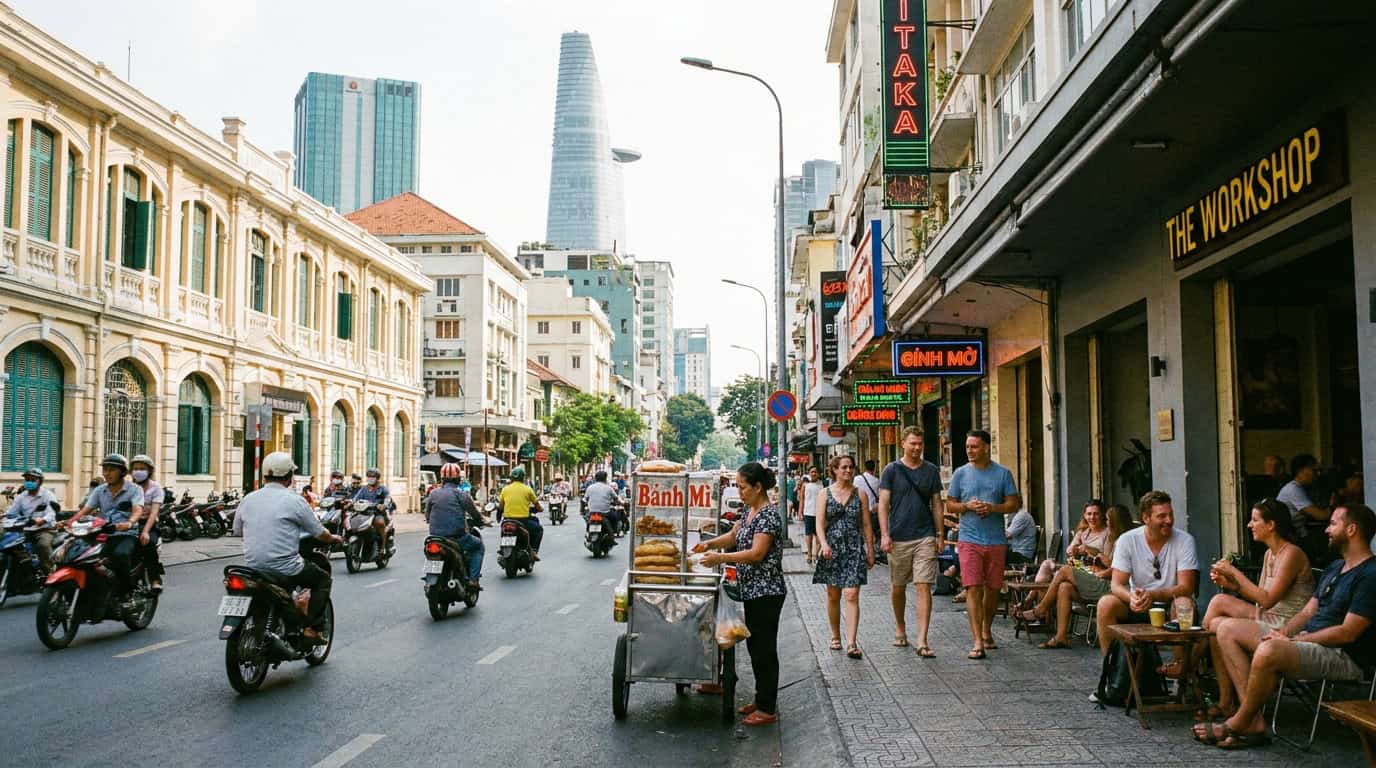
- Street food or local com binh dan (rice plate) lunch: 40,000–70,000 VND ($1.60–$2.80)
- Bowl of pho or bun bo Hue at a local restaurant: 50,000–90,000 VND ($2–$3.60)
- Mid-range Vietnamese restaurant, full meal with drinks: 150,000–300,000 VND ($6–$12) per person
- Western restaurant or rooftop bar, main course: 250,000–500,000 VND ($10–$20) per person
- Fine dining (Anan, Cuc Gach Quan level): $30–$80 per person with wine
Monthly food budgets by habit:
- Mostly local food, some cooking: $200–$350/month
- Mixed — local lunch, Western dinner a few nights/week: $400–$600/month
- Predominantly Western restaurants and delivery: $700–$1,100/month
Grocery shopping at local markets costs 30–40% less than Coopmart or VinMart, which in turn run 20–30% cheaper than Annam Gourmet or the imported goods section of major supermarkets. If you cook most meals, $200/month for groceries is achievable and comfortable.
Transportation Costs in Ho Chi Minh City
Saigon has no viable metro yet for most journeys (Line 1 opened in late 2024 but covers a limited route), so transportation comes down to motorbike ownership, Grab (ride-hail), or car.
- Motorbike ownership (used Honda Wave or Yamaha): $300–$600 one-time purchase, then $15–$25/month fuel and maintenance
- Grab bike (Grabike) — average daily commute: $1–$2 per trip; $50–$80/month for daily users
- Grab car — regular user: $120–$200/month
- Taxi (Vinasun, Mai Linh): Similar to Grab car pricing
- Private car with driver (part-time): $600–$900/month
Most expats in central districts (District 1, 3, Binh Thanh) spend $60–$120/month on transport using a mix of Grab and occasional motorbike. Living further out in Thu Duc or District 7 without a motorbike pushes this to $150–$250/month in Grab costs alone.
Healthcare and Health Insurance Costs
Healthcare quality in HCMC has improved significantly, and international hospitals like FV Hospital, Columbia Asia, and Vinmec provide Western-standard care. According to a 2024 Pacific Prime insurance report, expats in Vietnam pay an average of $1,800–$3,600 USD per year for international health insurance, or $150–$300/month — roughly half the equivalent cost in Thailand or Singapore.

- GP consultation at international clinic: $40–$80
- Specialist consultation (international hospital): $80–$150
- Dental cleaning (international clinic): $30–$60
- Prescription medication (generic, local pharmacy): 80–90% cheaper than Western equivalents
- Gym membership (mid-range, e.g., California Fitness): $40–$70/month
Many expats skip insurance during short stays and pay out of pocket for routine care, given how affordable local consultations are. Long-term residents should carry at minimum emergency and hospitalization coverage.
Utilities, Internet, and Phone in Saigon
If you are renting a bare-unit apartment, build these into your budget:
- Electricity: $40–$120/month depending on aircon usage (the biggest variable)
- Water: $5–$15/month
- Home fiber internet (Viettel or VNPT, 100–300 Mbps): $10–$18/month
- Mobile data plan (4G/5G, unlimited): $5–$12/month
Total utilities for a 1-bedroom apartment: $60–$160/month. In a serviced apartment with all-inclusive pricing, this cost disappears from your variable budget entirely — you pay one fixed number.
Entertainment, Lifestyle, and Social Life
Saigon has a vibrant expat social scene, and nightlife can be as cheap or expensive as you make it. A craft beer at Pasteur Street Brewing Co. costs $3–$5. A cocktail at a rooftop bar in District 1 runs $7–$12. Here is a realistic monthly entertainment budget breakdown:
- Minimal socializer (home streaming, occasional coffee): $50–$100/month
- Average social expat (weekend dinners out, 2–3 nights out/month): $200–$400/month
- Active nightlife/heavy dining out: $500–$900/month
Additional lifestyle costs worth budgeting:
- Yoga or fitness classes: $30–$80/month
- Netflix/Spotify (local pricing): $3–$6/month each
- Haircut at a local barber: $3–$7
- Massage (1 hour, local spa): $8–$15
- Weekend trip within Vietnam (Da Nang, Dalat, Phu Quoc): $150–$300 all-in
Visa and Administrative Costs
Visa costs are an often-overlooked part of the cost of living in Saigon budget. Options in 2026 include:
- E-visa (90 days, single/multiple entry): $25 USD, renewable
- Business visa (DN1/DN2, 1–2 year): $150–$400 depending on agent and duration
- Temporary residence card (TRC, 2 years): $100–$200 with sponsoring employer
- Work permit: Employer usually covers this; standalone cost $150–$300 in agent fees
Amortized monthly, visa costs add $10–$30/month for most expats on renewable e-visas, or less for those on multi-year business visas or TRCs.
Cost of Living in Saigon vs. Other Southeast Asian Cities
Context matters when evaluating the cost of living in Saigon. According to Numbeo’s 2025 Cost of Living Index, Ho Chi Minh City ranks as one of the most affordable major cities in Southeast Asia for expats. Here is how it compares at a mid-range expat lifestyle:
- Ho Chi Minh City: $1,800–$2,500/month
- Bangkok, Thailand: $2,200–$3,200/month
- Kuala Lumpur, Malaysia: $2,000–$2,800/month
- Bali (Canggu), Indonesia: $1,600–$2,400/month
- Singapore: $5,000–$8,000/month
HCMC competes directly with Bali and KL for affordability while offering a larger city infrastructure, better healthcare, and stronger career opportunities. It is significantly cheaper than Bangkok for equivalent housing quality.
How to Reduce Your Cost of Living in Saigon
Experienced residents consistently identify the same levers for cutting costs without sacrificing quality of life:
- Choose your district wisely. Districts 1, 3, and central Binh Thanh carry a 20–40% rent premium over equally comfortable areas like Phu Nhuan, Go Vap, or outer Binh Thanh. Assess your actual need to be in the central core.
- Eat local at least half your meals. Shifting from 100% Western dining to 50/50 local saves $300–$500/month with zero sacrifice in food quality — Vietnamese cuisine is outstanding.
- Own a motorbike. After the initial purchase, a motorbike reduces monthly transport costs by $60–$150 compared to Grab dependency.
- Lock in fixed-rate housing. Variable electricity bills are the most complained-about budget surprise for HCMC expats. Serviced apartments with all-inclusive pricing eliminate this entirely.
- Use local pharmacies and clinics for routine care. A GP visit at a local international clinic costs $40–$60 versus $150+ at a brand-name international hospital for the same consultation.
- Negotiate longer leases. A 12-month commitment typically saves 10–15% on monthly rent versus month-to-month agreements.
You May Also Find Useful
- Entertainment Budget in Saigon: What Expats Spend on Going Out Each Month
- Cost of Living in Ho Chi Minh City for Expats: Real 2026 Breakdown
- Living Expenses in Vietnam: Month-by-Month Budget Guide for Expats and Retirees
- Medical Costs in Vietnam for Expats 2025: What Things Actually Cost Without and With Insurance
Frequently Asked Questions
How much money do you need to live comfortably in Saigon?
A comfortable expat lifestyle in Ho Chi Minh City — serviced apartment in a central district, mixed dining, gym membership, regular social activities, and occasional travel within Vietnam — costs $2,000–$2,800 USD per month in 2026. You can live well on $1,500/month with local habits, or spend $4,000+ if you prioritize luxury. The figure depends almost entirely on housing choice and dining preferences.
Is Saigon cheaper than Bangkok for expats?
Yes, for equivalent housing quality and lifestyle, HCMC runs 15–25% cheaper than Bangkok. Accommodation, street food, transport, and healthcare all tend to cost less in Saigon. Bangkok has a slight edge in some entertainment categories and a wider selection of international goods, but for overall cost of living, Ho Chi Minh City is the more affordable city.
What is the biggest unexpected expense for new expats in Saigon?
Electricity bills in bare-unit apartments consistently surprise new arrivals. Vietnam’s tiered electricity pricing means heavy aircon use in a non-serviced apartment can produce bills of $100–$180/month — far more than expected. The second most common surprise is the cost of eating Western food daily, which can push food costs to $800–$1,000/month. Choosing an all-inclusive serviced apartment and adopting local dining habits for at least some meals are the two most effective ways to stay on budget.
Can you live in Saigon on $1,000 a month?
It is possible but requires significant lifestyle adjustments: living in an outer district, eating almost exclusively local food, owning a motorbike, and avoiding Western bars and restaurants. Most expats who try this find it too restrictive after a few months. A more sustainable minimum budget is $1,200–$1,400/month, which allows for a decent local-area apartment, comfortable local dining, and occasional indulgences.
Are costs in Saigon rising in 2026?
Yes. Rents in Districts 1 and 3 increased approximately 8–12% between 2024 and 2026, driven by increased expat demand and new international businesses entering the market. Food costs have risen modestly (5–8%) in line with regional inflation. However, HCMC remains well below regional peers, and the overall cost of living in Saigon still represents exceptional value compared to Singapore, Hong Kong, or major European and American cities.
Official Resources
For the most up-to-date information on cost of living in saigon, visit the Numbeo – Cost of Living in Ho Chi Minh City.