
Phu Quoc beaches rank among the finest in Southeast Asia, offering a rare combination of powder-white sand, warm turquoise water, and a coastline long enough to escape the crowds entirely. Vietnam’s largest island, situated off the southwestern tip of Kien Giang province in the Gulf of Thailand, stretches across roughly 574 square kilometres and holds more than 150 kilometres of coastline. Whether you are planning a quick getaway from Ho Chi Minh City or an extended island holiday, understanding which beach suits your pace — from sunrise swims to cliff-framed sunset coves — makes all the difference.
Key Takeaways
- Phu Quoc’s west coast (Long Beach, Sao Beach) offers the calmest water and best sunsets, while the east coast suits adventurous snorkellers.
- The dry season runs November through April — the optimal window for flat seas and clear visibility at every beach on the island.
- Hidden coves on the southern tip near An Thoi and along the northern forest edge remain largely crowd-free even during peak travel months.
- According to Vietnam National Administration of Tourism, Phu Quoc welcomed over 4.8 million visitors in 2024, yet its longest beaches still offer genuine seclusion outside resort zones.
- Direct flights connect Tan Son Nhat International Airport (SGN) to Phu Quoc (PQC) in approximately 55 minutes, making it the most accessible island escape for Saigon residents.
Understanding Phu Quoc’s Coastline Before You Go
The island is divided naturally by its central mountain spine. The west coast faces the Gulf of Thailand directly and benefits from calm waters during the dry season, making it the preferred side for swimming, paddleboarding, and long lazy beach days. The east coast catches more wind and swell, particularly between May and October, but rewards explorers with emptier shores, mangrove-fringed inlets, and some of the island’s best dive sites just offshore. The far south clusters around the An Thoi Archipelago, a scatter of nineteen islets that form Phu Quoc’s snorkelling and kayaking heartland. Knowing this geography before you book saves considerable time once you arrive.
Long Beach (Bai Truong): The Island’s Social Spine
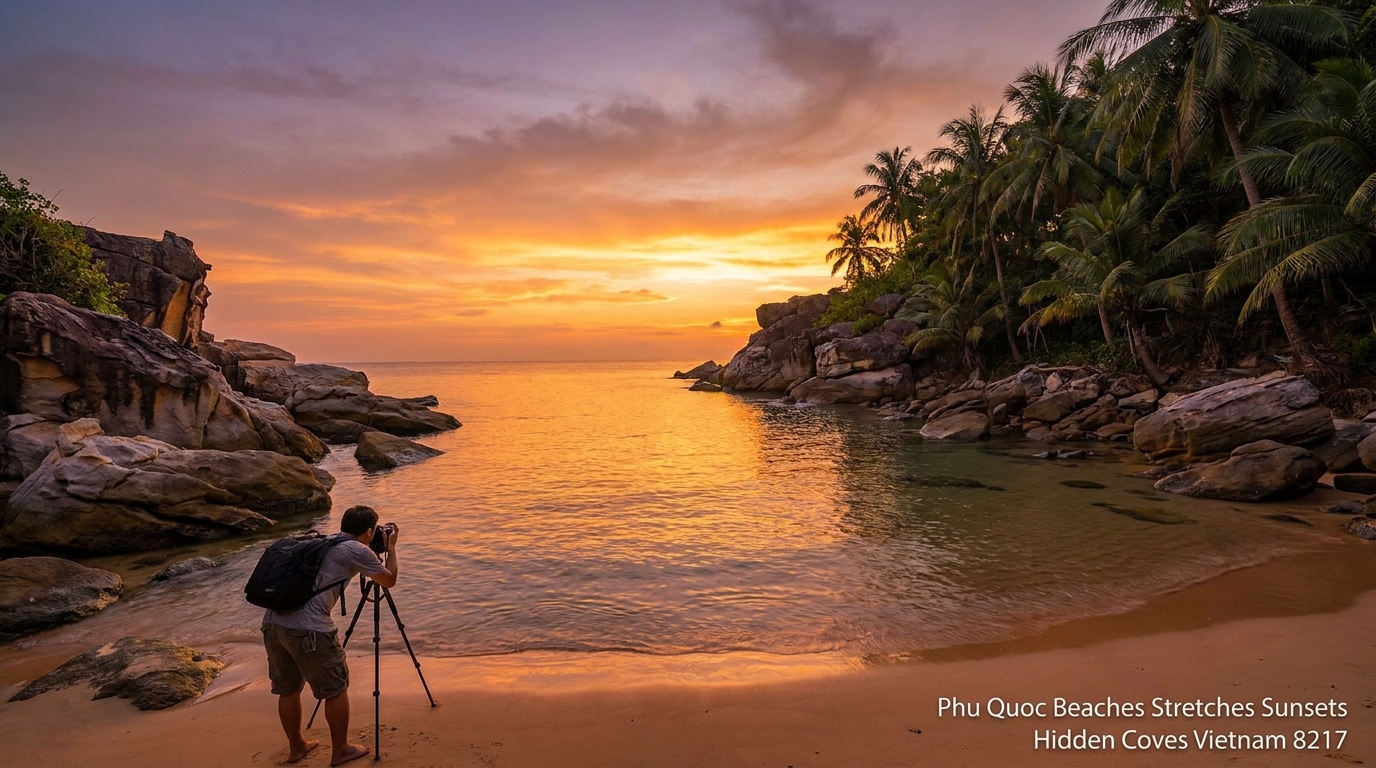
Stretching almost 20 kilometres along the western coast, Long Beach — locally called Bai Truong — is the longest and most developed of all phu quoc beaches. The northern section near Duong Dong town concentrates the majority of hotels, seafood restaurants, and beach bars, including the famous Rory’s Beach Bar where backpackers and long-term expats have gathered for years. Move south past the resort belt and the beach widens considerably; sun loungers thin out and local families take over stretches that receive almost no tourist traffic. Sunsets here are genuinely spectacular — the horizon is unobstructed across the Gulf of Thailand and the light turns the water copper and rose for a good thirty minutes before dark. If you arrive from Saigon on an afternoon flight, heading straight to Long Beach for sunset is the classic first evening ritual.
Sao Beach (Bai Sao): The Postcard Standard
Located on the southeastern coast, Sao Beach is frequently cited by travel photographers as the most visually perfect of all phu quoc beaches. The sand here is exceptionally fine and bright white, contrasting sharply with the deep green-blue water. The bay curves gently inward, protected from open-ocean swell, which keeps the surface unusually flat even during months when other beaches become choppy. A row of casuarina trees provides natural shade behind the shoreline, and several seafood shacks serve grilled squid and cold Saigon beer directly on the sand. The access road from An Thoi passes through pepper farms and jungle — part of what keeps Sao Beach feeling genuinely remote despite its fame. Arrive before 9 am to have the water largely to yourself.
Ong Lang Beach: The Low-Key Boutique Alternative
Ong Lang Beach sits mid-way up the western coast, roughly 15 kilometres north of Duong Dong town, and has developed a quiet reputation among travellers who want comfort without the resort-strip atmosphere. A handful of small eco-lodges and boutique hotels back directly onto the beach, none of them taller than the treeline. The shoreline is punctuated by rocky outcrops that divide the sand into smaller coves, each with its own micro-character. Snorkelling around the rocks at the northern end of Ong Lang regularly turns up parrotfish, clownfish, and small reef formations that would cost significantly more to reach on organised boat trips from the south. This is where Saigon professionals tend to base themselves when they want a proper reset rather than a party weekend.
Ganh Dau Beach: The Quiet Northern Tip
The road north from Duong Dong follows the coast past pepper plantations and through the edge of Phu Quoc National Park before arriving at Ganh Dau, a small village at the island’s northwestern point. The beach here is narrow and backed by trees, with Cambodia’s coast visible clearly across the water on most days — the two coastlines sit just ten kilometres apart at this point. Ganh Dau is not a beach for swimming facilities or restaurant service; it is a beach for standing quietly with a coffee at sunrise, watching fishing boats pass. A few simple seafood restaurants in the village behind the beach cook whatever was caught overnight. For Saigon residents accustomed to the city’s density, the stillness here is the main attraction.

Hidden Coves of the An Thoi Archipelago
The nineteen islands south of Phu Quoc’s main landmass form an archipelago that remains largely undeveloped. Hon Thom (Pineapple Island) is the most accessible, connected to the mainland by the world’s longest non-stop cable car at 7.9 kilometres. The beaches on Hon Thom’s southern side are quiet even on public holidays, with clear water and good coral coverage within easy snorkelling depth. Hon May Rut and Hon Gam Ghi are reachable only by private boat or through dive operators — two-hour trips that deposit you on genuinely deserted sand with no infrastructure whatsoever. According to a 2025 survey by Dive Vietnam, water visibility around the An Thoi Archipelago averages 15–20 metres during the dry season, placing it among the top five dive destinations in the country.
Best Phu Quoc Beaches for Snorkelling and Diving
Underwater visibility and coral health vary significantly by location and season. The waters around the An Thoi Archipelago in the south and the small islands off the northeastern coast near Bai Thom consistently deliver the clearest conditions. Fingernail Island (Hon Mong Tay) is considered by most local dive operators to have the best-preserved shallow reef accessible to snorkellers without prior experience. For certified divers, sites around Hon Gam Ghi and the deeper pinnacles south of Hon Thom offer encounters with batfish, moray eels, and occasional reef sharks. The best months are January through April. If you are travelling from Ho Chi Minh City primarily for diving, booking a liveaboard that departs from An Thoi jetty will maximise your time underwater.
Sunset Beaches: Where to Watch the Sky Change Colour
Because Phu Quoc sits on the western edge of Vietnam’s territorial waters, almost the entire west coast delivers unobstructed sunsets over open sea — a luxury unavailable on Vietnam’s main eastern coastline where the sun sets over land. Long Beach‘s northern section near Dinh Cau Rock is the most popular sunset vantage, complete with a small lighthouse shrine that becomes photogenic in silhouette. For something quieter, the beach immediately south of Cua Can River mouth has no development at all and offers the same sunset view with a handful of fishing boats in the foreground. The beach bars along Tran Hung Dao Street serve drinks with direct sea views and a social atmosphere that builds from about 5 pm daily.
Phu Quoc Beaches by Season: When to Visit
The island divides into two distinct weather seasons that directly determine which phu quoc beaches are swimmable. Dry season (November to April) brings flat seas, light winds, and water temperatures around 27–29°C across the entire west coast and southern tip — the ideal window for every beach activity from casual swimming to serious diving. Wet season (May to October) brings afternoon downpours and stronger west-facing swells that can make Long Beach choppy and render some of the southern island beaches unsuitable for swimming. However, the east coast beaches including Bai Vong and Bai Thom actually become calmer during this period, as the weather system shields the eastern shore. Prices drop by 30–40% in the wet season and accommodation is easy to find without advance booking — a consideration for budget-conscious travellers from Ho Chi Minh City.
Getting to Phu Quoc from Ho Chi Minh City
The most beautiful beaches in Southern Vietnam are less than an hour from our D1 apartments by air. Vietnam Airlines, VietJet, and Bamboo Airways all operate multiple daily flights between Tan Son Nhat (SGN) and Phu Quoc (PQC), with journey times typically between 50 and 65 minutes. Return fares booked two to three weeks in advance regularly fall in the 800,000–1,500,000 VND range per person. From Phu Quoc International Airport, taxis and pre-booked transfers reach Long Beach in around 15 minutes and the southern beaches in 30–40 minutes. Ferry services from Ha Tien (a three-hour bus ride from Saigon) offer a slower but scenic alternative for travellers who want to bring motorbikes. For residents in District 1, the total door-to-beach time including check-in can realistically be under three hours.
Practical Tips for Visiting Phu Quoc’s Beaches
A few logistics make a significant difference to the quality of a beach trip on the island. Renting a motorbike in Duong Dong town (approximately 150,000–200,000 VND per day) gives complete freedom to move between beaches without depending on taxis, which become expensive for repeated cross-island journeys. Most beaches have no public facilities; carrying water, sunscreen (the UV index regularly reaches 10–11 between 10 am and 3 pm), and snacks is practical for any beach south of Ong Lang. Plastic bag use has been officially restricted on the island since 2020, and several beach areas carry visible fines for littering — the island is genuinely cleaner than it was five years ago as a result. Currency exchange is available in Duong Dong market and at most resort reception desks; card acceptance is widespread at formal accommodation but cash is preferred at smaller beach restaurants.
Combining Beaches with Phu Quoc’s Other Attractions
The island’s appeal extends beyond sand and water. The Phu Quoc National Park covers over 37,000 hectares of primary forest in the north and offers hiking trails that connect to isolated northern beaches reachable only on foot or by boat. The Duong Dong night market is a 15-minute walk from Long Beach and serves as the island’s best seafood experience after dark — grilled sea snail, pepper crab, and fresh spring rolls at prices well below what resort restaurants charge. Phu Quoc fish sauce (nuoc mam) production is a legitimate cultural attraction; several family-run barrel houses near Duong Dong accept visitors and the tasting process is brief but memorable. Pairing a morning at Sao Beach with an afternoon at the fish sauce factory and an evening at the night market is a solid one-day itinerary for first-time visitors from Saigon.
You May Also Find Useful
If you are planning a stay in Phu Quoc, it is worth checking what is available on Booking.com or Agoda while you work out the dates.
Frequently Asked Questions
Which is the best beach in Phu Quoc for swimming?
Sao Beach on the southeastern coast is generally considered the best beach for swimming due to its exceptionally calm water, fine white sand, and protection from open-ocean swell. Long Beach’s central section near Duong Dong is an equally good option for those staying on the west coast, particularly outside the May–October swell period. Both beaches have water temperatures between 27 and 29°C throughout the dry season.
Are Phu Quoc beaches crowded?
Crowding concentrates heavily in a few specific zones — the northern end of Long Beach near resort hotels, and the central section of Sao Beach from mid-morning onward during Vietnamese public holidays. Most of phu quoc beaches outside these pockets receive relatively light traffic even in peak season. The An Thoi Archipelago islands, Ganh Dau in the north, and the southern stretches of Long Beach past the resort belt are reliably quiet throughout the year.
What is the best time of year to visit Phu Quoc’s beaches?
November through April is the optimal period, coinciding with the dry season when seas are calm across the entire west coast and southern tip. February and March are often cited by dive operators as the best months for underwater visibility. December and early January coincide with the Vietnamese holiday season and bring higher prices and more domestic tourists. If budget is a priority, May or late October offer good beaches on the east coast at significantly lower rates.
How do I get from Ho Chi Minh City to Phu Quoc?
The standard route from Saigon is by air from Tan Son Nhat Airport (SGN) to Phu Quoc International Airport (PQC), a flight of 50–65 minutes operated several times daily by Vietnam Airlines, VietJet, and Bamboo Airways. Budget fares booked in advance are frequently under 1,000,000 VND one-way. An alternative is the bus-and-ferry combination via Ha Tien, which takes approximately five to six hours total but allows passengers to bring motorcycles across on the ferry.
Is Phu Quoc suitable for a weekend trip from Saigon?
Yes — a Friday evening flight and Sunday afternoon return gives a full two days of beach time, which is enough to cover Long Beach, a half-day boat trip to the An Thoi Archipelago, and an evening at Duong Dong night market. Many Saigon residents treat Phu Quoc as a regular long-weekend destination rather than a once-a-year holiday precisely because the flight time is so short. Booking accommodation and flights two to three weeks in advance secures the best rates for weekend departures.
Official Resources
For the most up-to-date information on phu quoc beaches, visit the Vietnam National Administration of Tourism.