
Digital Nomad Guide to Ho Chi Minh City: Cost, Community, and Setup
The digital nomad Ho Chi Minh City scene has grown into one of Southeast Asia’s most compelling remote work destinations — combining ultra-affordable living costs, fast urban infrastructure, and a buzzing expat community that makes relocating feel surprisingly seamless. Whether you are planning a one-month stint or a year-long base, Saigon delivers the rare combination of low overhead and high quality of life that keeps nomads coming back.
Key Takeaways
- Ho Chi Minh City offers a full remote work lifestyle for roughly $1,200–$2,000 USD per month, including rent, food, transport, and coworking memberships.
- District 1, District 3, and Thao Dien (District 2) are the top nomad neighborhoods, each with strong coworking infrastructure and reliable fiber internet.
- Vietnam’s e-visa allows 90-day stays for citizens of 80+ countries, making the visa situation straightforward for most nomads.
- The city has dozens of dedicated coworking spaces, many open 24/7, with day passes starting around 150,000 VND (~$6 USD).
- A local SIM card with 30GB+ data costs under $5/month, and most cafes and apartments offer fiber broadband exceeding 100 Mbps.
Why Ho Chi Minh City Attracts Digital Nomads in 2025–2026
Among Southeast Asian cities competing for the remote worker’s dollar, the digital nomad Ho Chi Minh City proposition stands apart. Saigon is a megacity that genuinely functions — the 4G and fiber coverage is excellent, English is spoken widely in business districts, and the food and coffee culture rivals cities three times the price. According to Nomad List (2025), Ho Chi Minh City ranked in the global top 20 cities for digital nomads, scoring highly on cost of living, internet speed, and nightlife. The city’s international airport connects directly to dozens of destinations, making multi-country trips easy to weave into a nomad lifestyle.
Digital Nomad Cost of Living: What to Budget in HCMC
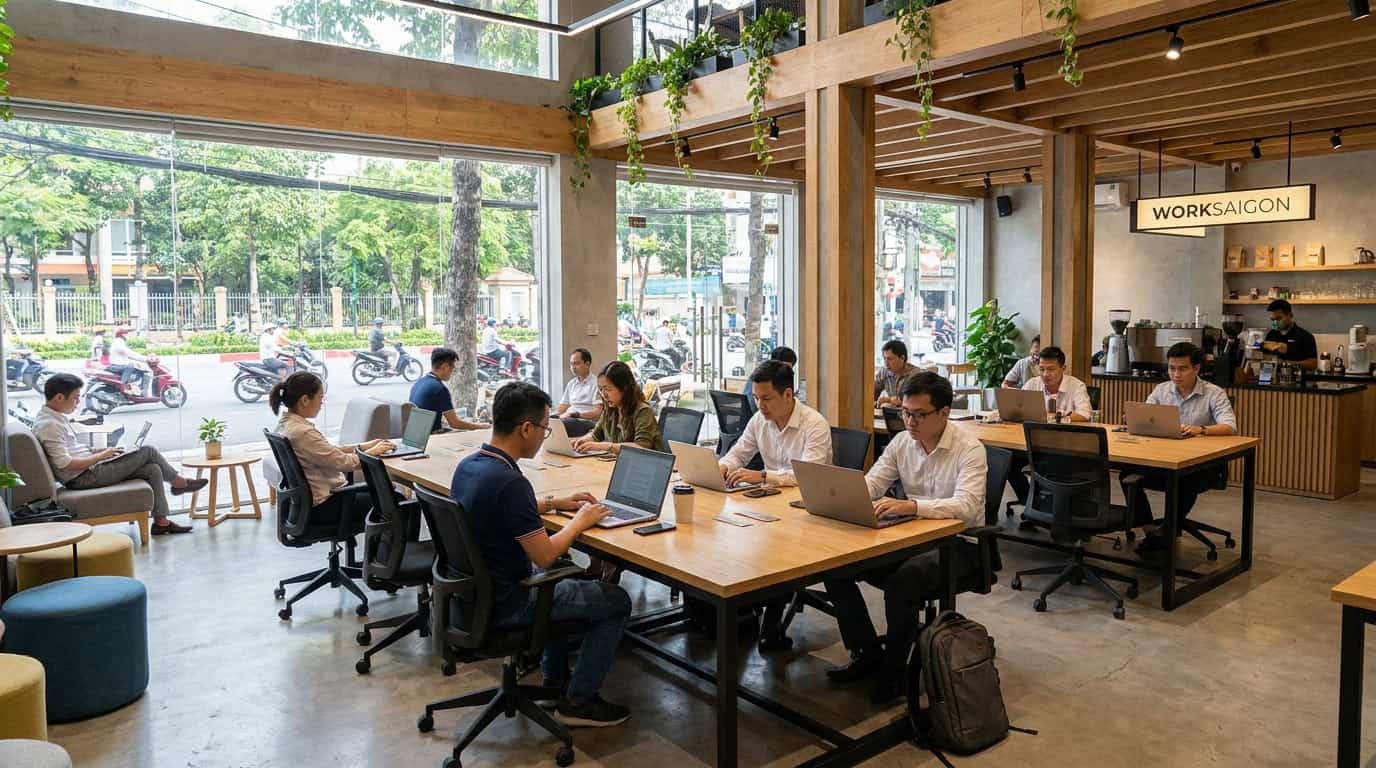
Understanding the real monthly cost is the first thing every digital nomad Ho Chi Minh City researcher wants to know. Here is a realistic breakdown for a mid-range lifestyle:
- Rent (serviced apartment or studio, District 1): $500–$900 USD/month
- Food and dining out: $200–$400 USD/month (street food is $1–2 per meal; Western restaurants run $8–15)
- Coworking membership: $80–$150 USD/month for a hot desk
- Transport (Grab rides + motorbike rental): $40–$80 USD/month
- Utilities and SIM data: $20–$40 USD/month
- Entertainment, gym, health insurance: $100–$200 USD/month
Total realistic range: $940–$1,770 USD per month. Travelers who cook occasionally and use coworking day passes instead of monthly memberships can comfortably live below $1,200/month. Those who want a private serviced apartment with a gym, pool, and cleaning service will sit closer to $1,800–$2,200.
Best Neighborhoods for Digital Nomads in Ho Chi Minh City
Location matters enormously when you are working remotely. The right neighborhood puts coworking spaces, fast-food delivery, coffee shops, and reliable transport within walking distance.
District 1 — The Central Hub
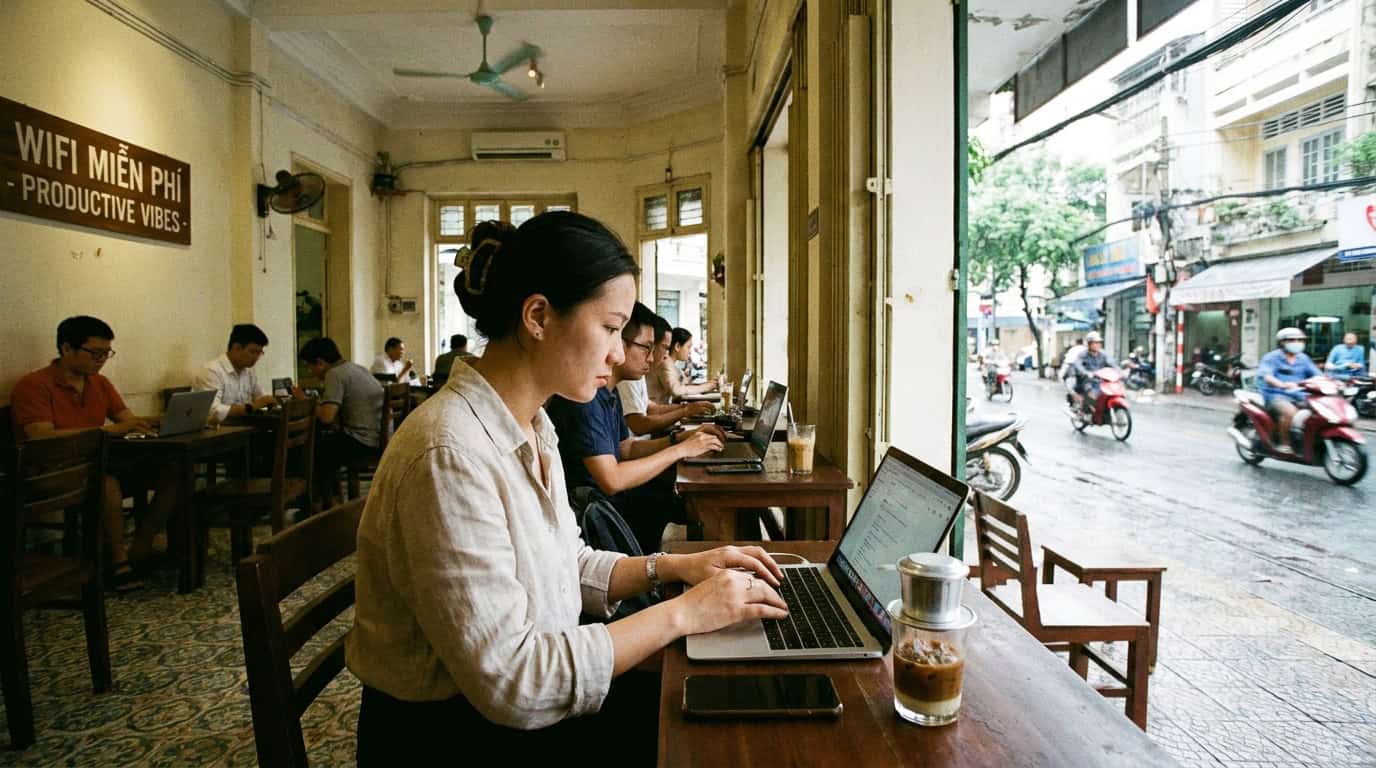
District 1 is the business and tourist center of Saigon. Bui Vien Street, Pham Ngu Lao, and the Ben Thanh market area place you within minutes of every coworking space, international cafe, and rooftop bar in the city. Apartments here command a premium but save time and Grab fare. Nomads choose our D1 apartments for fast WiFi, flexible leases, and proximity to HCMC’s co-working hubs — making District 1 the most practical base for anyone who values convenience over cost savings.
District 3 — Quieter, Still Connected
District 3 sits just north of D1 and offers a more residential feel with tree-lined streets and excellent Vietnamese coffee shops that double as casual work spots. Rent runs 10–20% cheaper than D1 while maintaining easy access to the city center.
Thao Dien (District 2 / Thu Duc)
Thao Dien is the expat family neighborhood with international schools, Western supermarkets, and a growing coworking scene. It is quieter and greener than the center, popular with nomads who have been in Saigon for several months and want more space for less money.
Visa Options for Digital Nomads in Vietnam
Vietnam does not yet offer a dedicated digital nomad visa, but the existing e-visa structure is workable for most remote workers. Citizens of over 80 countries can obtain a 90-day e-visa online at evisa.xuatnhapcanh.gov.vn for $25 USD. The e-visa is single or multiple entry and extendable. For longer stays, many nomads use border runs to Cambodia or Thailand to reset, or apply for a 1-year business visa through a local agent (typically $150–$300 USD all-in). According to Vietnam’s Immigration Department (2024), over 17.5 million international visitors entered Vietnam in 2024, reflecting a full post-pandemic recovery and eased entry procedures for most nationalities.
Internet and Connectivity in HCMC
Reliable internet is non-negotiable for any digital nomad Ho Chi Minh City setup. The good news is that Vietnam’s urban connectivity is genuinely impressive. The national fiber providers — VNPT, Viettel, and FPT — have blanketed District 1–4 with fiber reaching 200–600 Mbps in most residential buildings. Serviced apartments almost always include broadband in the rent. On mobile, Viettel and Vietnamobile sell SIM cards at the airport for under $5, loaded with 30GB of 4G data — sufficient for video calls and cloud work for an entire month. Coworking spaces typically offer symmetric gigabit connections with backup lines.
Best Coworking Spaces for Digital Nomads in Ho Chi Minh City
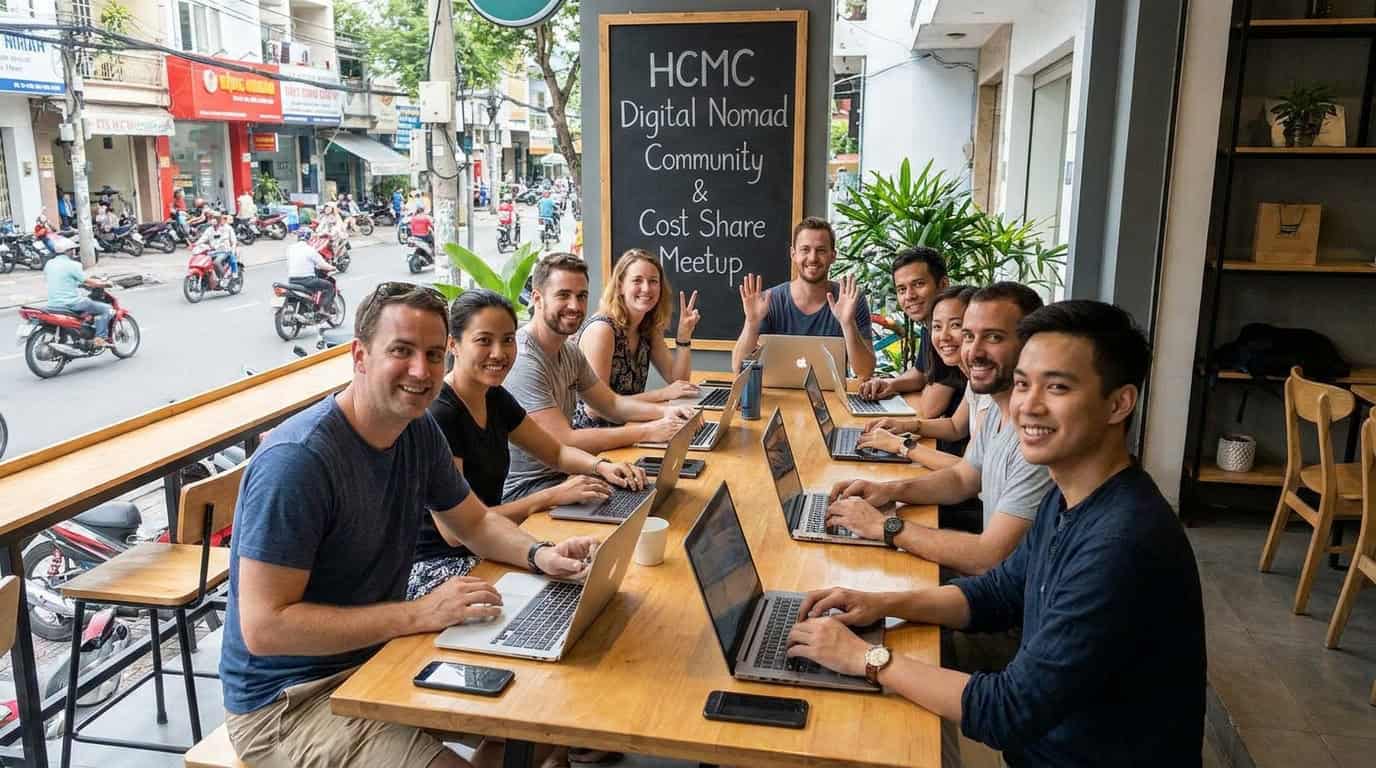
The coworking infrastructure for the digital nomad Ho Chi Minh City community is extensive. Here are the most-used spaces:
- Toong Coworking (multiple locations): Popular Vietnamese chain with 24/7 access, private offices, and day passes from 150,000 VND. Locations in D1, D3, Binh Thanh, and Thao Dien.
- Dreamplex (D1 and Binh Thanh): Premium coworking with standing desks, event programming, and a strong networking community. Monthly hot desk around $120 USD.
- UP Coworking Space (D1): Mid-range, reliable internet, good coffee, close to Bui Vien. Popular with tech nomads.
- The Hive (Thao Dien): Quieter atmosphere suited to focused work, strong expat community events.
- Kafnu (D1): Design-forward space inside a hotel, flexible memberships, rooftop access.
Most spaces offer free trial days. Day passes typically run $5–10 USD, monthly hot desks $80–150 USD, and dedicated desks $150–250 USD.
Digital Nomad Community and Networking in Saigon
One underrated advantage of basing yourself in HCMC is the active nomad and expat community. Facebook groups like “Digital Nomads Ho Chi Minh City” and “Saigon Expats” have tens of thousands of members actively sharing apartment recommendations, visa tips, and meetup invitations. Meetup.com lists weekly language exchanges, tech talks, and entrepreneur networking events. Coworking spaces like Dreamplex host regular community dinners. The nomad community skews heavily toward tech, marketing, e-commerce, and design professionals — making it genuinely useful for referrals and collaboration, not just social connections.
Healthcare, Safety, and Practical Logistics
Healthcare costs in HCMC are low by Western standards. A GP consultation at a private international clinic (Family Medical Practice, FV Hospital) runs $30–60 USD without insurance. Most nomads carry travel insurance with medical evacuation coverage — World Nomads and SafetyWing both cover Vietnam with plans starting at $40–50 USD/month. Street crime in District 1 is largely petty (bag snatching from motorbikes), easily avoided by keeping bags on your building-side when walking. HCMC consistently ranks safer than many Western cities for violent crime. Air quality can be poor in dry season (January–April); a portable air purifier in your apartment is a worthwhile $30–50 investment.
Food, Coffee, and Quality of Life for Remote Workers
The food scene is a genuine pull for the digital nomad Ho Chi Minh City demographic. Saigon’s street food — banh mi, pho, com tam, banh xeo — runs $1–3 per meal and is available from 6 AM to midnight across the city. The Vietnamese coffee culture is exceptional: ca phe sua da (iced milk coffee) costs 20,000–40,000 VND ($0.80–1.60) and many cafes provide quiet seating that doubles as an impromptu workspace. For a change of pace, HCMC has hundreds of international restaurants — Japanese, Korean, Indian, Italian — concentrated in D1 and D3. The city’s rooftop bars, night markets, and weekend day trips to the Mekong Delta or Con Dao islands ensure that downtime is as rewarding as the workday.
Setting Up Your Digital Nomad Base in District 1
For most first-time nomads, District 1 is the smartest entry point. The practical checklist for your first week:
- Pick up a SIM card at Tan Son Nhat Airport (Viettel or Vietnamobile counters, arrivals hall).
- Book a serviced apartment for the first month — flexible leases let you move if the neighborhood does not suit you.
- Open a Wise or Revolut account before you arrive to avoid ATM conversion fees (local ATMs charge 50,000–85,000 VND per withdrawal).
- Join the Digital Nomads HCMC Facebook group and attend one meetup in your first week.
- Trial two or three coworking spaces before committing to a monthly membership.
- Register your temporary address with the local ward office (your landlord usually handles this — required by Vietnamese law for stays over 30 days).
According to InterNations Expat Insider 2025, Vietnam ranked among the top 10 countries globally for ease of settling in, with expats citing friendly locals, affordable lifestyle, and digital infrastructure as top factors. For the digital nomad Ho Chi Minh City newcomer, the learning curve is short.
Seasonal Considerations: When to Come to HCMC
Ho Chi Minh City has two seasons: dry (November–April) and wet (May–October). The wet season brings afternoon downpours, but rarely all-day rain — mornings are typically clear and workable. The dry season from December to February is the most comfortable, with temperatures around 25–30°C and low humidity. The Tet holiday (late January to mid-February) shuts down much of the city for one to two weeks — a great time to travel domestically or to a beach destination. If you are arriving for the first time, November through March offers the most pleasant conditions for exploring the city between work sessions.
You May Also Find Useful
Frequently Asked Questions
Is Ho Chi Minh City good for digital nomads?
Yes. HCMC combines very low living costs ($1,200–$1,800/month all-in), fast fiber internet, dozens of coworking spaces, and a large active nomad community. It consistently appears in global top-20 nomad city rankings and is considered one of the best value destinations in Southeast Asia for remote workers.
How much does it cost to live in Ho Chi Minh City as a digital nomad?
A comfortable mid-range budget is $1,200–$1,800 USD per month, covering a private apartment with AC in D1 or D3, food, transport, a coworking membership, and leisure. Budget travelers who eat mostly street food and use cafes to work can live well for under $1,000/month.
What visa do digital nomads use for Vietnam?
Most nomads enter on the 90-day e-visa, available online for $25 USD to citizens of 80+ countries. For longer stays, agents can arrange 1-year business visas. Vietnam does not currently offer a dedicated digital nomad visa, but the e-visa policy is among the most flexible in Southeast Asia.
Which district is best for digital nomads in Ho Chi Minh City?
District 1 is the most practical for first-time nomads — central, walkable, and loaded with coworking spaces and cafes. District 3 is a quieter alternative with slightly lower rents. Thao Dien suits longer-term nomads wanting a more residential lifestyle with more space.
Is internet reliable for remote work in HCMC?
Yes. Fiber broadband from VNPT, FPT, or Viettel is standard in serviced apartments and runs 100–500 Mbps for $10–20/month. Coworking spaces offer gigabit connections. Mobile 4G data SIMs with 30GB cost under $5/month. Internet outages are rare in District 1–3.
Official Resources
For the most up-to-date information on digital nomad ho chi minh city, visit the Vietnam Tourism Official Guide.
Sources and review note
Last reviewed: July 3, 2026. Remote-work setup depends on visa status, banking access, insurance, and housing fit. This guide is practical editorial guidance, not legal, tax, or immigration advice.
- Vietnam National Electronic Visa Portal
- Vietnam Immigration Department
- Vietnam Tourism official e-visa guide
Editorial note: Saigon Apartment reviews practical expat guidance against official sources where possible and updates high-impact pages when rules, fees, or availability change.