
Saigon Safety Guide: Is Ho Chi Minh City Safe for Tourists?
Ho Chi Minh City’s Is saigon safe is a topic every expat and long-stay visitor needs to understand before settling in Saigon. Ho Chi Minh City is considerably safer than its chaotic first impression suggests. The HCMC Tourist Police reported a 12% decrease in tourist-related incidents in 2024 compared to 2023, and the city ranks consistently in the lower-risk tier of Southeast Asian destinations in the Economist Intelligence Unit’s safety index. That said, specific risks do exist, and knowing them before you arrive makes the difference between a smooth trip and an avoidable headache.
Key Takeaways
- Saigon has very low rates of violent crime against tourists. The primary risks are bag snatching from motorbikes, taxi overcharging, and petty scams targeting first-time visitors.
- Phone and bag snatching from passing motorbikes is the most commonly reported tourist incident — keep your phone out of sight on busy pavements.
- Emergency contacts: Police 113, Ambulance 115, Fire 114, Tourist Police hotline 1800 599 920 (free call).
- Tap water is not safe to drink. Bottled water (15,000-25,000 VND) is available everywhere.
Is Saigon Safe for Tourists Overall?
Saigon is generally safe for tourists, including solo female travelers. The U.S. State Department rates Vietnam at Level 1 (“Exercise Normal Precautions”) as of 2025, the lowest risk designation and the same level assigned to Japan and Germany. Violent crime against tourists is rare. The risks that do exist in Saigon are almost entirely non-violent: theft, scams, and traffic-related incidents.
The biggest shift in Saigon’s safety profile over the last decade has been the growth of legal ride-hailing through Grab. Before app-based transport became dominant, unlicensed taxi drivers routinely overcharged tourists. That specific scam has largely retreated, though it still occurs at the airport and near major bus stations. The practical result is that navigating the city is safer and more predictable than it was five years ago.
Travelers who exercise basic awareness — keeping bags secure, using Grab instead of random taxis, and being alert to common scam patterns — will almost certainly complete their Saigon trip without incident. The city doesn’t require the heightened vigilance needed in some other Southeast Asian capitals.
What Are the Most Common Scams in Saigon?
The HCMC Tourist Police identify four scam types as consistently reported by foreign visitors in 2024: the cyclo overcharge, the shoe-shine trap, the “broken meter” taxi, and the fake tour operator. None of these involve violence; all involve a version of the same mechanism: a service begins, a price is not agreed in advance, and the final charge is 10-50 times higher than a fair rate.
The Cyclo and Xe Om (Motorbike Taxi) Overcharge
A cyclo (three-wheeled bicycle taxi) driver approaches and offers a “short ride” with no price mentioned upfront. After the ride, the driver demands an inflated fee and refuses to negotiate. Always agree on the price before getting on any cyclo or unlicensed motorbike taxi. Say “bao nhieu?” (how much?) and confirm the number before boarding. The safest alternative is simply using Grab, where the price is fixed before you confirm the ride.
The Shoe-Shine and Vendor Trap
Someone starts cleaning your shoes without asking permission, or a vendor places an item in your hands and then demands payment. The technique relies on a social obligation once a service has started. The response is simple: firmly decline before any service begins. If someone approaches offering to clean your shoes, say “no thank you” and keep walking without stopping.
The Fake Tour Operator
A person on the street offers a cheap Cu Chi Tunnels or Mekong Delta tour, takes payment upfront, and either doesn’t show up or substitutes an inferior product. Always book day trips through established operators with a physical office or a verified platform like Klook or GetYourGuide. Don’t hand cash to strangers offering tours on the street, regardless of how convincing the pitch sounds.
The Gem Investment and Restaurant Invitation Scam
A friendly local invites you to their “family restaurant” or engages you in conversation about a gem trading opportunity. The restaurant bill is 10 times normal, or the “investment” involves sending money to an overseas account. These are confidence scams that rely on building trust before the trap closes. If a stranger is unusually friendly and keeps steering toward a specific restaurant or business, treat that as a warning sign.
How Dangerous Is Saigon Traffic for Tourists?
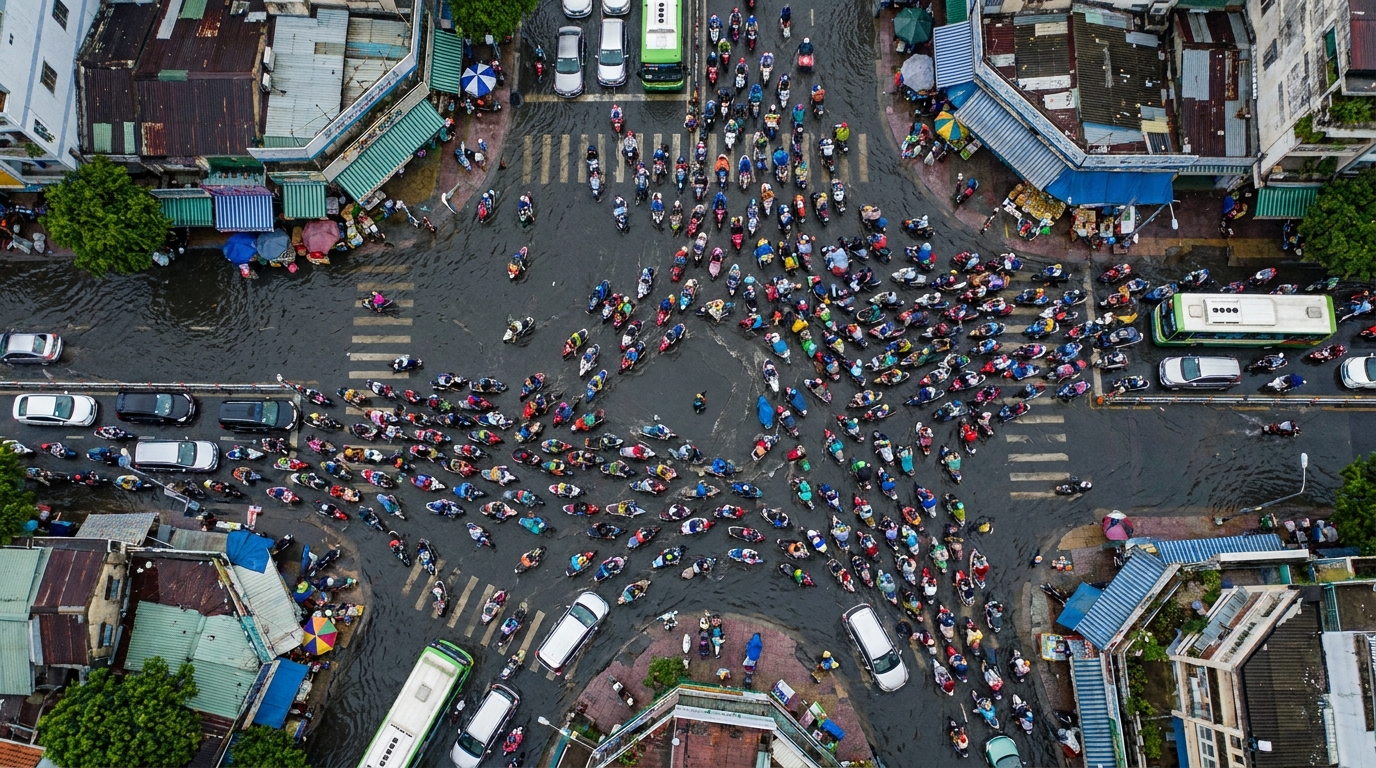
Saigon’s traffic is the most genuinely disorienting experience for most first-time visitors. The city has approximately 8 million registered motorbikes (HCMC Transport Department, 2024) and a road culture built around flow rather than rules. Traffic accidents are the leading cause of tourist injury in Vietnam, according to the World Health Organization’s Vietnam road safety report (2024). Understanding the traffic system is essential, not optional.
How to Cross the Street in Saigon
Crossing a major Saigon intersection without traffic lights looks impossible. It isn’t, but it requires surrendering your instinct to wait for a gap. The correct technique: step off the curb, move at a slow, steady pace, and let the motorbikes flow around you. Don’t stop. Don’t run. Don’t change direction suddenly. Motorbike riders are extremely skilled at adjusting to pedestrians who move predictably. The danger comes from stopping suddenly or darting unpredictably.
Use pedestrian crossings and traffic lights whenever available, particularly in District 1 where they’re more common. Outside of crossings, the flow technique works on smaller streets. On major arterials (like Dien Bien Phu or Nguyen Van Linh), always use the overhead crossings or wait for a gap in traffic — these roads move too fast for the flow technique to be safe.
Renting a Motorbike in Saigon
Foreigners renting and riding motorbikes in Saigon do so at substantially elevated risk. The WHO Vietnam report notes that motorbike riders have a fatality rate 25 times higher than car passengers per kilometer traveled in HCMC. If you’re an experienced motorbike rider in Southeast Asian traffic, this is manageable risk. If you’re not, it isn’t. Grab and metered taxis provide safe, affordable alternatives that eliminate the risk entirely.
Is Saigon Safe for Solo Female Travelers?
Solo female travelers consistently report Saigon as one of the safer cities in Southeast Asia. Harassment is not absent, but it’s considerably less prevalent than in some other regional destinations. The HCMC Tourist Police’s 2024 survey found that 82% of solo female visitors rated Saigon as “safe” or “very safe” during their stay.
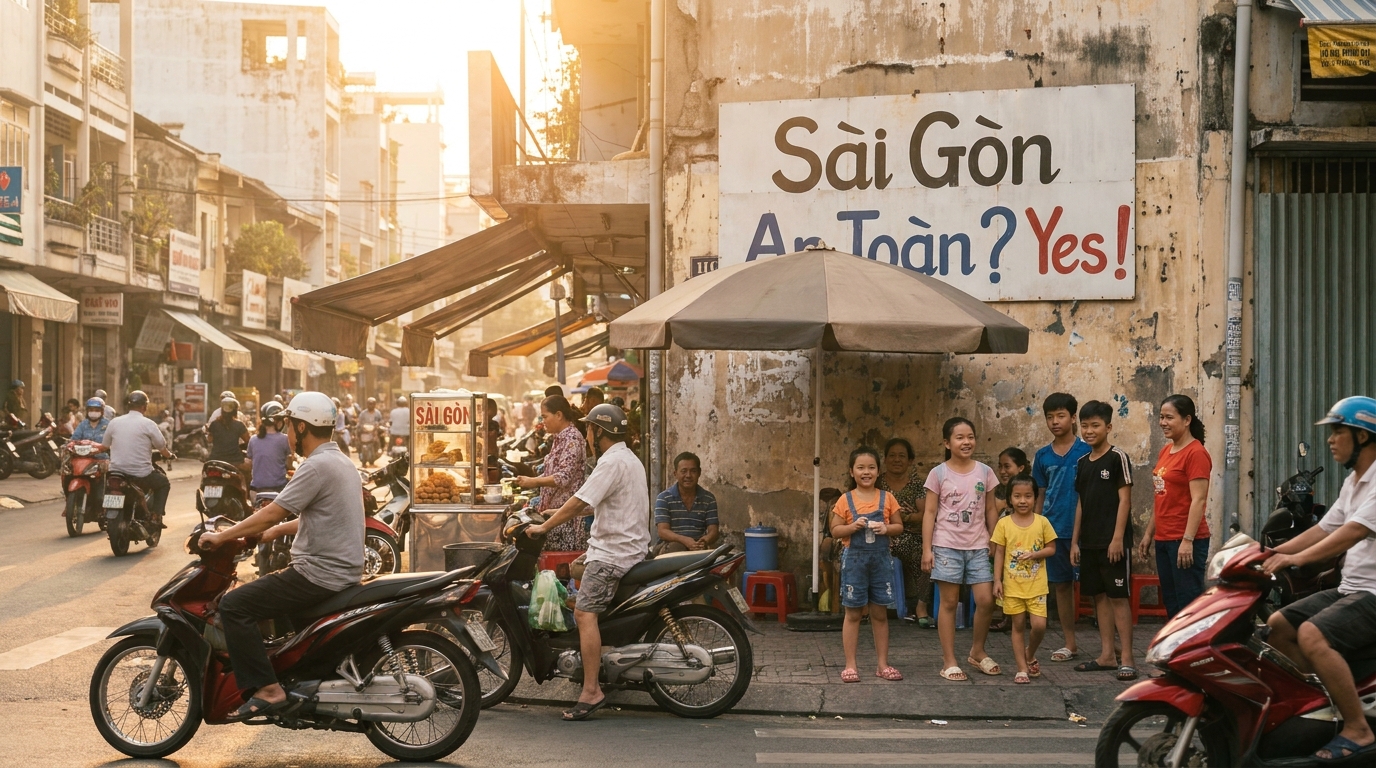
Practical precautions that experienced solo female travelers in Saigon recommend: use Grab for evening transport rather than walking alone on quieter streets after midnight; stay in hotels or guesthouses in District 1 or District 3 where streets are well-lit and busy; dress modestly near temples and in local neighborhoods (this is respected cultural practice, not solely a safety measure); and avoid the very late hours on Bui Vien Street alone, not because it’s dangerous but because it gets rowdy and unpredictable after 1:00 AM.
What Health Precautions Should Tourists Take?
Vietnam’s Centers for Disease Control recommends visitors to Ho Chi Minh City be current on routine vaccinations and consider Hepatitis A, Typhoid, and Japanese Encephalitis vaccines depending on activities and travel duration. Mosquito-borne diseases including dengue fever are present in HCMC, particularly during the wet season (May-November). Dengue has no vaccine for most adult travelers, making mosquito repellent the primary prevention tool.
Water and Food Safety
Do not drink tap water in Saigon. Bottled water costs 15,000-25,000 VND at any convenience store and is universally available. Be cautious with ice in drinks outside of established restaurants and cafes — ask “da sach?” (clean ice?) if unsure. Street food is generally safe to eat from busy stalls where food is cooked fresh in front of you. Avoid pre-cooked food sitting at room temperature for extended periods.
Food-related illness is the most common health complaint among visitors to Saigon, usually manifesting as a 24-48 hour stomach upset. Oral rehydration salts (available at any pharmacy for 15,000-30,000 VND) are the primary treatment for mild cases. Pharmacies (nha thuoc) are on almost every block in District 1 and are equipped to help with minor illnesses.
Heat and Sun Safety
Heat exhaustion is a real risk, particularly in the first 2-3 days before acclimatization. Temperature in Saigon averages 30-35°C with high humidity year-round. Drink 2-3 liters of water daily, schedule outdoor activities in the morning (before 10:00 AM) and late afternoon (after 4:00 PM), wear sunscreen with SPF 30 or higher, and carry a hat. If you feel dizzy, nauseous, or stop sweating despite the heat, move to air conditioning immediately and hydrate.
What Are the Emergency Numbers in Saigon?

The most important emergency contact for tourists in Saigon is the Tourist Police hotline: 1800 599 920 (free call, available 24 hours). English-speaking officers are available and the service is designed specifically for foreign visitors dealing with scams, theft, or emergencies. Save this number in your phone before you leave for Saigon.
Full emergency contact list for Ho Chi Minh City:
- Police: 113
- Ambulance: 115
- Fire: 114
- Tourist Police Hotline: 1800 599 920 (free, 24 hours)
- FV Hospital (international standard): District 7, 24-hour emergency
- Hoan My Medical International Hospital: District 3, 24-hour emergency
For non-emergency theft (if your bag or phone is stolen), report to the nearest police station and request a police report. You’ll need this document for any insurance claim. The tourist police office in District 1 (near the Reunification Palace) has English-speaking staff and experience handling tourist reports.
Frequently Asked Questions
Is Saigon safe at night for tourists?
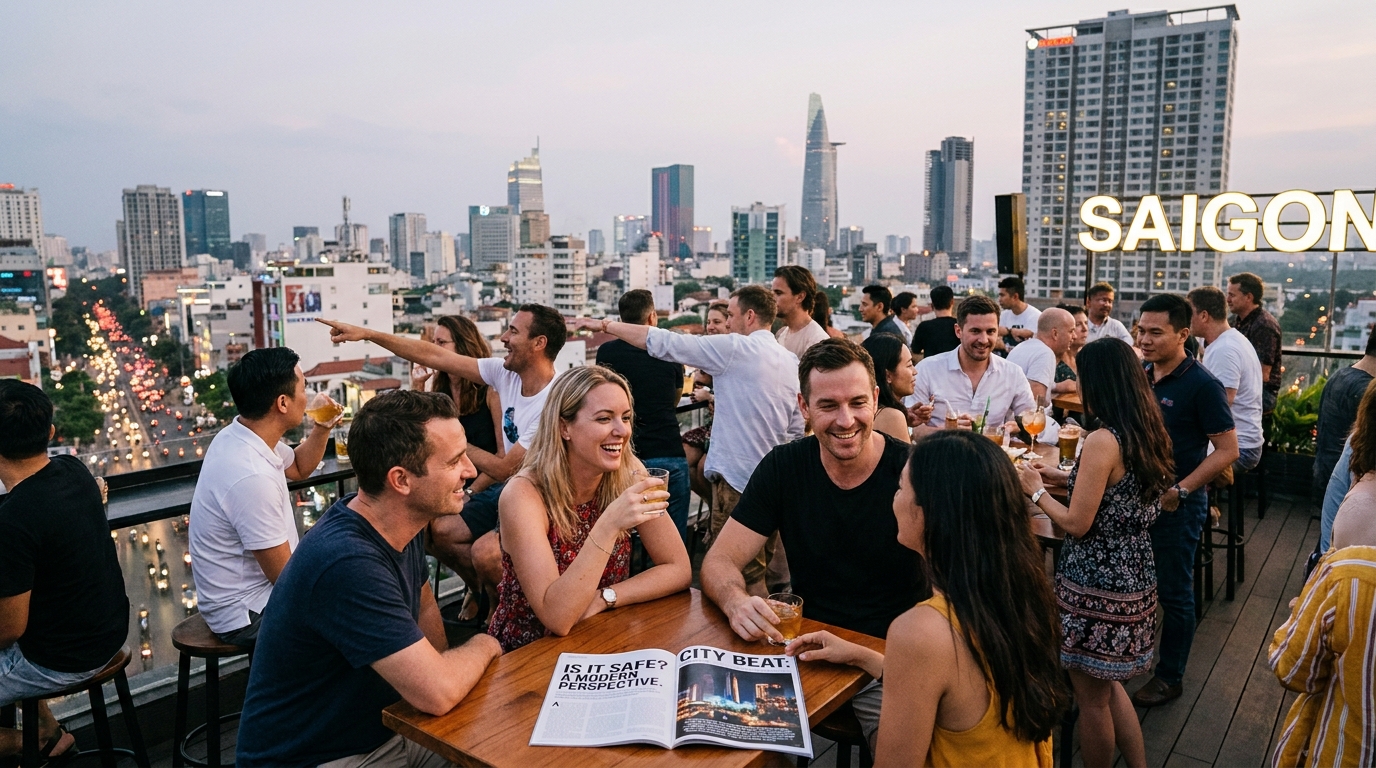
District 1 is safe at night for tourists, including women traveling solo. The main streets and entertainment zones are well-lit and busy until late. The primary nighttime risk is bag snatching on quieter streets, particularly where phone use is visible from the road. Use Grab for transport after midnight rather than walking on unfamiliar streets, and keep valuables in a front-facing bag. The areas around Bui Vien and Dong Khoi are consistently safe and well-patrolled.
What should I do if my bag or phone is snatched in Saigon?
Don’t chase the thief on foot — motorbike snatchers move too fast and pursuit creates risk of injury. Note the direction the motorbike went and any identifying features. Report the theft to the Tourist Police hotline (1800 599 920) or visit the nearest police station. Request a written police report, which you’ll need for travel insurance claims. Contact your bank immediately to cancel any cards in the stolen bag, using the overseas emergency number on the back of your card.
Is it safe to eat street food in Saigon?
Yes, street food from busy vendors is generally safe. The key indicators of safe street food: the stall is busy with locals eating, food is cooked fresh in front of you (not sitting pre-cooked), and utensils are either single-use or you’ve watched them being washed. Avoid pre-cooked food sitting at room temperature for more than 1-2 hours, especially in the midday heat. Mild stomach upsets affect roughly 20-30% of first-time visitors to Vietnam (WHO Southeast Asia travel health data, 2024) but are usually short-lived.
Do I need travel insurance for Saigon?
Travel insurance is strongly recommended for Saigon. Medical treatment at international-standard hospitals (which you should use if seriously ill) costs USD $100-500 per consultation without insurance, and a hospital stay can reach USD $1,000-5,000 per day. Travel insurance covering medical evacuation is particularly important if you plan to rent a motorbike or do adventure activities. Most policies that include Vietnam can be purchased online before departure for USD $3-8 per day depending on coverage level.
Is the water safe to drink in Saigon?
Tap water in Saigon is not safe to drink directly. The municipal water supply contains bacteria and trace contaminants that can cause illness in unacclimatized travelers. Always drink bottled water (15,000-25,000 VND at any convenience store) or water that has been boiled and filtered. Brushing teeth with tap water is generally considered safe for short-stay visitors. Ice in established restaurants and hotels is made from purified water and is safe; ice from unknown sources on the street is less certain.
For more Saigon guides, check out: District 4 Saigon Guide: Seafood, Locals, and Hidden Gems Near D1, District 3 Saigon Guide: Leafy Streets, Cafes, and the Best of Local Saigon.
For official information and further reading, visit Lonely Planet — Ho Chi Minh City.