
Saigon vs Bangkok for Expats: Which City Is Right for You in 2026?
Choosing between Saigon and Bangkok isn’t just about cost. It’s about the life you want to build in Southeast Asia. For expats, remote workers, retirees, and long-stay residents, both cities offer strong food scenes, modern housing, and large international communities. Yet daily life feels very different once you settle in.
If you’re researching “saigon vs bangkok expats,” you likely want clear answers on budget, visas, healthcare, work rhythm, housing, and social life. This guide compares Ho Chi Minh City and Bangkok through a long-term living lens, not a short tourist stay. Which city gives you better value, more convenience, and a smoother landing in 2026?
Key Takeaways
- Saigon usually offers lower monthly living costs than Bangkok for solo expats and couples.
- Bangkok generally has stronger public transport and wider international healthcare networks.
- Saigon often feels faster, younger, and more entrepreneurial for remote workers and founders.
- Bangkok can suit retirees and families seeking more established expat infrastructure.
- District 1 in Saigon remains a practical base for walkability, serviced housing, and daily convenience.
- Your best choice depends on lifestyle priorities, not headline prices alone.
Saigon is often better for lower living costs, while Bangkok usually offers more polished infrastructure.
Saigon is often the better value choice for expats focused on monthly spending. Numbeo data in 2025 shows consumer prices, including rent, are generally lower in Ho Chi Minh City than in Bangkok. That gap matters for long stays. Lower apartment costs, cheaper local meals, and affordable app transport can reduce monthly stress. Bangkok still wins in city systems, but Saigon wins on stretch. Isn’t that the first trade-off most expats weigh?
For solo professionals, Saigon often feels easier on a mid-range budget. You can rent a modern serviced apartment, eat out frequently, and still keep entertainment costs manageable. Bangkok can deliver similar comfort, but often at a higher monthly total in comparable central areas. If you work online and care about staying flexible, that pricing difference becomes more important over six or twelve months.
The local economy also shapes each city’s expat appeal. Vietnam’s GDP growth reached 7.09% in 2024, according to Vietnam’s General Statistics Office, making it one of Asia’s stronger growth stories. That growth supports new cafes, coworking spots, housing supply, and business energy in Saigon. Bangkok feels more mature and orderly. Saigon feels more dynamic and open to newcomers trying something new.

Bangkok has broader transport options, but central Saigon can be easier to live in day to day.
Bangkok clearly leads on mass transit. Its BTS and MRT systems handle millions of trips and reduce dependence on cars and motorbikes. By contrast, Ho Chi Minh City is still building out its rail future, though Metro Line 1 has moved the city forward. For central residents, however, Saigon’s compact core still makes daily living very manageable.
This point matters more than many comparison guides admit. Bangkok’s network is excellent, but your commute depends on where you live and work. In Saigon, many expats choose District 1, District 3, or Binh Thanh and rely on short ride-hailing trips. If your apartment is near cafes, gyms, groceries, and coworking spaces, you may spend less time planning movement across the city.
Walkability isn’t perfect in either city, but central Saigon often feels more condensed. You can live close to everything you need, especially in a well-positioned serviced residence. That’s one reason many long-stay guests choose fully furnished homes in the city center. If you want a practical base, explore serviced residences to see how central living can simplify life in Ho Chi Minh City.
Traffic remains a challenge in both places. Bangkok’s jams can feel legendary. Saigon’s motorbike-heavy streets can feel intense at first. Still, many expats adapt quickly once they settle into neighborhood routines. Would you rather have a polished rail network or a compact lifestyle that keeps most of your week within a short radius?
For housing, Saigon often gives expats more space and service for the same budget.
Saigon often offers better apartment value in central neighborhoods. According to Numbeo 2025 comparisons, average city-center rents in Ho Chi Minh City are lower than in Bangkok. For expats, that can mean a larger studio, one-bedroom, or serviced apartment for the same monthly spend. In practical terms, your money often buys more comfort in Saigon.
Housing quality depends heavily on building age, management, and location. Bangkok has a huge condo market, with many towers offering pools, gyms, and security. Saigon’s advantage is often flexibility. You’ll find more serviced apartments tailored to expats who want cleaning, reception support, utility bundles, and shorter commitment structures. That setup suits remote workers, new arrivals, and anyone who doesn’t want to spend weeks sorting utilities and furniture.
For long-term residents, serviced living also reduces friction. You don’t need to chase maintenance, negotiate internet installation, or buy household basics on day one. That’s especially useful if you’re relocating from abroad and need a soft landing. If that sounds appealing, review our amenities to see what everyday convenience looks like in a central Saigon residence.
Neighborhood feel also differs. Bangkok’s expat districts can be very polished, but sometimes less personal. Saigon’s central districts feel more mixed and lived-in. International restaurants sit beside local coffee shops, office towers, and street food stalls. Isn’t that layered street life exactly why many people move to Southeast Asia rather than stay in a predictable global city?
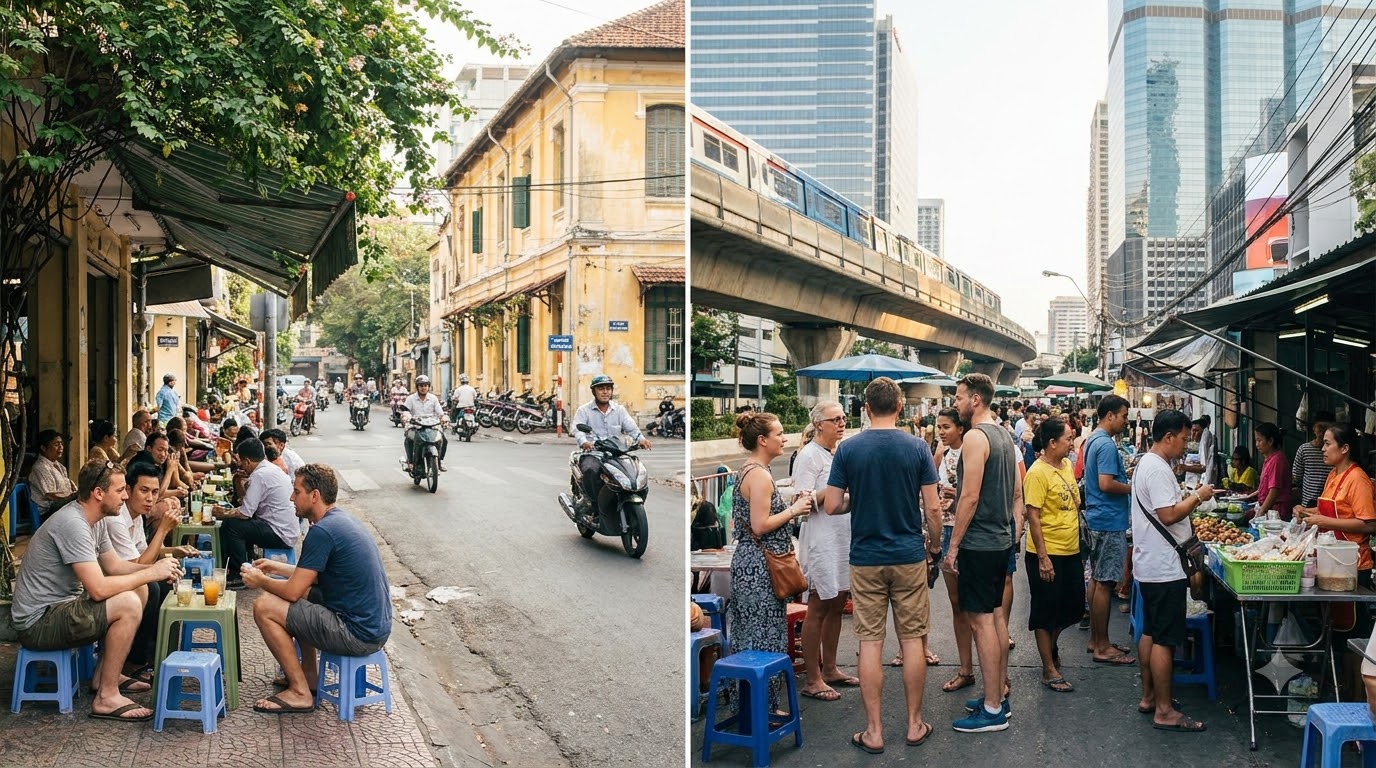
Bangkok has deeper international healthcare infrastructure, but Saigon covers most expat needs well.
Bangkok has the edge for hospital depth and medical tourism reputation. Thailand ranked 6th globally in the 2021 Medical Tourism Index by the Medical Tourism Association, reflecting its established international healthcare sector. That reputation reassures retirees and families. Still, Saigon’s private hospitals and clinics now meet most routine expat needs without much trouble.
In practical life, most healthy working-age expats won’t need complex care every month. They’ll need reliable GP visits, dental care, specialist referrals, and emergency access. Saigon provides those through providers such as FV Hospital, Family Medical Practice, and international clinics across the city. Bangkok simply offers more choice at the top end, especially for planned procedures and larger hospital systems.
Air quality is another quality-of-life factor. WHO reporting and global air quality trackers regularly show both cities face seasonal pollution concerns, though conditions vary by district and weather. Bangkok can experience heavy smog episodes. Saigon’s traffic pollution is also real. If you have asthma or other respiratory issues, your housing choice matters. Air purifiers, sealed windows, and strong building maintenance become part of the decision.
Healthcare comfort often comes down to routine, not rankings. If you live centrally, know where your clinic is, and have good insurance, Saigon is very workable. Families with children or retirees with ongoing conditions may still prefer Bangkok’s broader hospital ecosystem. But do you need the region’s biggest medical network, or simply dependable care near home?
Saigon feels more entrepreneurial and social for younger expats, while Bangkok suits broader lifestyle types.
Saigon often appeals more to founders, freelancers, and younger professionals. Vietnam’s median age is about 32.5 years, according to UN population estimates, giving the city a notably young energy. That youth shows up in new cafes, startup events, language exchange nights, and flexible work culture. Bangkok is diverse too, but Saigon often feels more hungry and informal.
For digital nomads and remote workers, community matters almost as much as internet speed. Saigon’s coworking and cafe scene supports spontaneous networking. It’s easy to meet agency owners, app builders, teachers, consultants, and e-commerce operators. Bangkok also offers that, but on a bigger and more segmented scale. In Saigon, people often seem easier to reach, especially if you base yourself near the center.
Food and nightlife also shape expat retention. Bangkok has greater range, more rooftop venues, and stronger late-night transit in some areas. Saigon counters with intensity and convenience. Great coffee is everywhere. Casual dining stays affordable. Social plans often happen with little friction. You can finish work, grab dinner, meet friends, and be home quickly. Isn’t that ease what long-term city life should feel like?
Retirees may read this differently. Bangkok’s larger expat base and established retirement pathways can feel safer and more predictable. Saigon may suit active retirees who prefer a lively, fast-changing environment. Neither answer is universal. The right city depends on how much structure you want around your daily life.

For visas, practical setup, and long-term rhythm, Saigon works best if you already plan to live in Vietnam.
Saigon is the stronger choice if your personal or business life is already tied to Vietnam. Vietnam welcomed 17.6 million international visitors in 2024, according to the Vietnam National Authority of Tourism, showing strong momentum in access and recovery. While tourism numbers don’t equal residency policy, they reflect a country that remains highly open to arrivals and active mobility.
Visa pathways change often in both countries, so expats should always check official rules. Thailand has expanded options for some long-stay groups, retirees, and remote professionals, but requirements can be detailed. Vietnam’s system also evolves, with business, work permit, investor, family, and other pathways depending on your situation. The key question is simple. Where do you actually intend to anchor your life and paperwork?
If your clients, partner, employer, or business activity are already Vietnam-based, Saigon becomes the natural base. It’s easier to create a routine when your home city matches your legal and professional center of gravity. A centrally managed serviced apartment also helps when you first arrive. You can settle quickly, learn neighborhoods, and make more informed housing choices later if needed.
That’s why many expats begin with flexible, fully furnished accommodation in District 1. You stay close to embassies, offices, restaurants, hospitals, and social spaces while reducing setup stress. Why wait until the week before relocation to sort your housing?
So, which city is right for you in 2026? Saigon wins on value and energy, while Bangkok wins on systems and scale.
For many expats in 2026, Saigon is the better choice if budget, momentum, and central convenience matter most. Bangkok is better if you want stronger transit, deeper healthcare, and a more mature expat ecosystem. Reuters and IMF reporting continue to highlight Vietnam’s strong economic trajectory, which supports Saigon’s appeal for long-stay professionals and entrepreneurs.
Here’s the simple breakdown. Choose Saigon if you want lower monthly costs, strong apartment value, easy social mixing, and a city that feels commercially alive. Choose Bangkok if you prioritize regional flight links, transit coverage, hospital depth, and a more established big-city structure. Both cities can work well. But for many long-term residents, Saigon’s combination of affordability and daily convenience is hard to beat.
If you’re moving to Ho Chi Minh City, where you live shapes your experience more than any citywide average. A central, calm, well-managed home can make the transition smoother from the first day. That’s especially true for remote workers and expats who want less friction and more time to enjoy the city.
Frequently Asked Questions
Is Thailand or Vietnam better for expats?
It depends on your priorities. Thailand is often better for retirees, families, and expats who want mature infrastructure and broader healthcare options. Vietnam is often better for professionals, entrepreneurs, and budget-conscious long-stay residents who want lower costs and stronger growth momentum. If you plan to work or build connections in Vietnam, Saigon usually makes more sense than living across the border.
Which is better, Ho Chi Minh City or Bangkok?
Ho Chi Minh City is better for expats who value affordability, energy, and a compact central lifestyle. Bangkok is better for those who prioritize public transport, hospital choice, and a more established expat ecosystem. There isn’t one universal winner. Saigon feels more agile and youthful, while Bangkok feels larger, more systemized, and more internationally mature.
What is the best city in Vietnam for expats?
For many expats, Ho Chi Minh City is the best city in Vietnam because it combines career opportunity, international dining, serviced housing, and a large social scene. Hanoi suits people who prefer four seasons and a more traditional political and cultural center. Da Nang attracts lifestyle-focused residents. Still, Saigon remains the most practical all-round choice for long-term expat living.
Where is the best place for an expat to live in Thailand?
Bangkok is usually the best place in Thailand for expats who want career options, international schools, advanced hospitals, and urban convenience. Chiang Mai suits slower living and digital nomads. Phuket works for resort-style life and higher budgets. Among these, Bangkok remains the strongest all-round base for most long-term expats in Thailand.
Is Saigon good for digital nomads and remote workers in 2026?
Yes. Saigon remains a strong choice for digital nomads and remote workers in 2026, especially those who want lower living costs and a social business environment. Reliable internet, plentiful cafes, coworking access, and central serviced apartments make day-to-day life efficient. District 1 is especially useful if you want short travel times and easy access to services.
Conclusion
When comparing saigon vs bangkok expats in 2026, the real answer comes down to lifestyle fit. Bangkok offers stronger infrastructure and broader healthcare depth. Saigon offers lower costs, better central housing value, and a street-level energy many expats find addictive. If you’re building a life in Vietnam, Saigon often becomes the more natural and rewarding base.
For expats planning a long stay, a comfortable home in the right neighborhood makes all the difference. Central serviced living can save time, reduce setup stress, and help you settle faster.
Planning to make Saigon your base?
For more Saigon guides, check out: Motorbike vs Grab in Saigon: Which Is Better for Daily Expat Life?, Best Apps and Resources for Expats Living in Saigon.