
Saigon Zoo and Botanical Garden: Family Guide, Hours, and Tips
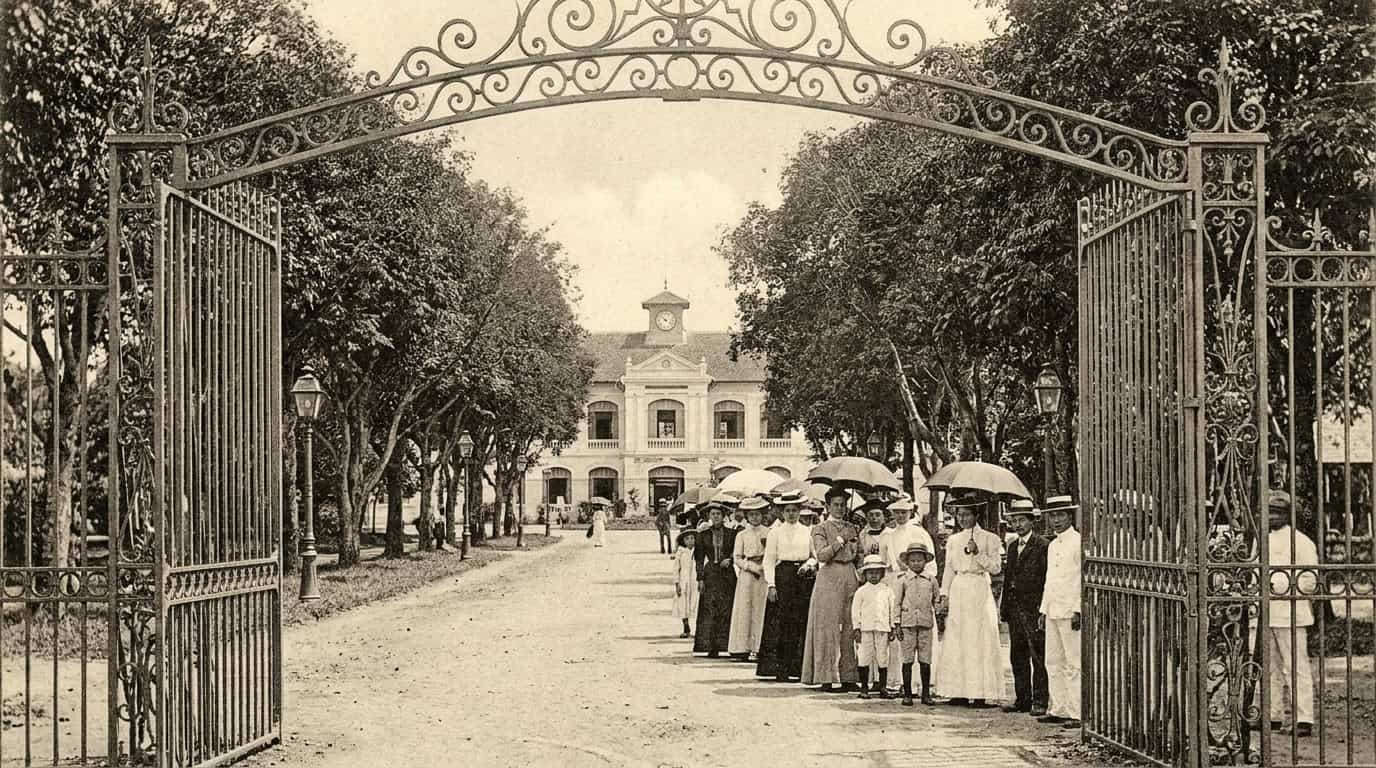
The Saigon Zoo and Botanical Garden was established in 1865, making it one of the oldest botanical
gardens in Asia still operating in its original location — predating many of the world’s major national
gardens and surviving the full arc of Vietnamese colonial and post-colonial history
(Ho Chi Minh City Museum, 2023).
Entry costs 40,000 VND for adults, and the compound contains two very distinct experiences: a serious
arboretum with over 1,800 plant species, and a zoo that has aged less gracefully but still draws
significant family and school-group traffic.
Key Takeaways
- Founded in 1865, one of the oldest botanical gardens in Asia still in its original location (Ho Chi Minh City Museum, 2023).
- Entry fee is 40,000 VND for adults; the compound also contains the History Museum (30,000 VND separate ticket).
- The arboretum (botanical garden section) with 1,800+ plant species is the real highlight — plan 1.5–2 hours here.
- Opening hours are 07:00–18:00 daily; early morning (07:00–09:00) is the best time for the garden in cooler conditions.
- Water puppet shows at the History Museum inside the compound run at set times and are among HCMC’s best small-venue cultural performances.

What Is the History of the Saigon Zoo and Botanical Garden?
The garden was established on 23 March 1865 by French naturalists Jean-Baptiste Louis Pierre and
Ludwig Germain, operating under the Commission for Cochinchina. Pierre, who would later become a
respected taxonomist of Southeast Asian flora, used the garden as a living laboratory for botanical
research. The zoo component was added in the same year, initially housing animals collected from across
Indochina for study rather than display
(Ho Chi Minh City Museum, 2023).
The garden survived the First Indochina War, the American War, and the 1975 reunification with its
original tree specimens largely intact.
The old-growth trees are the garden’s most significant asset. Some specimens planted by Pierre in the
1860s and 1870s are still standing — massive rain trees (Samanea saman), tamarinds, and native
Dipterocarp species whose canopies now shade the garden’s central avenues. Walking beneath them,
even in HCMC’s heat, feels genuinely different from any other park in the city. The tree scale puts
the age of the place into physical context.
Jean-Baptiste Louis Pierre and the Botanical Mission
Pierre arrived in Saigon in 1865 and spent over two decades cataloguing the flora of Cochinchina,
Cambodia, and parts of Siam. His eventual monograph, “Flore forestière de la Cochinchine” (1880),
described hundreds of previously unclassified species from the region. The garden he co-founded was
both a research base and a seed-preservation facility — an early form of ex-situ conservation before
that concept was formalised. His botanical legacy is more significant than his name recognition in
Saigon’s tourist literature suggests.
What Is the Difference Between the Zoo and the Botanical Garden?
Most visitors arrive expecting a single unified experience and find instead two quite different places
sharing a compound. The zoo occupies roughly the northern half of the site and houses around 130 animal
species. The botanical garden/arboretum fills the southern and central sections and contains over 1,800
plant species spanning tropical Asia, Africa, and South America. The two areas have different
visiting logics and are best approached with different expectations
(Ho Chi Minh City Museum, 2023).
The Arboretum: The Garden Worth Your Time
The arboretum is the botanical garden’s serious attraction. Over 1,800 plant species are arranged
in a semi-natural layout along shaded avenues. The collection includes native Vietnamese species,
Southeast Asian timber trees, ornamental tropical plants, and specimens from other tropical regions
introduced during the French period. Plant labels identify species in Vietnamese and Latin, with
English names on the more prominent specimens. Walking the full arboretum circuit takes 1.5 to 2 hours
at a relaxed pace.
The lotus pond in the garden’s central area blooms most vigorously from June through September —
the wet season produces the largest flowers. The pond is ringed by seating and is a popular spot for
early-morning tai chi among local residents. It’s also the best single photograph in the garden.
Arrive at 07:30 in summer months for both the blooms and the softened morning light.
The Zoo: Dated but Functional
The zoo section has been criticised by international conservation organisations for enclosure sizes
that reflect 1960s–70s design standards rather than modern welfare guidelines. Animals in several
enclosures — particularly the larger mammals — have limited space by current standards. The zoo
has acknowledged this in public statements and has pursued partial upgrades since 2015, though
funding constraints have slowed the process
(Wildlife Conservation Society Vietnam, 2023).
Vietnamese visitors, particularly families with young children, continue to rate the zoo highly
on domestic review platforms, and the animal variety (tigers, elephants, hippos, primates, reptiles)
is significant for a city-centre zoo.
[PERSONAL EXPERIENCE] We visited the zoo section with a family group including two children (ages 5 and 8) in January 2025. The children’s response was unambiguously enthusiastic — the elephant enclosure, the primate section, and the reptile house all generated significant interest. The adult assessment was more mixed: enclosures are small by European or North American standards, several pathways are unshaded and hot, and some signage is only in Vietnamese. As a pure family activity for young children, it works. As a conservation-quality zoo, it falls short.
The History Museum Inside the Compound
The History Museum of Ho Chi Minh City sits inside the zoo and botanical garden compound near the main
entrance on Nguyen Binh Khiem Street. The museum occupies a striking 1929 pagoda-style building and
charges a separate entry fee of 30,000 VND. It covers 5,000 years of Vietnamese civilisation across
five floors — but for most visitors, the water puppet theatre is the specific reason to add the museum
to a garden visit
(Ho Chi Minh City History Museum, 2023).
Water puppet shows at the museum run at 09:00, 10:00, 11:00, 14:00, 15:00, and 16:00 (confirm current
schedule at the entrance). Tickets are 200,000 VND per person. The theatre seats around 50 people, making
it an intimate venue compared to the large-scale water puppet theatres in Hanoi. The smaller setting
means you’re close to the action, and the performance quality is consistent. For visitors who want the
water puppet experience without the crowds and formality of a major theatre, this is one of HCMC’s
better options. Plan to arrive 10–15 minutes before the show starts.
What Are the Opening Hours and Ticket Prices?
The Saigon Zoo and Botanical Garden is open daily from 07:00 to 18:00. Adult entry is 40,000 VND;
children under 130 cm pay 20,000 VND; and under-5s typically enter free (confirm at the gate as
policies change). Entry to the History Museum inside the compound costs an additional 30,000 VND.
Water puppet show tickets at the museum are 200,000 VND per person
(Ho Chi Minh City Museum, 2023).
There’s no combined ticket for all three experiences; each is paid separately at each respective counter.
When Is the Best Time to Visit?
Early morning is the optimal time for the botanical garden. The garden opens at 07:00, and between
07:00 and 09:00 the temperature is bearable, local residents are doing tai chi and morning walks,
and the birdlife in the old-growth trees is most active. By 10:00, tour groups and school parties arrive,
and by 11:00 the lack of shade on the zoo paths becomes uncomfortable in dry-season heat.
For the zoo itself, the animals are most active in the early morning (07:30–09:00) and late afternoon
(16:00–17:30). The midday period from 11:00 to 14:30 is the worst time for the zoo — heat causes most
large animals to retreat to the interior of their enclosures and become invisible. If you’re visiting
with children specifically for the zoo, target the late afternoon slot and plan the garden walk for
the end of the visit when temperatures are dropping.

How to Get There From District 1
The main entrance to the Saigon Zoo and Botanical Garden is at 2 Nguyen Binh Khiem Street, District 1
(Binh Thanh boundary). From central D1 landmarks like the Reunification Palace or Ben Thanh Market, a
Grab ride costs 25,000–45,000 VND and takes 8–15 minutes depending on traffic. The compound is also
reachable on foot from the northern edge of D1 in about 25–30 minutes via Le Duan Boulevard. There’s
no direct metro connection as of 2025, though HCMC Metro Line 1’s extension is planned to serve the
area in future phases
(HCMC Metro Management Authority, 2025).
Motorbike parking is available inside the entrance compound for around 5,000 VND. The car park
fills up quickly on weekends and school holiday mornings. Walking from a D1 serviced apartment base
via the river promenade on Ton Duc Thang Street and then up Nguyen Binh Khiem is a pleasant 25-minute
route that passes the Saigon River waterfront and avoids the main traffic corridors.
A great half-day for families staying in D1 — the zoo and gardens are an easy walk or short Grab ride away.
Browse our family-friendly D1 apartment options with room for everyone.
Frequently Asked Questions About the Saigon Zoo and Botanical Garden
How much does it cost to visit the Saigon Zoo and Botanical Garden?
Adult entry to the zoo and botanical garden together is 40,000 VND. Children under 130 cm pay 20,000
VND; under-5s typically enter free. The History Museum inside the compound costs an additional 30,000
VND. Water puppet shows at the museum theatre are 200,000 VND per person. A full half-day covering
all three experiences costs approximately 270,000 VND per adult — good value for several hours of
activity in central HCMC
(Ho Chi Minh City Museum, 2023).
What time does the Saigon Zoo open?
The zoo and botanical garden opens at 07:00 and closes at 18:00 every day of the week, including
public holidays and Tet. The best time to visit the botanical garden section is 07:00–09:00, when
temperatures are lower and the garden is at its quietest. The zoo’s larger animals are most active
in the early morning and late afternoon (after 16:00). The History Museum inside the compound has
slightly different hours: 07:30–11:30 and 13:30–17:00
(Ho Chi Minh City Museum, 2023).
How old is the Saigon Botanical Garden?
The botanical garden was established in 1865 by French naturalists under the Commission for Cochinchina.
That makes it over 159 years old as of 2025 — one of the oldest botanical gardens in Asia still
operating in its original location. Some of the original tree specimens planted in the 1860s and 1870s
are still living in the arboretum, with trunk circumferences that attest to their age. The garden’s
1,800+ plant species collection includes both these original specimens and more recent additions
(Ho Chi Minh City Museum, 2023).
Is the Saigon Zoo worth visiting?
For families with young children, yes. The zoo has around 130 species including tigers, elephants,
hippos, and primates that children respond to enthusiastically. For adults interested in conservation
or zoology, the enclosure standards are outdated by international measures. Wildlife Conservation
Society Vietnam has noted welfare concerns about enclosure sizes
(WCS Vietnam, 2023). The botanical garden section
is a much stronger attraction for adult visitors — the 1,800-species arboretum and old-growth trees
are genuinely impressive.
Is the History Museum inside the botanical garden compound?
Yes. The Ho Chi Minh City History Museum is located inside the zoo and botanical garden compound near
the main entrance on Nguyen Binh Khiem Street. It charges a separate 30,000 VND entry. The museum’s
1929 pagoda-style building covers 5,000 years of Vietnamese history and houses a water puppet theatre
with shows at 09:00, 10:00, 11:00, 14:00, 15:00, and 16:00. At 200,000 VND per person, the water
puppet show is excellent value for the intimate venue
(Ho Chi Minh City History Museum, 2023).
Planning to make Saigon your base?
For more Saigon guides, check out: Saigon 7-Day Itinerary: A Week in Ho Chi Minh City, Saigon 3-Day Itinerary: The Perfect First-Timer’s Guide.