
When expats search for a serviced apartment ho chi minh city, they are rarely looking for a vacation. They need a real home base — a place where they can work, rest, cook, and settle into the rhythm of Saigon without the daily friction of hotel checkout times or the anxiety of an Airbnb host who cancels two weeks before their lease starts. After a decade operating in District 1, we have seen thousands of expats make this transition, and the reasons they choose serviced apartments over hotels and Airbnb are consistent, practical, and worth laying out clearly.
Key Takeaways
- Serviced apartments in Ho Chi Minh City cost 30–60% less per month than equivalent hotel rooms and provide full kitchen and living facilities for long-term residents.
- Airbnb listings in HCMC carry significant cancellation and quality risks on stays beyond 30 days — serviced apartments offer legally registered leases and stable tenancy.
- District 1 serviced apartments put expats within walking distance of major business hubs, international schools, consulates, and transport links.
- Housekeeping, utilities, WiFi, and building security are typically bundled into serviced apartment rates, removing the hidden-cost surprises common with both hotels and Airbnb.
- Vietnamese law requires landlords to register long-stay foreign tenants with local police — reputable serviced apartment operators handle this compliance automatically.
Serviced Apartments Over Hotels in Saigon: What Makes a Serviced Apartment Different From a Hotel Room in Saigon
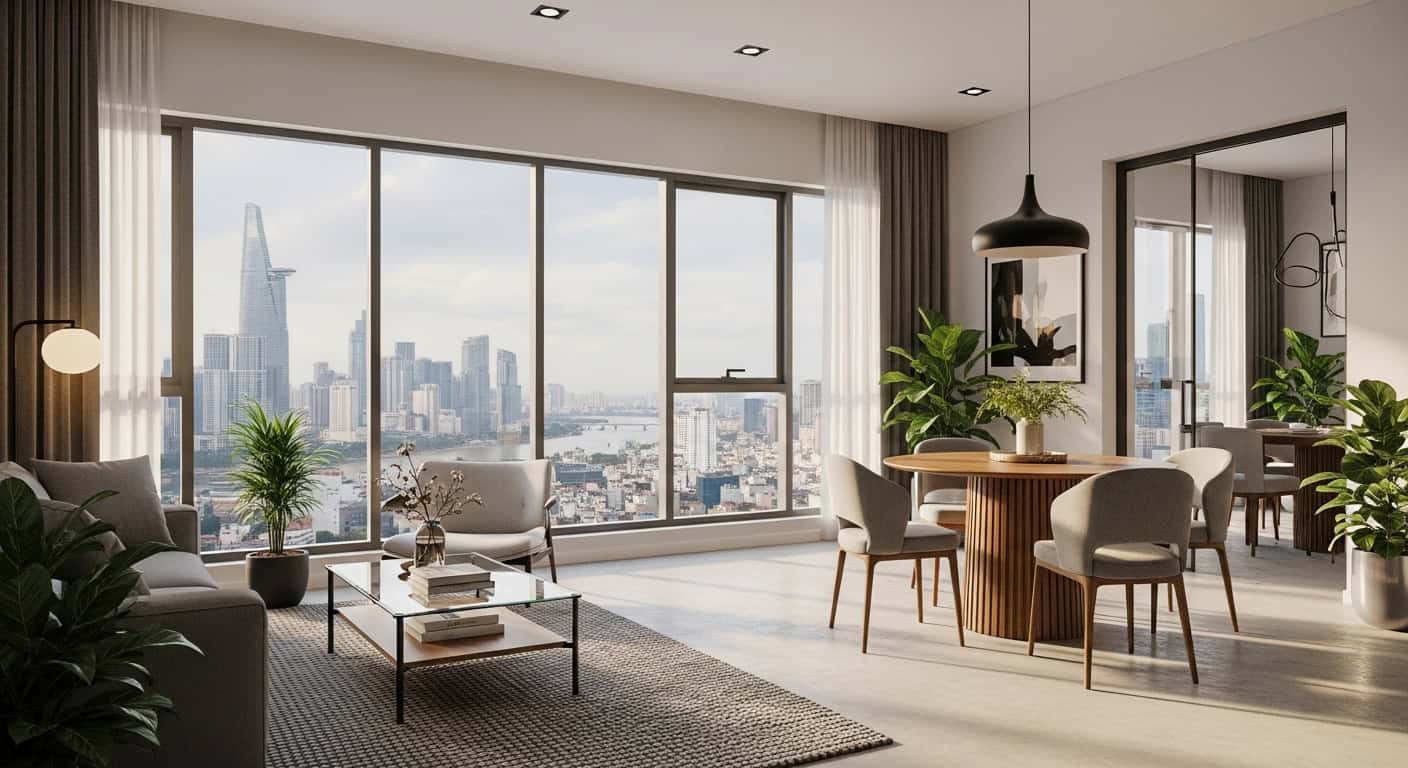
A hotel room is designed for transience. Everything — the tiny desk, the minibar priced at ten times convenience-store rates, the single chair — signals that you are a guest passing through, not a person living. A serviced apartment ho chi minh city is a furnished flat with a kitchen, separate sleeping and living areas, and services layered on top: weekly or daily housekeeping, 24-hour reception, WiFi, and utilities included. You shop at the Ben Thanh wet market two blocks away, cook your own pho, and come home to a clean apartment. That is a fundamentally different experience from ordering room service at midnight because you have no other option.
The Real Cost Comparison: Serviced Apartments vs Hotels vs Airbnb in HCMC
Cost is where the argument becomes undeniable. A mid-range hotel in District 1 — think a three-star property near Bui Vien or Pham Ngu Lao — runs between USD 60 and USD 120 per night. Over 30 days, that is USD 1,800 to USD 3,600 before meals, before laundry, before anything resembling a normal life. A comparable serviced apartment ho chi minh city in District 1 runs between USD 700 and USD 1,500 per month all-inclusive. The savings compound fast.
Airbnb sits awkwardly in the middle. Nightly rates look attractive, but monthly discounts are inconsistent, hosts can withdraw listings, and the quality gap between photos and reality is wide in a city like Saigon where renovation standards vary enormously by building. According to Statista’s 2025 Global Accommodation Report, short-term rental cancellation rates in Southeast Asian cities increased by 18% year-on-year in 2024, with Vietnam among the highest-affected markets. That statistic is not abstract when you are living out of a suitcase and your host cancels three weeks before your arrival.
Why District 1 Is the Right Base for Most Expats in Ho Chi Minh City
Expats who spend serious time in Saigon almost always gravitate to District 1. The reasons are structural: the central business district, the majority of international company offices, the French Quarter’s consular row, Vincom Center, the Saigon Opera House, and the best transport links to Tan Son Nhat Airport are all here. Walking to a client meeting in fifteen minutes beats a forty-minute Grab ride from Binh Thanh in afternoon traffic.
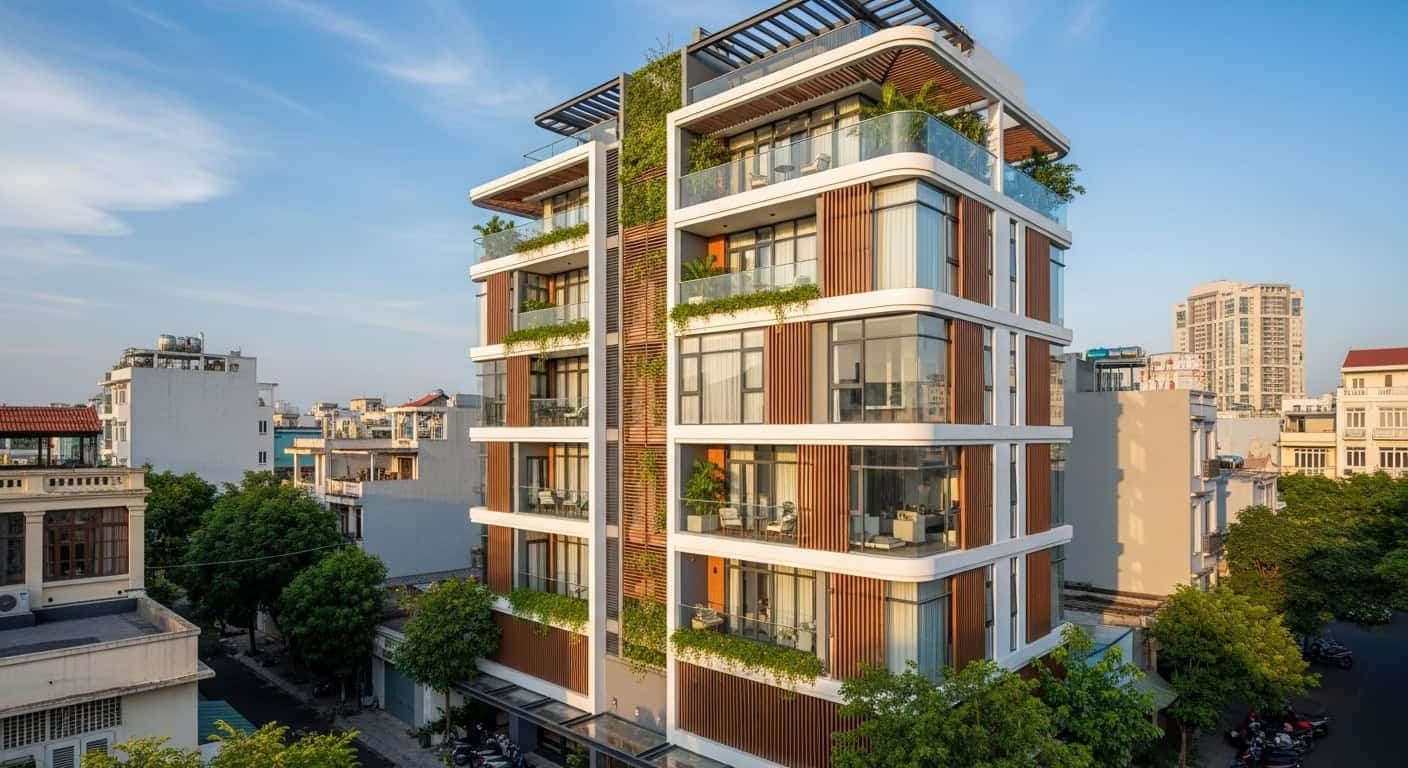
Beyond logistics, District 1 has the density of services that expat life depends on — international pharmacies, English-language medical clinics, co-working spaces, international supermarkets stocking European and Japanese goods, and a restaurant scene that covers every cuisine an expat might miss from home. A serviced apartment in this district is not just accommodation; it is access to an entire functioning expat infrastructure.
Legal Compliance and Visa Support: What Reputable Operators Provide
This is the section most comparison guides skip, and it matters enormously. Vietnamese law under Decree 144/2021 requires that foreign nationals staying in any accommodation — hotel, apartment, or private home — be registered with the local police within 24 hours of arrival. Hotels do this automatically. Many Airbnb hosts and informal landlords do not, leaving tenants technically in violation of their visa conditions.
A professional serviced apartment ho chi minh city operator registers every tenant as a matter of course, maintains the paperwork trail, and can provide residency documentation that supports visa extensions, work permit applications, and bank account openings. For expats on business visas, e-visas, or the new digital nomad arrangements that Vietnamese immigration is gradually formalising, this compliance infrastructure is not optional — it is the difference between smooth bureaucracy and an unnecessary crisis.
Workspace and Connectivity: Built for the Modern Expat Workflow
Remote work has fundamentally changed what expats need from accommodation. According to Cushman & Wakefield’s 2025 Asia-Pacific Office Market Report, HCMC saw a 23% increase in demand for flexible living-working spaces among foreign nationals between 2023 and 2025, driven primarily by technology sector employees and entrepreneurs on multi-year assignments. A hotel room with a tiny desk and shared-floor WiFi that drops during peak hours is simply incompatible with a full professional workday.
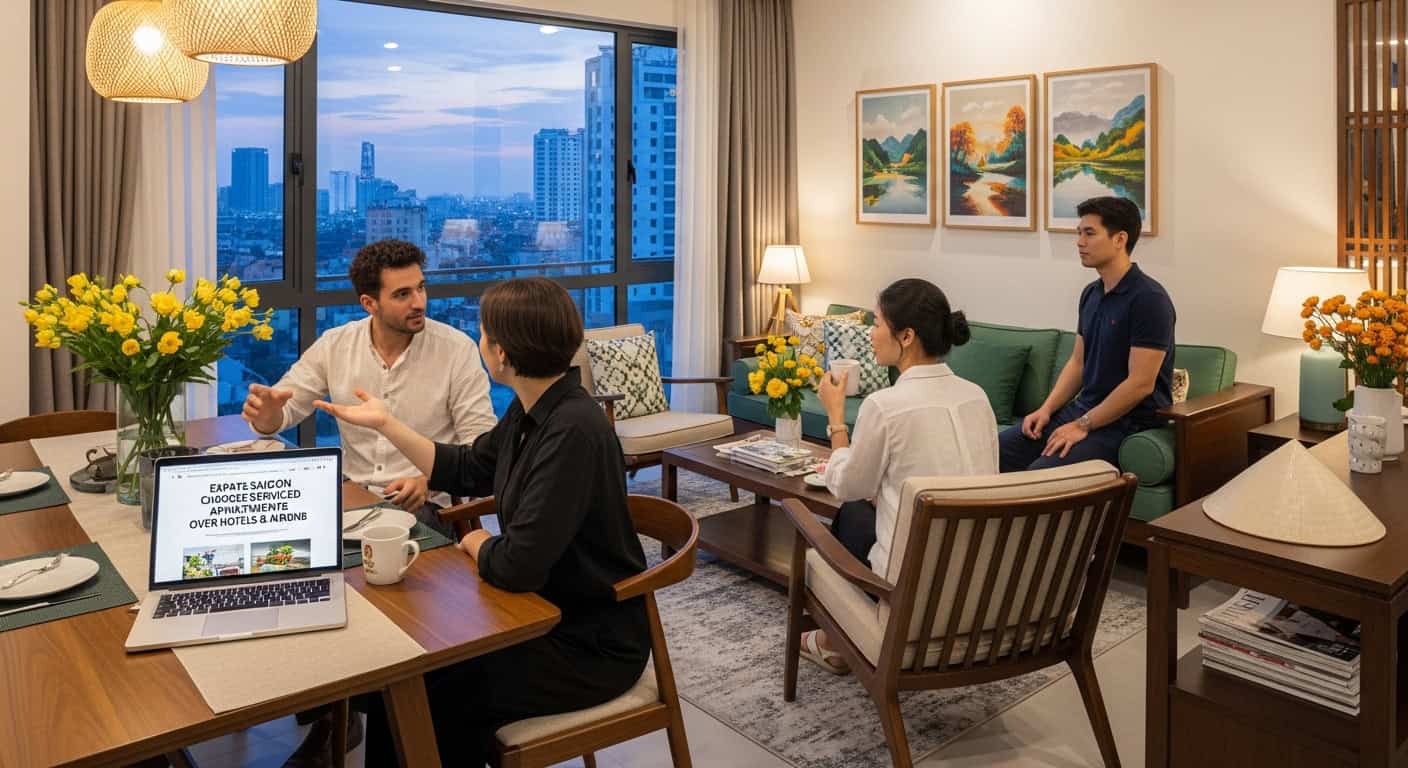
Good serviced apartments in District 1 offer fibre-optic internet (100 Mbps or higher is now standard in reputable buildings), dedicated desks with ergonomic setups, and enough space to separate work from rest — something that directly affects sleep quality and long-term productivity. Several buildings also offer co-working areas in common spaces, useful for calls or client meetings without leaving the building.
Kitchen Access and Nutrition: The Underrated Advantage
Living in Saigon on hotel food alone is expensive and, after the first few weeks, genuinely exhausting. Vietnamese street food is extraordinary but not three-meals-a-day sustainable for everyone. Having a full kitchen changes the calculus. You stock the fridge from Vinmart or the Ba Chieu market, you make your own coffee in the morning instead of paying VND 90,000 at a hotel breakfast buffet, and you maintain the dietary routines that keep you functional over a three-to-twelve-month assignment.
This is a quality-of-life argument that sounds small but is cited consistently by expats who have tried both arrangements. The ability to cook is the ability to feel at home — and feeling at home in a foreign city is directly linked to performance, mental health, and the willingness to extend a contract.
Security, Maintenance, and Reliability: What Breaks at 2am
Hotels have 24-hour maintenance. Informal Airbnb rentals often do not. The air conditioning compressor that fails during a Saigon July heat event — temperatures regularly exceed 38°C — is not an abstract risk; it is a near-certainty at some point in a long stay. A professional serviced apartment operator has an in-house maintenance team, a spare parts inventory, and a clear SLA for resolving issues. A private Airbnb landlord has a phone that may or may not be answered.
Security follows the same logic. District 1 serviced apartments operate with 24-hour security, CCTV, key-card access systems, and reception desks staffed through the night. The combination of safety, maintenance reliability, and professional management removes a category of stress that accumulates invisibly over months of independent living.
Community and Social Infrastructure for Long-Term Residents
One of the least-discussed advantages of choosing a well-run serviced apartment ho chi minh city building is the community that forms within it. Buildings that cater specifically to expats develop informal networks — referrals for doctors, recommendations for Vietnamese language teachers, introductions to other professionals in the same industry. This is not incidental. For expats arriving without an existing social network in Saigon, the building community can be the first thread in a social fabric that takes months to build otherwise.
Rooftop pools, common lounges, and organised building events accelerate this. A good serviced apartment building in District 1 functions as a soft landing — not isolating you from the city, but giving you a stable, socially connected base from which to explore it.
Flexibility and Lease Terms That Match Expat Reality
Expat assignments change. Projects extend. Contracts end early. The Vietnamese property market, unlike Western rental markets, is accustomed to this reality, and reputable serviced apartment operators structure leases accordingly. Monthly rolling contracts, three-month minimums with one-month break clauses, and six-to-twelve-month leases with early-exit provisions are all standard. This flexibility is simply not available in the hotel sector (where you pay per night regardless) or in the private rental market (where six-to-twelve-month leases with stiff penalty clauses are the norm).
Hotels exhaust you. Airbnb surprises you. Serviced apartments in District 1 settle you in. After 10 years operating a well-run serviced building, we know the difference — contact to discuss the lease structure that fits your timeline.
How to Choose the Right Serviced Apartment in Ho Chi Minh City
Not all serviced apartments are equal, and the market in HCMC has a wide quality range. When evaluating options, prioritise the following: legal registration capability (ask directly whether they register foreign tenants with ward police), internet speed (request a speed test, not a brochure claim), maintenance response times, lease flexibility terms in writing, and proximity to your primary work location or the transit routes you will use daily.
Visit in person before committing. Saigon’s light plays differently in the afternoon, the street noise from the alley below may not appear in listing photos, and the actual kitchen equipment (versus the staged photo) matters for a stay of more than a week. A reputable serviced apartment ho chi minh city operator will welcome an in-person inspection without pressure — that confidence in their product is itself a quality signal.
What Expats Actually Say After Six Months in a District 1 Serviced Apartment
The feedback pattern from long-term residents is consistent across nationality and profession. The initial adjustment — learning the neighbourhood, establishing routines, finding the right supermarket — takes two to four weeks. After that, most expats describe a feeling of genuine residence rather than extended travel. They have a favourite coffee shop two doors down. They know the security guard’s name. They have figured out the optimal Grab route to their office to avoid the morning school-run congestion on Nguyen Thi Minh Khai.
This is what a good serviced apartment ho chi minh city enables — not just accommodation, but the scaffolding around a functioning daily life in one of Southeast Asia’s most dynamic cities. The difference between being a tourist in Saigon and being a resident is almost entirely a function of where and how you live.
You May Also Find Useful
- Airbnb Ho Chi Minh City 2026: How It Compares to Serviced Apartments for Long Stays
- Serviced Apartments vs Hotels in Saigon: Which Is Better for a Long Stay?
- Long-Stay Apartments in Saigon 2026: The Complete Guide to Monthly Accommodation
- Serviced Apartment Ho Chi Minh City 2026: The Complete Guide for Corporate and Long-Stay Guests
For a first month while you look at longer leases, Booking.com and Agoda both list serviced apartments in Ho Chi Minh City on monthly rates — a useful baseline before you start dealing with local agents.
Frequently Asked Questions
What is the average monthly cost of a serviced apartment in Ho Chi Minh City in 2026?
A one-bedroom serviced apartment in District 1 typically ranges from USD 700 to USD 1,500 per month, all-inclusive with utilities, WiFi, and housekeeping. Studio units start from around USD 500. Prices vary by building quality, floor level, and lease length — longer leases (six months or more) generally attract a 10–15% discount on the listed monthly rate.
Do serviced apartments in HCMC handle visa and police registration paperwork?
Reputable serviced apartment operators register all foreign guests with the local ward police within 24 hours of check-in, as required under Vietnamese law. They will also provide official accommodation confirmation letters for visa extension and work permit applications. Always confirm this capability before signing a lease — it is a legal requirement and a practical necessity for long-stay expats.
What is the minimum stay for a serviced apartment in Ho Chi Minh City?
Most serviced apartments in District 1 have a minimum stay of one month, with some buildings offering two-week minimums for premium-priced units. Monthly rolling contracts are common, and many operators offer three-to-twelve-month leases with flexible early-exit clauses. Short stays under two weeks are generally better served by hotels or boutique accommodation.
Is District 1 the best area for expats renting serviced apartments in Saigon?
District 1 remains the most practical base for the majority of expats due to its concentration of business offices, international services, consulates, and transport links. District 2 (Thu Duc) is popular with families due to international schools, and Binh Thanh attracts younger expats seeking a more local feel at lower prices. For first-time expats or those on business assignments, District 1’s infrastructure advantages typically outweigh the slightly higher rental cost.
How does a serviced apartment in Ho Chi Minh City compare to Airbnb for a 3-month stay?
For a three-month stay, a serviced apartment will almost always be more cost-effective, more legally compliant, and more reliable than Airbnb. The monthly all-inclusive rate undercuts typical Airbnb pricing after monthly discounts are applied, and the serviced apartment provides police registration, a formal lease, stable management, and maintained facilities. Airbnb’s main advantage — flexibility for very short bookings — is irrelevant for stays over 30 days.
Official Resources
For the most up-to-date information on serviced apartment ho chi minh city, visit the Vietnam Real Estate Association.