
Settling In Timeline for Saigon Expats: What to Do Week by Week
Moving to Ho Chi Minh City feels exciting, fast, and sometimes chaotic. A clear week-by-week plan makes the first month easier. This settling in Saigon timeline expat guide helps you handle arrival basics, housing, money, transport, health, and daily routines without wasting time. If you’re an expat, digital nomad, remote worker, or retiree planning a long stay, this timeline shows what matters first and what can wait until later.
Saigon rewards people who get organized early. Your first week shapes your comfort level for months. Where will you sleep, how will you pay, and how will you get around safely? Those questions come up fast. This guide focuses on practical steps, realistic expectations, and common expat priorities in District 1 and nearby neighborhoods. It also shows where a serviced apartment can remove the hardest parts of the transition.
Settling in Saigon Timeline Expat: Key Takeaways
- Week 1 should focus on immigration, a local SIM, cash access, and temporary housing.
- Week 2 is best for choosing a neighborhood and confirming a longer-term apartment.
- Week 3 should cover banking, work setup, healthcare, and transport routines.
- Week 4 is when most expats settle social habits, budget controls, and local admin tasks.
- District 1 remains a strong base for walkability, services, and reliable long-stay convenience.
- Serviced apartments reduce startup friction for remote workers, retirees, and business travelers.
Week 1: Arrive, clear the basics, and create a soft landing
Start with stability, not sightseeing. Tan Son Nhat handled nearly 40 million passengers in 2023, according to Airports Corporation of Vietnam, so arrival lines and airport traffic can feel intense. Your first week should cover immigration, transport, a local SIM, cash, and a dependable place to stay. If you remove those pressures first, the city feels much easier within days.
At the airport, keep your passport, visa documents, hotel address, and onward details easy to reach. Immigration timing varies by arrival bank and season, but many expats should expect around 30 to 90 minutes from landing to exit. That range is realistic, especially during evening waves. Book your first nights before arrival, ideally in a central area. District 1 works well because banks, pharmacies, supermarkets, and coworking options are close together.
Your first accommodation should support adjustment, not just sleep. A serviced apartment often helps more than a standard hotel room. You get space to unpack, reliable housekeeping, and a routine-friendly environment. Why scramble through apartment listings while jet lagged, humid, and trying to decode local contracts?

Next, get connected. Buy a local SIM at the airport or a reputable city store. Mobile data is cheap and essential for maps, ride-hailing, translation, and banking alerts. Then withdraw some Vietnamese dong. Card acceptance is decent in modern venues, but cash still matters for smaller cafes, markets, and quick errands. Keep small bills. Large notes can be awkward in taxis or convenience stores during your first days.
Finally, don’t overbook your first week. Walk your block, identify one grocery store, one pharmacy, one coffee shop, and one ATM. That tiny map reduces stress immediately. If your building includes support services, ask about laundry, cleaning schedules, or local recommendations. You don’t need to master Saigon in three days. You just need a stable base and enough energy to notice what your real priorities are.
Week 2: Choose the right neighborhood and lock in housing
Housing deserves your full attention in week two. Numbeo data for Ho Chi Minh City shows a one-bedroom apartment in the city centre averages around 13.2 million VND monthly, while outside the centre averages about 8.3 million VND. Those prices help frame expectations, but expats should compare convenience, commute, and building quality as much as rent.
Most new arrivals spend too much time searching broadly and not enough time narrowing lifestyle needs. Start with three questions. Do you want walkability? Do you need quiet nights? Do you work from home every day? District 1 remains popular for first-time expats because daily tasks are simple there. Restaurants, clinics, offices, parks, and social spots stay within easy reach. For many long-stay residents, that convenience offsets higher rent.
District 2, especially Thao Dien, attracts families and established expats. District 3 appeals to people who want a local feel but still quick central access. Binh Thanh works for budget-conscious renters who still want decent connectivity. Yet many newcomers underestimate commute fatigue. A cheap apartment can become expensive if you spend time and energy crossing traffic every day. Isn’t saving money less appealing when it steals your working hours?
When viewing apartments, check noise, water pressure, internet speed, kitchen function, backup support, and contract terms. Ask what is included. Utilities, cleaning, parking, and management fees can change the real monthly cost. For remote workers, internet reliability matters more than rooftop aesthetics. For retirees, elevator access and building staff responsiveness may matter most. Long-stay comfort comes from consistency, not glossy listing photos.
This is where serviced apartments stand out. They remove deposit shocks, furniture stress, and setup delays. If you’re staying several months, predictability often beats bargain hunting. Week two should end with housing confirmed, not with another ten browser tabs and rising decision fatigue.

Week 3: Set up money, healthcare, work tools, and transport routines
By week three, your goal is function. Vietnam’s inflation averaged 3.25% in 2023, according to the General Statistics Office, which helps explain why many expats still find local daily costs manageable. This is the week to build systems: banking access, clinic choices, work routines, and transport habits that keep life smooth.
Some expats open a local bank account quickly, while others rely first on international cards and transfer apps. The best option depends on your visa type, employer support, and stay length. Keep at least two payment methods active. Banks, apps, and cards fail at inconvenient moments. Set spending alerts early so your budget doesn’t drift. Saigon makes it easy to overspend on dining, delivery, and quick ride bookings without noticing.
Healthcare should also move up your list now. Identify one clinic for general care and one hospital for emergencies. The World Health Organization notes Vietnam’s life expectancy reached around 73.7 years in recent reporting, reflecting broad health improvements, but expats still need to choose providers carefully for language support and insurance compatibility. Save addresses in your phone. Who wants to search for medical advice while already feeling sick in a new city?
For work, settle your home setup before problems appear. Test video call stability at different times of day. Identify one backup cafe and one coworking space within easy reach. Good routines protect productivity better than heroic last-minute fixes.
Transport takes some adjustment, too. Many expats begin with ride-hailing apps, then decide later about motorbike rental or purchase. That’s usually wise. Spend time observing traffic patterns before making a bigger commitment. Learn a few landmark-based directions, not just street names. Saigon navigation often works better that way. If you mostly live centrally, you may need fewer rides than expected, especially if groceries, cafes, and services are walkable.
Week 4: Build your daily life, social circle, and realistic monthly budget
Week four is when Saigon starts feeling livable, not temporary. Numbeo estimates consumer prices in Ho Chi Minh City are far lower than in many Western cities, and a basic local meal often costs only a few dollars. That gap attracts remote workers and retirees, but your true monthly budget depends heavily on housing, transport, and lifestyle habits.
Around this point, most expats can judge whether they are living like residents or staying in travel mode. Travel mode is expensive. It means constant dining out, random ride use, impulse weekends, and premium imported groceries. Resident mode is calmer. You know your coffee spots, your grocery rhythm, your laundry cycle, and your productive hours. That’s when Saigon becomes easier on both your wallet and your energy.
Use week four to track your expenses honestly. Split them into housing, food, transport, mobile and internet, wellness, and leisure. That simple breakdown reveals where lifestyle inflation starts. Many expats can live comfortably on moderate budgets if housing is stable and centrally located. But if you commute heavily, prefer imported goods, and eat out often, costs rise fast. Isn’t it better to adjust now than feel squeezed by month three?
Socially, choose consistency over quantity. Join one recurring group, class, or meetup. It could be language exchange, fitness, chess, volunteering, or a coworking community. Friendships in Saigon often form through repeated casual contact, not one-off networking events. Retirees may prefer neighborhood cafes and walking routes. Remote workers may benefit from scheduled coworking days. You don’t need a packed social calendar. You need familiar faces and a few dependable routines.
This is also a good week to decide what you still need from your home base. Better cleaning support? More kitchen space? Stronger work setup? Easier guest access? Long-stay residents usually value comfort features more after their first month. A good apartment should reduce admin, not create more of it.
Month 2 and beyond: Handle paperwork, refine habits, and think long term
After the first month, focus on sustainability. Vietnam welcomed 12.6 million international visitors in 2023, according to the Vietnam National Authority of Tourism, showing how busy major gateways remain. Long-stay expats benefit from staying ahead on extensions, renewals, and documentation because official processes can shift. Once your daily life works, protect it with better planning.
Visa and residence matters vary by nationality and purpose of stay, so keep current rules checked through official channels or trusted legal support. Store scanned copies of your passport, visa, lease documents, insurance, and emergency contacts. Put reminders in your calendar before any expiry date. It sounds simple, yet many expats only organize this after a problem appears. Why wait until a deadline week to learn what document you missed?
As your routine matures, sharpen your neighborhood strategy. You may discover that District 1 still suits you because it saves time daily. Or you may later move farther out for more space. Both choices can work. The key is making that decision after lived experience, not before. A central serviced apartment often serves as the ideal first base because it gives you flexibility while you learn how Saigon fits your habits.
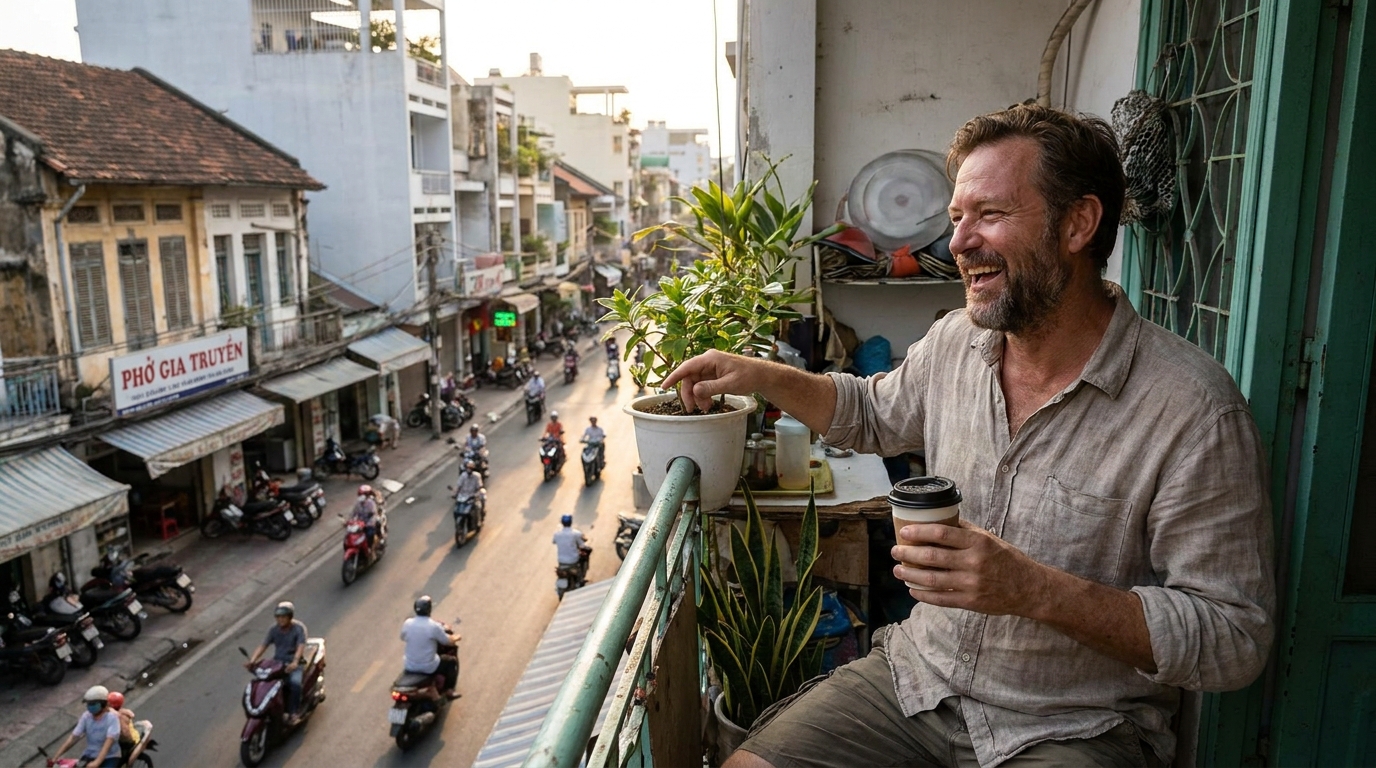
Long-term comfort also depends on small habits. Build heat management into your day. Schedule errands early when possible. Drink enough water. Learn several backup routes home. Keep a few key Vietnamese phrases ready. Respect local building norms and neighborhood pace. Saigon becomes far more welcoming when daily friction drops. The city doesn’t ask for perfection. It asks for attention, patience, and a little structure.
If you know you’ll stay several months or longer, this is the right time to ask for tailored housing advice. The right home base can support work, health, and social life all at once. Good planning now saves stress later.
Common mistakes that slow down the settling in process
Most settling delays come from trying to do everything at once. Reuters has reported repeatedly on Vietnam’s strong urban growth and investment appeal, which helps explain why Ho Chi Minh City moves quickly and rewards decisiveness. The fix isn’t rushing. It’s sequencing. Expats who settle best usually handle basics first, then optimize later.
The first common mistake is choosing housing from price alone. A lower rent can hide poor internet, long commutes, limited support, or difficult lease terms. The second mistake is staying too long in short-term tourist mode. That delays routine building and makes every week feel temporary. The third mistake is not creating admin backups. Have duplicate cards, saved documents, and one emergency contact who knows your building details.
Another mistake is assuming your previous expat city habits will transfer neatly. Saigon has its own logic. Timing matters here. Weather matters. Street access matters. Building management matters more than some newcomers expect. A stunning apartment with weak support can become frustrating fast. Meanwhile, a well-run serviced building can make daily life feel calm from the start. Isn’t peace of mind worth paying for when you’re building a new life?
Finally, many people underestimate how long adaptation takes. The first month isn’t a final judgment on the city. It is a learning period. Give yourself permission to revise your routines, spending, and neighborhood expectations. Small changes compound. Better sleep, easier transport, cleaner living space, and less admin stress can transform your whole experience. Settling in isn’t one decision. It’s a sequence of better ones.
Frequently Asked Questions
Where do most expats live in Saigon?
Most expats in Saigon live in District 1, District 2, District 3, and Binh Thanh. District 1 suits newcomers, remote workers, and business travelers who want central convenience. District 2, especially Thao Dien, is popular with families and longer-term international residents. District 3 offers a balance of local character and central access. Binh Thanh often appeals to renters who want lower costs while staying connected to the city centre.
Can I live on $1500 a month in Vietnam?
Yes, many expats can live on $1500 a month in Vietnam, especially in Ho Chi Minh City with controlled housing costs. That budget usually works best with a sensible apartment choice, local dining, moderate transport use, and limited imported shopping. A serviced apartment can still fit, depending on size and location. If you want frequent nightlife, imported goods, and regular travel, you may need more than $1500.
How long does it take to clear immigration at Saigon airport?
Clearing immigration at Tan Son Nhat Airport often takes around 30 to 90 minutes, depending on arrival time, staffing, and passenger volume. Busy evening periods can take longer. Keep documents ready before landing, and have your local address accessible. Baggage delivery and customs add extra time. If you’re arranging airport pickup or meeting building staff, allow a reasonable buffer so your first arrival feels less stressful.
Where do most foreigners live in Vietnam?
Most foreigners in Vietnam cluster in Ho Chi Minh City, Hanoi, Da Nang, and a few resort or industrial hubs. In Ho Chi Minh City, foreign residents often choose District 1, District 2, District 3, and Binh Thanh. In Hanoi, Tay Ho is a well-known expat area. Choice usually depends on work location, school access, budget, and lifestyle. Large cities remain the most practical for long-stay services and international communities.
Is a serviced apartment better than a regular rental for a new expat?
For many new expats, yes. A serviced apartment reduces setup stress during the first month. Furniture, cleaning, maintenance support, and simpler move-in processes can save time and money. That’s especially useful if you’re still learning neighborhoods or waiting on paperwork. Regular rentals may cost less in some cases, but they often require more deposits, more admin, and more problem-solving during an already busy transition period.
Conclusion
The best settling in Saigon timeline expat plan is simple. Week one is for stability. Week two is for housing. Week three is for systems. Week four is for routine. After that, you refine what works and drop what doesn’t. Saigon can feel intense at first, but structure changes the experience fast. With the right base, the city becomes easier to navigate, more productive to live in, and much more enjoyable long term.
Planning to make Saigon your base?
For more Saigon guides, check out: Healthcare Costs in Saigon for Expats: Clinics Insurance and What to Budget, Gym and Wellness Costs in Ho Chi Minh City: What Expats Pay Monthly.