
Vietnam COVID Entry Requirements: What’s Still in Place in 2026
As of 2026, Vietnam COVID entry requirements have been fully lifted. There are no PCR tests, no vaccine certificates, no health declarations, and no quarantine requirements for international travelers entering Vietnam. The country has returned to full pre-pandemic entry conditions, meaning you can book your flight to Ho Chi Minh City and arrive without any COVID-related paperwork or restrictions.
Key Takeaways
- All Vietnam COVID entry requirements were permanently removed in 2022 and remain fully lifted as of 2026.
- No COVID test, vaccine proof, or health declaration form is required to enter Vietnam.
- Quarantine on arrival was abolished — you go directly from the airport to your accommodation.
- E-visa processing is available online for citizens of 80+ countries, valid for 90 days with single or multiple entries.
- Ho Chi Minh City (HCMC) is fully open for tourism, business, and long-stay expats — normal life has completely resumed.
Current Vietnam COVID Entry Requirements in 2026
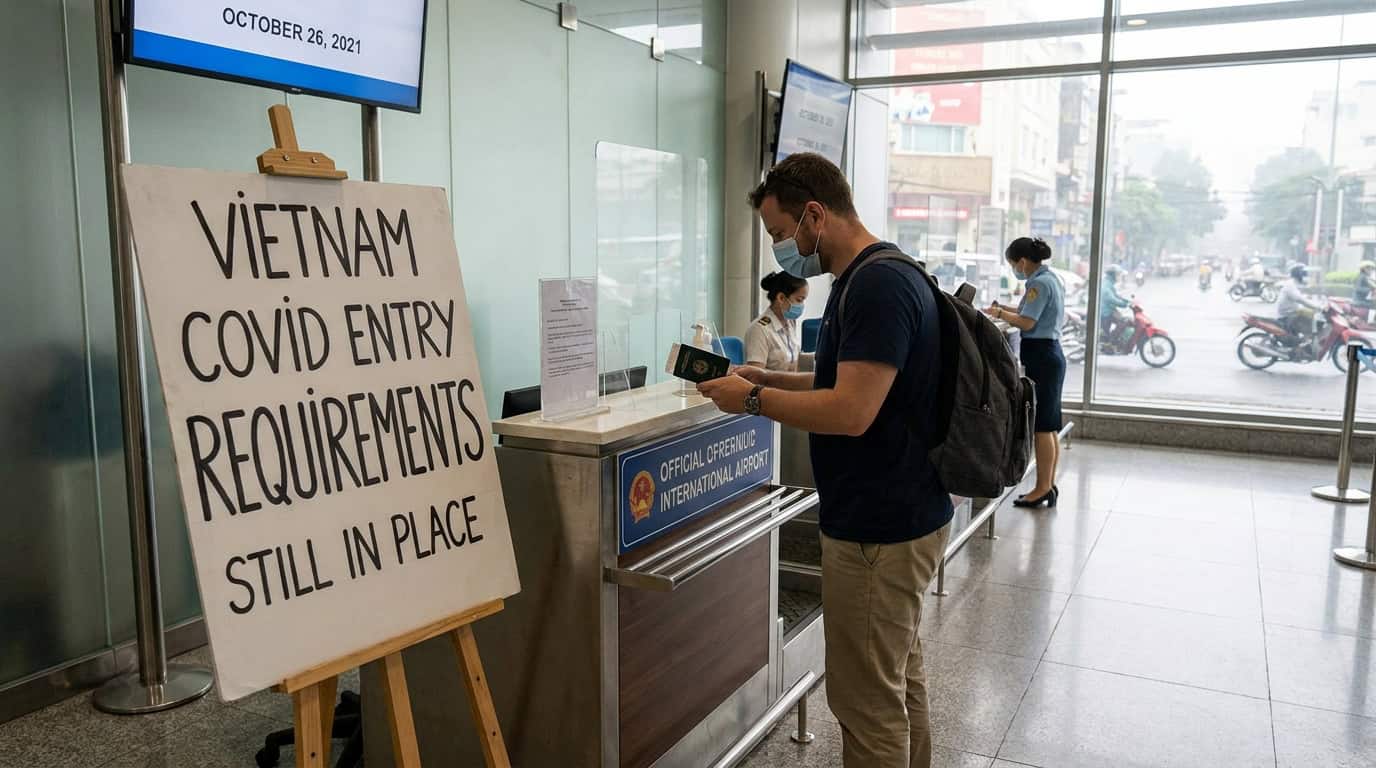
The short answer: there are none. Vietnam officially ended all vietnam covid entry requirements on May 15, 2022, when the government issued Resolution 38/NQ-CP, transitioning the country to treating COVID-19 as an endemic disease rather than a pandemic. Since that date, no traveler — regardless of nationality, vaccination status, or country of origin — has been required to present any COVID-related documentation at Vietnamese ports of entry.

This applies to Tan Son Nhat International Airport in Ho Chi Minh City, Noi Bai International Airport in Hanoi, Da Nang International Airport, and all land border crossings and sea ports across the country. The policy is nationwide and has not been revised or reinstated at any point since 2022.
What Was Required Previously (and Is Now Gone)
During the height of the pandemic, Vietnam had some of the strictest border controls in Southeast Asia. Understanding what used to be required helps clarify just how completely those measures have been dismantled. At various stages between 2020 and early 2022, visitors needed:
- A negative PCR test result taken within 72 hours of departure
- Proof of full COVID-19 vaccination (two doses minimum)
- Completion of a health declaration form via the PC-COVID app
- Mandatory quarantine ranging from 7 to 21 days at government-designated facilities
- Travel insurance with a minimum COVID-19 coverage amount
- Pre-approved entry permissions in some cases
None of these vietnam covid entry requirements exist today. You will not be asked for any of them at check-in, at immigration, or at customs in HCMC or anywhere else in Vietnam.
Vietnam Visa Requirements for 2026 (What You Actually Need)
While COVID restrictions are gone, standard visa requirements still apply depending on your nationality. This is the only documentation you need to prepare before traveling to Vietnam:
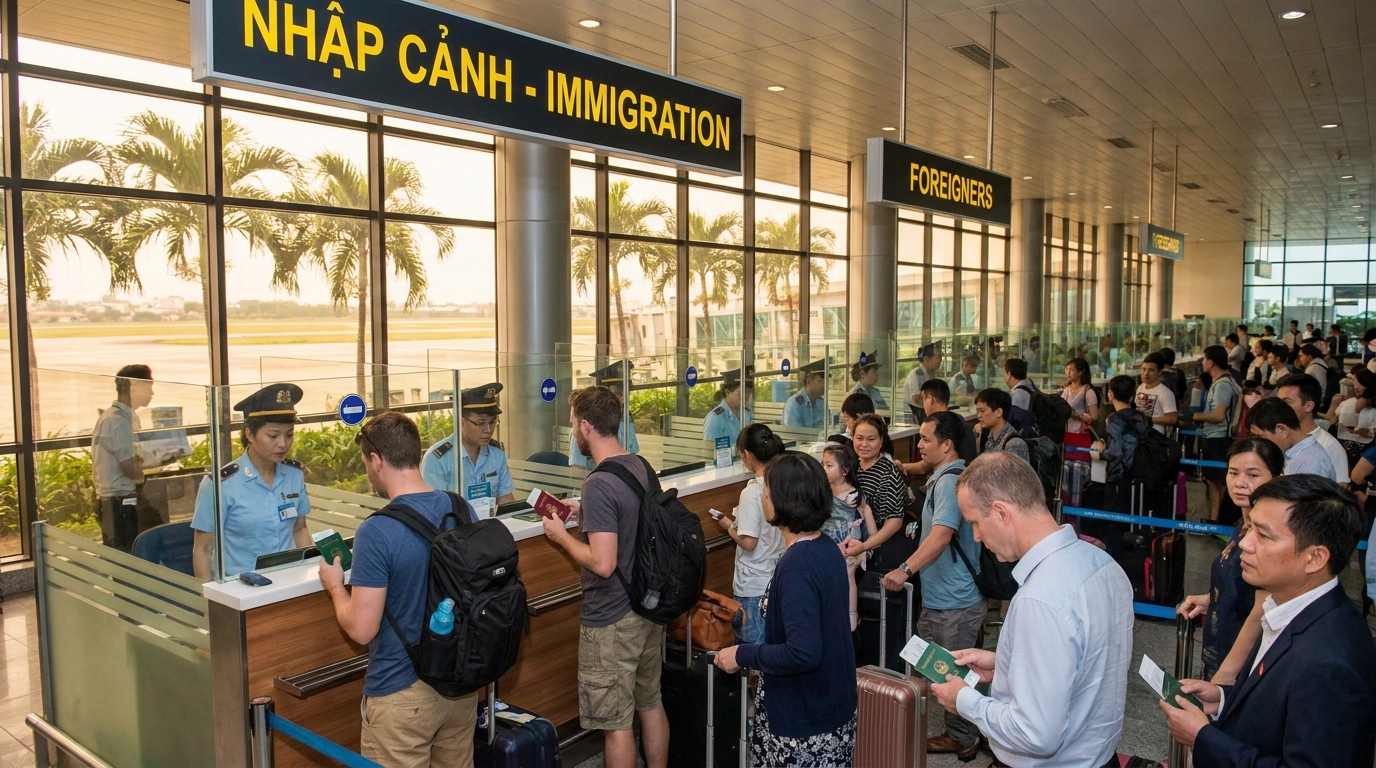
- E-visa: Citizens of over 80 nationalities can apply online at evisa.xuatnhapcanh.gov.vn. The e-visa is valid for 90 days and allows single or multiple entries. Processing typically takes 3 business days.
- Visa-exempt nationalities: Citizens from certain countries including Germany, France, the UK, Italy, Spain, and others enjoy visa-free stays of 45 days. The list was expanded in 2023.
- Visa on arrival: Still available for some nationalities but requires pre-approval letters and is generally less convenient than the e-visa option.
- Passport validity: Your passport must be valid for at least 6 months beyond your intended entry date.
According to the Vietnam National Authority of Tourism, the country welcomed over 17.5 million international visitors in 2024, surpassing pre-pandemic figures from 2019 for the first time — a clear signal that the border is fully operational and traveler confidence is high.
Arriving at Tan Son Nhat: What the Process Looks Like Now
For travelers flying into Ho Chi Minh City, the arrival experience at Tan Son Nhat International Airport is now entirely straightforward. Here is what you can expect step by step:
- Disembark your flight and follow signs to immigration (International Arrivals, Terminal 2 for most international flights).
- Join the immigration queue — no health checkpoint, no temperature scanning station, no app check.
- Present your passport and visa (e-visa, visa-exempt entry, or visa on arrival approval letter).
- Complete the standard arrival/departure card — this is a basic form asking for your accommodation address, not a health declaration.
- Collect your baggage and proceed through customs.
- Exit directly to the arrivals hall and get into your taxi, Grab, or private transfer.
The entire process from landing to exiting the terminal typically takes 30 to 60 minutes depending on queue length. There are no COVID screening stations, no mandatory temperature checks, and no health officers asking about symptoms or recent travel history.
Health Insurance and Medical Preparedness in 2026
Although Vietnam no longer mandates travel insurance with COVID coverage, it is still strongly advisable to carry comprehensive travel health insurance when visiting. This is general travel advice that applies regardless of any pandemic situation. Vietnam’s private hospitals in Ho Chi Minh City — particularly FV Hospital in District 7, Vinmec HCMC, and Columbia Asia — offer high-quality care but at costs that can be significant without insurance.
According to the World Health Organization’s 2025 Western Pacific Regional Health Report, Vietnam’s healthcare infrastructure has significantly improved since 2020, with increased ICU capacity and a vaccination rate exceeding 95% of the adult population. This context matters for travelers assessing risk: the healthcare system is robust and COVID is managed like any other endemic respiratory illness.
Do You Need a COVID Vaccine to Enter Vietnam?
No. Vaccination status is completely irrelevant to entering Vietnam as of 2026. The Vietnamese government does not check, record, or require any proof of COVID-19 vaccination at the border. Whether you are fully vaccinated, partially vaccinated, boosted, or completely unvaccinated, your entry is not affected.
This is an important point for travelers who have been following outdated information online. Many travel blogs and government advisory pages from 2021 and 2022 still appear in search results and may reference the old vietnam covid entry requirements that included vaccine verification. Those rules no longer apply.
Is Vietnam Safe to Visit in 2026 Regarding COVID?
Yes. Ho Chi Minh City operates entirely normally. Restaurants, bars, nightlife venues, markets, shopping malls, museums, and tourist attractions are all fully open without any capacity restrictions, distancing requirements, or mask mandates. The city’s famous street food scene on Bui Vien Street, the Ben Thanh Market area, and the rooftop bars of District 1 are all operating at full capacity.
Mask-wearing in public spaces is now a matter of personal preference rather than law. Some locals choose to wear masks in crowded indoor environments or on public buses — this is a cultural habit predating COVID in parts of Asia — but there is no legal requirement and no expectation for tourists to do the same.
Entry is fully open. Book your D1 apartment with confidence — flexible cancellation policies are available.
Vietnam COVID Entry Requirements vs. Other Southeast Asian Countries
Vietnam’s full reopening puts it on par with or ahead of many of its regional neighbors in terms of entry simplicity. Here is a quick comparison for 2026:
- Thailand: No COVID requirements, e-visa or visa exemption available. Similar to Vietnam.
- Cambodia: No COVID requirements, e-visa available for most nationalities.
- Indonesia (Bali): No COVID requirements, visa on arrival or e-visa available.
- Malaysia: No COVID requirements, many nationalities enter visa-free.
- Singapore: No COVID requirements, strong visa-free access for Western passport holders.
The entire region has moved on from pandemic-era entry protocols. Vietnam’s full reopening since 2022 positions it competitively for tourism, and the 90-day e-visa has made it particularly attractive for digital nomads and long-stay visitors choosing to base themselves in Ho Chi Minh City’s District 1.
Long-Stay and Expat Entry: What You Need to Know
For those planning to stay in Ho Chi Minh City for extended periods — whether for work, retirement, or as a digital nomad — the absence of vietnam covid entry requirements is just the starting point. Long-stay visitors should consider:
- 90-day e-visa: The current maximum on a tourist visa, extendable in some circumstances.
- Business visa (DN): Available for those with work purposes, sponsored by a Vietnamese company.
- Investor or expert visas: Available for qualifying individuals with extended validity options.
- Visa runs: Exiting and re-entering Vietnam to reset the visa clock — common among expats, though regulations on this vary and should be confirmed with current immigration guidelines.
The expat community in District 1 and District 2 (Thu Duc) has fully recovered from the disruptions of 2020-2021. Co-working spaces, international schools, and serviced apartment communities are operating at capacity. Demand for quality short and long-stay accommodation in D1 in particular has rebounded strongly.
Practical Tips for Arriving in Ho Chi Minh City in 2026
Now that you know the vietnam covid entry requirements are nonexistent, here are practical tips to make your arrival in HCMC smooth:
- Apply for your e-visa at least 1 week before departure — processing is usually 3 days but allow buffer time.
- Book accommodation in advance for D1 — the area around Ben Thanh Market and the Nguyen Hue walking street is in high demand year-round.
- Download Grab before you land — it is the most reliable and transparent ride option from Tan Son Nhat Airport to the city center.
- Exchange some cash at the airport — while card payment is increasingly common, cash in Vietnamese Dong (VND) is still king for street food, local markets, and smaller guesthouses.
- Check your passport expiry date — the 6-month validity rule is enforced at check-in, not just at immigration.
- Register your accommodation — hotels and serviced apartments handle this automatically, but if staying with friends, you or your host needs to register your stay with the local police ward office.
You May Also Find Useful
Frequently Asked Questions
Do I need a COVID test to enter Vietnam in 2026?
No. Vietnam dropped all COVID testing requirements in May 2022. No PCR test, antigen test, or any COVID-related health document is required to enter Vietnam. This applies at all entry points including Tan Son Nhat Airport in Ho Chi Minh City.
Are there any remaining vietnam covid entry requirements I should know about?
None. All pandemic-era entry requirements — including vaccine certificates, health declarations, quarantine, and COVID travel insurance mandates — were permanently removed in 2022 and have not been reinstated. Standard visa requirements apply based on your nationality.
What documents do I need to enter Vietnam in 2026?
You need a valid passport (with at least 6 months remaining validity) and either an e-visa, a visa on arrival approval letter, or documentation confirming you qualify for Vietnam’s visa exemption policy. No COVID-related documents are required.
Is quarantine required when arriving in Ho Chi Minh City?
No. Mandatory COVID quarantine was abolished in 2022. You travel directly from Tan Son Nhat Airport to your hotel, serviced apartment, or private residence without any isolation period or health monitoring requirement.
Has Vietnam ever reinstated COVID entry restrictions after lifting them?
No. Since Vietnam fully reopened its borders in May 2022, no COVID-related entry restrictions have been reinstated. The government has maintained a consistent policy of treating COVID-19 as an endemic illness, and there have been no temporary reinstatements even during subsequent COVID variant waves globally.
Official Resources
For the most up-to-date information on Vietnam COVID Entry Requirements: What’s Still in Place in 2, visit the Vietnam Tourism Official Guide.
Official sources: