
When it comes to ho chi minh city vs hanoi expats, the choice between Vietnam’s two largest cities shapes every aspect of your overseas life — from career trajectory and social scene to monthly budget and daily rhythm. HCMC (Saigon) is the commercial engine of Southeast Asia, while Hanoi is the political capital with a slower, more traditional pace. Both cities attract thousands of foreign residents each year, but they attract very different types of people for very different reasons.
Key Takeaways
- HCMC consistently ranks as the top destination for career-focused expats, entrepreneurs, and tech professionals due to its dominant business ecosystem and international connectivity.
- Hanoi offers lower overall living costs and a quieter lifestyle, but HCMC’s higher salaries often offset the cost difference — and then some.
- The expat communities differ sharply: Saigon is fast-paced, cosmopolitan, and globally networked; Hanoi is smaller, tighter-knit, and more culturally immersive.
- District 1 in HCMC remains the epicenter of expat life, offering the highest concentration of international offices, premium apartments, dining, and networking events.
- For most career-builders, internationalists, and digital professionals choosing between the two cities in 2026, HCMC wins on opportunity, infrastructure, and lifestyle flexibility.
The Core Difference: What Kind of Expat Are You?
The ho chi minh city vs hanoi expats debate ultimately comes down to personal priorities. HCMC attracts expats chasing growth — in income, network, and professional experience. Hanoi attracts expats seeking depth — in culture, language, and a slower connection to Vietnamese life. Neither choice is wrong. But understanding which city fits your profile before you sign a lease can save you months of frustration.
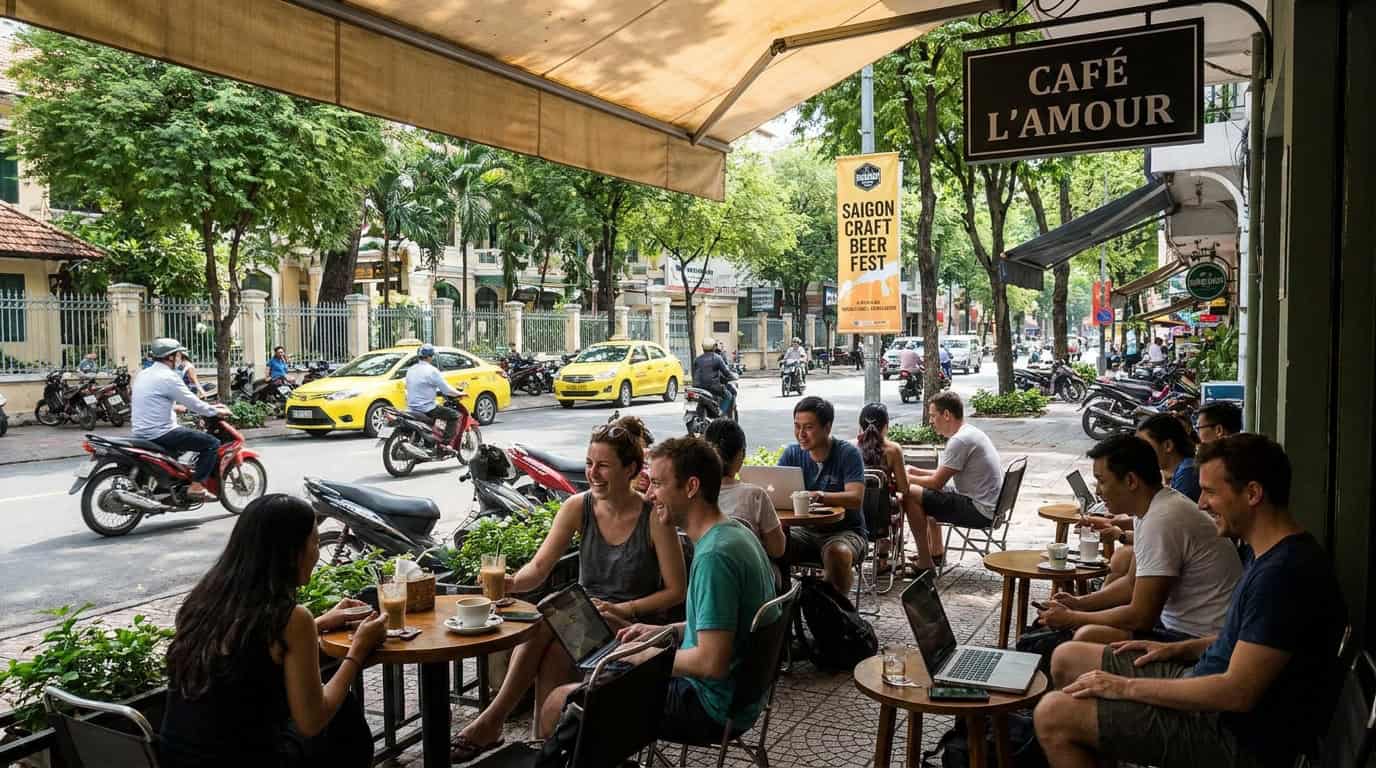
Career-driven professionals, corporate transferees, startup founders, and remote workers with international clients overwhelmingly choose HCMC. Teachers, cultural researchers, diplomats, and expats who want to integrate deeply into Vietnamese society often prefer Hanoi. The cities are not interchangeable — they are genuinely different environments.
Jobs and Career Opportunities: HCMC Dominates
HCMC is Vietnam’s undisputed commercial capital. The city hosts the regional headquarters of most major multinational corporations operating in Vietnam, the highest concentration of foreign-invested enterprises, and a rapidly expanding tech and startup ecosystem anchored in districts like District 1, District 7, and the emerging Thu Duc City innovation zone.
According to the Vietnam Ministry of Planning and Investment, HCMC attracted over $5.3 billion USD in foreign direct investment in 2024, representing more than 30% of the national total — underscoring why international companies staff their Vietnam operations from Saigon rather than Hanoi.
English-language job availability is significantly higher in HCMC. Sectors where expats find well-compensated roles include finance and fintech, logistics and supply chain, software development, marketing and e-commerce, hospitality management, and international education. Hanoi has a strong government and diplomatic sector, making it the right choice for expats in development organizations, embassies, or policy-adjacent roles — but for private-sector careers, HCMC is simply where the jobs are.
Remote workers and digital nomads also tend to favor HCMC. The coworking infrastructure in District 1 and District 3 is more developed, international fiber speeds are reliable, and the timezone and flight connections to key markets in Europe, Australia, and North America make coordination easier.
Cost of Living Comparison: Closer Than You Think
A common assumption among ho chi minh city vs hanoi expats is that Hanoi is substantially cheaper. In 2026, the gap has narrowed considerably — and when factoring in salary differentials, HCMC often works out more economically favorable for working expats.
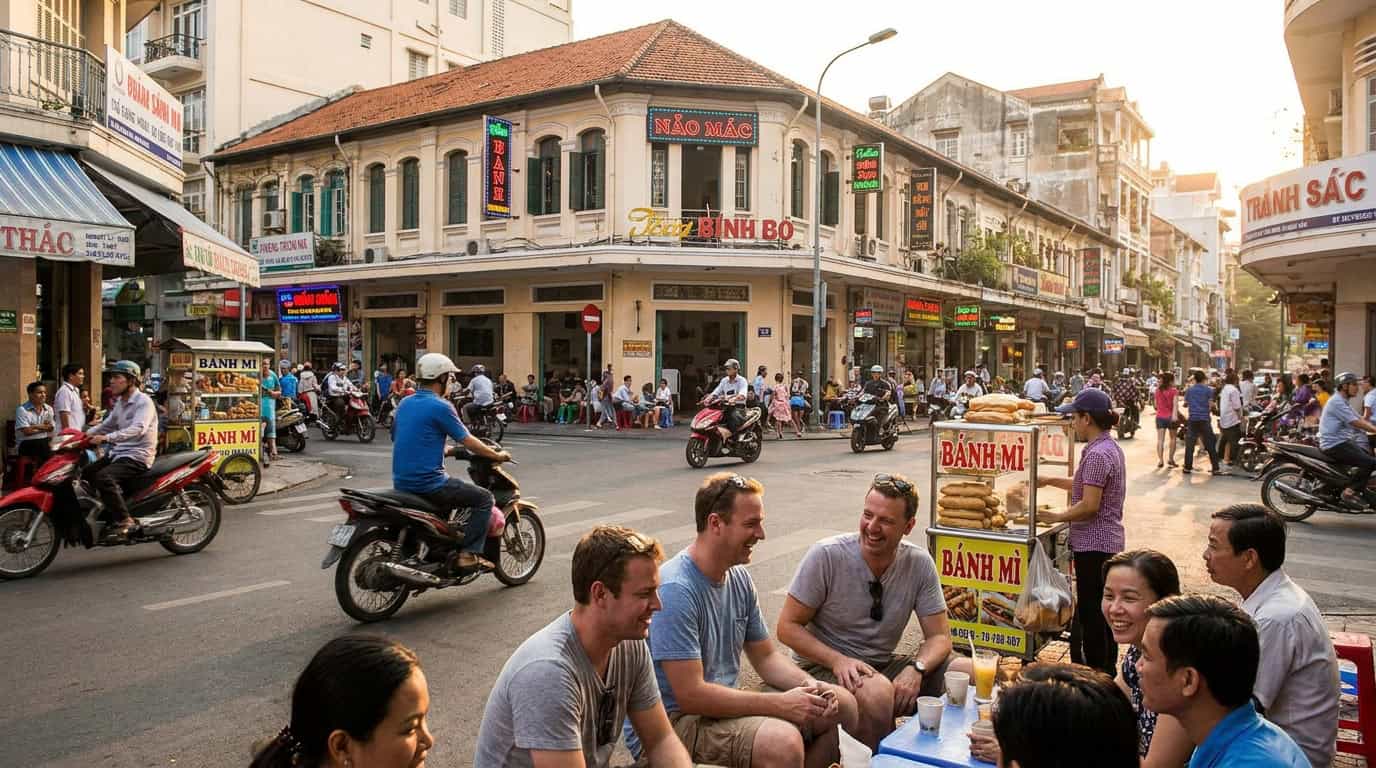
Rental costs for a furnished one-bedroom apartment in central Hanoi’s Hoan Kiem or Ba Dinh districts typically range from $600–$900/month. Comparable apartments in HCMC’s District 1 or District 3 run $900–$1,400/month. The premium is real, but District 1 apartments include amenities — building management, gym, pool, security — that justify the cost for professionals on expat packages.
Daily expenses tell a more balanced story. Street food, local markets, and transportation costs are roughly similar between the two cities. International dining, gym memberships, and imported goods are slightly more expensive in HCMC but also more widely available. The net result: an expat living a comparable lifestyle in both cities will spend roughly 15–20% more in HCMC — but earn 25–35% more if employed locally.
Expat Community and Social Life
The expat communities in the two cities have distinct characters. HCMC’s foreign resident population is estimated at over 200,000 people, making it one of the largest expat hubs in Southeast Asia. The community is diverse, transient, and globally connected. Networking events, international chambers of commerce (AmCham, EuroCham, BritCham), industry meetups, and social groups run continuously throughout the year. District 1 is the gravitational center of this activity.
Hanoi’s expat community is smaller — estimated at 40,000–60,000 foreign residents — and feels more intimate. Long-term residents tend to know each other, and integration with Vietnamese social circles is easier given the slower pace and more historically minded culture. For expats who want to feel embedded in a place rather than passing through it, Hanoi offers that experience.
That said, for most expats arriving in Vietnam for the first time, HCMC’s community infrastructure is dramatically easier to navigate. The volume of English-language events, the density of international restaurants and bars, and the availability of expat-focused services (healthcare, legal, relocation) make settling in far less daunting.
Culture, Weather, and Daily Life
Weather is one of the most practically significant differences between the two cities. HCMC sits in the south and operates on a two-season tropical calendar: a dry season from November to April and a wet season from May to October. Temperatures stay between 25–35°C year-round. There is no winter.
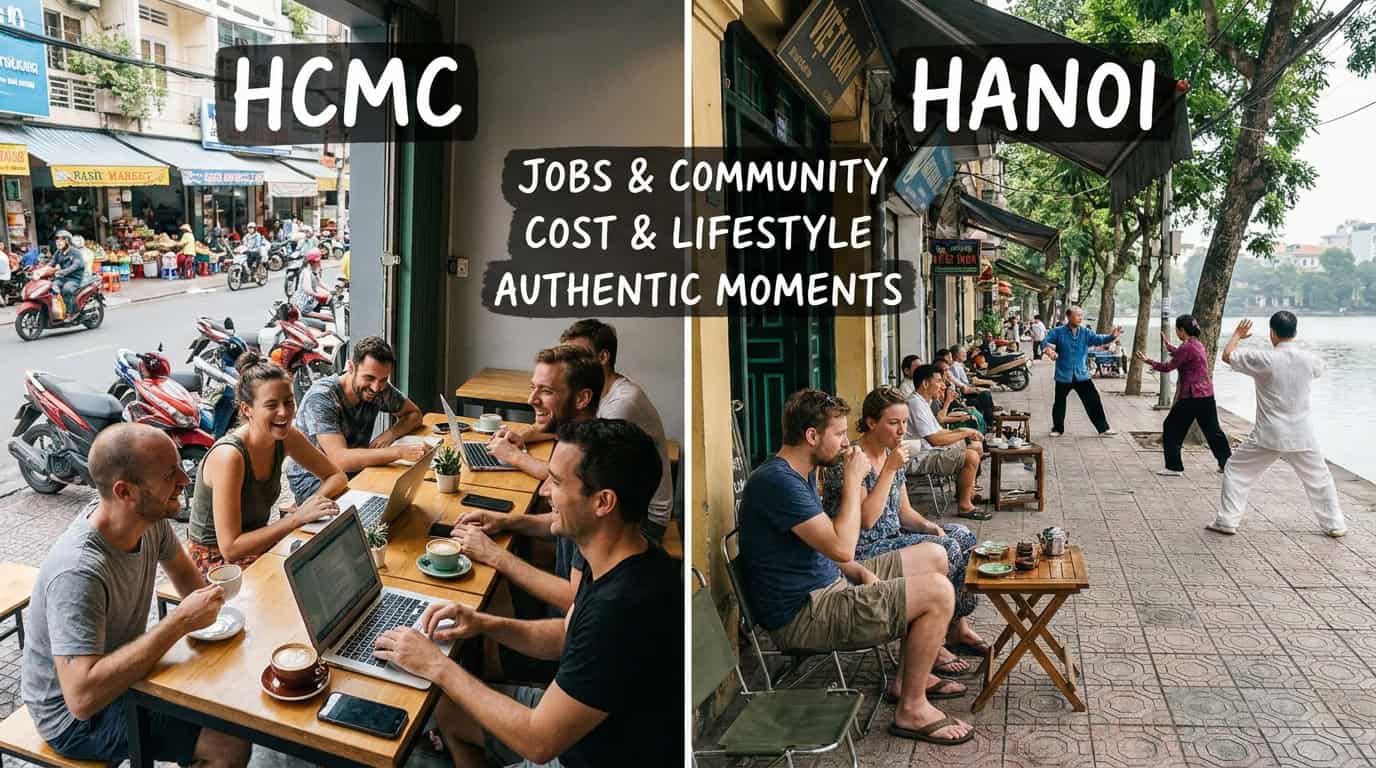
Hanoi experiences four distinct seasons, including a genuine winter (December–February) where temperatures can drop to 10–15°C and persistent grey drizzle settles in for weeks. Many expats who grew up in temperate climates appreciate this seasonal variation. Those from tropical or desert climates often find Hanoi winters unexpectedly uncomfortable.
Culturally, Hanoi is more conservative and slower-paced. The old quarter architecture, lake-side parks, and traditional craft villages give the city a depth of historical character that HCMC — which moves fast and tears down old buildings with enthusiasm — doesn’t always match. HCMC compensates with relentless energy, world-class restaurants, international-standard entertainment, and a sense that anything is possible if you move fast enough.
Healthcare and International Services
Both cities have improved their international healthcare options significantly in recent years, but HCMC maintains a clear edge. The city is home to FV Hospital, Vinmec, Columbia Asia, and multiple international clinics in District 1 and District 7 that meet the standard expected by expats accustomed to Western healthcare systems.
According to International SOS’s 2025 Medical Risk Report, HCMC ranks among the top tier of Southeast Asian cities for healthcare accessibility for expatriates, with response times and specialist availability comparable to Bangkok. Hanoi’s international medical infrastructure is improving but remains thinner in terms of specialist coverage and English-language clinical staff.
International schools follow a similar pattern. HCMC has the highest concentration of accredited international schools in Vietnam, including British, American, Australian, and IB-curriculum options in every major expat district. Families relocating with children consistently find the school selection process more straightforward in HCMC.
District 1 HCMC: The Expat Epicenter
Within the broader ho chi minh city vs hanoi expats debate, District 1 deserves specific mention. For expats choosing HCMC, the question of where to live is nearly as important as the city choice itself — and District 1 is consistently the answer for professionals who want to maximize their time in the city.
District 1 sits at the heart of HCMC’s business district, walking distance from the majority of corporate offices, co-working spaces, consulates, banks, premium dining, and nightlife. Apartment quality in District 1 is the highest in the city, with modern high-rises offering pool, gym, concierge, and city views as standard features. Commute times to any point in HCMC from District 1 are shorter than from outlying expat neighborhoods like District 2 or Binh Thanh.
HCMC and Hanoi serve different expat profiles. Career-builders, internationalists, and tech workers consistently choose HCMC — and District 1 specifically. Ask about our availability.
Visa and Legal Practicalities
Vietnam’s immigration framework applies equally across both cities, but the practical execution of visa and work permit processes tends to be smoother and faster in HCMC due to the higher volume of immigration lawyers, relocation agencies, and experienced HR departments who handle these processes routinely. The Department of Labor offices in HCMC process work permits at higher volume and with more established procedures than their Hanoi counterparts.
Expats in both cities most commonly hold E-visas, business visas, or work permits tied to a local employer. Vietnam’s five-year E-visa introduced in 2023 has made long-stay planning significantly simpler for both cities, but HCMC-based employers are generally more experienced in navigating the full work permit and temporary residence card process.
Transportation and Infrastructure
HCMC’s long-awaited Metro Line 1, connecting Ben Thanh Market in District 1 to Suoi Tien in the east, finally opened in late 2024 and has already transformed commuting options for expats living or working along that corridor. Additional metro lines are under construction. In the interim, Grab (ride-hailing), personal motorbike, and taxi remain the dominant modes of transport.
Hanoi has its own metro system (the Cat Linh–Ha Dong line), but coverage remains limited. Both cities are notoriously congested during peak hours, though HCMC’s grid layout makes short-distance navigation somewhat more predictable than Hanoi’s maze of narrow old quarter streets.
For international connectivity, Tan Son Nhat International Airport in HCMC handles a higher volume of international routes and has more direct connections to key business destinations in Asia, Europe, and the Middle East. Long Thanh Airport, under construction southeast of the city, will dramatically expand capacity when it opens in the next few years.
Which City Should You Choose in 2026?
The honest answer to ho chi minh city vs hanoi expats depends entirely on your priorities. If you are relocating for a corporate role, building a startup, working in tech, finance, or international trade, or simply want the most connected, opportunity-rich environment Vietnam offers, HCMC is the correct choice in 2026. The jobs are better, the salaries are higher, the community is larger, and the infrastructure for expat professionals is more developed.
If you are moving to Vietnam to teach, to write, to study the language deeply, to work with an NGO or embassy, or to live at a slower pace inside Vietnamese culture, Hanoi offers a more immersive and arguably more authentic experience. Both cities reward the right kind of expat who chooses them intentionally.
For the majority of career-focused expats making this decision in 2026, the data, the job market, and the quality of life infrastructure all point in the same direction: HCMC wins.
You May Also Find Useful
If you are planning a stay in Hanoi, it is worth checking what is available on Booking.com or Agoda while you work out the dates.
Frequently Asked Questions
Is HCMC or Hanoi better for expats in 2026?
For career-focused expats, entrepreneurs, tech workers, and those seeking an internationally connected lifestyle, HCMC is the better choice in 2026. Hanoi suits expats seeking a slower pace, deeper cultural immersion, or roles in government, diplomacy, or NGOs. The cities serve different expat profiles, and the best choice depends on your reasons for relocating.
How much more expensive is HCMC compared to Hanoi for expats?
Expats living a comparable lifestyle in HCMC typically spend 15–20% more per month than in Hanoi. However, local salaries in HCMC are generally 25–35% higher for equivalent roles. Rent is the biggest single cost driver — a premium District 1 apartment costs more than central Hanoi, but typically includes higher-quality amenities and a superior location relative to employment centers.
Which city has a better expat community?
HCMC has a significantly larger and more internationally diverse expat community, estimated at over 200,000 foreign residents compared to Hanoi’s 40,000–60,000. HCMC offers more networking events, international chambers of commerce, and professional meetups. Hanoi’s expat community is smaller but more tight-knit, which some residents prefer for building deeper relationships.
What are the best neighborhoods for expats in HCMC?
District 1 is the top choice for professionals due to its central location, premium apartment stock, proximity to business districts, and density of international amenities. District 3 offers a quieter residential feel with good café culture and slightly lower rents. District 7 (Phu My Hung) is popular with families due to its international schools and planned urban layout. District 2 (Thao Dien) is well-established among long-term expat residents seeking a village-like atmosphere near the river.
Is it easy to find work in HCMC as a foreigner?
HCMC offers the strongest job market in Vietnam for foreign professionals, particularly in sectors like finance, technology, marketing, logistics, hospitality management, and international education. Multinational corporations, foreign-invested enterprises, and a growing startup ecosystem all recruit internationally. Having relevant professional qualifications, industry experience, and strong English skills significantly improves job prospects. Working with a local recruiter or using LinkedIn with a Vietnam location filter is the most effective job search approach.
Official Resources
For the most up-to-date information on ho chi minh city vs hanoi expats, visit the Vietnam Tourism Official Guide.