
If you are searching for Airbnb Ho Chi Minh City options in 2026, you have two real choices: book a short-term Airbnb listing or rent a fully managed serviced apartment. For stays under two weeks, Airbnb can be convenient. For anything longer — a month, a relocation, or a remote-work stint — serviced apartments in Saigon consistently outperform on price, reliability, legal standing, and daily quality of life. This guide breaks down exactly how the two options compare so you can make the right call before you book.
Key Takeaways
- Airbnb Ho Chi Minh City listings vary enormously in quality, legal status, and pricing — especially for stays over 30 days.
- Vietnam’s short-term rental regulations tightened in 2024, putting many informal Airbnb hosts in a grey legal area.
- Serviced apartments offer stable monthly rates, professional management, and registered residency documentation that Airbnb listings rarely provide.
- For expats and long-stay visitors, community amenities, consistent housekeeping, and verified Wi-Fi speeds matter far more than nightly flexibility.
- District 1 serviced apartments often cost less per month than a comparable Airbnb when all fees are included.
The State of Airbnb Ho Chi Minh City in 2026
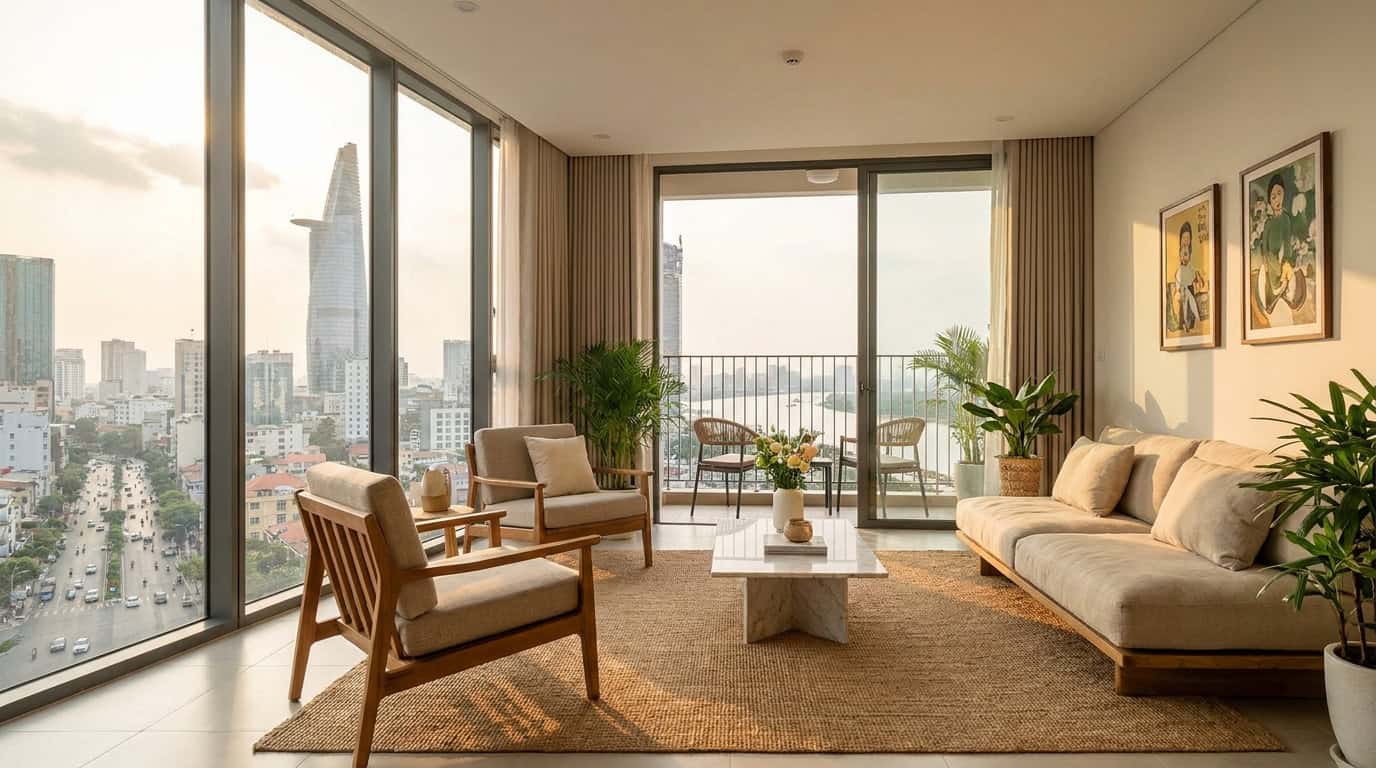
Ho Chi Minh City has one of Southeast Asia’s most active short-term rental markets. Thousands of listings appear on Airbnb across Districts 1, 2, 3, 7, and Binh Thanh, ranging from studio units in old walk-up buildings to rooftop penthouses in new high-rises. Demand from tourists, digital nomads, and relocating professionals keeps the market busy year-round.
However, the landscape shifted significantly after Vietnam’s revised tourism accommodation laws came into force in late 2024. According to the Vietnam National Authority of Tourism, local authorities in Ho Chi Minh City began requiring short-term rental hosts to register with the city’s Department of Tourism and obtain a business household licence. Many listings on Airbnb Ho Chi Minh City operate without this registration, creating risk for both hosts and guests.
How Airbnb Ho Chi Minh City Pricing Actually Works
Advertised nightly rates on Airbnb Ho Chi Minh City typically range from $25 for a basic studio to $120 or more for a two-bedroom in a premium building. Those rates look attractive until you factor in Airbnb’s service fees (usually 14–16% of the subtotal), cleaning fees ($15–$40 per stay), and the lack of any monthly discount that is genuinely competitive with the serviced apartment market.
A mid-range one-bedroom Airbnb in District 1, at $60 per night with fees, costs approximately $1,980 for a 30-day stay. A comparable serviced apartment in the same district, fully furnished with weekly housekeeping, utilities, and gym access, typically rents for $900–$1,400 per month all-inclusive. The arithmetic is straightforward.
Legal and Registration Differences
This is where the gap between Airbnb Ho Chi Minh City and licensed serviced apartments becomes most significant for longer stays. Foreign nationals in Vietnam are required to register their place of residence with local authorities — a process known as tạm trú (temporary residence registration). Hotels, licensed serviced apartments, and registered guesthouses handle this automatically on your behalf. The majority of Airbnb hosts do not.
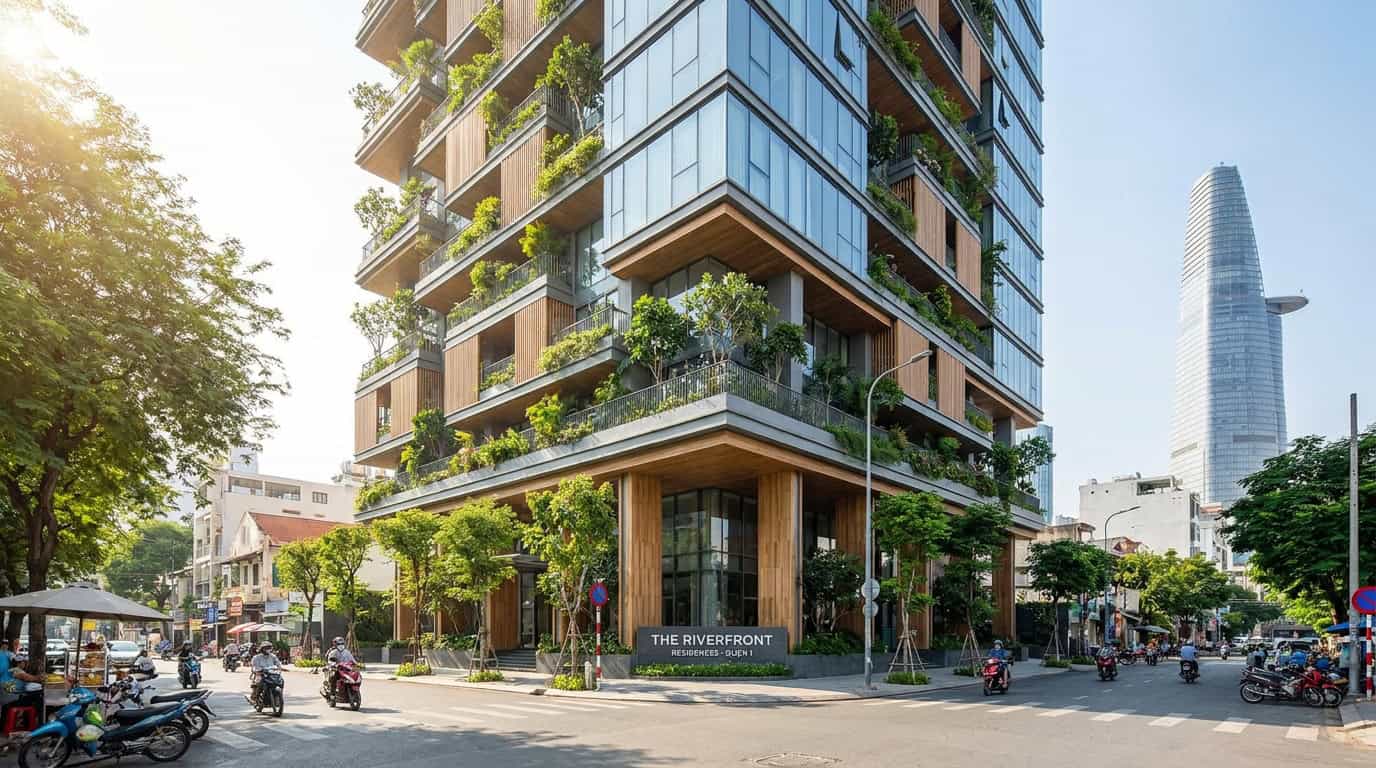
Failing to register your residence is a technical violation of Vietnamese law and can complicate visa extensions, business visa applications, and any interaction with local authorities. For short holidays this risk is minimal in practice. For a three-month remote-work stay or a relocation, it is a genuine administrative headache you should avoid entirely.
Quality Consistency: What You Get vs. What You See in Photos
One of the most common complaints about Airbnb Ho Chi Minh City is the gap between listing photos and on-arrival reality. HCMC’s humidity, tropical insects, and rapid building wear mean that apartments photographed two years ago may look significantly different today. Air-conditioning units that appear modern may be poorly maintained. Wi-Fi routers that show “fast connection” in the listing description may deliver 10 Mbps on a shared residential plan — inadequate for video calls.
Professionally managed serviced apartments maintain fixed property standards. Housekeeping is scheduled, appliances are serviced on a regular cycle, and the management team has a financial incentive to maintain quality because repeat bookings and long-term rentals depend on it. When something breaks, there is a front desk to call — not a host who may be overseas or simply slow to respond.
Airbnb Ho Chi Minh City for Digital Nomads: The Real Picture
Ho Chi Minh City is one of Asia’s top digital nomad destinations in 2026. According to Numbeo’s 2025 Cost of Living Index, HCMC ranks among the most affordable major cities in Asia for monthly living costs, with a monthly budget of $1,200–$1,800 covering comfortable accommodation, food, transport, and coworking access. This affordability draws a large community of remote workers, many of whom first search for Airbnb Ho Chi Minh City when planning their stay.
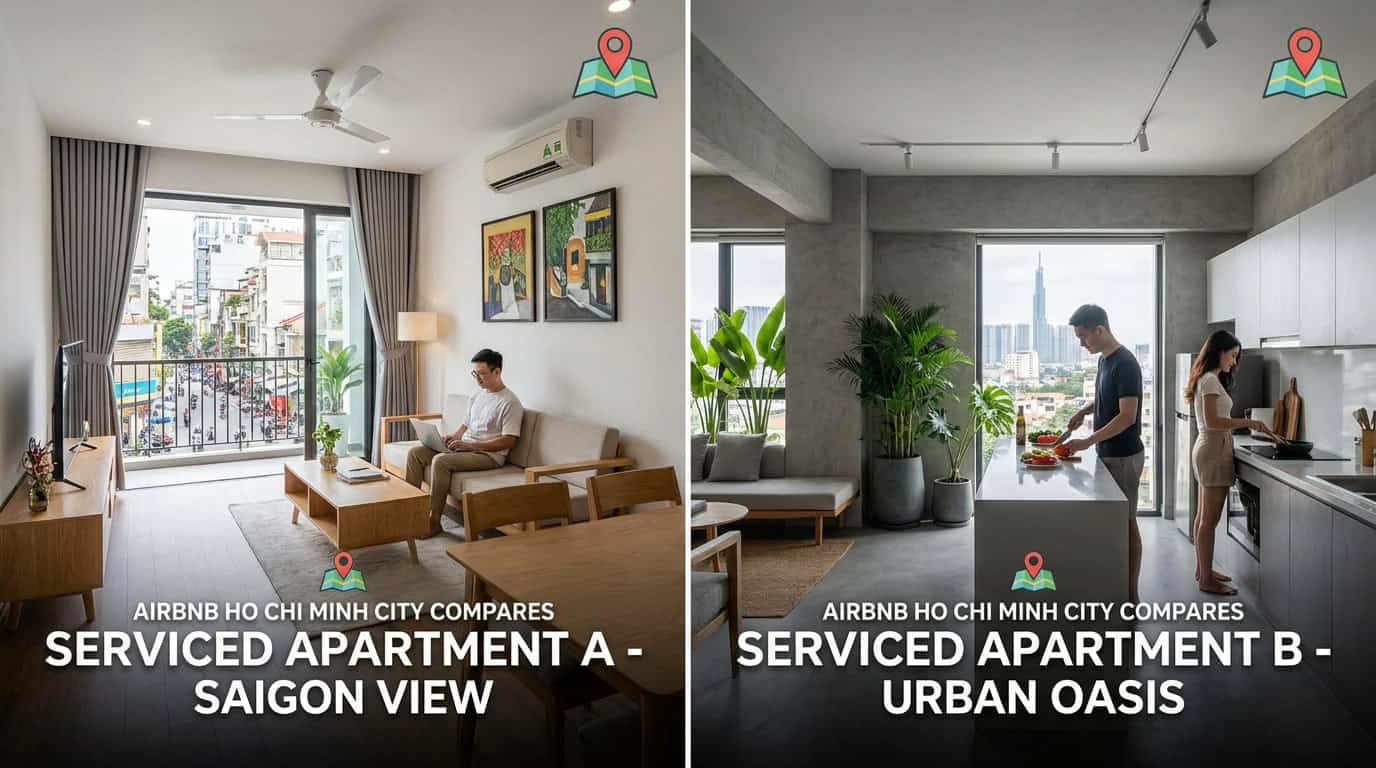
The practical challenges for nomads using Airbnb are real: minimum stays of 28–30 days are not universally available, the best-value listings get booked months ahead, and Wi-Fi reliability is inconsistent. Serviced apartments, by contrast, are set up specifically for the medium-to-long stay market. Symmetric fibre connections (100–500 Mbps) are standard in newer buildings, coworking access is often bundled, and monthly leases can start from 30 days with rolling renewal options.
Neighbourhood Guide: Where Airbnb Listings Cluster in HCMC
Understanding where Airbnb Ho Chi Minh City inventory concentrates helps you compare it against serviced apartment supply in the same areas.
- District 1 (Ben Nghe, Ben Thanh): The highest concentration of listings and the widest price range. Walking distance to Nguyen Hue, the Opera House, and Bui Vien. Also home to the largest supply of licensed serviced apartments.
- District 3: Quieter, leafy streets, popular with longer-stay visitors who want local neighbourhood feel. Good café density and lower noise levels than District 1.
- Thu Duc City (former District 2, Thao Dien): Expat enclave with international schools and a large Western restaurant scene. Higher Airbnb prices due to demand from relocating families.
- District 7 (Phu My Hung): Korean and Japanese expat community hub. Purpose-built serviced apartments dominate; Airbnb supply is thinner.
- Binh Thanh: Emerging area with newer high-rises and lower prices. Growing Airbnb supply but fewer amenities than central districts.
5 Things Airbnb Listings in HCMC Rarely Include (But Serviced Apartments Do)
- Temporary residence registration (tạm trú): Essential for visa compliance on stays over 30 days. Serviced apartments handle this as a standard part of check-in.
- On-site maintenance response: A 24/7 team that can fix a broken air conditioner at 2 AM in Saigon summer heat is not a luxury — it is a necessity.
- Consistent linen and housekeeping schedule: Airbnb cleaning fees are one-time; mid-stay cleaning is extra. Serviced apartments include regular housekeeping in the monthly rate.
- Community and networking: Long-stay residences attract a like-minded community of professionals, entrepreneurs, and expats. The social value of a well-managed building compounds over a multi-month stay.
- Transparent utility billing: Many HCMC Airbnb listings charge electricity at commercial rates (often 5,000–8,000 VND/kWh versus the residential rate of ~2,000 VND/kWh). Serviced apartments with inclusive utility packages remove this variable entirely.
The Legal Grey Zone: What the 2024 Regulations Mean for Guests
Vietnam’s revised Law on Tourism (effective amendments, 2024) and Decree 168/2024/ND-CP on administrative penalties for tourism violations put stricter obligations on accommodation providers. Hosts operating short-term rentals without proper business registration face fines. More relevantly for guests: unregistered accommodation cannot issue tạm trú paperwork, cannot be listed as a registered address for visa extension applications, and does not provide the administrative trail that employment-based visa holders need to maintain.
For tourists on 30-day or 90-day e-visas who plan to extend, using unregistered Airbnb Ho Chi Minh City accommodation is increasingly problematic. Immigration officers at District-level police stations are cross-referencing accommodation registrations more rigorously than they did before 2024.
When Airbnb Ho Chi Minh City Does Make Sense
It would be unfair to dismiss Airbnb entirely. For stays of seven nights or fewer — a long weekend, a recce trip before a relocation, or a brief business visit where your employer is covering accommodation — Airbnb Ho Chi Minh City can offer excellent value, interesting properties (rooftop units, heritage-building apartments, riverside studios), and flexibility that hotel blocks cannot match.
If you know the HCMC market well, have a trusted host you have used before, and are not concerned about formal residency documentation, short-stay Airbnb bookings are a perfectly reasonable choice. The calculus changes completely once your stay extends beyond two weeks.
Serviced Apartments vs. Airbnb: Side-by-Side Comparison
Here is a direct comparison across the factors that matter most for medium and long stays in Ho Chi Minh City.
- Monthly cost (1BR, District 1): Airbnb ~$1,800–$2,500 all-in | Serviced apartment ~$900–$1,400 all-in
- Residence registration: Airbnb — rarely available | Serviced apartment — standard inclusion
- Housekeeping: Airbnb — one-off clean, extra charges mid-stay | Serviced apartment — weekly or daily included
- Maintenance support: Airbnb — host-dependent, often slow | Serviced apartment — on-site team, fast response
- Wi-Fi reliability: Airbnb — variable, often shared residential | Serviced apartment — dedicated fibre, 100–500 Mbps typical
- Legal standing: Airbnb — often unregistered | Serviced apartment — licensed, fully compliant
- Community: Airbnb — none | Serviced apartment — resident community, events, shared spaces
- Lease flexibility: Airbnb — nightly/weekly with availability gaps | Serviced apartment — 1-month rolling typical
Airbnb in HCMC can work for short visits but lacks consistent service, legal clarity, and community. Serviced residences are fully registered, managed, and community-oriented.r a productive, comfortable stay in Saigon.
How to Choose the Right Long-Stay Option in Saigon
The decision framework is simple. Ask yourself three questions before booking any accommodation in Ho Chi Minh City for a stay over two weeks:
- Do you need tạm trú registration — for visa extension, employer compliance, or personal record-keeping? If yes, rule out most Airbnb listings immediately.
- Is your budget better served by a transparent monthly rate or a nightly rate that compounds with fees and mid-stay cleaning charges? Run the actual numbers for your exact stay length.
- Do you value consistent quality, on-site support, and the social fabric of a managed residence? If yes, a serviced apartment will measurably improve your daily experience in Saigon.
Most long-stay visitors to Ho Chi Minh City who start with Airbnb end up transitioning to serviced apartments within their first month. Making that decision before you arrive saves money, reduces administrative friction, and lets you focus on actually living in one of Southeast Asia’s most exciting cities.
You May Also Find Useful
- Why Expats in Saigon Choose Serviced Apartments Over Hotels and Airbnb for Long Stays
- Serviced Apartments vs Hotels in Saigon: Which Is Better for a Long Stay?
- Airbnb District 1 Saigon vs Serviced Apartments: Which Is Better for Your Stay Length?
- Saigon Serviced Apartments: The Best Options for Long-Stay Visitors
Rates in Ho Chi Minh City move a lot by season and by district. It is worth comparing current availability on Booking.com and Agoda before committing to anything.
Frequently Asked Questions
Is Airbnb legal in Ho Chi Minh City in 2026?
Airbnb itself operates legally as a platform in Vietnam. Individual hosts, however, are required to register with the Department of Tourism and hold a business household licence to legally offer short-term rentals. Many listings on Airbnb Ho Chi Minh City do not meet these requirements, placing them in a legal grey zone under 2024 regulations. Guests face no direct penalty, but they lose access to official residence registration, which is important for visa and administrative purposes.
What is the average price for an Airbnb in Ho Chi Minh City?
As of 2026, a one-bedroom apartment on Airbnb Ho Chi Minh City in District 1 ranges from approximately $45 to $100 per night before Airbnb service fees and cleaning fees are added. For a 30-day stay, total costs including fees typically fall between $1,700 and $2,500 per month — significantly higher than comparable serviced apartments, which average $900–$1,400 per month with utilities included.
Can I get temporary residence registration (tạm trú) through an Airbnb in HCMC?
Very rarely. Only officially registered accommodation providers — hotels, licensed guesthouses, and registered serviced apartments — are legally obligated and operationally equipped to process tạm trú paperwork for foreign guests. If you need residence registration for a visa extension or employer compliance, you should book accommodation with a licensed provider rather than relying on an informal Airbnb host.
Which districts are best for long-stay accommodation in Ho Chi Minh City?
District 1 remains the most practical base for most long-stay visitors: walkable, centrally located, and well-served by both Airbnb Ho Chi Minh City listings and licensed serviced apartments. District 3 suits those who prefer quieter streets with good café culture. Thao Dien (Thu Duc City) is preferred by families and those needing international school access. District 7 (Phu My Hung) serves the Korean and Japanese expat community well. For budget-focused stays, Binh Thanh offers newer buildings at lower rates with good metro line access.
How far in advance should I book a serviced apartment in Ho Chi Minh City?
For peak arrival periods — January through March (Tet recovery season) and September through November — booking two to four weeks ahead is advisable for the best District 1 serviced apartments. Outside of peak periods, one to two weeks’ notice is typically sufficient. Unlike Airbnb Ho Chi Minh City listings where availability gaps can be frequent, managed serviced apartment buildings usually have rolling availability and can accommodate flexible start dates with short notice.
Official Resources
For the most up-to-date information on airbnb ho chi minh city, visit the Vietnam Tourism Official Guide.