
If you’re researching HSBC Vietnam expat banking, the short answer is this: HSBC is the best-positioned international bank in Vietnam for expats who move serious money across borders, hold multi-currency balances, or need a globally recognised institution backing their finances in Ho Chi Minh City. It is not the cheapest option, and for expats who just need a local VND account for rent and groceries, the fees will sting. But for District 1 residents managing international income, overseas investments, or frequent wire transfers, HSBC’s infrastructure is genuinely difficult to beat locally.
Key Takeaways
- HSBC Vietnam operates as a fully licensed foreign bank subsidiary — not a branch — giving it more flexibility than most international banks operating in-country.
- The Premier account tier requires a minimum balance of USD 100,000 (or equivalent) or a qualifying Premier relationship elsewhere globally, waiving many fees for qualifying customers.
- International transfers via HSBC Vietnam are significantly faster and more reliable than transfers through local Vietnamese banks, particularly for USD, EUR, GBP, and AUD.
- HSBC Vietnam’s mobile and online banking platforms are fully English-language and integrate with the global HSBC One app, making it the most internationally connected banking experience available in Vietnam.
- For expats earning locally in VND without significant offshore assets, Vietcombank or BIDV will be cheaper for day-to-day needs — HSBC is the premium layer on top.
Decision table: is HSBC Vietnam worth it for you?
HSBC makes most sense when international banking convenience outweighs higher relationship requirements.
| Profile | HSBC fit | Why | Consider instead |
|---|---|---|---|
| Frequent international transfers | Strong fit | Global network and familiar cross-border process | Wise plus local bank for smaller transfers |
| High-balance professional | Strong fit | Premier/Advance-style relationship benefits can matter | Techcombank or Vietcombank if you want lower friction |
| New arrival with basic local needs | Maybe | Useful if you already bank with HSBC overseas | Local bank for rent, QR payments, and daily transfers |
| Budget-focused resident | Weak fit | Fees and balance expectations may not justify it | Techcombank, Vietcombank, or employer salary bank |
Decision rule: Choose HSBC for cross-border complexity; choose a local bank first if your main needs are rent, QR payments, ATMs, and salary.
HSBC Vietnam’s Structure and Why It Matters for Expats
HSBC Vietnam received its locally incorporated subsidiary licence in 2009, making it one of the first foreign banks to achieve this status in the country. This distinction matters for HSBC Vietnam expat banking customers: as a locally incorporated entity, HSBC Vietnam can open branches, offer retail banking to Vietnamese citizens, and operate more flexibly than foreign bank branches operating under stricter capital restrictions. As of 2025, HSBC Vietnam operates branches in Ho Chi Minh City (the main centre of gravity), Hanoi, Binh Duong, and Da Nang.
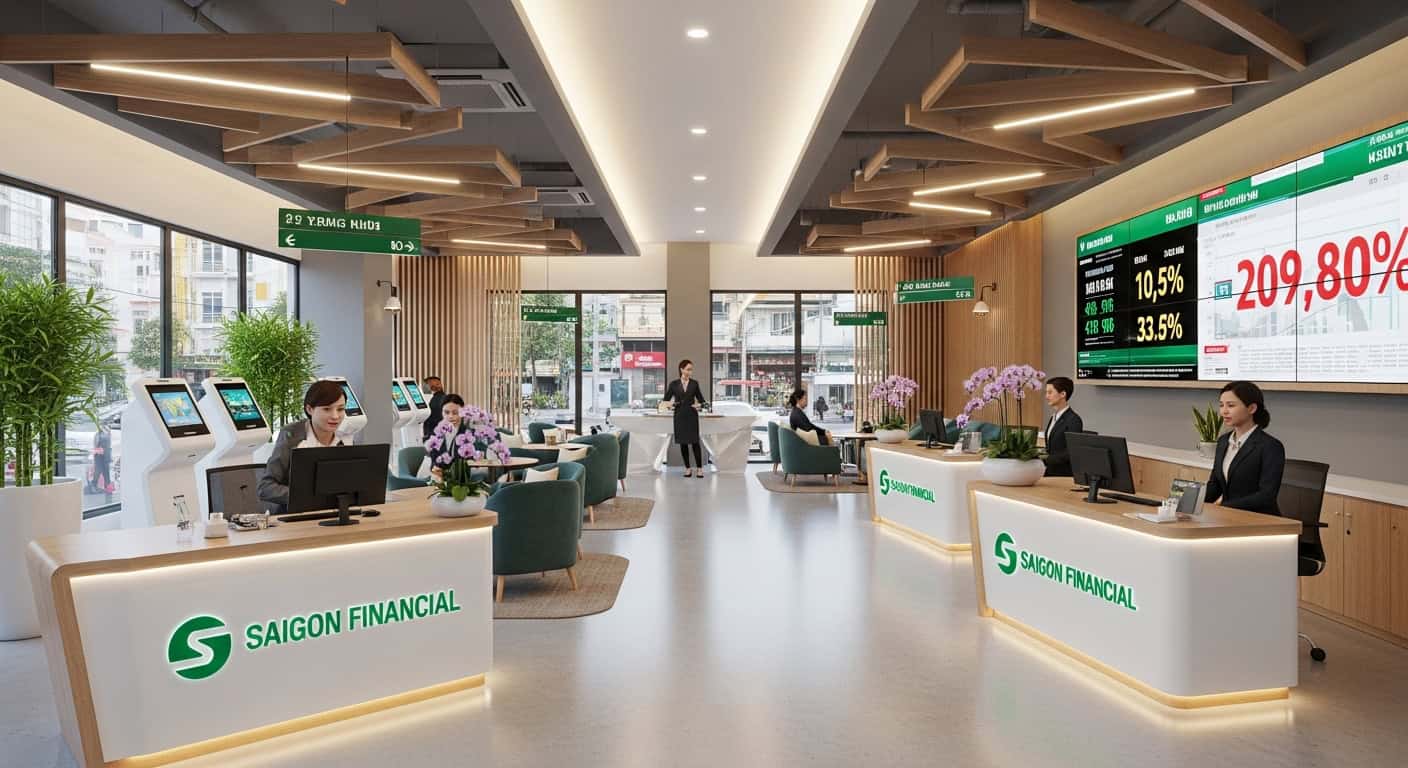
For expats based in HCMC — particularly those in District 1, District 2 (Thu Duc City), and Binh Thanh — the Bitexco Financial Tower branch and the Le Loi Street branch cover most practical needs. Phone banking in English is available, and the customer service tier for Premier customers is noticeably more responsive than the general queue.
Account Types Available to Expats in Vietnam
HSBC Vietnam offers three main retail tiers relevant to expats: Everyday Banking, Advance, and Premier. Each unlocks different fee structures, transfer limits, and service levels.
- Everyday Banking: Basic VND and USD accounts. Minimum balance requirements apply. Suitable for expats with modest local financial needs. Monthly fee applies if balance falls below threshold.
- Advance: Requires a minimum relationship balance of approximately VND 200 million (roughly USD 8,000–8,500 at current rates). Waives most monthly fees, includes preferential FX rates, and provides a dedicated relationship manager at select branches.
- Premier: The flagship tier for HSBC Vietnam expat banking at scale. Requires USD 100,000 equivalent in total relationship balance (deposits, investments, insurance products combined) or an existing Premier relationship in another HSBC market. Premier customers receive global Premier status, meaning they can walk into any HSBC Premier centre worldwide and receive preferential service — useful for expats who split time between Vietnam and home countries.
According to HSBC’s published Vietnam fee schedule (2024), Premier customers pay zero monthly account fees, zero international transfer fees on outward telegraphic transfers in major currencies, and receive priority FX desk access with tighter spreads than walk-in retail customers.
Opening an HSBC Account in Ho Chi Minh City: What You Actually Need
The documentation requirements for HSBC Vietnam are stricter than local banks but manageable. For most expats, you will need a valid passport, a Vietnam visa or temporary residence card (TRC), proof of address in Vietnam (a utility bill, lease agreement, or official letter from your employer suffices), and — for higher tiers — proof of income or existing HSBC relationship status.
The Bitexco branch processes most expat account openings. Wait times at walk-in are typically 45–90 minutes. Booking an appointment via the HSBC Vietnam website or Premier hotline cuts this significantly. If you hold Premier status from another HSBC market (UK, Hong Kong, Singapore, Australia are the most common for Vietnam expats), the account opening process is streamlined — your existing profile transfers and verification requirements are reduced.
One practical note for D1 residents: the Le Loi branch is quieter than Bitexco mid-week mornings and the staff there are experienced with expat documentation edge cases, including those on multiple-entry business visas rather than full TRCs.
International Transfers: Where HSBC Vietnam Expat Banking Genuinely Excels
This is the core differentiator for HSBC Vietnam expat banking. Sending money out of Vietnam through a local bank — Vietcombank, Techcombank, or VP Bank — involves unpredictable processing times (often 2–5 business days), occasional compliance holds, and customer service that operates almost entirely in Vietnamese. HSBC Vietnam’s transfer infrastructure uses the global HSBC correspondent network, which means USD transfers to US accounts, GBP to UK accounts, EUR to EU accounts, and AUD to Australian accounts typically settle same-day or next business day.
According to the World Bank’s Remittance Prices Worldwide database (Q3 2025), the average cost of sending USD 200 from Vietnam is 5.8% of the total. HSBC Premier customers sending larger amounts (USD 5,000+) typically pay well below this average on a percentage basis due to flat-fee structures and tighter FX spreads, though the absolute fee can be higher than money transfer services like Wise for smaller amounts.
For expats receiving salary or dividends from overseas — a common setup for those employed by multinationals with Vietnam operations — inward transfers to HSBC Vietnam accounts clear faster and with fewer documentation requests than at most local banks. The bank’s compliance team is also more experienced with legitimate international income structures, reducing the likelihood of funds being held pending additional paperwork.
Multi-Currency Accounts and FX Capabilities
HSBC Vietnam offers multi-currency accounts holding VND, USD, EUR, GBP, AUD, SGD, HKD, and JPY. For expats managing expenses across multiple currencies — paying overseas mortgage in GBP, investing in AUD, living in VND — the ability to hold balances and convert within one platform without triggering separate transfer fees each time is a genuine operational advantage.
The FX rates available through HSBC Vietnam’s online banking platform are not as sharp as Wise or Interactive Brokers for pure FX conversion, but the convenience of having it integrated with the same account used for local VND transactions removes friction. Premier customers can call the FX desk for live dealing rates on amounts above USD 10,000, which typically beats the online screen rate by a meaningful margin.
HSBC One App and Digital Banking Experience
The HSBC One mobile app works seamlessly in Vietnam and integrates your Vietnam account with any other HSBC accounts globally. This is a significant practical advantage: you can view your UK, Singapore, or Hong Kong HSBC balances alongside your Vietnam accounts in a single English-language interface, initiate transfers between HSBC entities at preferential internal rates, and manage standing orders across jurisdictions.
Local VND payments via QR code (VietQR) are supported, and HSBC Vietnam cards work smoothly across the domestic payment infrastructure. Apple Pay and Google Pay support is available for the debit and credit cards. The app’s security features — including international travel notification settings and card freeze functions — are more sophisticated than what local Vietnamese banking apps currently offer in English.
Credit Cards and Lending Products
HSBC Vietnam’s credit card lineup includes the HSBC Live+ Card and Premier Mastercard. The Premier Mastercard provides airport lounge access (Priority Pass), travel insurance, and cashback on international spending — relevant for expats who travel frequently for work or home visits. Credit limits for expats are assessed on local income documentation, which can be a friction point for those paid offshore rather than through a Vietnam-registered employer.
Mortgage products exist but are primarily targeted at Vietnamese citizens and permanent residents. Personal loans are available to qualifying expats with TRCs and provable local income. For most expats, HSBC Vietnam’s lending products are secondary to its core value proposition around deposits and transfers.
HSBC Vietnam Expat Banking Fees: The Honest Breakdown
HSBC Vietnam is not cheap. For expats who do not qualify for Premier or Advance tiers, the monthly account maintenance fee, outward transfer fees, and FX conversion spreads add up. A realistic monthly cost for a non-qualifying Everyday Banking customer making two international transfers could reach USD 40–60 per month in fees alone.
The calculus changes sharply at Premier. If you have USD 100,000 in qualifying assets (or can direct your existing HSBC Premier relationship here), most fees disappear and the service quality jumps significantly. The break-even analysis for many expats is straightforward: if you’re sending more than USD 2,000–3,000 per month internationally, the time saved and reliability of HSBC’s transfer rails versus local alternatives justifies even the Advance tier fees.
HSBC Vietnam is the premium option — higher fees, better international transfer rails. Worth it for residents managing significant international cash flow from a D1 base.
How HSBC Vietnam Compares to Alternatives
The main alternatives for HSBC Vietnam expat banking needs are: UOB Vietnam (which absorbed Citibank’s retail operation following the 2022 acquisition), Standard Chartered Vietnam, local heavyweights Vietcombank and Techcombank, and digital-first options like Wise for transfers.
Standard Chartered Vietnam is the closest direct competitor at the premium international tier. Its Priority Banking product offers similar global connectivity, though its branch footprint in HCMC is smaller than HSBC’s. UOB (post-Citi) has expanded its expat-focused offering but is more Singapore-oriented in its service culture. Local banks win on fee structure and VND account functionality but lose on English-language service, international transfer reliability, and global integration.
For pure transfer efficiency on smaller amounts, Wise remains cheaper than even HSBC Premier for amounts under USD 5,000. The practical approach for many HCMC expats is a hybrid: HSBC Premier for the main international banking relationship, plus a Vietcombank account for local VND day-to-day payments.
Practical Tips for Setting Up HSBC Vietnam Expat Banking in District 1
A few operational details worth knowing for anyone setting up or optimising their HSBC Vietnam expat banking setup in HCMC:
- The Premier hotline (1800 599 936, toll-free from Vietnam) has English-speaking agents available during business hours. Response times are notably faster for Premier customers than standard banking lines.
- If your passport is renewed or visa status changes, update your documents with the bank proactively — outdated KYC can trigger account restrictions at the worst possible time.
- For large outward transfers (above USD 50,000), prepare supporting documentation (contract, investment records, dividend notice) in advance. HSBC Vietnam’s compliance team will request these and having them ready cuts processing time from days to hours.
- HSBC Vietnam participates in the government’s electronic tax payment system — useful for expats filing personal income tax in Vietnam.
- The bank offers USD and EUR time deposit products with rates that, while not headline-grabbing, are reliable and protected under the Vietnam Deposit Insurance Corporation framework.
According to the State Bank of Vietnam’s 2024 annual report, foreign bank subsidiaries in Vietnam collectively held approximately 10.2% of total system assets — a share that has grown steadily as internationally mobile residents increasingly choose institutions with global infrastructure over purely domestic options.
Is HSBC Vietnam Right for You?
The honest answer depends entirely on your financial profile. If you’re an expat in HCMC with significant international income, offshore assets exceeding USD 100,000, or regular need to move money between Vietnam and home — yes, HSBC Vietnam is the right primary banking relationship. The Premier tier’s fee waivers, transfer reliability, and global integration deliver tangible value that cheaper alternatives cannot match.
If you’re teaching English, working for a local company with a modest VND salary, or in Vietnam short-term, the fee structure will feel punishing and a local bank will serve you better for everyday needs. The middle ground — expats earning USD 3,000–8,000 per month locally — is where the analysis gets nuanced, and the Advance tier often represents the best value inflection point.
For anyone based in District 1 or nearby districts running international business operations, consulting work, or managing property investments alongside their Vietnam life, HSBC Vietnam expat banking at the Premier level is the most complete financial infrastructure available in the country.
You May Also Find Useful
- Techcombank Vietnam Expat Review 2025: Digital Banking, English Support, and Fees
- Vietnam Health Insurance for Expats: The Complete 2026 Comparison Guide
- Vietnam Banking for Expats 2025: The Complete Guide to Opening Accounts, Sending Money, and Managing Finances
- SIM Cards and Internet for Long-Stay Expats in Vietnam: 2026 Guide
Frequently Asked Questions
Can expats open an HSBC Vietnam account without a Temporary Residence Card?
Yes, in most cases. HSBC Vietnam can open accounts for expats holding valid passports and Vietnamese visas, including multiple-entry business visas. However, a TRC or official employment documentation from a Vietnam-registered entity strengthens the application and reduces the likelihood of additional compliance requests. Premier customers with existing global HSBC relationships have the smoothest experience regardless of visa type.
How long does an international transfer from HSBC Vietnam take?
For major currencies (USD, EUR, GBP, AUD, SGD) sent to HSBC accounts in other countries, same-day or next business day settlement is typical. Transfers to non-HSBC accounts in those currencies generally clear within 1–2 business days. Transfers sent after the HCMC cut-off time (typically 3:30–4:00 PM local time) process on the following business day. These timelines are significantly faster than most local Vietnamese bank transfers, which can take 3–5 business days for the same corridors.
What is the minimum balance for HSBC Premier in Vietnam?
HSBC Premier Vietnam requires a total relationship balance of USD 100,000 equivalent across qualifying products (deposits, investments, insurance). Alternatively, holding Premier status in any other HSBC market globally qualifies you for Premier Vietnam at no additional balance requirement, as long as your Vietnam account is linked to your global profile. Falling below the threshold results in a monthly fee rather than immediate downgrade, giving customers time to restore qualifying balances.
Does HSBC Vietnam offer mortgages for expats buying property?
HSBC Vietnam offers mortgage products, but eligibility for foreign nationals is constrained by Vietnamese property law, which limits foreign ownership to apartments in approved projects (maximum 30% foreign ownership per building, 50-year renewable leases). HSBC Vietnam can facilitate mortgages for eligible expats purchasing within these legal parameters, but the process requires Vietnamese residency documentation and is more complex than in markets with full foreign ownership rights. Most expats in HCMC use HSBC primarily for banking and transfer services rather than local mortgages.
Is HSBC Vietnam safe — what deposit protection exists?
HSBC Vietnam, as a locally incorporated subsidiary, is subject to Vietnamese banking regulations and deposit insurance under the Vietnam Deposit Insurance Corporation (DIV). The DIV currently insures deposits up to VND 125 million (approximately USD 5,000) per depositor per institution — a limit that is low relative to international standards but reflects Vietnam’s developing deposit insurance framework. Beyond the statutory limit, HSBC Vietnam’s capital adequacy ratios, global parent backing, and regulatory standing make it one of the most financially stable banking institutions operating in Vietnam.
Official Resources
For the most up-to-date information on hsbc vietnam expat banking, visit the State Bank of Vietnam.