
District 1 Ho Chi Minh City is the beating heart of Saigon — a dense, walkable grid of five-star hotels, French colonial facades, rooftop bars, consulates, and some of the city’s most sought-after long-stay apartments. Whether you are relocating for work, extending a business trip, or simply done tolerating hotel rooms with no kitchen, this guide covers everything you need to know about finding, booking, and settling into a serviced residence right in the centre of it all.
Key Takeaways
- District 1 Ho Chi Minh City offers unmatched walkability, with the CBD, Bến Thành Market, and expat dining strips all within 15 minutes on foot from most serviced apartments.
- Studio and one-bedroom units in well-managed serviced buildings typically range from USD 700–1,400 per month, with meaningful discounts for three-month-plus stays.
- Key sub-neighbourhoods — Bến Nghé, Bến Thành, Phạm Ngũ Lão, and Nguyễn Thị Minh Khai corridor — each carry a different vibe; choosing the right pocket matters more than the district name alone.
- Lease extensions are common and usually negotiated directly with management; having a local contact who knows the building is the fastest path to a better rate.
- According to the Vietnam National Administration of Tourism, international arrivals into Ho Chi Minh City rebounded past 5 million in 2024, sustaining strong year-round demand for quality mid-term accommodation in central districts.
Why District 1 Ho Chi Minh City Still Wins for Long-Stay Residents
Saigon has sprawled dramatically over the past decade. Thủ Đức City, Bình Thạnh, and Phú Mỹ Hưng in District 7 all compete for expat tenants. Yet District 1 Ho Chi Minh City retains a specific gravitational pull for people who need to be — or simply want to be — in the middle of it all. Your international school liaison, your visa agent, your favourite banh mi cart, and the Grab ride that takes you to Tân Sơn Nhất airport are all within a compact, navigable radius. For business travellers on rolling monthly stays, that frictionlessness has real dollar value.
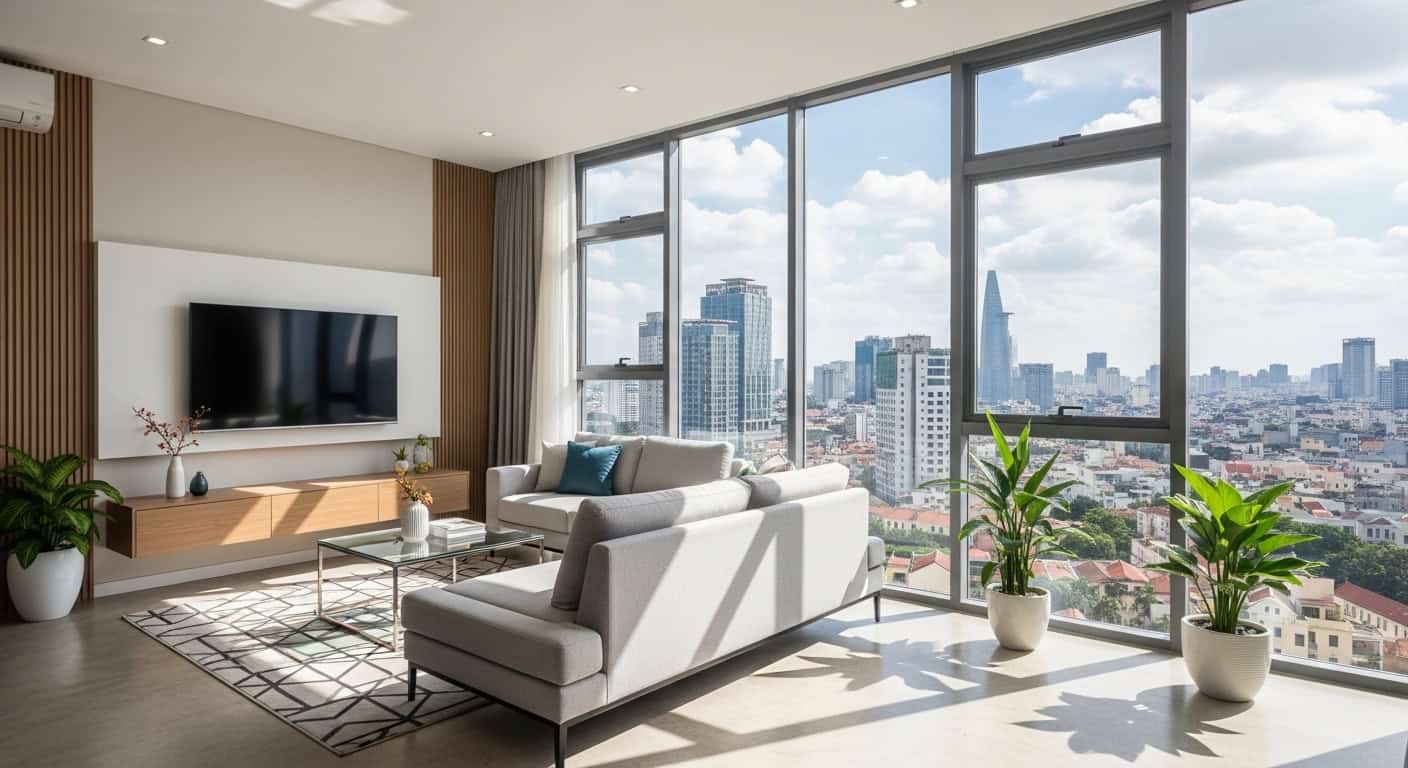
Mapping the Sub-Neighbourhoods of District 1
Most online listings flatten District 1 into a single pin, but the district covers roughly 7.7 square kilometres and the experience changes block by block.
- Bến Nghé ward — the financial and diplomatic core. Home to Đồng Khởi Street, the Opera House, and the highest concentration of premium serviced apartments. Quieter than you might expect at street level because most activity happens inside towers.
- Bến Thành ward — surrounds the iconic covered market. Excellent transport links, heavy foot traffic, and a good mix of mid-range serviced buildings popular with first-time Saigon renters.
- Phạm Ngũ Lão / Bùi Viện corridor — historically the backpacker strip, but the north end bleeds into genuinely liveable apartment streets. Lower price points, strong café density, useful for freelancers.
- Nguyễn Thị Minh Khai / Điện Biên Phủ axis — the quieter northern edge of the district, close to several international clinics and a favourite among healthcare workers and NGO staff on longer postings.
Knowing which ward you want before you start viewing saves significant time and prevents the common mistake of renting somewhere technically in district 1 Ho Chi Minh city but practically inconvenient for your daily routine.
What Serviced Apartments in District 1 Actually Include
The term “serviced apartment” is used loosely in Saigon. At the quality end of the spectrum, a true serviced residence will provide weekly housekeeping, linen changes, a fully equipped kitchen, building security operating around the clock, and a front-desk team capable of handling mail, parcel acceptance, and basic maintenance tickets in English. Some buildings add a rooftop pool, a fitness room, and a lounge for co-working. At the budget end, “serviced” can mean nothing more than a ceiling fan and someone who answers the phone occasionally.
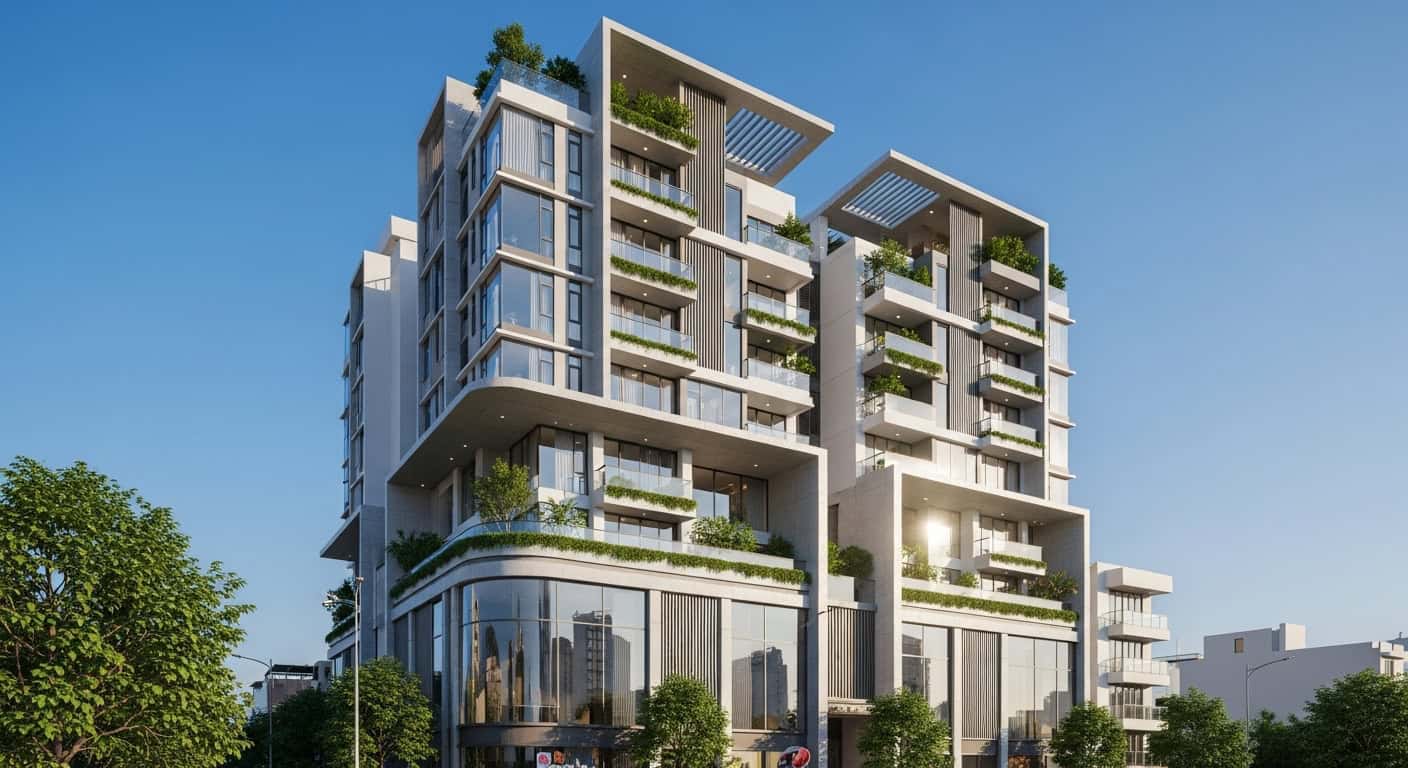
When evaluating any listing in district 1 Ho Chi Minh city, ask specifically: what is the housekeeping frequency, is the internet a dedicated line or shared building Wi-Fi, and is the quoted rate inclusive of electricity or capped at a unit allowance. Electricity in Vietnam is metered at residential tariffs and costs can add USD 50–150 per month to your bill depending on air-conditioning usage, which is non-negotiable nine months of the year.
Price Ranges and What Drives Them in 2025–2026
According to CBRE Vietnam’s Q4 2025 Residential Market Report, average asking rents for serviced apartment studios in the central districts of Ho Chi Minh City rose approximately 8% year-on-year, driven by constrained new supply and continued demand from regional corporate relocations. That translates to real numbers as follows:
- Studio (25–35 sqm): USD 650–950 per month for a well-managed building with housekeeping.
- One-bedroom (40–55 sqm): USD 950–1,400 per month. This tier dominates long-stay demand from couples and solo professionals who need a proper workspace.
- Two-bedroom (65–90 sqm): USD 1,500–2,500 per month. Typically targeted at families or colleagues sharing.
The spread within each tier is wide because District 1 Ho Chi Minh City contains buildings ranging from 1990s walk-ups to purpose-built 2022 residences. Floor height, natural light, and the quality of the kitchen fit-out account for most of the variance once you strip out location bias.
The Booking Process: From First Inquiry to Key Collection
The standard process in district 1 Ho Chi Minh city serviced buildings runs as follows. You make an inquiry — by WhatsApp, email, or a contact form — and receive a rate sheet within 24 hours for any reputable operator. A viewing is arranged, almost always in person; virtual tours exist but the building management will push for a physical visit because they are also screening you as a tenant. If the unit works, you receive a draft tenancy agreement in English and Vietnamese. Signing typically happens within two to three days. Deposit requirements vary: most buildings ask for one month’s deposit on stays of one to three months, and two months on longer leases.
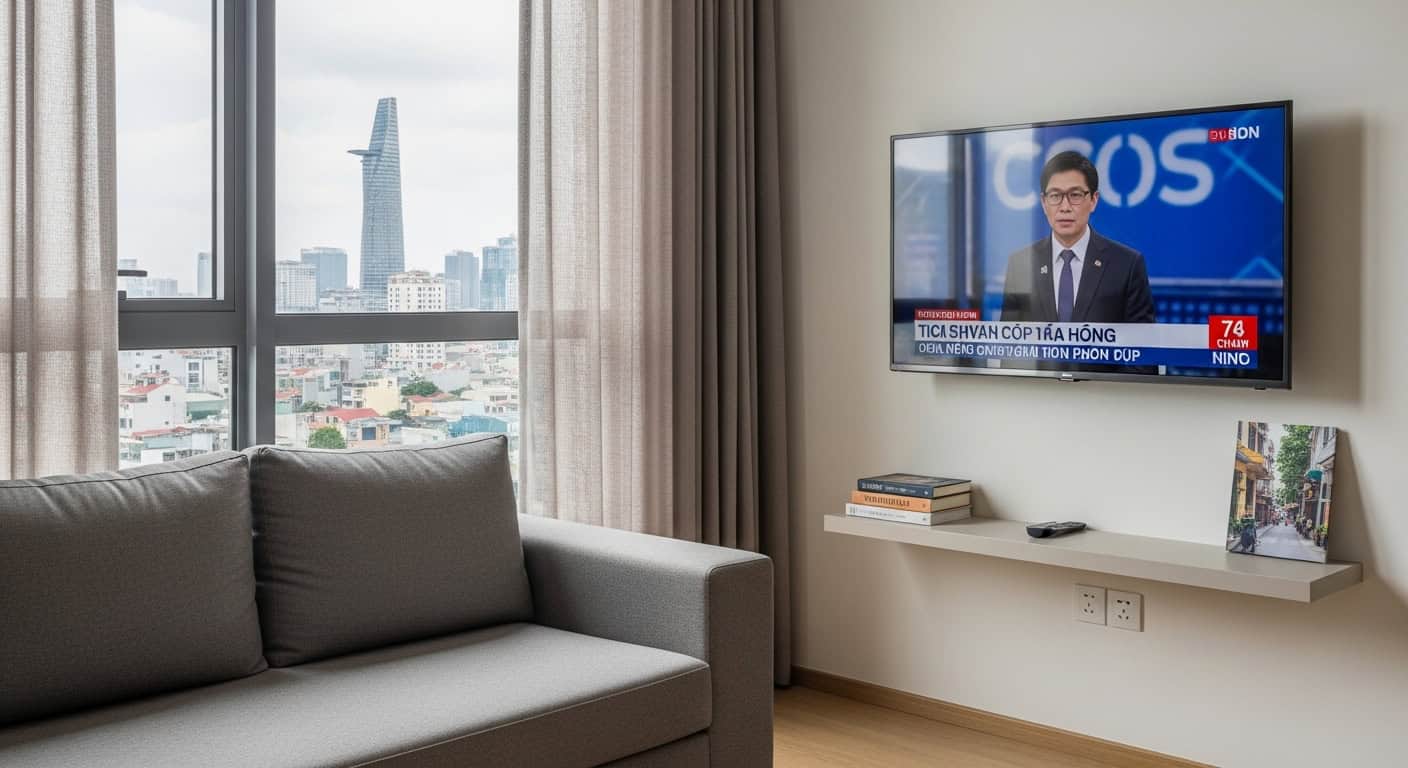
Payment is usually accepted by bank transfer in Vietnamese Dong at the prevailing exchange rate, though some buildings retain USD-denominated rates for foreign tenants. Keep copies of all payment receipts — you will need them if you apply for a business visa extension tied to your accommodation address.
Extending Your Stay: How Negotiations Actually Work
Lease extensions are one of the most underused advantages of renting directly from a managed building rather than through a third-party platform. If you are a quiet, prompt-paying tenant at the end of your first term, the management has a strong incentive to keep you rather than turn the unit over and absorb a vacancy gap. The best approach is to raise the extension conversation four to six weeks before your end date — not two days before.
At that point, ask whether the rate holds, whether there is a multi-month discount for committing to three or six months, and whether any building upgrades are planned that might affect your unit. In district 1 Ho Chi Minh city, renovation work on older towers is common and scheduling your extension around a lobby refurbishment that comes with weeks of drilling is a detail worth confirming upfront.
Visa Logistics for Long-Stay Residents in District 1
Vietnam’s e-visa system now allows most nationalities a 90-day entry, extendable once in-country to a maximum of 90 additional days at a local immigration office. For stays beyond that, the most practical route for non-business visitors is a multiple-entry tourist visa. Business visa holders on company-sponsored stays have access to longer options tied to their work permit or business registration.
Your apartment address in district 1 Ho Chi Minh city matters for this process: you will need a notarised copy of your tenancy agreement and sometimes a letter from your building management confirming residency. Reputable serviced buildings issue these routinely — ask before you sign whether this is standard practice for theirs.
Daily Life: Getting Around, Eating Well, and Staying Connected
Grab dominates urban mobility in Saigon. A cross-district trip rarely exceeds 80,000 VND. The new Metro Line 1 (Ben Thanh to Suoi Tien) opened in late 2024 and has already changed the logic of district 1 Ho Chi Minh city living for anyone with commitments in the east of the city — the Ben Thanh station sits at the district’s geographic heart.
Food options within walking distance of most D1 apartments range from 35,000 VND bowl of bún bò at a neighbourhood stall to USD 40 tasting menus at Bui Vien-adjacent restaurants that have been reviewed in international food media. Coffee, which is a genuine lifestyle category in Saigon rather than a caffeine delivery mechanism, is excellent and cheap within the district. Co-working options have multiplied since 2022 and several buildings now negotiate preferential day-pass rates at nearby spaces for their tenants.
According to Numbeo’s 2025 Cost of Living Index, Ho Chi Minh City ranks among the most affordable major Asian cities for a combined accommodation-and-living budget, even after the recent rent increases in central districts.
What to Inspect Before You Sign
A viewing checklist for any apartment in district 1 Ho Chi Minh city should cover: air-conditioning unit age and filter condition (older units are inefficient and expensive), water heater type (instant versus tank — relevant for large-volume users), mobile signal strength on your carrier on upper floors, elevator wait times during a morning or evening visit, and the noise profile at ground level if the unit faces a main road. Đồng Khởi, Lê Lợi, and Nguyễn Huệ are beautiful streets but traffic noise carries.
Also check whether the building has a generator that covers your unit — not just common areas — and what the reported downtime has been during the May-to-October wet season when grid interruptions are more frequent.
Booking a Viewing or Requesting Rates
Having your preferred dates, approximate budget, and preferred ward in district 1 Ho Chi Minh city ready when you reach out shortens the back-and-forth considerably. If you are not yet certain which sub-neighbourhood suits you, that is also a conversation the team is well-positioned to have — the goal is a match that works long-term, not a quick booking that leads to an early exit.
Common Mistakes First-Time Renters Make in District 1
The most frequent errors we see from people renting in district 1 Ho Chi Minh city for the first time:
- Booking entirely on photos. Saigon apartment photography is often shot with a wide-angle lens that flatters small rooms. A 28 sqm studio can look spacious on a listing and claustrophobic in person.
- Ignoring the electricity cap. A base rent of USD 800 becomes USD 1,000 the first hot month when the air conditioning runs 18 hours a day and the cap was USD 30.
- Not confirming English-language support at the front desk. It matters more than you think when you need a maintenance issue resolved at 10pm on a Sunday.
- Over-committing on the first building viewed. See at least two or three options across different wards before signing. The decision improves with reference points.
- Skipping the area walk. After the viewing, spend 20 minutes walking the immediate block. The wet market that smells fine at 10am smells quite different at 7am when deliveries arrive.
You May Also Find Useful
- Serviced Apartment District 1 Saigon: Full Review of the Best Managed Residences
- Where to Stay in Ho Chi Minh City: Honest District-by-District Guide
- Saigon Chinatown (Cholon): Complete Visitor Guide to District 5
- Saigon Street Food Guide 2025: The Complete District-by-District Breakdown for Residents
Frequently Asked Questions
How much does a serviced apartment in District 1 Ho Chi Minh City cost per month?
Expect to pay USD 650–950 for a well-managed studio and USD 950–1,400 for a one-bedroom. Rates depend on building age, floor height, included services, and lease length. Stays of three months or more typically attract a 5–15% discount versus monthly rates.
Can foreigners rent apartments directly in District 1?
Yes. Foreign nationals can rent apartments in Vietnam on short and long-term leases without restriction. Serviced buildings in district 1 Ho Chi Minh city are experienced in leasing to international tenants and routinely issue the English-language documentation required for visa and work permit applications.
Is District 1 safe for solo expats and families?
District 1 Ho Chi Minh City is considered one of the safest urban environments in Southeast Asia for residents. Violent crime targeting foreigners is rare. The main risk is opportunistic bag-snatching on busy tourist streets — standard urban precautions apply. Residential buildings with secure parking and 24-hour front desk cover the practicalities well.
What is the minimum stay at most serviced apartments in District 1?
Minimum stays vary by building but one month is the most common threshold for serviced apartment rates. Stays of under one month are generally quoted at a higher nightly rate comparable to extended-stay hotel pricing. If you anticipate needing flexibility on exit, negotiate a shorter minimum with a break-clause rather than committing to a full three-month term upfront.
How far is District 1 from Tan Son Nhat International Airport?
Tân Sơn Nhất Airport is approximately 7–9 kilometres from the centre of district 1 Ho Chi Minh city. A Grab car typically takes 20–35 minutes depending on traffic, with the morning rush between 7–9am and the evening surge between 5–7pm adding the most time. The fixed metered taxi fare from the airport to D1 runs roughly 130,000–180,000 VND.
Official Resources
For the most up-to-date information on district 1 ho chi minh city, visit the Vietnam Tourism Official Guide.