
Vietnam Visa Requirements: What Every Nationality Needs to Know
Vietnam visa requirements depend on your nationality, intended length of stay, and purpose of visit — and getting this right before you book flights to Ho Chi Minh City will save you serious stress at the airport. Most nationalities now qualify for an e-visa, many others benefit from visa-free access, and a smaller group still need to apply through a Vietnamese embassy. This guide covers every major route into Vietnam so you know exactly where you stand.
Key Takeaways
- Vietnam’s e-visa is available to citizens of all countries, grants up to 90 days single or multiple entry, and costs USD 25.
- Over 45 nationalities enjoy visa-free entry to Vietnam for periods ranging from 14 to 45 days as of 2024.
- The Visa on Arrival (VOA) option requires a pre-approved letter and is only valid at international airports, not land or sea borders.
- Passport validity of at least six months beyond your intended departure date is required for all visitors.
- Extensions and changes of visa status can be processed inside Vietnam without leaving the country.
Who Can Enter Vietnam Without a Visa
Vietnam has expanded its visa-free program significantly in recent years. According to Vietnam’s Ministry of Foreign Affairs, the country extended visa-free stays for nationals of most European countries from 15 days to 45 days in August 2023, a policy that remains in effect through 2026. Citizens of Germany, France, Italy, Spain, the United Kingdom, Russia, Japan, South Korea, and several other nations currently enjoy this benefit.
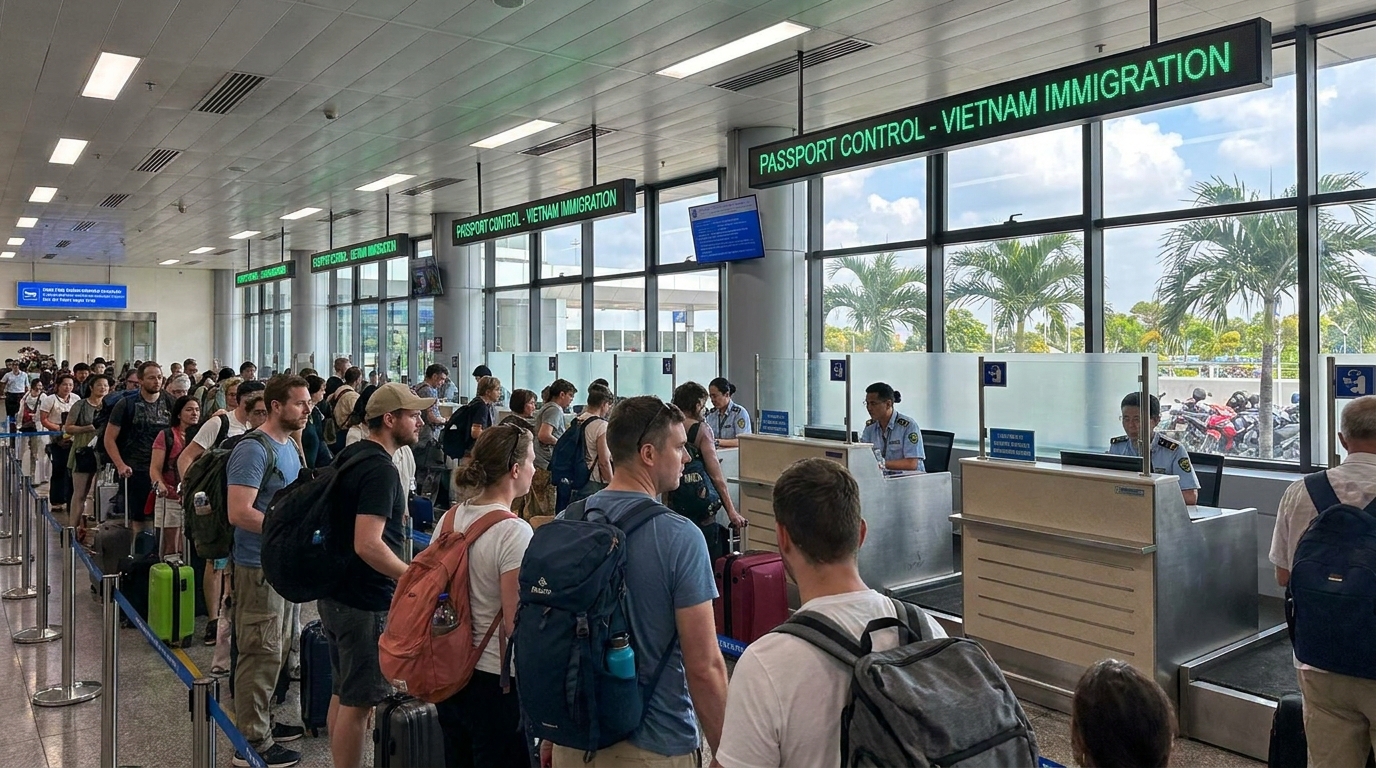
ASEAN member nationals — including citizens of Thailand, Malaysia, Singapore, Indonesia, the Philippines, Cambodia, Laos, Myanmar, and Brunei — also receive visa-free access, with stays ranging from 14 to 30 days depending on bilateral agreements. If you hold one of these passports, you simply present it at immigration at Tan Son Nhat International Airport and you’re in.
Always verify your country’s current status on the official Vietnam Immigration Department portal before travel, as agreements do change. The visa-free list has grown considerably but is not universal.
Vietnam E-Visa: The Standard Route for Most Travellers
For nationalities not covered by visa-free arrangements, the Vietnam e-visa is the simplest and most recommended path. Vietnam visa requirements through the e-visa system are straightforward: a valid passport, a passport-sized photo, a scanned copy of your passport bio page, and the USD 25 application fee.
The e-visa is available at evisa.xuatnhapcanh.gov.vn and typically processes within three business days, though peak periods can extend this to five days. It grants a stay of up to 90 days and can be issued as single entry or multiple entry. For anyone planning to explore beyond Ho Chi Minh City — perhaps crossing into Cambodia or taking a weekend trip to Phnom Penh — the multiple-entry option is worth the same flat fee.
The e-visa is valid at all international airports (including Tan Son Nhat), all major land border crossings, and sea ports. This makes it the most flexible option available.
Visa on Arrival: When It Makes Sense
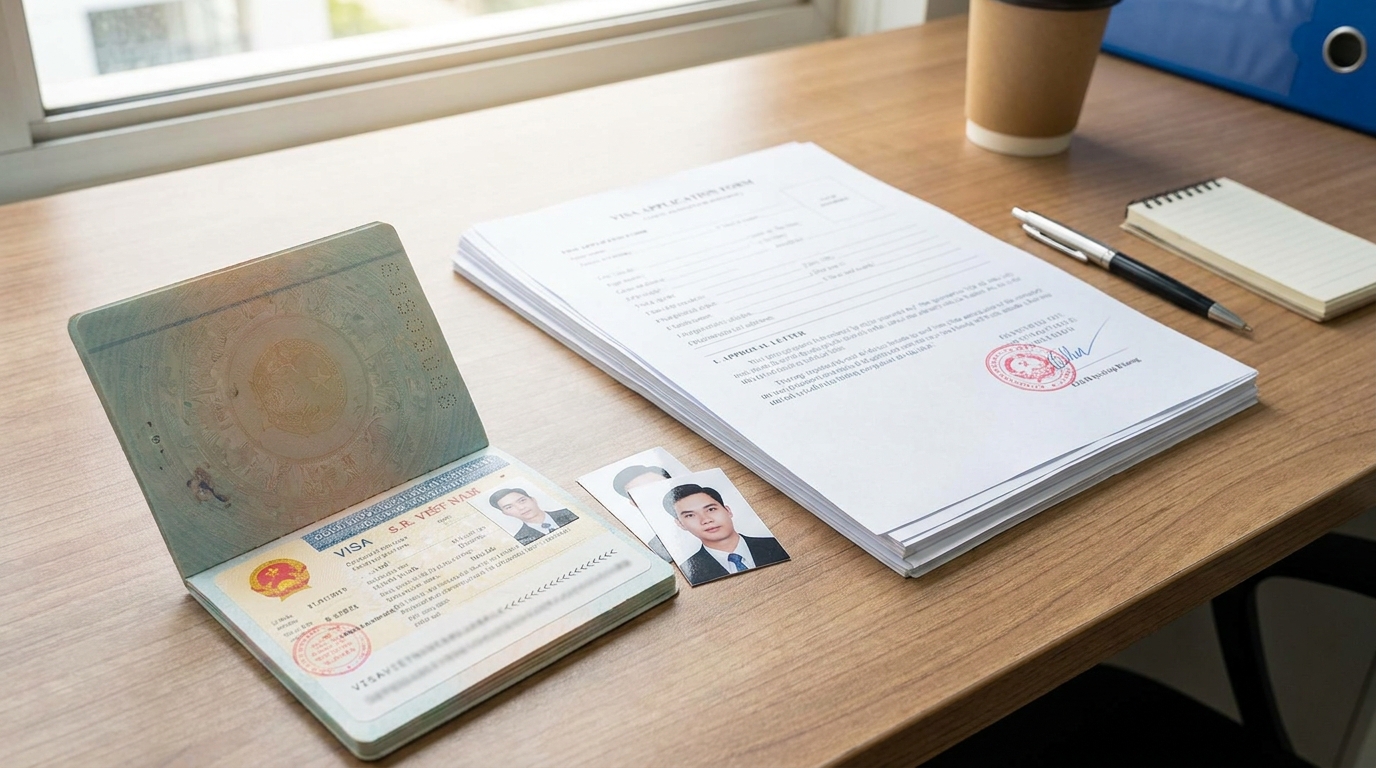
Visa on Arrival (VOA) is a process that often confuses first-time visitors to Vietnam. Despite the name, you cannot simply turn up at the airport and obtain a visa at the counter. VOA requires you to obtain a pre-approval letter from a licensed Vietnamese travel agency or visa service before you fly. You then present this letter at the VOA counter at one of Vietnam’s international airports, pay a stamping fee (typically USD 25 for single entry, USD 50 for multiple entry), and receive your visa stamp.
VOA is only available at international airports — Tan Son Nhat in Ho Chi Minh City, Noi Bai in Hanoi, Da Nang International, and a handful of others. If you’re arriving by road from Cambodia or by boat, VOA is not an option. For most travellers arriving in HCMC by air, the e-visa is simpler and cheaper than going through an agency for a VOA letter.
Vietnam Visa Requirements for US Citizens
American passport holders qualify for visa-free entry to Vietnam for up to 45 days per visit, a policy introduced in 2023 and renewed into 2026. This covers tourism, short business visits, and transit. If your stay in Ho Chi Minh City or elsewhere in Vietnam will exceed 45 days, you will need to apply for an e-visa before travel or arrange a visa extension inside the country.
US citizens planning a longer-term stay — whether for work, study, or an extended expat stint — should look at the business visa (DN) or the temporary residence card (TRC) issued after a valid work permit. These routes involve more documentation but allow stays of one to two years with renewal options.
Vietnam Visa Requirements for UK, EU, and Australian Citizens
Citizens of all 27 EU member states plus the United Kingdom receive 45-day visa-free entry to Vietnam under the expanded program. Australian and New Zealand nationals are not currently on the visa-free list, which means they must obtain an e-visa (USD 25, up to 90 days) before arrival.

For Europeans on longer stays, the e-visa’s 90-day multiple-entry option is the practical bridge between visa-free visits. A common strategy among European digital nomads based in District 1 is to use a visa-free 45-day entry, travel regionally, and re-enter on an e-visa for the following 90 days.
Business Visa and Long-Stay Options
Vietnam visa requirements for business visitors extend beyond the standard tourist routes. The DN1 visa (sponsored by a Vietnamese company) and DN2 visa (for those attending conferences or meetings without a local sponsor) are the two primary business categories. Both are available as e-visas for stays up to 90 days.
For stays beyond 90 days, the most common legal pathways are:
- Visa extensions: Single extensions of up to 90 days are possible inside Vietnam through licensed immigration agents.
- Work permit + business visa: Requires a Vietnamese employer to sponsor the application. Processing time is typically four to six weeks.
- Temporary Residence Card (TRC): Available for one or two years to those with a valid work permit or who are married to a Vietnamese national.
- Investor visa: Available to those with registered investment capital in a Vietnamese business entity.
According to data from the Vietnam General Statistics Office, the number of foreign visitors to Vietnam in 2024 reached approximately 17.5 million, with Ho Chi Minh City remaining the top destination — reinforcing why understanding the visa landscape before you arrive matters so much.
Passport Validity and Entry Requirements
Beyond the visa itself, Vietnam immigration requires your passport to be valid for at least six months beyond your intended departure date. This is a hard rule enforced at check-in by airlines before you even board. A passport valid for only three months may get you refused boarding in your home country, so check your travel document now.
You will also need to demonstrate onward travel — a return flight or a ticket to a third country — particularly if entering on a visa-free basis. Immigration officers at Tan Son Nhat do occasionally ask for proof of onward travel, especially for travellers without a fixed departure date. Having a flexible or refundable onward ticket is a practical workaround used by long-term travellers.
Extending Your Stay in Ho Chi Minh City
If you’ve settled into District 1 life and want to extend beyond your initial visa period, Vietnam allows in-country extensions without requiring a border run. Licensed immigration service agents in HCMC can process extensions of up to 90 days on most visa types. Costs typically range from USD 50 to USD 150 depending on the visa type and urgency.
The city’s concentration of visa agents — particularly around Pham Ngu Lao Street and Bui Vien in District 1 — makes this straightforward. Most reputable agents can have your passport returned with an extended stamp within three to five business days. Always use agents with physical offices and verifiable reviews; avoid handing your passport to anyone operating solely via social media.
Requirements confirmed — browse our D1 apartment options and secure your dates before you arrive.
Vietnam Visa Requirements for Popular Nationalities: Quick Reference
The table below summarises the visa situation for the most common nationalities arriving in Ho Chi Minh City:
- USA, Germany, France, UK, Italy, Spain, Russia: Visa-free 45 days, e-visa available for longer stays.
- Australia, Canada, New Zealand, India: E-visa required (USD 25, up to 90 days).
- Thailand, Malaysia, Singapore: Visa-free 30 days (ASEAN agreement).
- Japan, South Korea: Visa-free 45 days.
- China: Visa-free 30 days (as of 2023 bilateral agreement).
- All other nationalities: E-visa available universally.
According to the Vietnam National Authority of Tourism’s 2025 report, South Korean, Chinese, and American visitors collectively accounted for more than 40% of all international arrivals to Vietnam, with HCMC’s Tan Son Nhat airport processing the highest volume of any Vietnamese international gateway.
Common Mistakes to Avoid
Even experienced travellers run into vietnam visa requirements issues that are entirely preventable. The most frequent mistakes include:
- Applying for the wrong visa type: Tourist visas (DL) don’t permit paid work. If you plan to freelance or work remotely for clients while in Vietnam, technically a business visa is more appropriate.
- Letting the e-visa expire before you arrive: E-visas have a validity window — if you rebook your flight and arrive after the e-visa’s start/end window, it becomes invalid. Check your entry date against the visa dates carefully.
- Overstaying: Overstaying a Vietnamese visa results in fines, potential detention, and bans on re-entry. The fine is roughly USD 5–15 per day overstayed but the re-entry ban is the real risk.
- Using unofficial visa websites: Dozens of unofficial sites mimic the government e-visa portal and charge inflated fees. The only official URL is evisa.xuatnhapcanh.gov.vn.
Applying for a Vietnam E-Visa: Step by Step
For anyone who needs to apply, here is the complete process for meeting vietnam visa requirements through the e-visa system:
- Visit the official portal at evisa.xuatnhapcanh.gov.vn and select “Grant e-Visa.”
- Enter your personal details exactly as they appear in your passport.
- Upload a passport-sized photo (white background, face clearly visible) and a scan of your passport bio page.
- Select your entry point — Tan Son Nhat for most HCMC arrivals — and your intended entry and exit dates.
- Pay the USD 25 fee by international credit or debit card.
- Receive your e-visa approval by email within three to five business days.
- Print the e-visa approval letter and present it alongside your passport at immigration.
The process is entirely online and requires no visit to a Vietnamese consulate or embassy. It is genuinely one of the simplest e-visa systems in Southeast Asia.
You May Also Find Useful
Frequently Asked Questions
Can I extend my Vietnam e-visa inside the country?
Yes. Vietnam allows in-country visa extensions through licensed immigration service agents. Extensions of up to 90 days are available on most visa categories without leaving Vietnam. Processing typically takes three to five business days in Ho Chi Minh City.
Is the Vietnam e-visa available for all nationalities?
Yes. As of 2023, Vietnam opened its e-visa program to citizens of all countries globally. Previously restricted to around 80 nationalities, the system now accepts applications from everyone. This makes it the fallback option for any nationality not covered by visa-free agreements.
Do I need a visa to transit through Ho Chi Minh City’s Tan Son Nhat airport?
If you remain airside (do not pass through immigration), no visa is required for transit through Tan Son Nhat. However, if you plan to leave the airport during a layover, standard vietnam visa requirements apply and you will need either visa-free entry status or a valid e-visa.
How long in advance should I apply for a Vietnam e-visa?
Apply at least one week before your intended travel date to allow for processing time and any corrections. During peak travel seasons (December–January, April–May) processing can slow slightly. Applying two weeks ahead is the safest approach, especially if the e-visa is the only document allowing you to board your flight.
Can I enter Vietnam multiple times on the same e-visa?
Yes, if you select the multiple-entry option when applying. This costs the same USD 25 as single entry and is valid for the same 90-day window. Multiple-entry e-visas are ideal for travellers who plan to make regional trips to Cambodia, Thailand, or Laos during their stay in Ho Chi Minh City and return to Vietnam without applying for a new visa each time.
Official Resources
For the most up-to-date information on vietnam visa requirements, visit the Vietnam E-Visa Official Portal.